“I’m not interested in portraiture or its tradition. I’m interested in giving space to Blackwoman presence. A presence which has been distorted, hidden and denied. I’m interested in our humanity, our feelings and our politics.”
Claudette Johnson
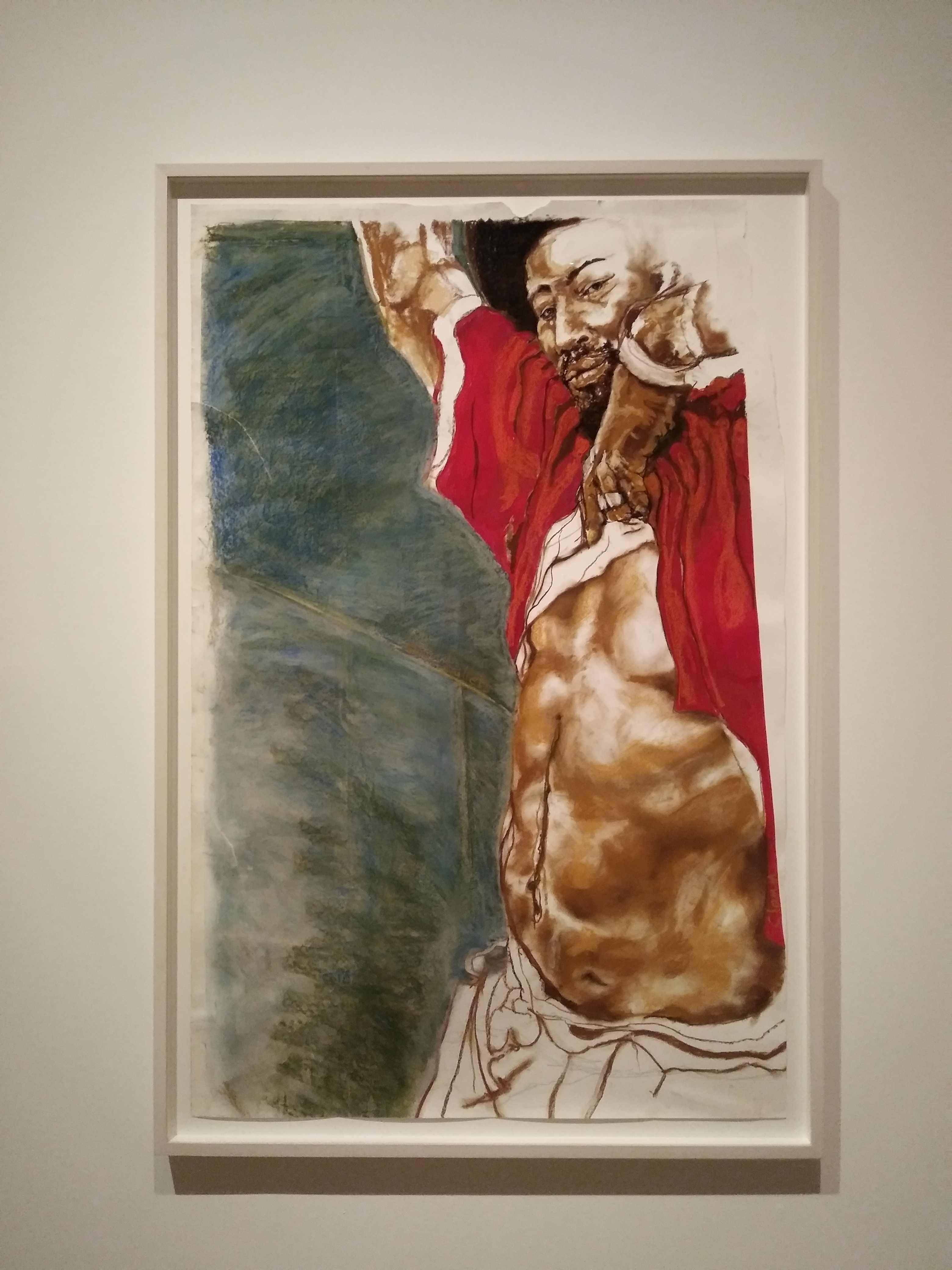
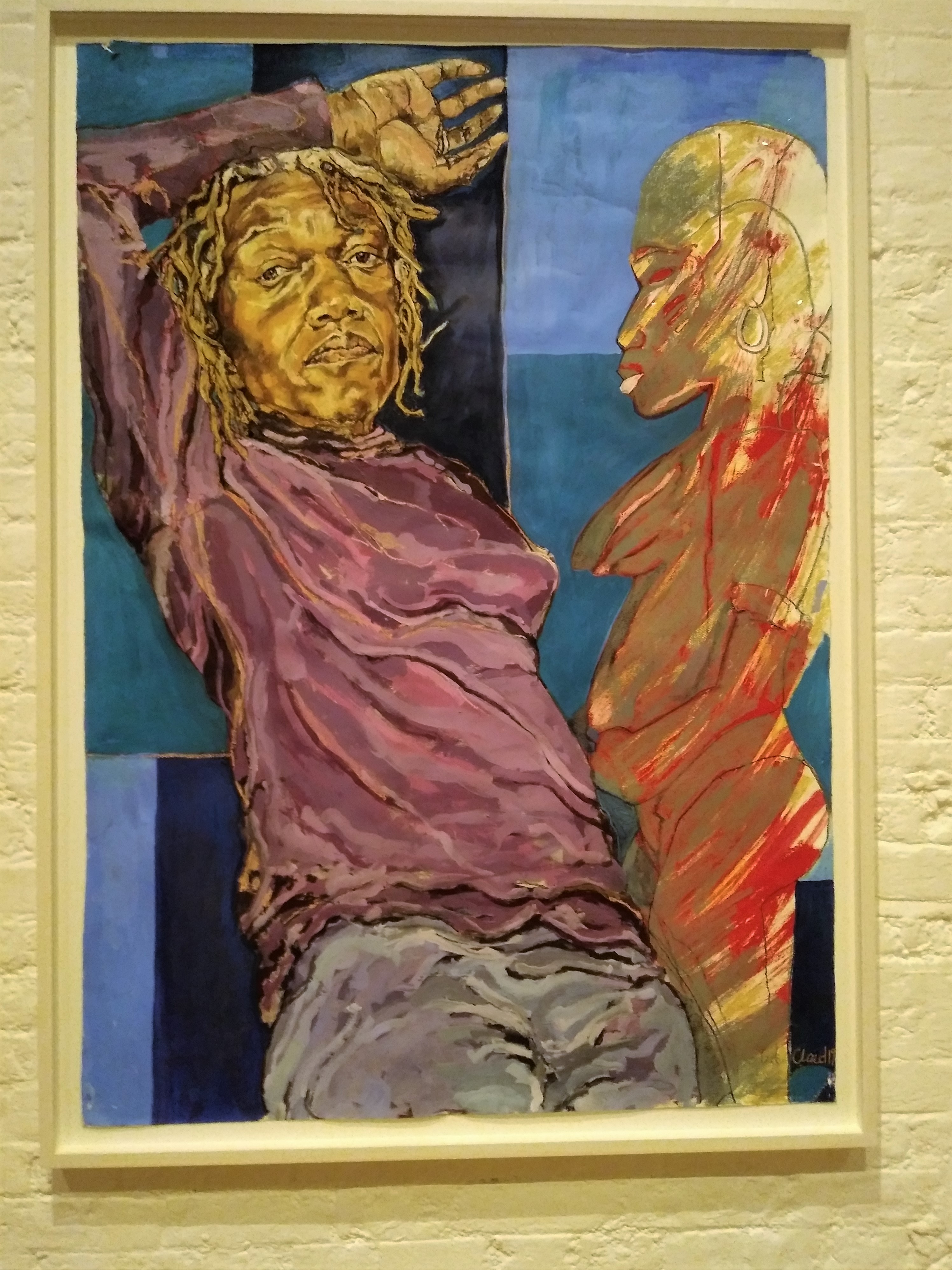
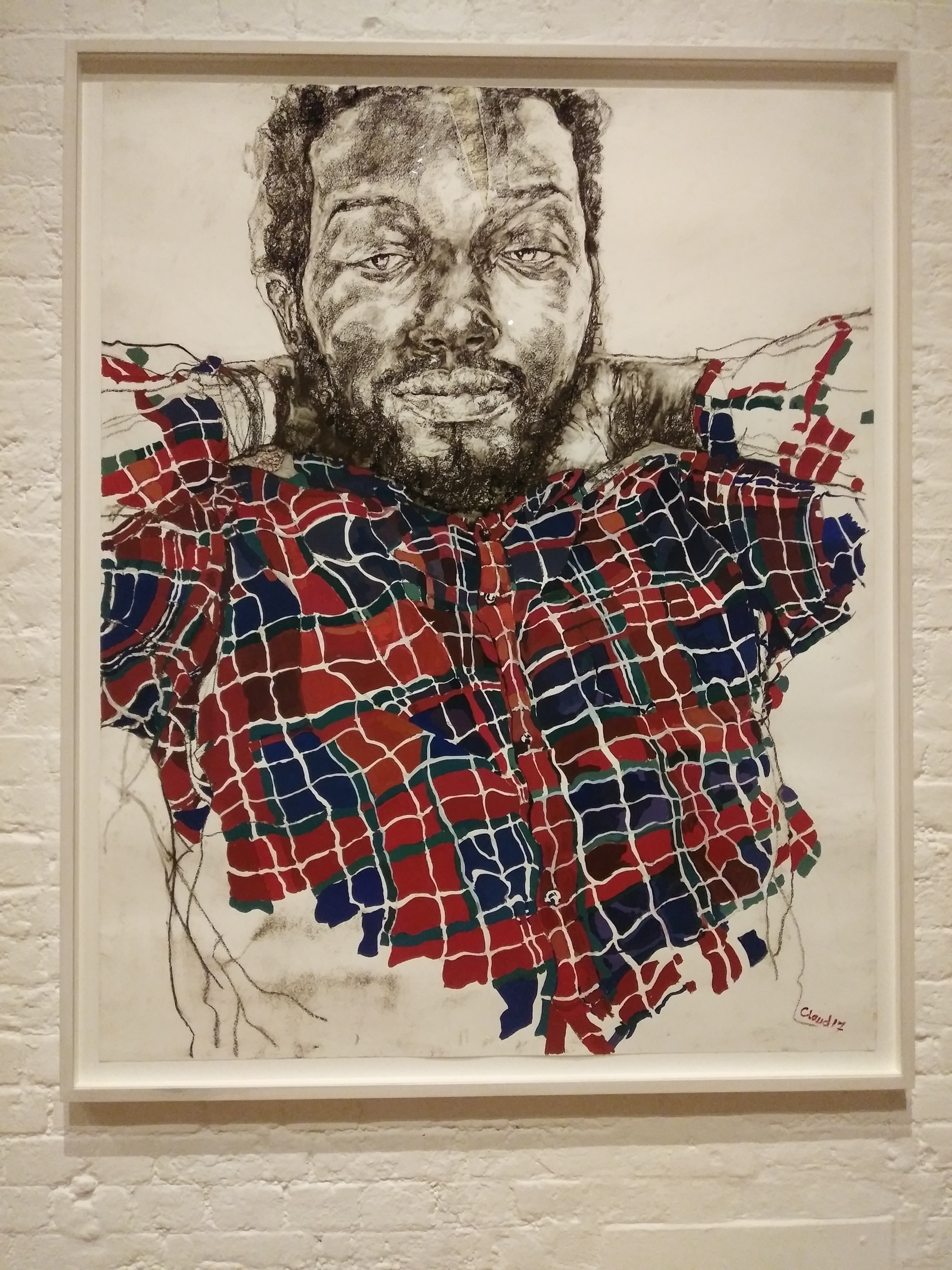
The title of Johnson’s exhibition at Modern Art Oxford – I Came to Dance – expresses how her pieces explore “the bittersweet history of the role of dance in Afro-Caribbean communities and its associations with both the pleasure of movement and the pain of racial stereotypes”. She creates portraits from either life (the sitters often being friends or fellow artists), found media images, or purely imagination. The sitters are invited to choose their own pose and to “take up the space in a way that is reflective of who they are”: this, combined with Johnson’s gestural, fluid marks create pieces that can feel quite intimate, gentle or even vulnerable. Her compositional choices often enhance this, with the subject making direct eye contact with the viewer in many of the pieces. As well as this sense of vulnerability, this eye contact can also add an air of authority or assertiveness, something that is also explored through the raised arm gesture that is used in several of her pieces.
Johnson has been influenced by a wide range of art-historical references:
- Egon Schiele’s use of line in his figurative pieces
- Willem de Kooning’s painted bodies
- Paul Klee’s idea of “taking a line for a walk”
- Henri de Toulouse-Lautrec’s prints (“almost flat areas of colour juxtaposed with linear details of the body’s extremities”)
- Suzanne Valadon – “her use of bold patterns and uncompromising approach to representing the female body and female experiences”
- Picasso’s Les Demoiselles d’Avignon, 1907 – “I first saw Picasso’s Les Demoiselles d’Avignon, 1907, (in reproduction), as a second year Fine Art student. I was struck by the rawness of the image, the fractured space, his use of African imagery and the fearlessness of the women. I referred to this work in And I Have My Own Business In This Skin, 1982, in which a spiky Afro-haired woman with her arms raised and stomach thrust forward is bisected by a jagged yellow line. In Standing Figure with African Masks, the woman with her belly exposed directs her gaze out of the frame whilst being aware that she must negotiate a relationship with the African masked figures who are moving in from the periphery.”
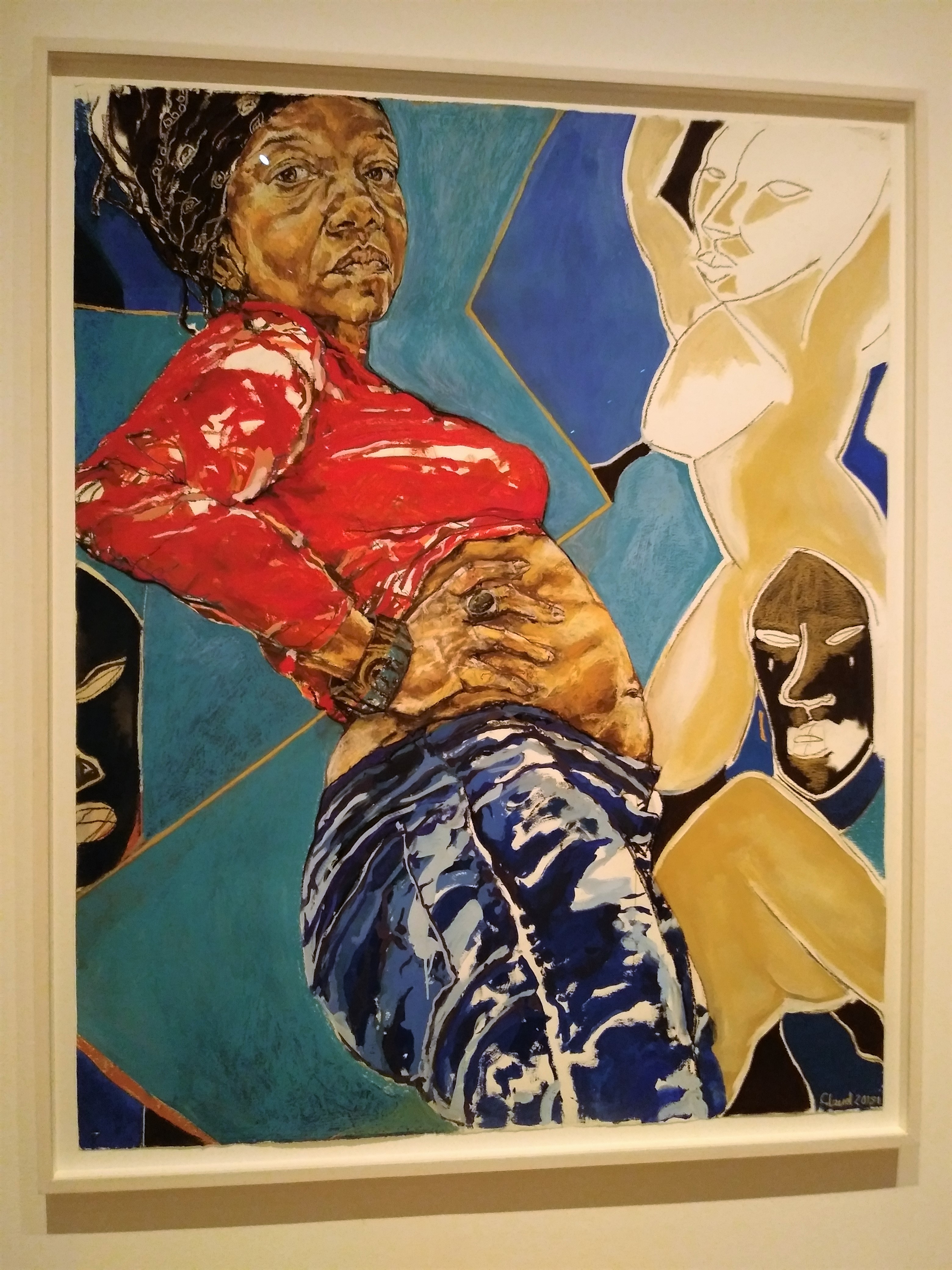
As well as the ideas and concepts behind her pieces, it is interesting to learn about the everyday working processes that go into the work. She says of her scale and medium: “As soon as I started working on at least 3×4 feet I knew that was my scale. It changed my mark making and felt more exciting. [Pastel] is very responsive to picking up pressure, speed, every aspect of the gesture involved in making the mark. It connotes a freedom to work large scale; it freed me”. This is certainly evident in her work; it is simultaneously gestural and loose, while equally maintaining a delicacy through the handling of tone and texture. In order to prepare for these large scale pieces, she does warm-up drawings in her sketchbook beforehand, some of which were displayed in the exhibition. These are not intended to plan out the larger pieces, but instead simply prepare the body for the task ahead; these sketches are “more about playing, warming up, like a vocal exercise before singing a song”.
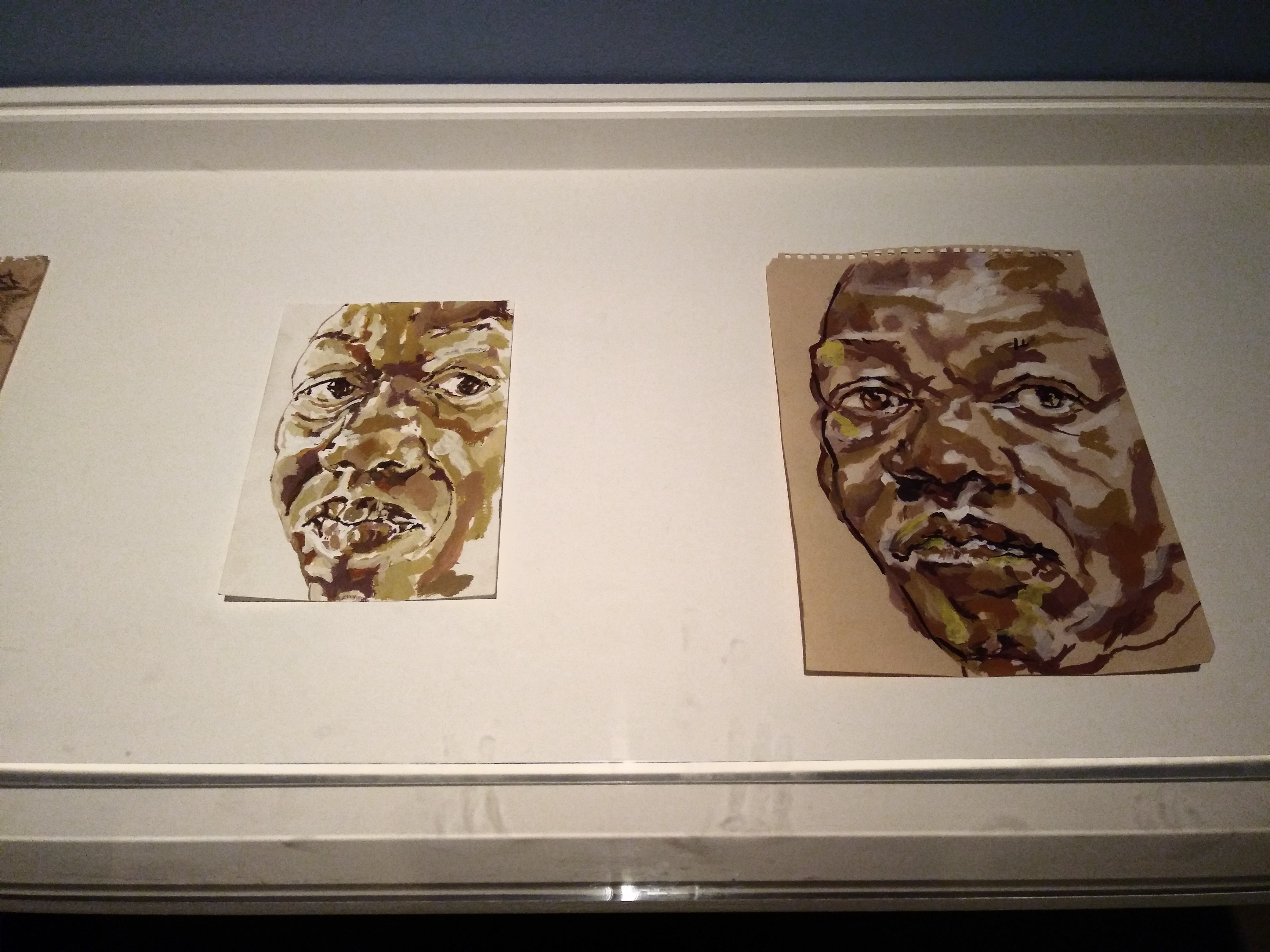
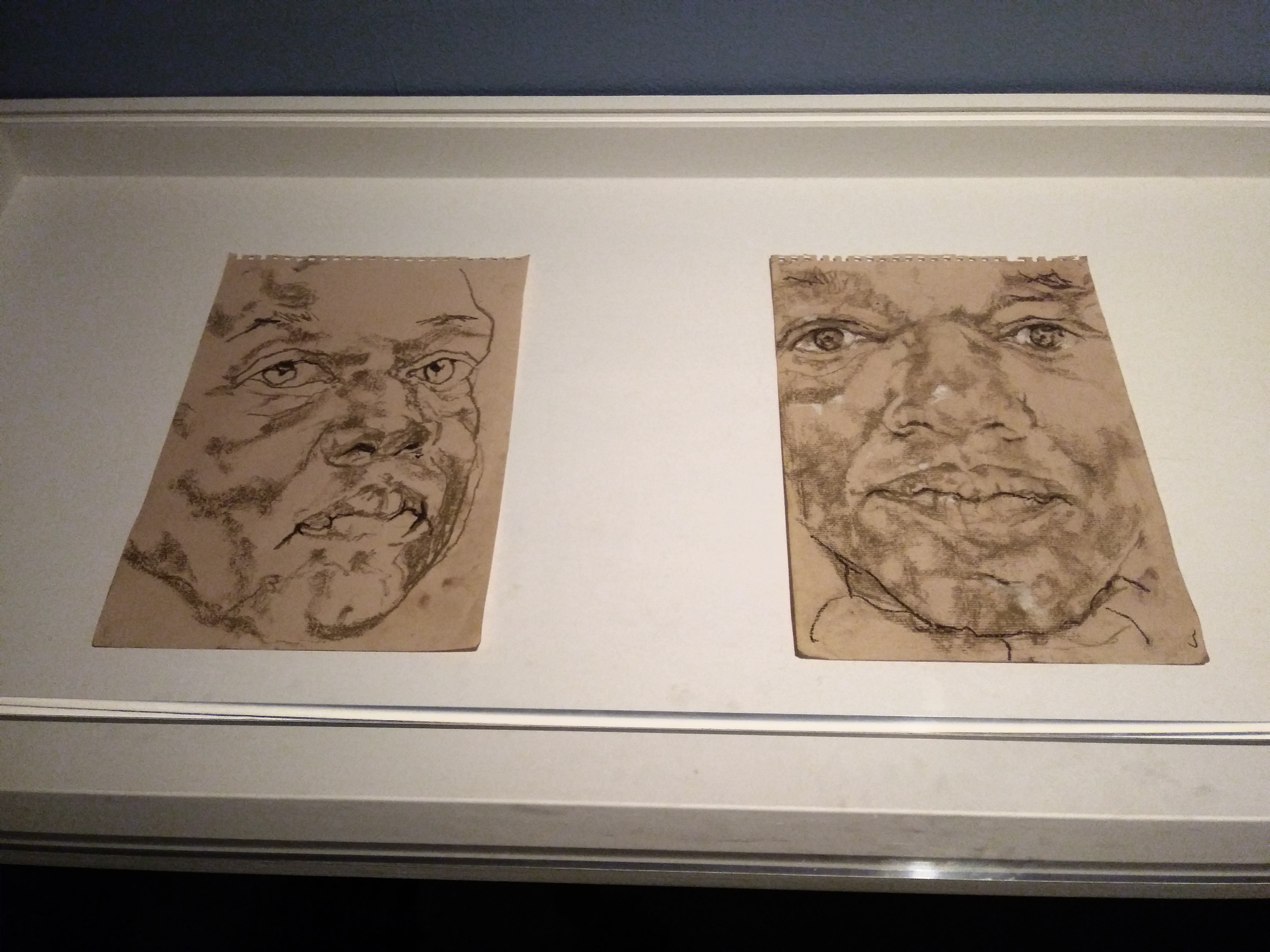
Overall Johnson’s skilful use of pastel and gouache combine throughout the exhibition to create a mixture of vulnerability, sensitivity and subtlety in her subjects that is oddly complimented by a sense of assertiveness and self-assurance. Each of her figures demand attention and draw the viewer in to imagine their individual narratives and personalities; as such she has very successfully given the “space to Blackwoman presence” that she set out to do, through an exploration of politics, feelings and, above all, humanity.
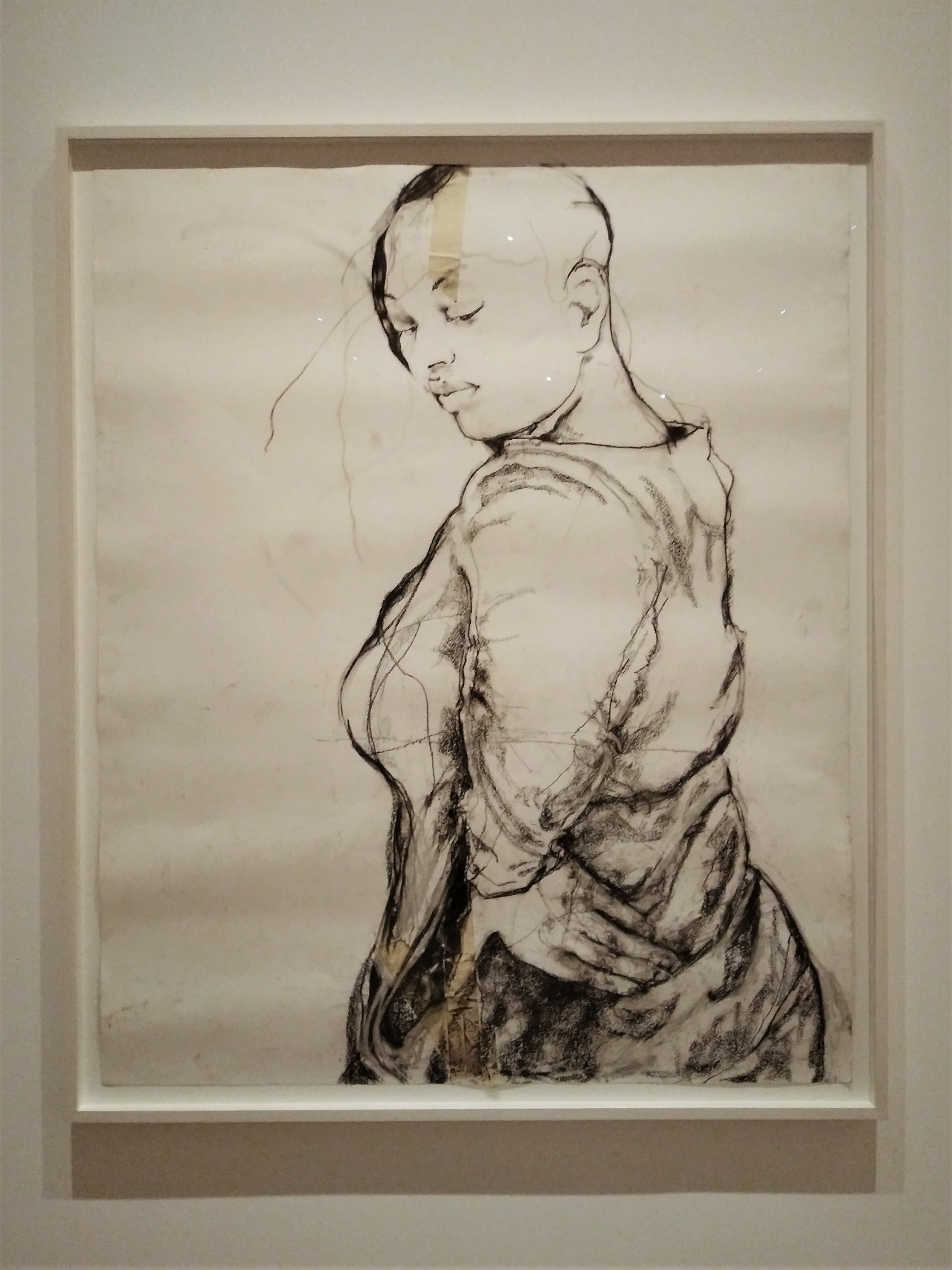
Standing Figure, 2017 – Claudette Johnson 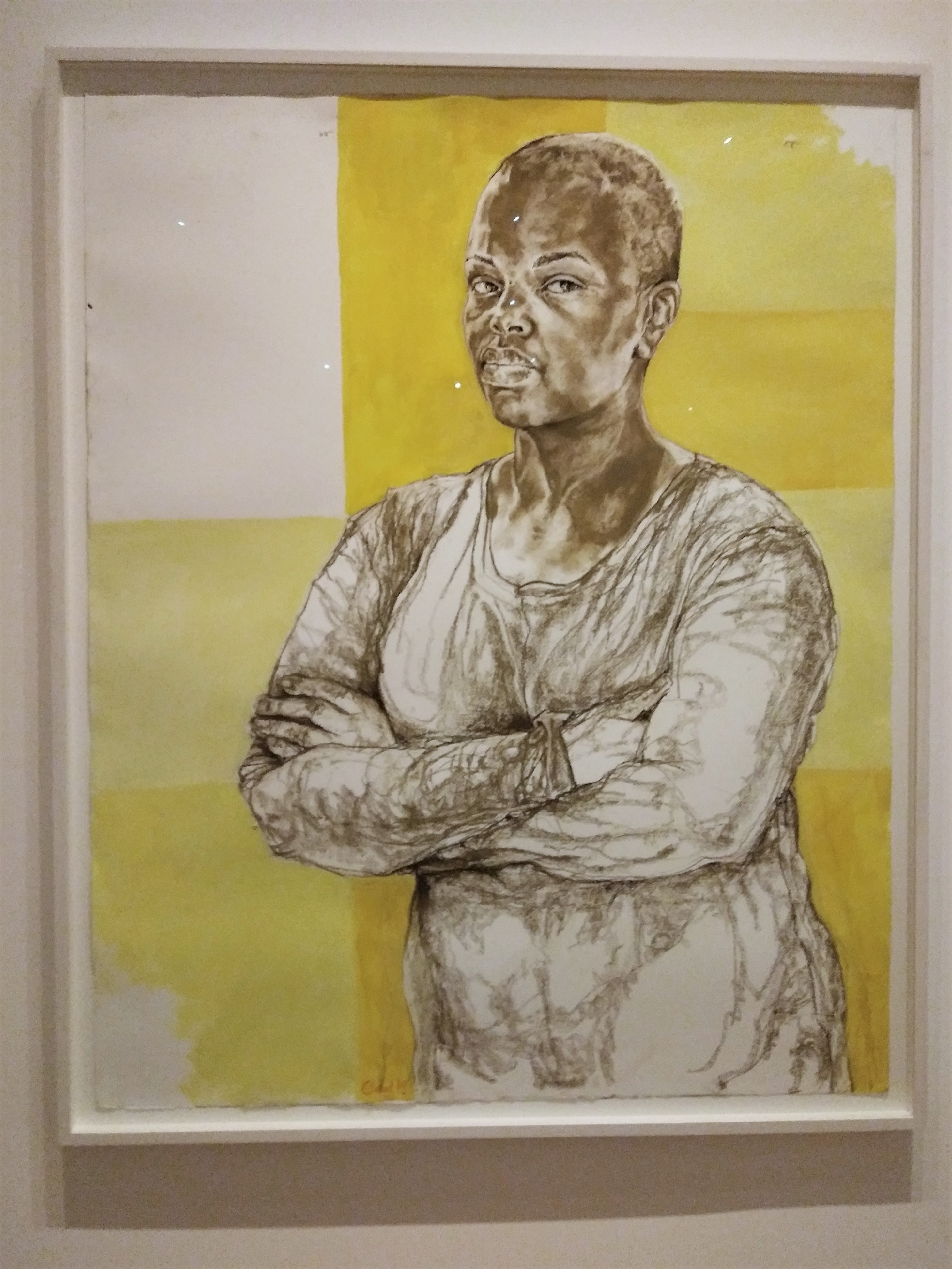
Untitled (Yellow Blocks), 2019 – Claudette Johnson 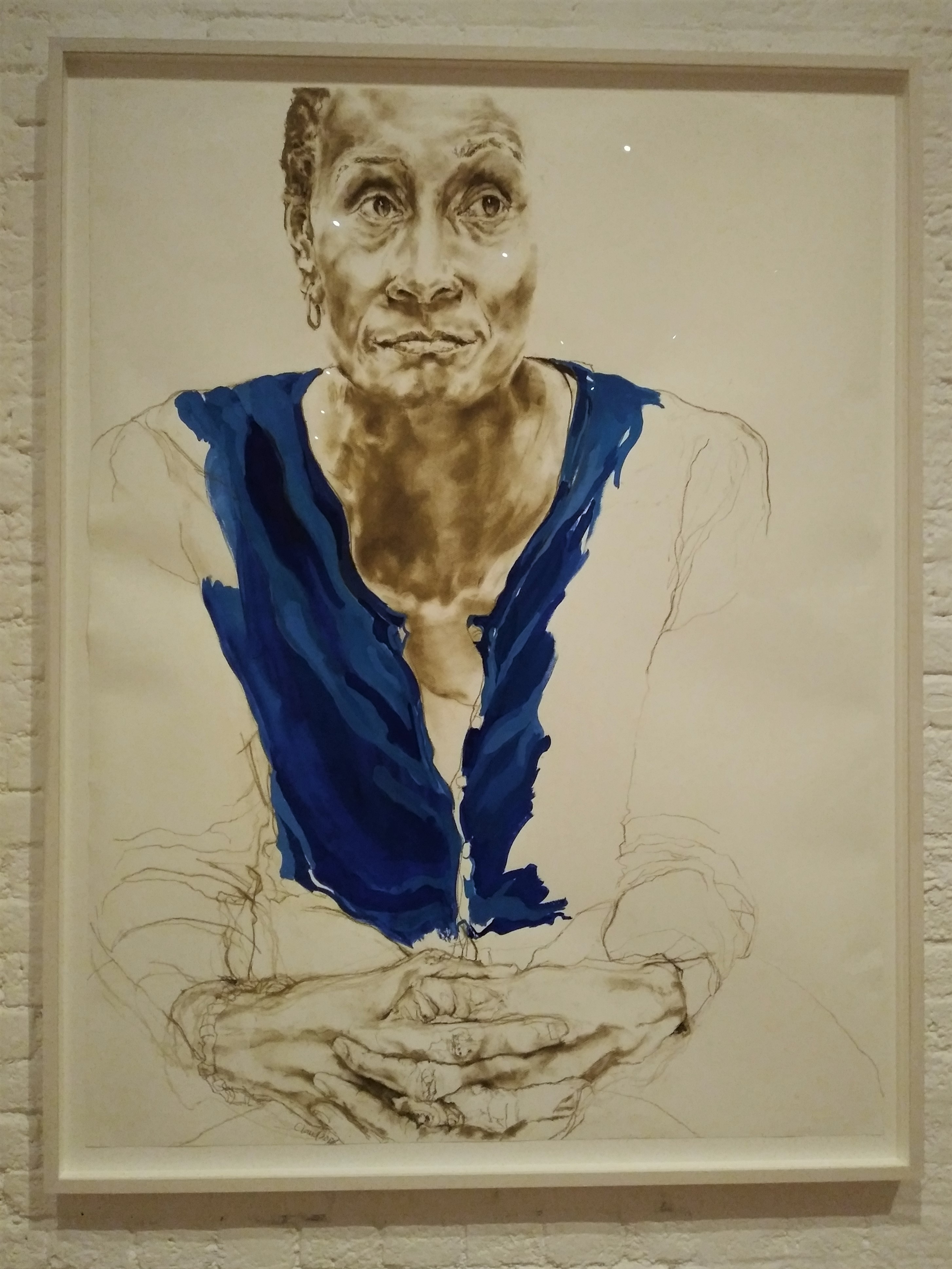
Seated Figure II, 2017 – Claudette Johnson 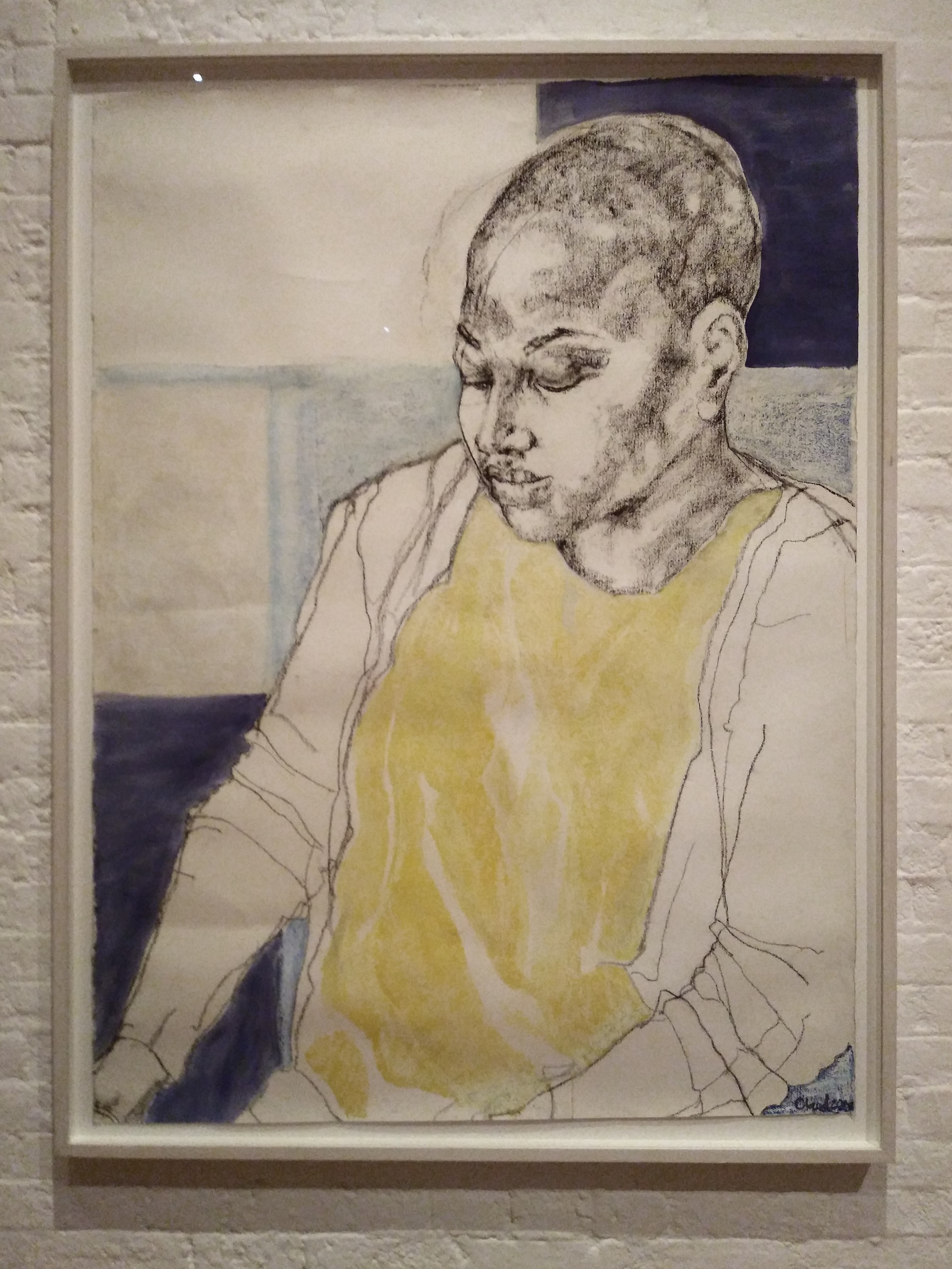
Seated Figure I, 2017 – Claudette Johnson 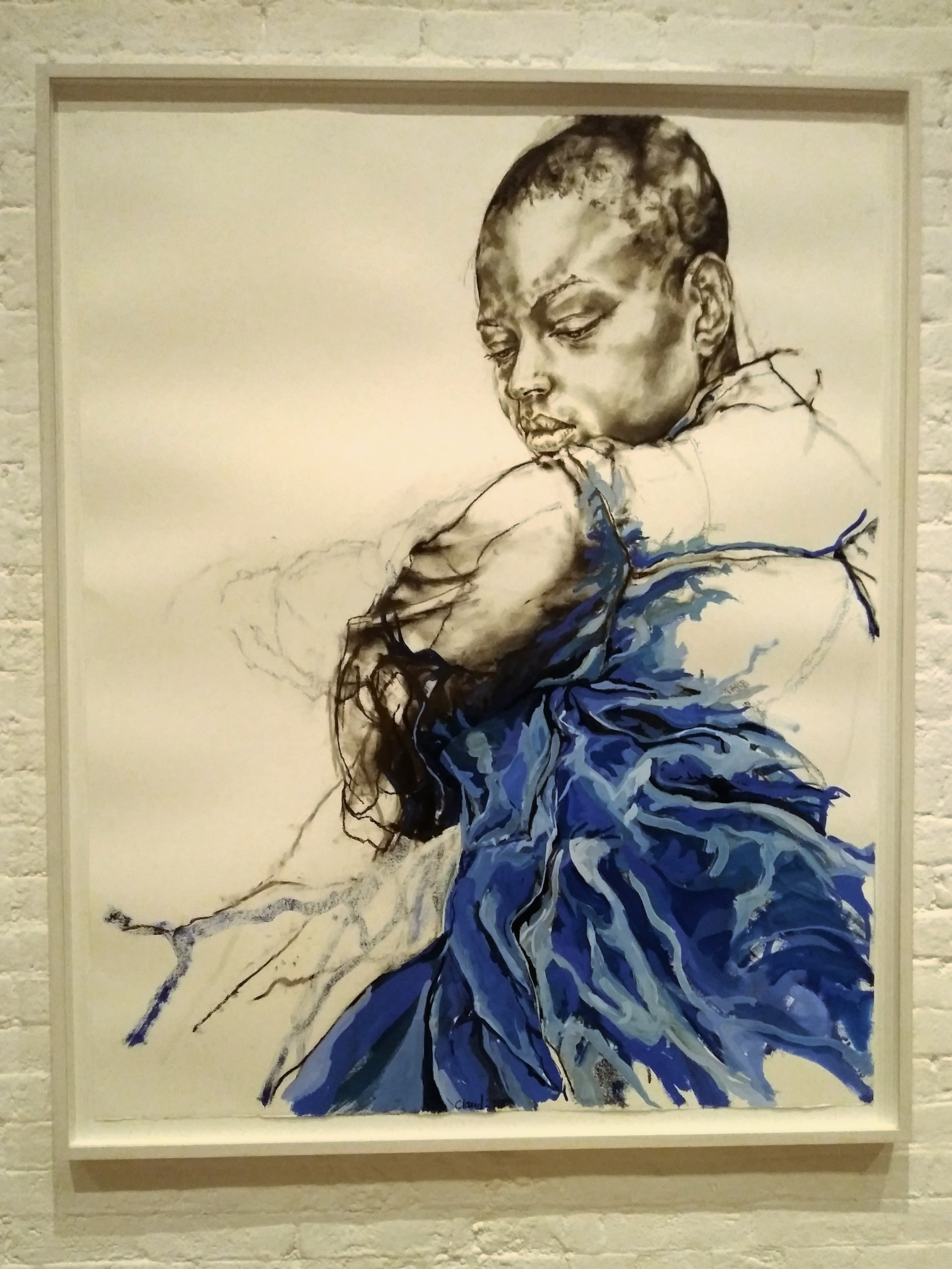
Figure in Blue, 2018 – Claudette Johnson 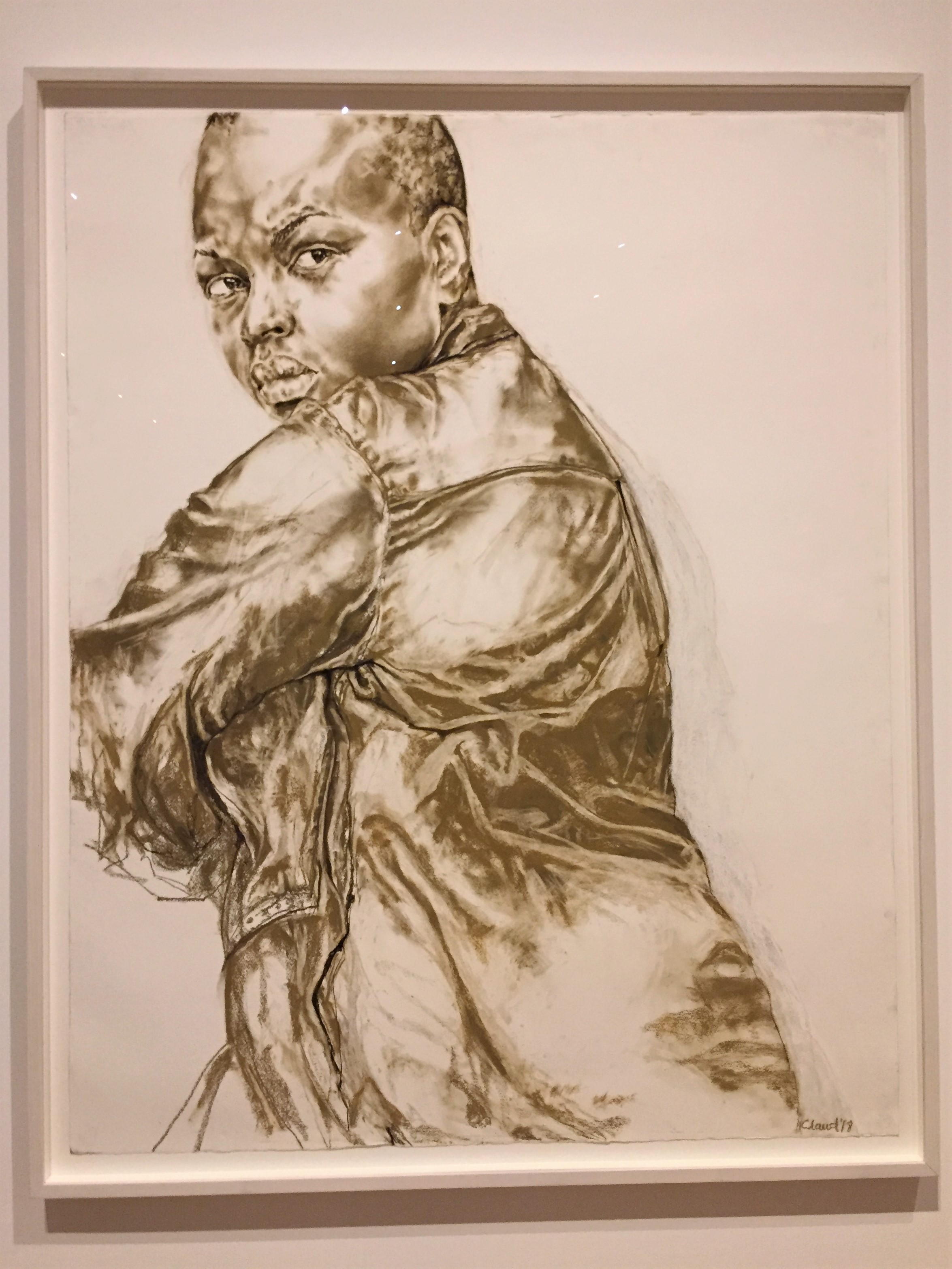
Figure in raw umber, 2018 – Claudette Johnson

 Anna Harris