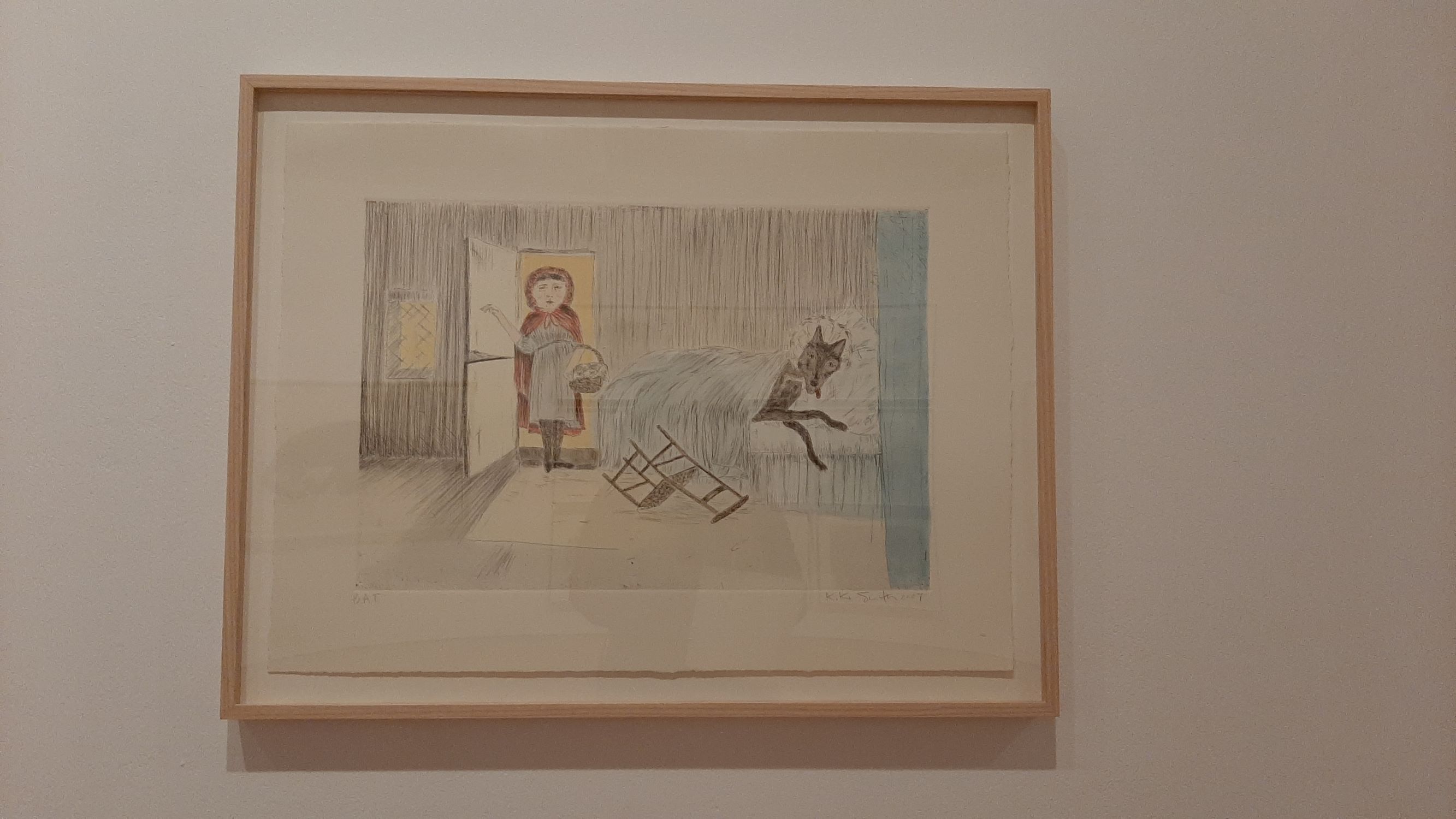
Kiki Smith’s current exhibition at Modern Art Oxford is described as being ‘in dialogue with the city of Oxford’ and the selected works heavily feature themes of history, mythology, legends and fairy tales. These are themes that I have never explored within my own work but have always interested me; local tradition and folklore fit quite well with the exploration of the local, the natural, history, stories within objects and a sense of place, which are all themes within my work. Considering I did at one point compare the paper sculptures I had made to sacred artefacts, it could be interesting to explore local traditions/tales, as often superstitions come hand-in-hand with their own set of rituals and associated objects.
Smith’s work uses a wide range of different media to explore the connection between the human condition and the natural world; she ‘communicates through art and beauty to remind us that it is mutual respect between humanity and nature that will secure the survival of both, and the planet at a whole’. She is described as a ‘subtle, poetic environmentalist’, which resonates with me and my own work; I often work with themes of environmentalism in mind but these are always quite underlying within the finished piece, more subtle. Smith’s work demonstrates to me that the environmental message does not always have to be spelled out in black and white, it can be explored and approached from many angles and one is not necessarily better than another.
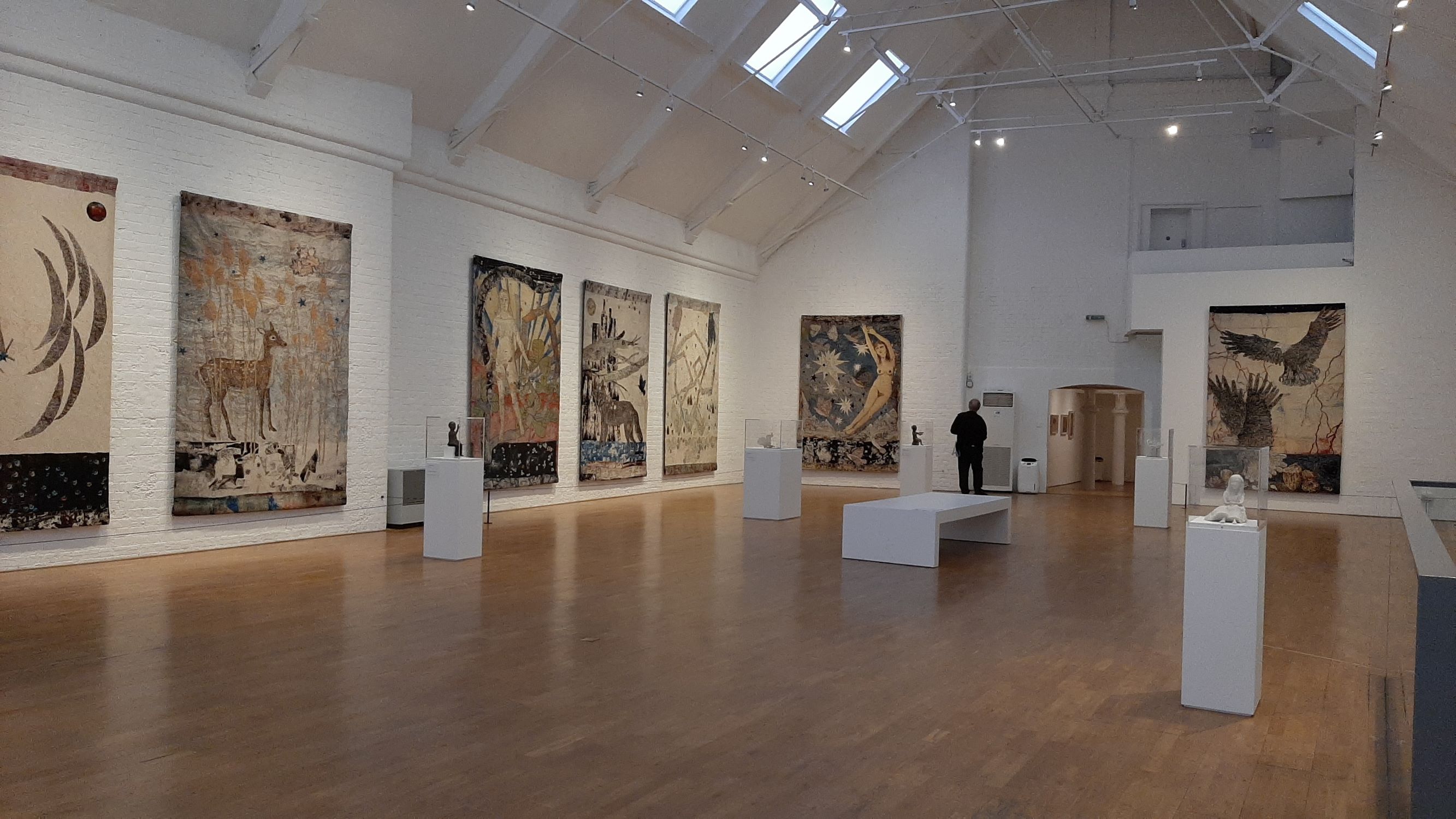
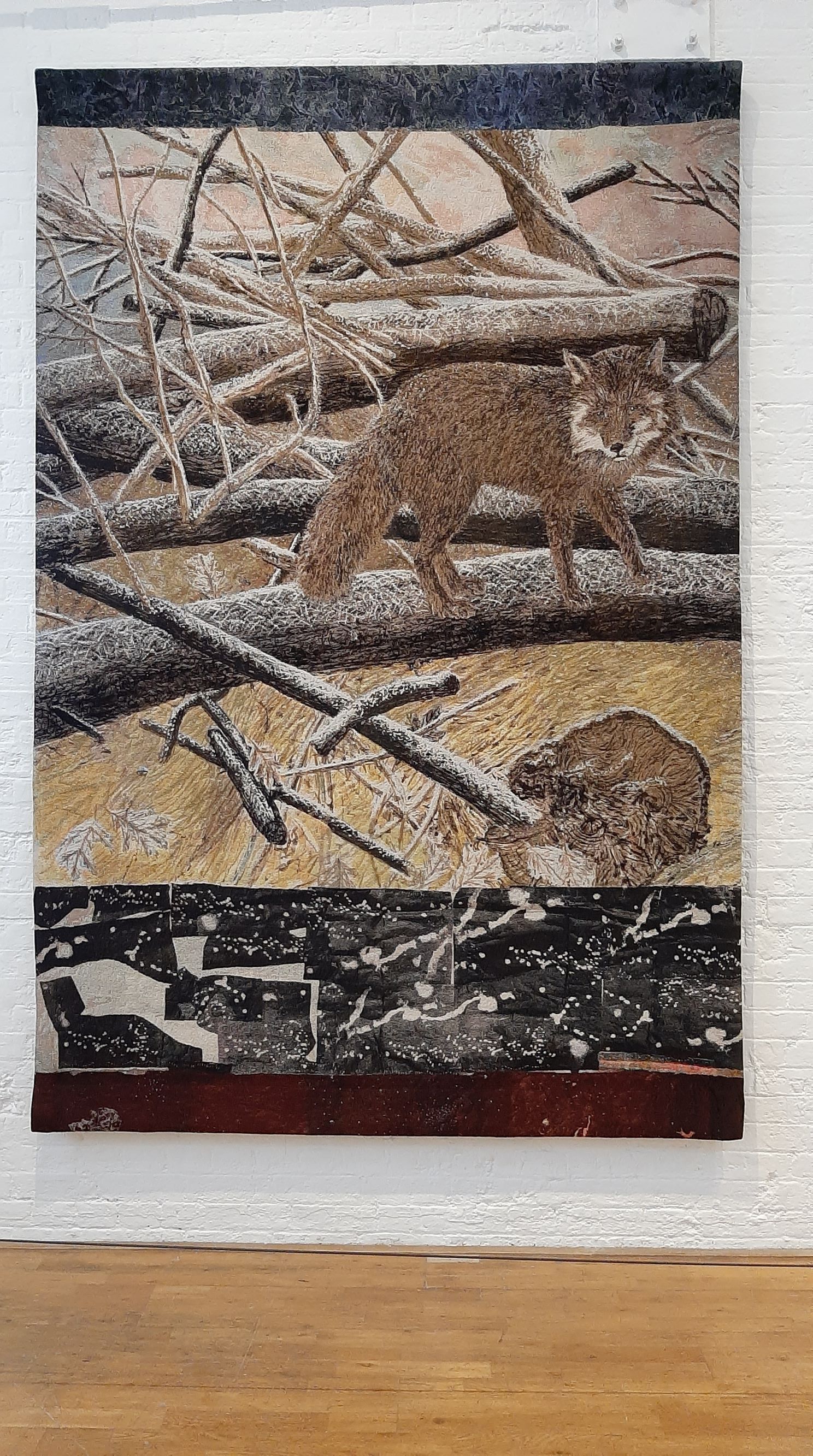
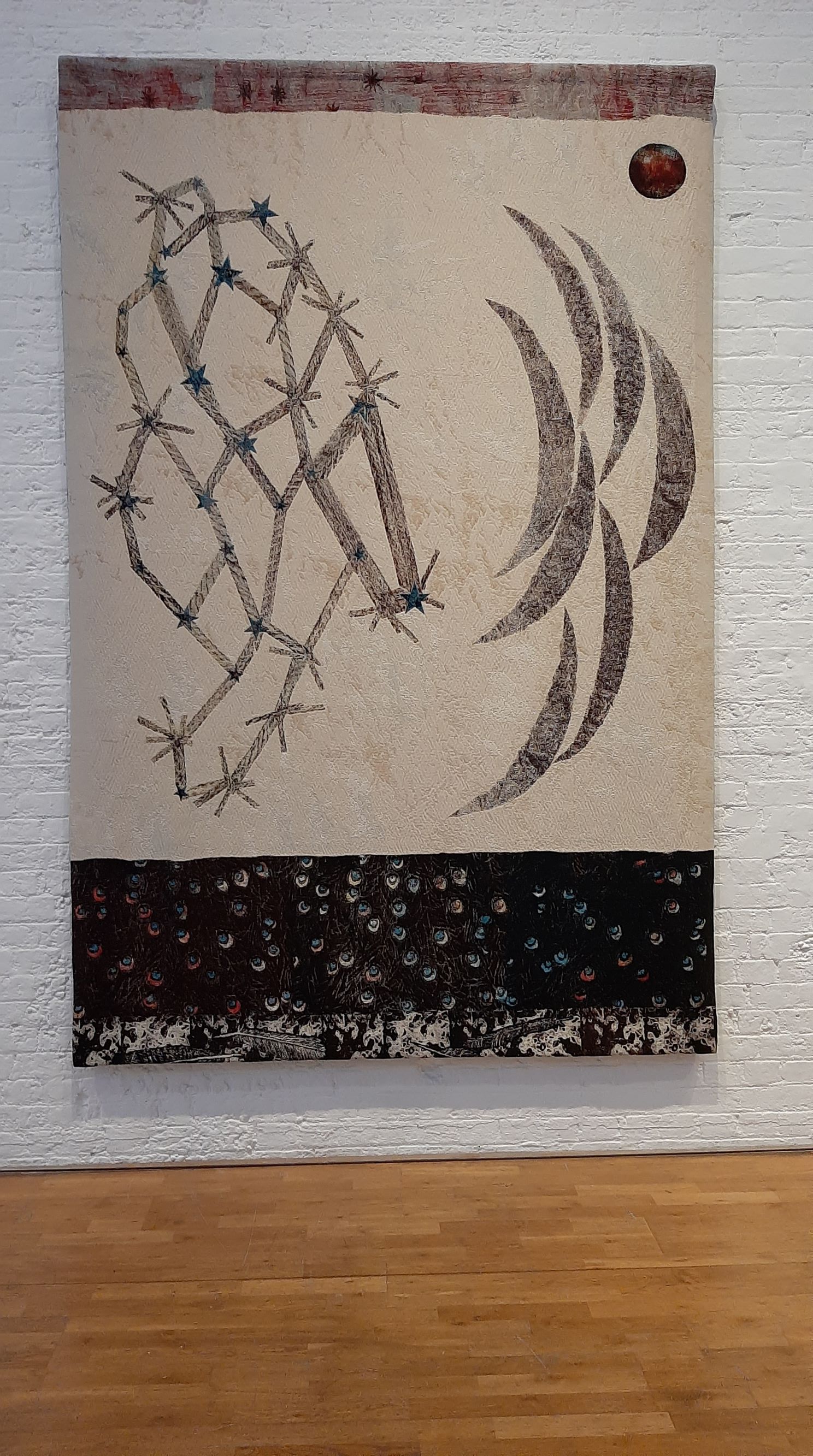
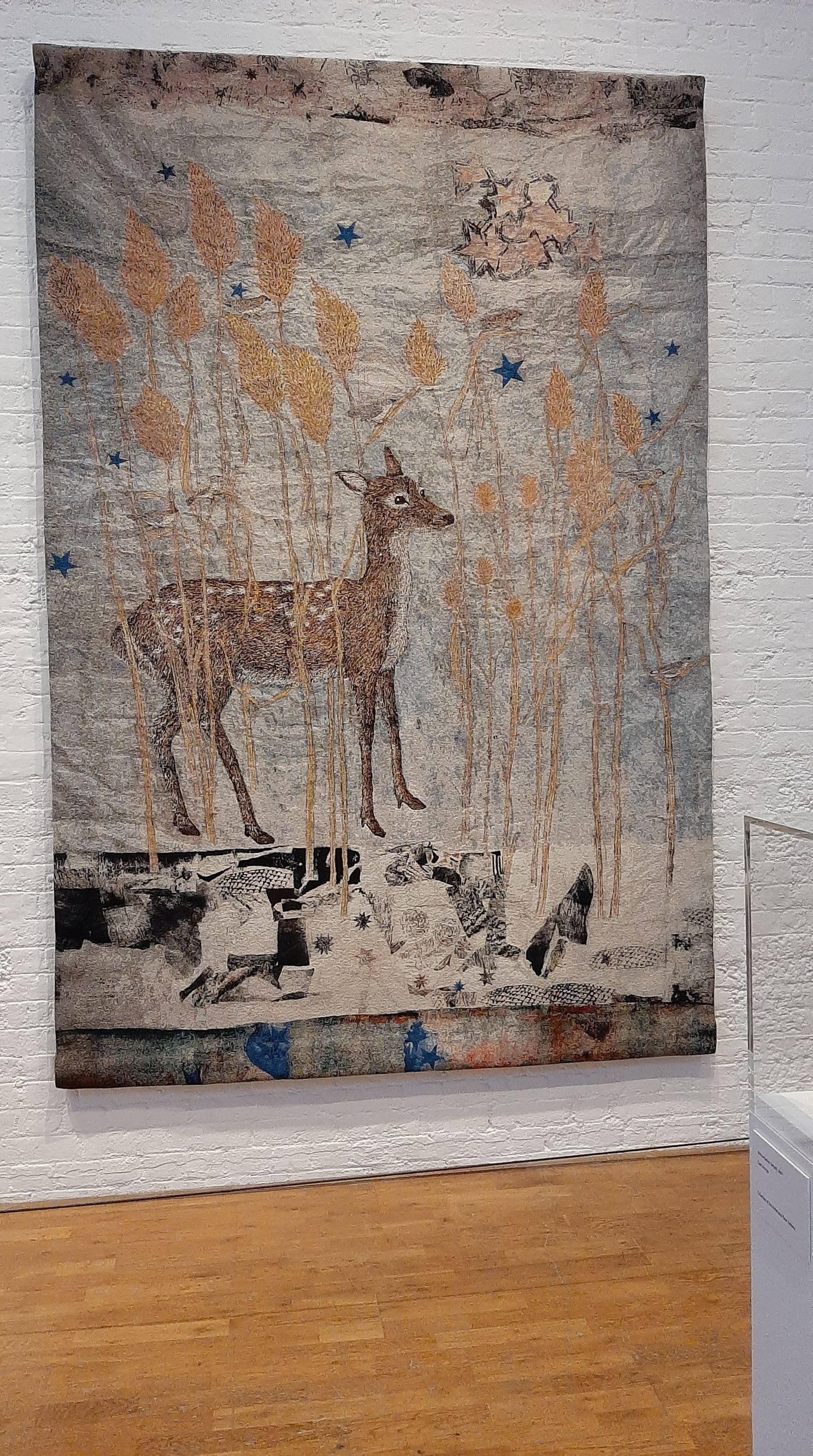
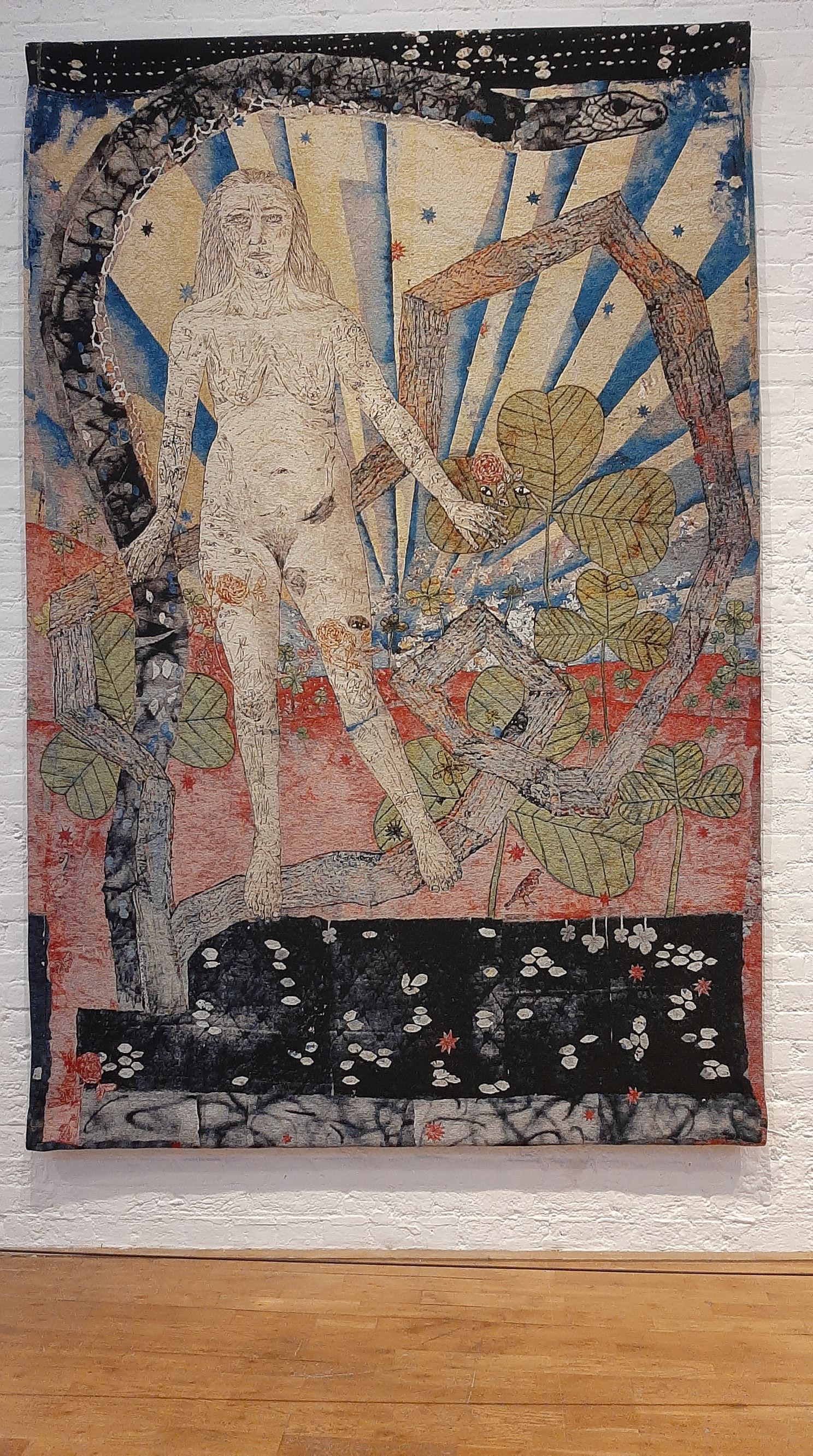
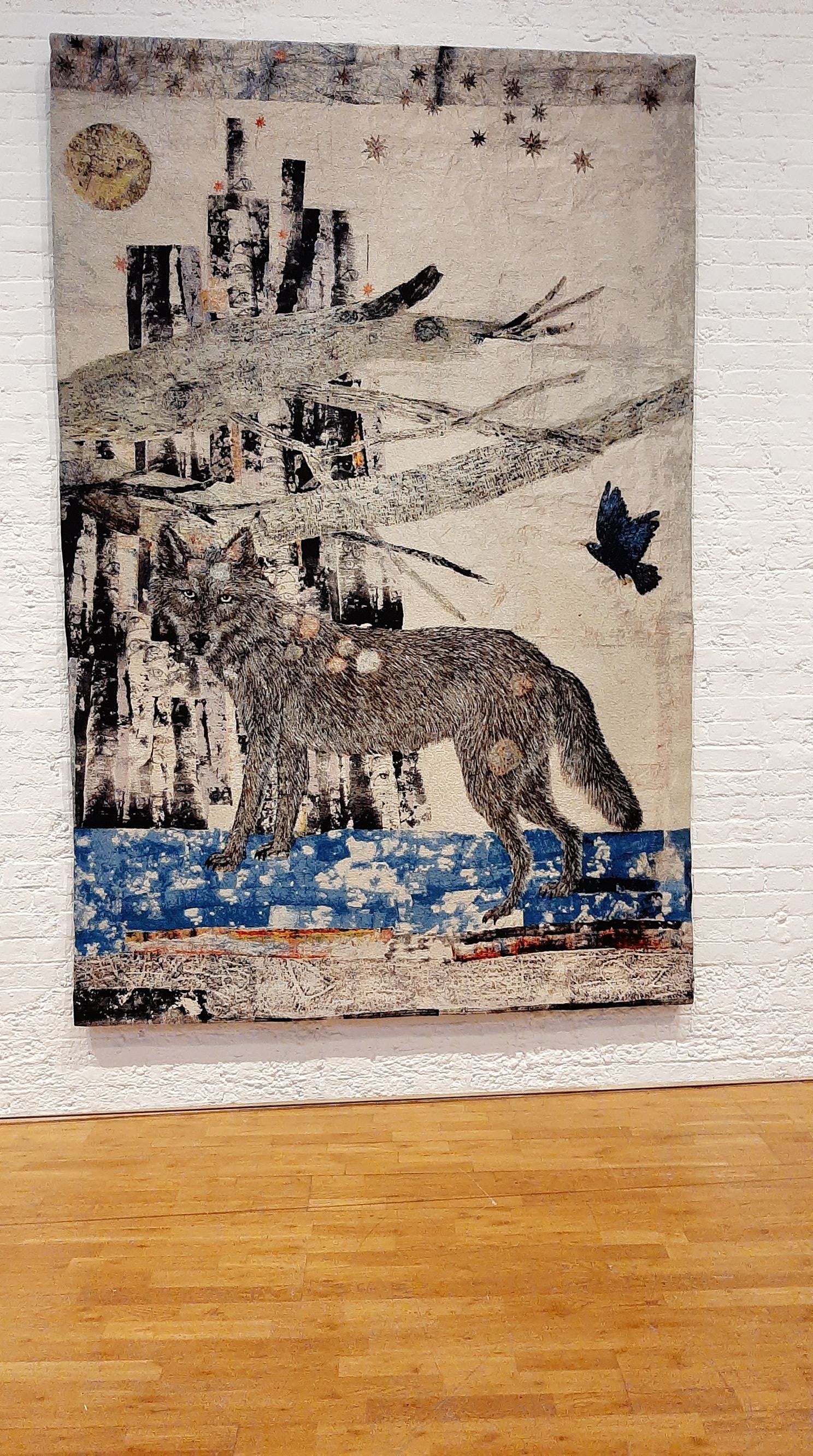
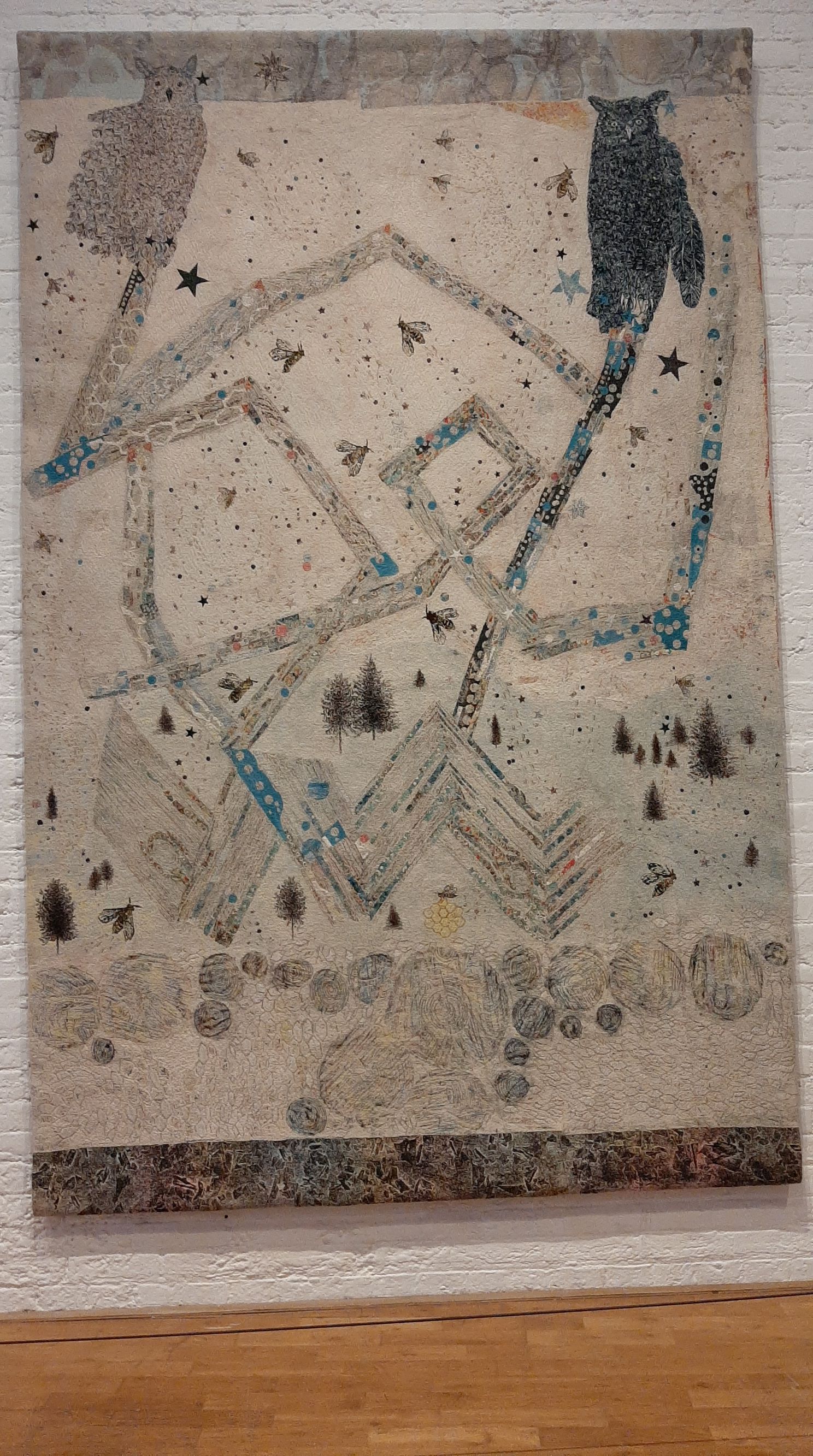
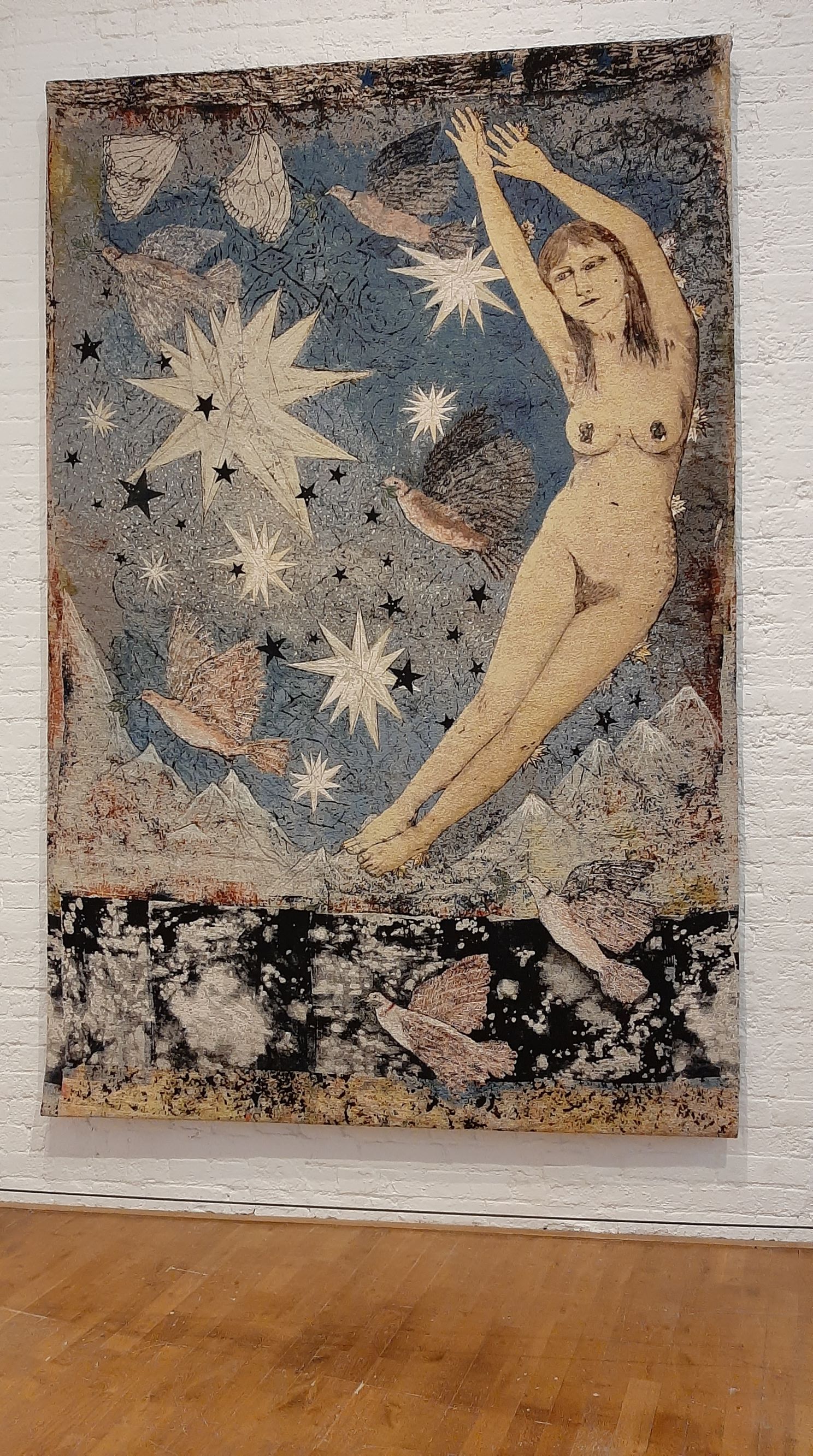
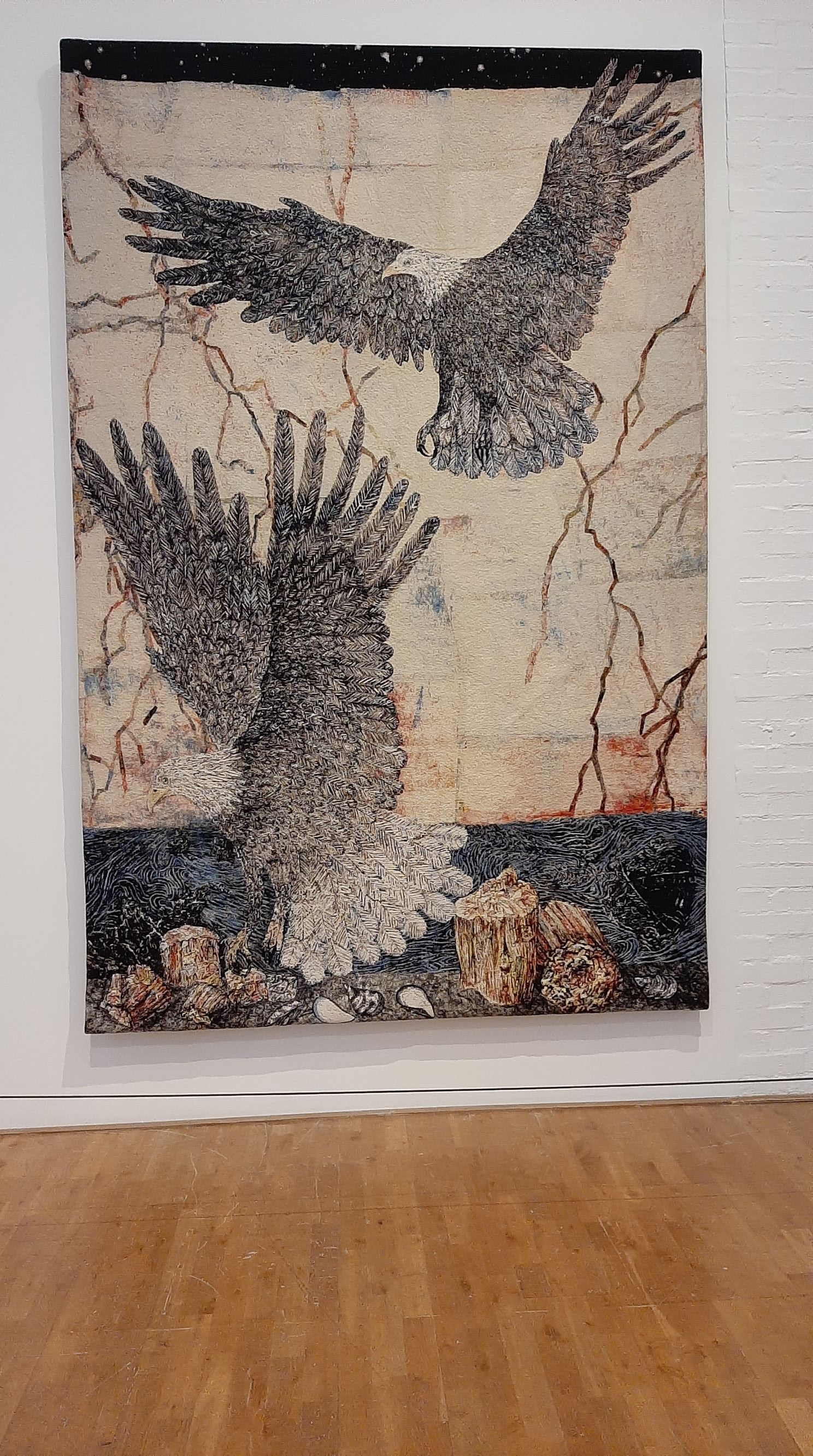
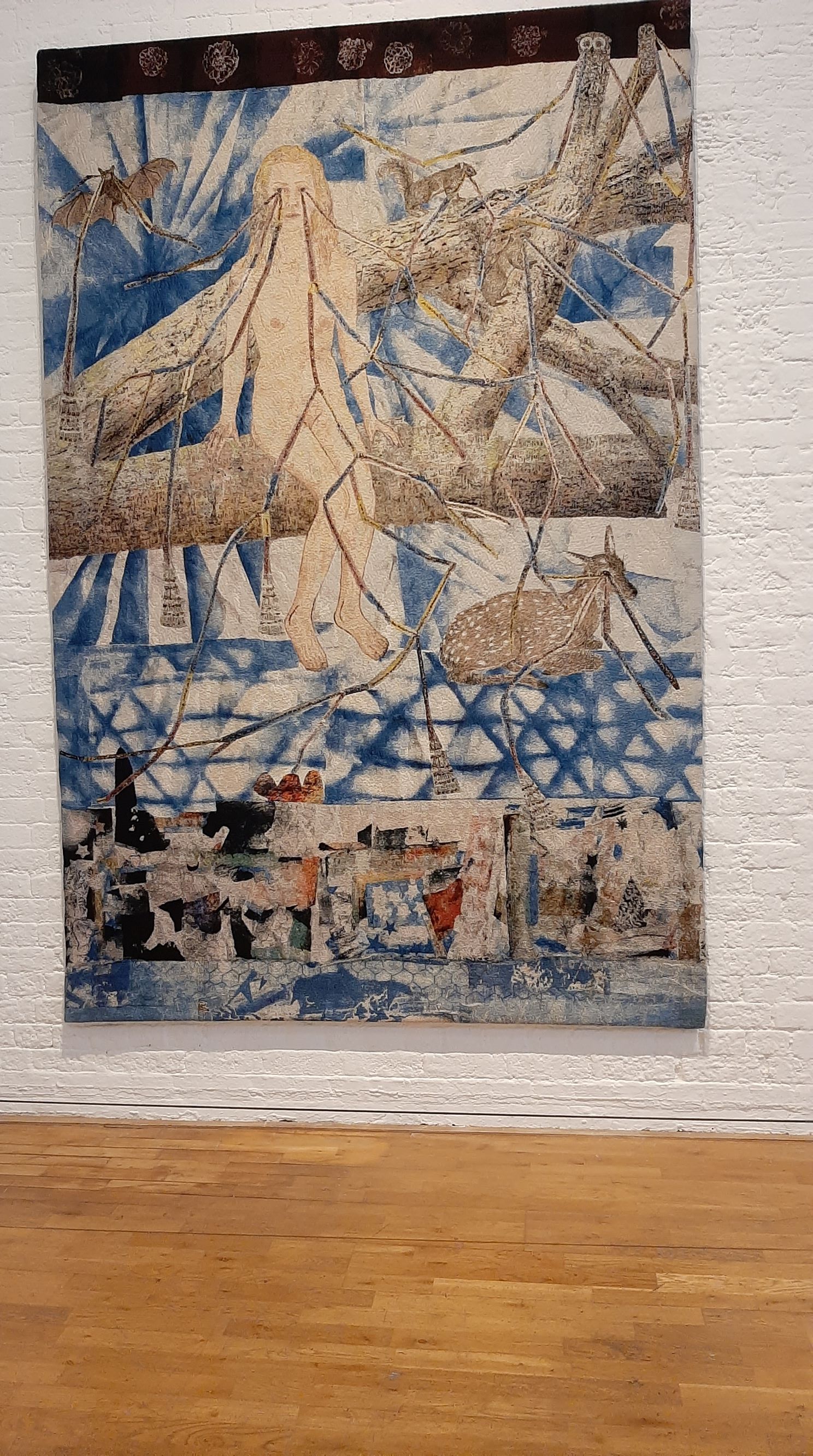
The exhibition itself is over three rooms. The first space is dominated by 12 large tapestries hung from the gallery walls, as well as some smaller sculptures placed around the floor space. The tapestries are created from full-scale collages that Smith creates in her studio and then sends off to be turned into tapestries. By creating the initial collages at the same scale of the end result she ensures there is no loss of detail or pixilation during translation. The large scale ’emphasises the holiness’ of tapestry as a medium; ‘there’s a relationship between cloth and life and protection’. The tapestries often have a high compositional density, integrating multiple images together in much the same way as the physical threads of the tapestry are woven. This compositional density is sometimes controlled through the division of the piece into three ‘realms’ – sky, Earth and underground – a technique that originates from traditional African, Celtic, Native American and Central American mythologies. As well as the imagery of the human form immersed in nature, the process itself is reflective of the investigation of the natural and the human; what starts out as a hand-crafted collage is replicated by machine into a traditional yet regimented final piece.
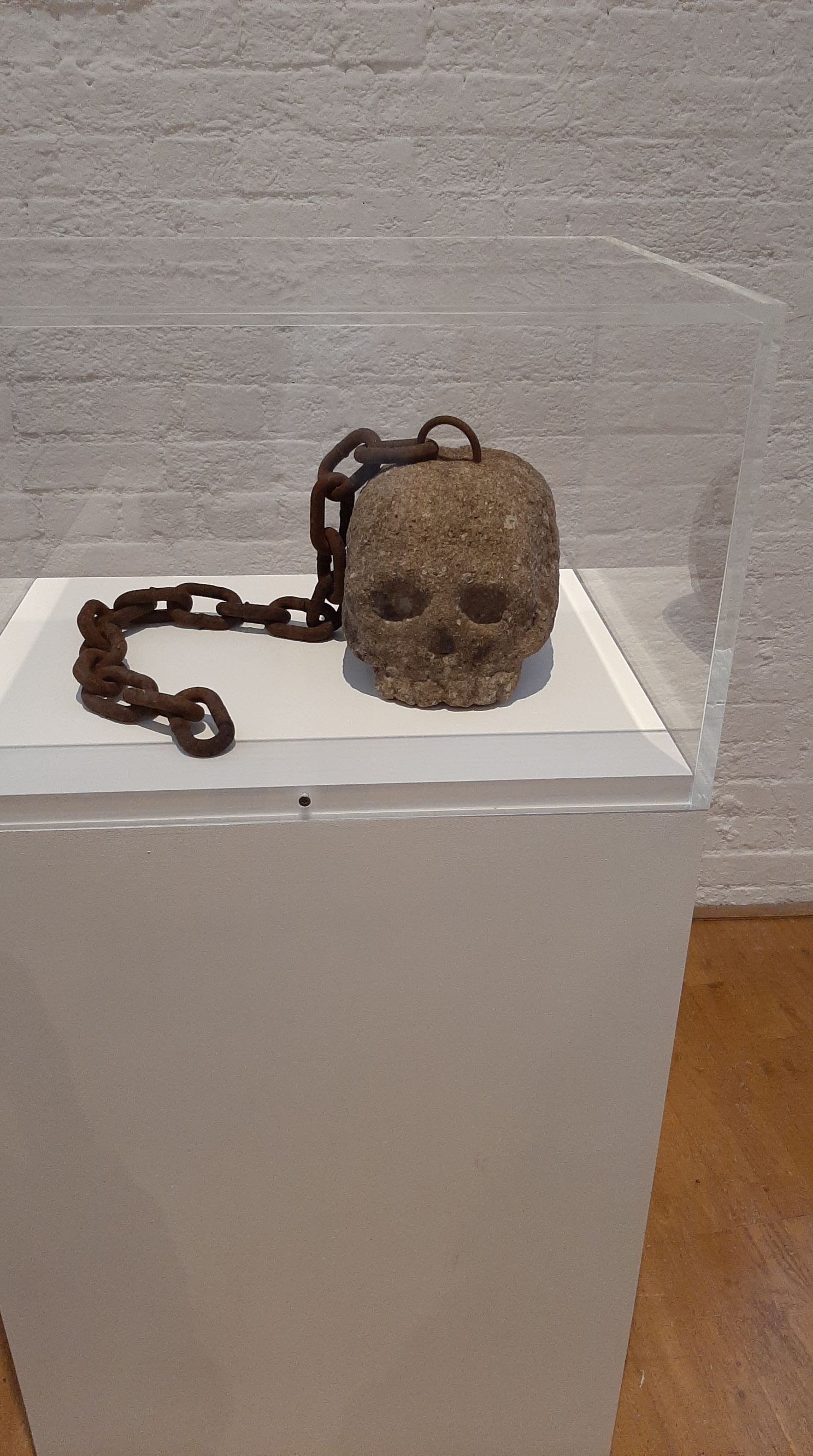
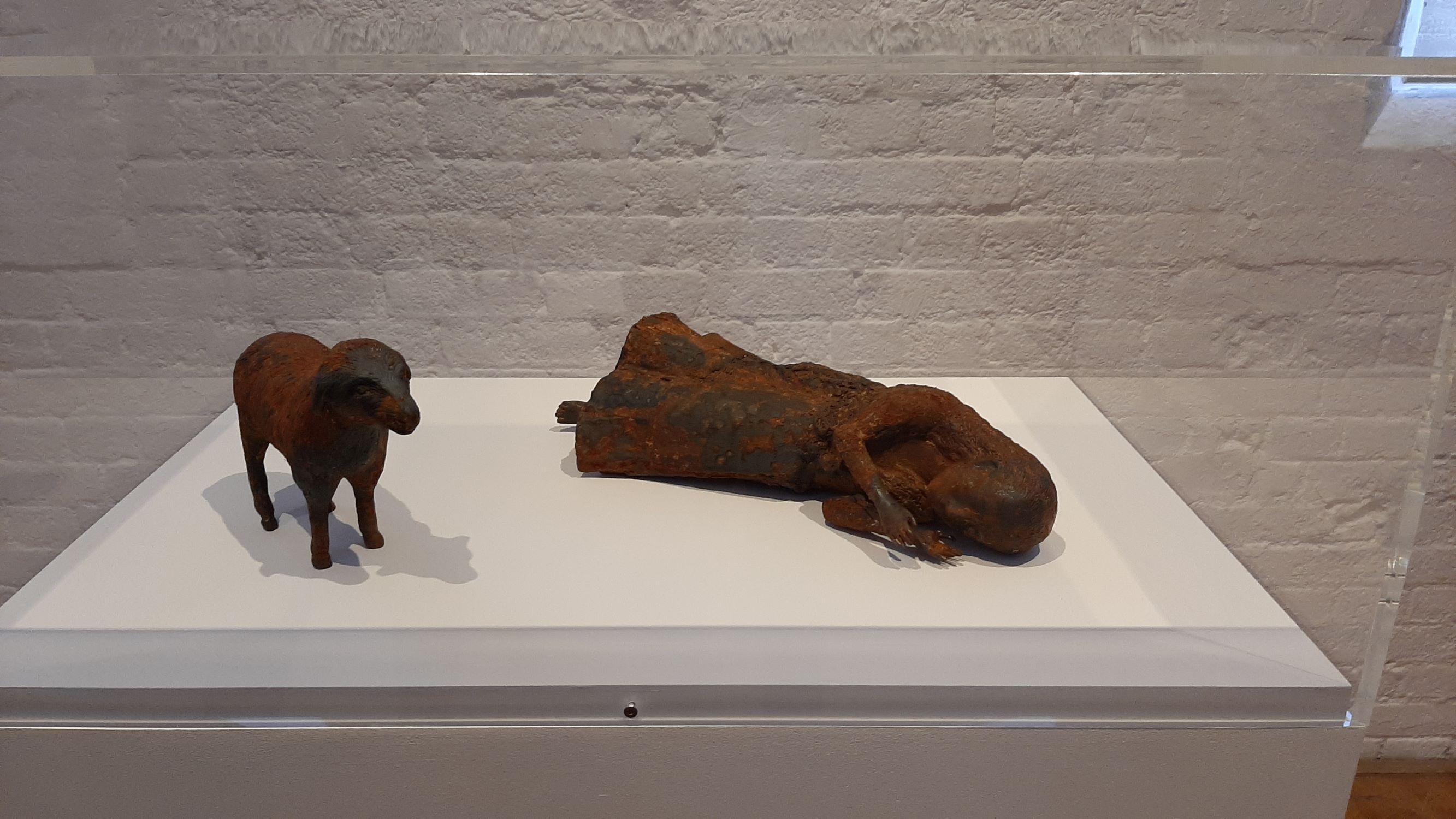
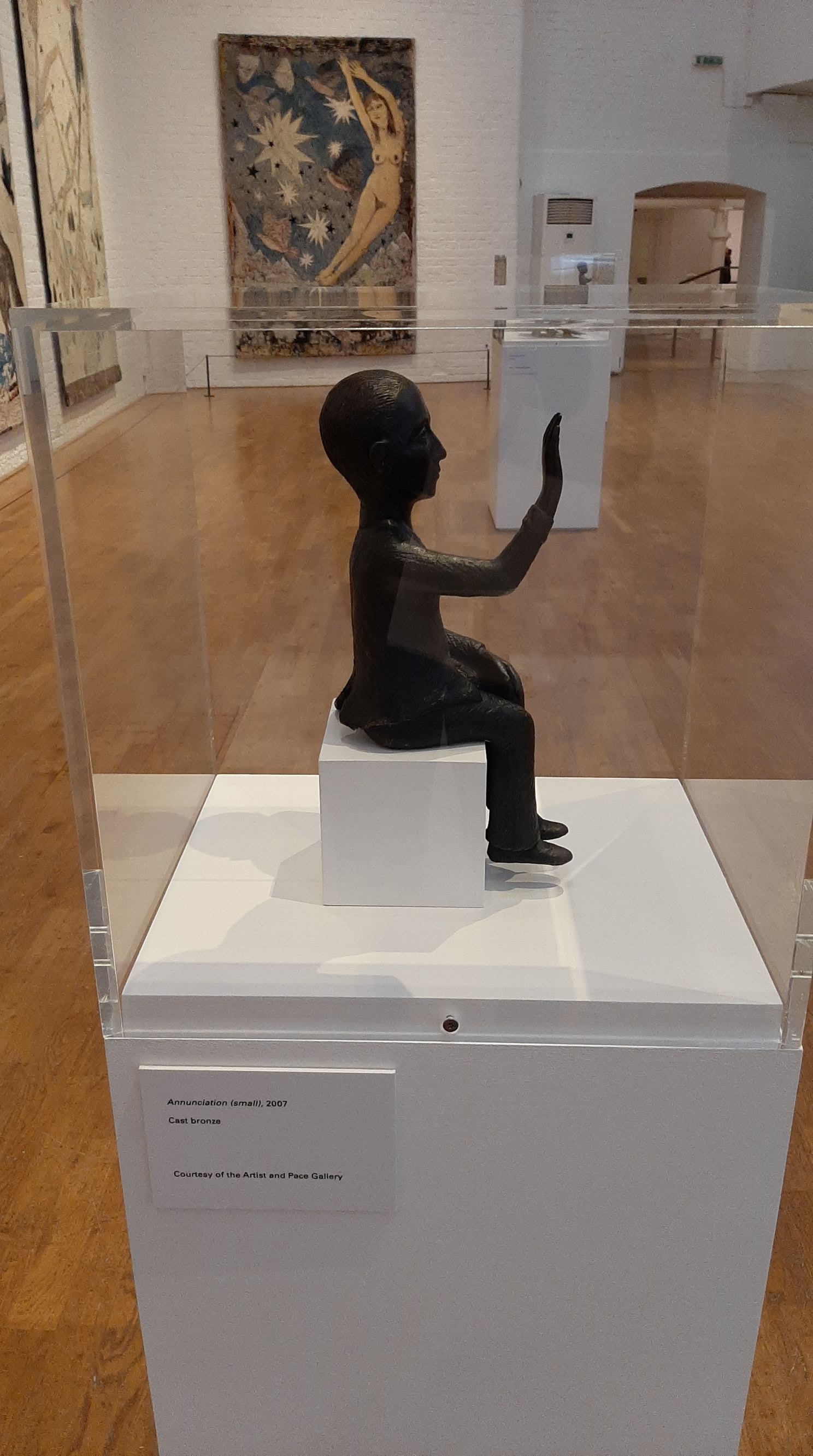
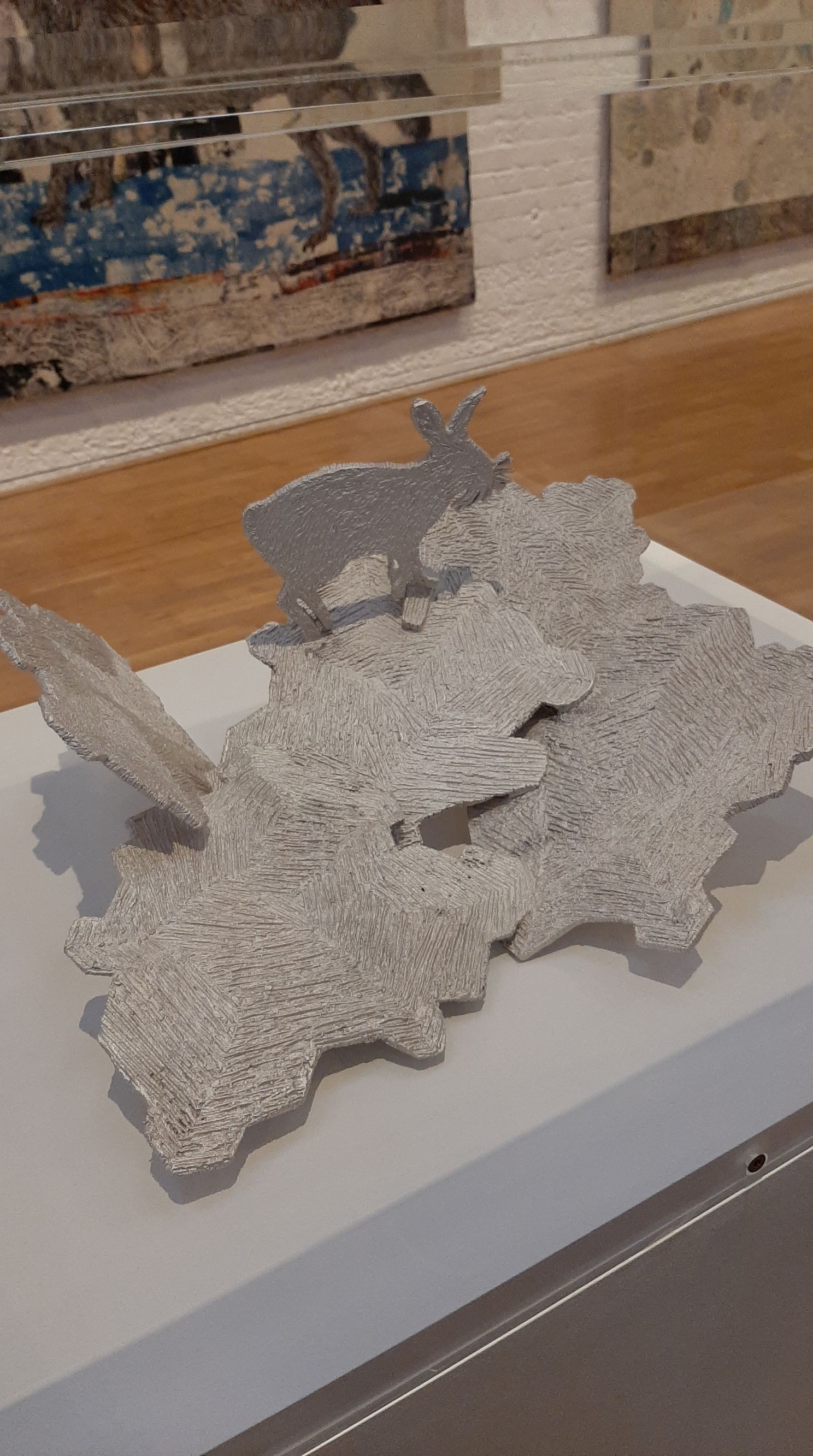
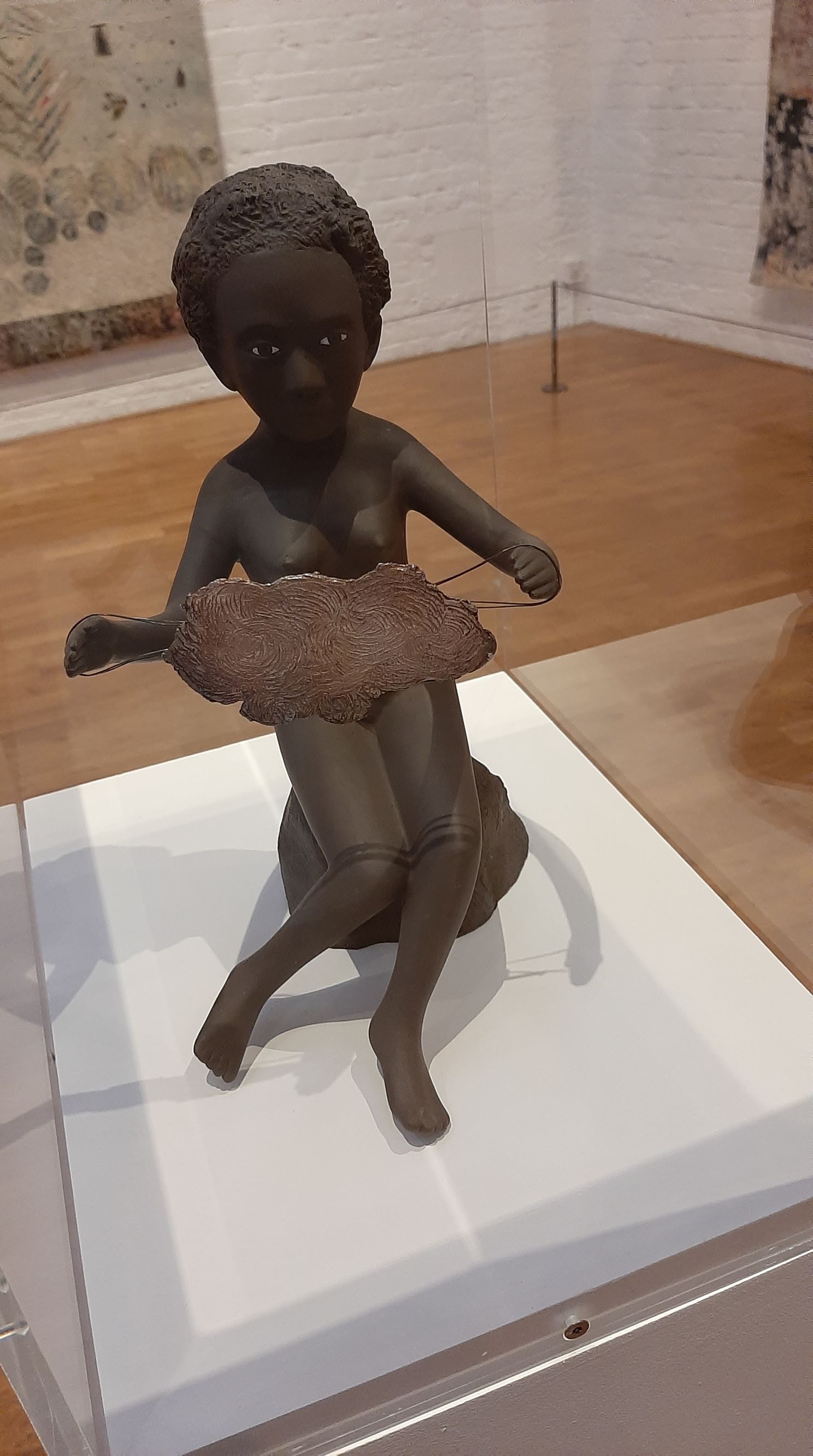
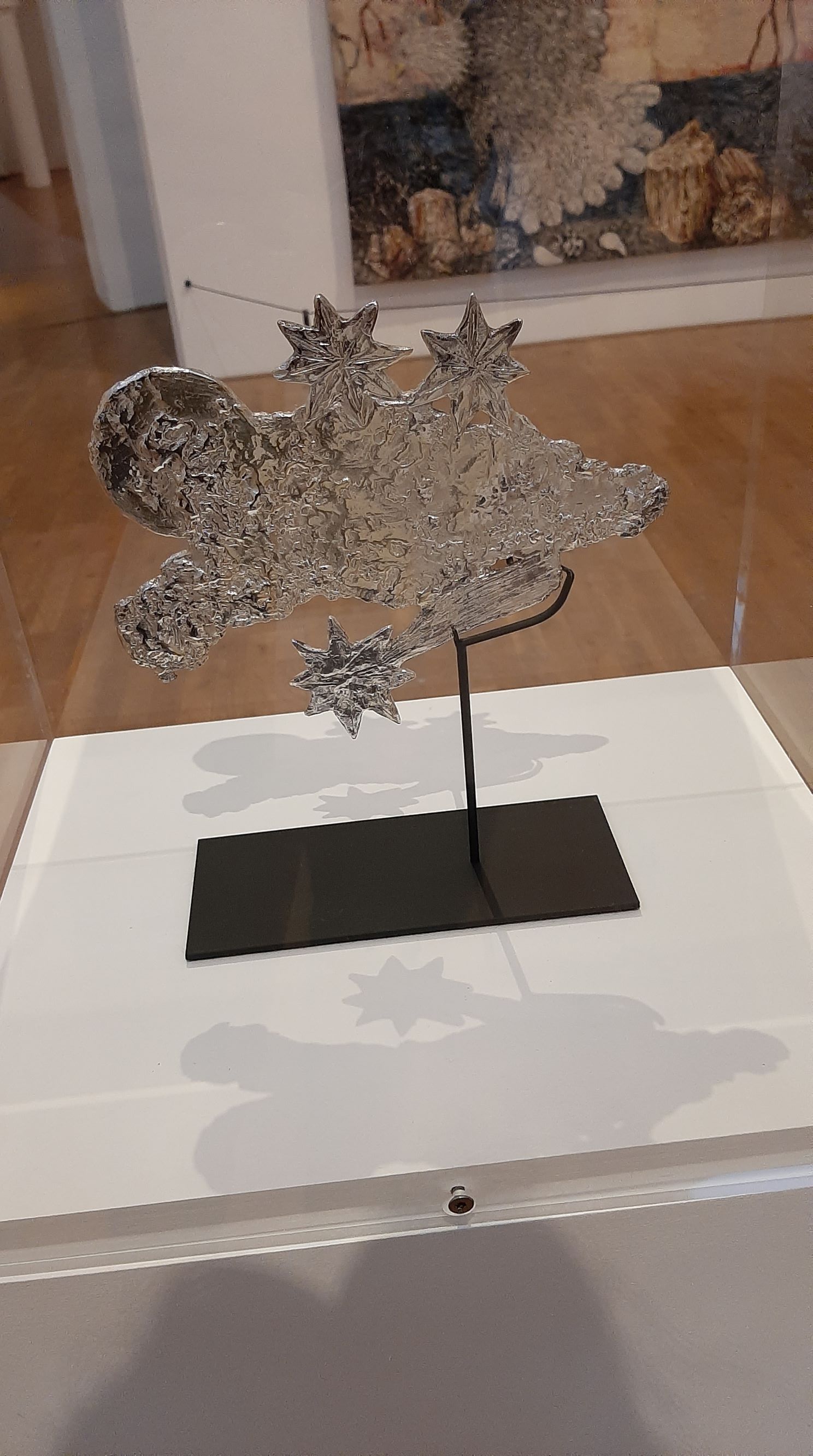
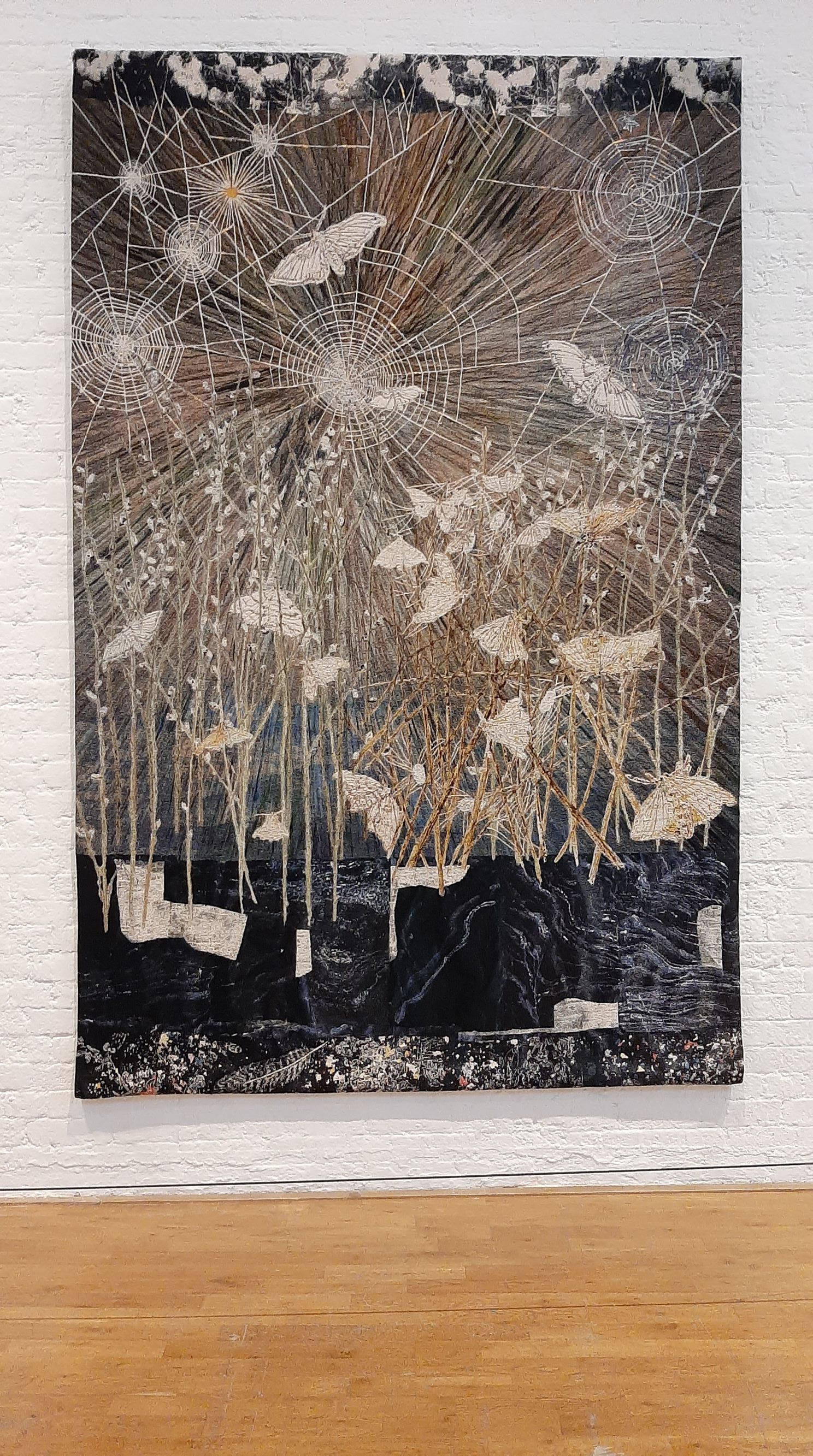
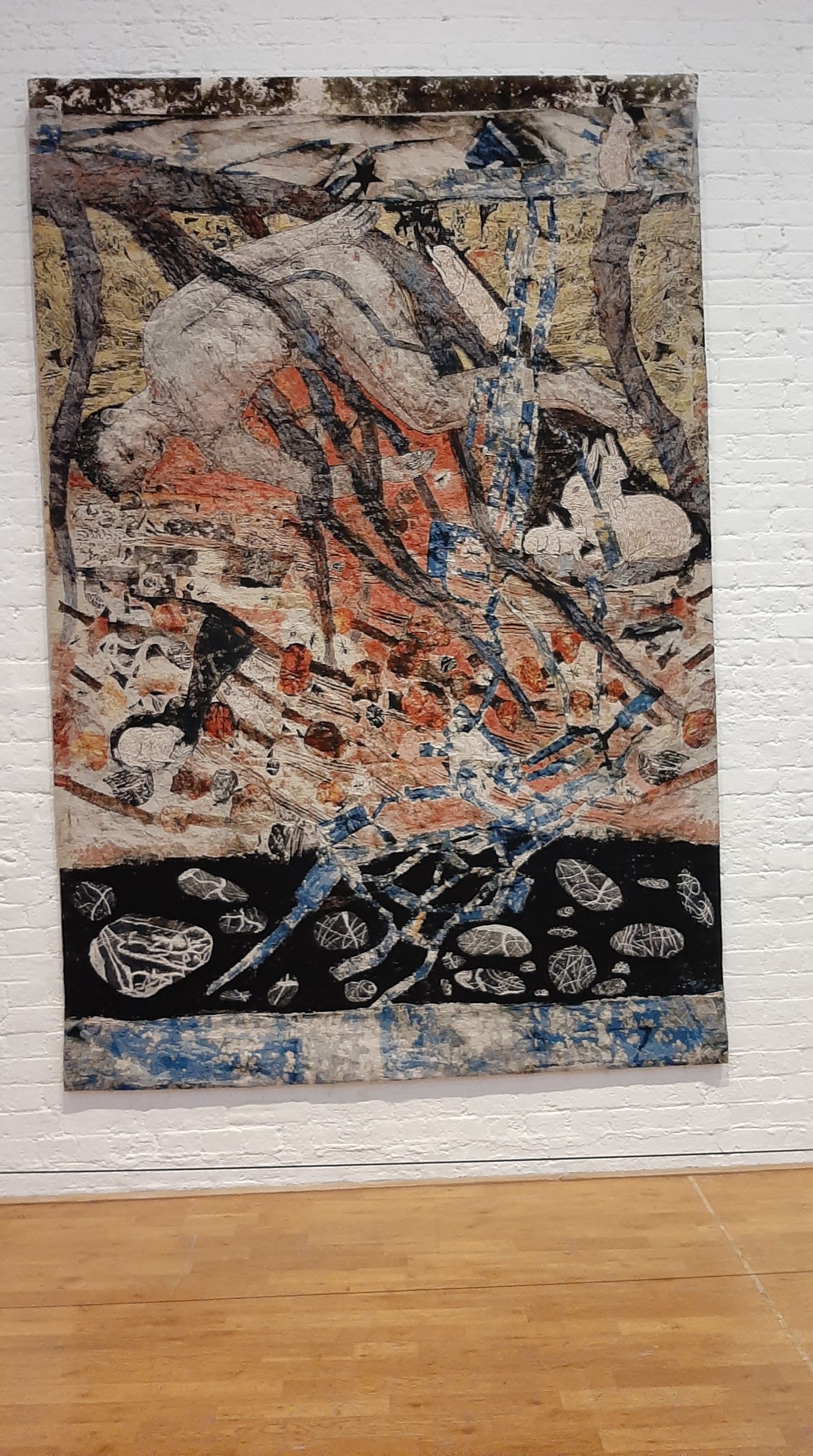
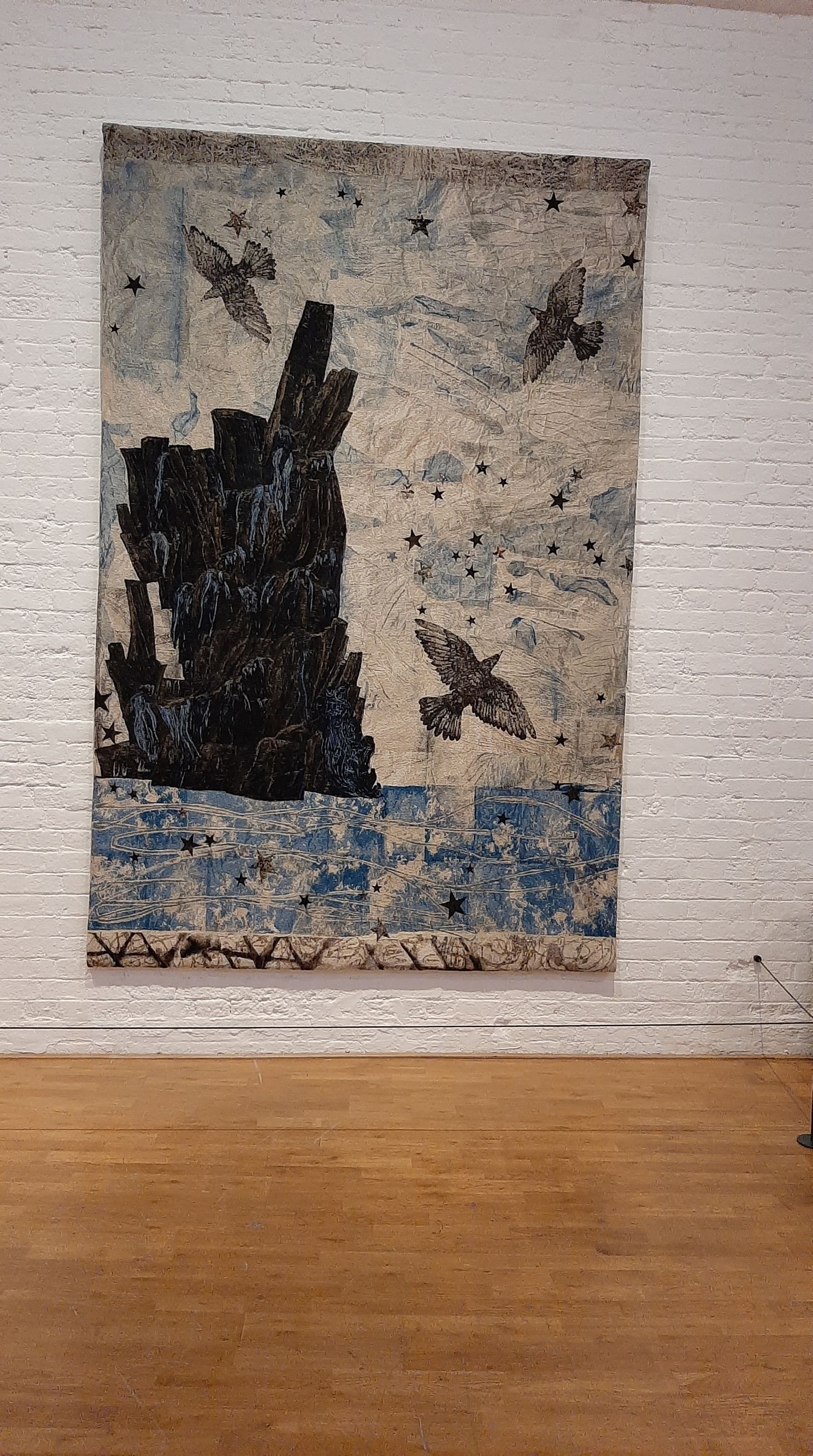
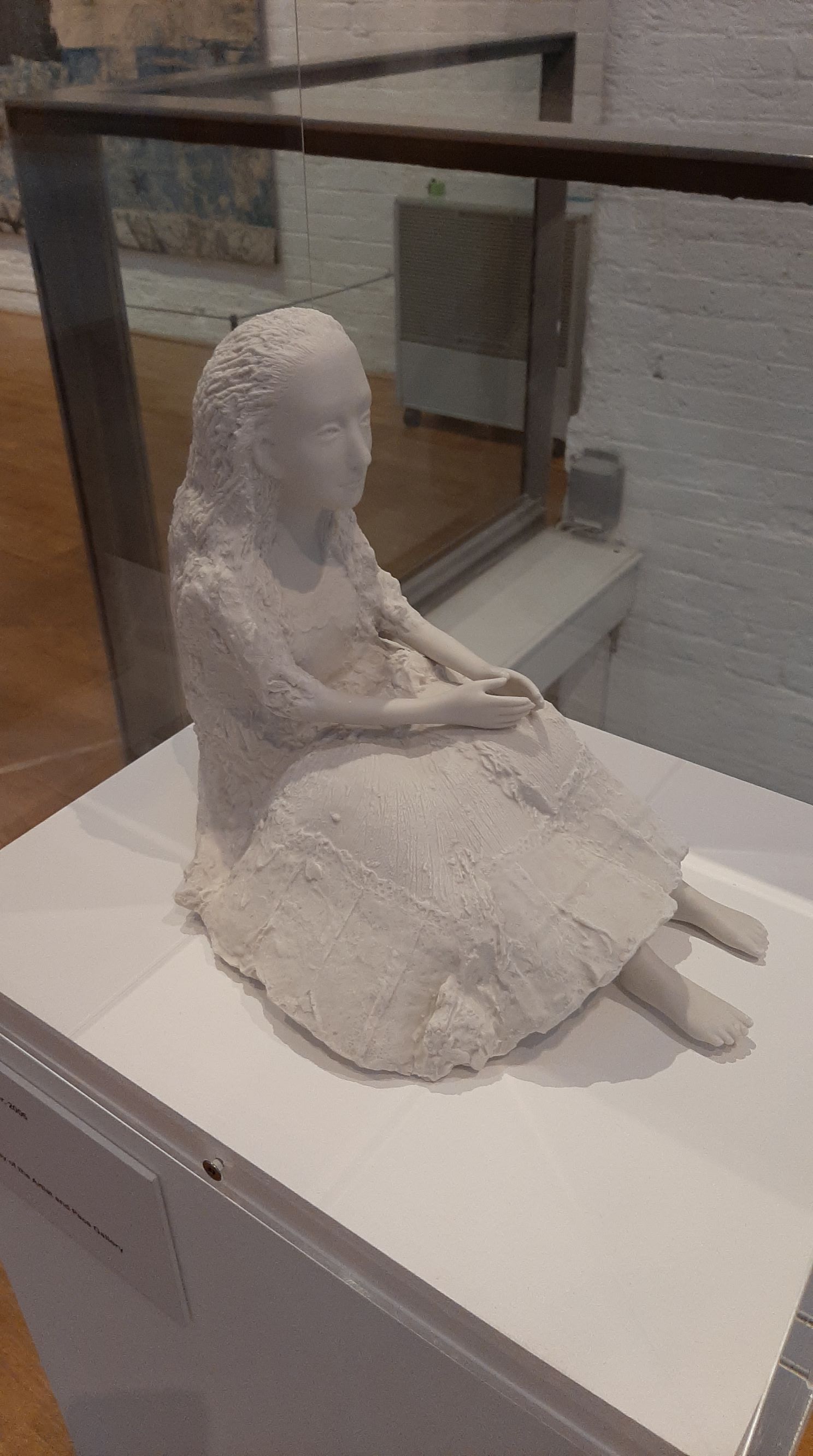
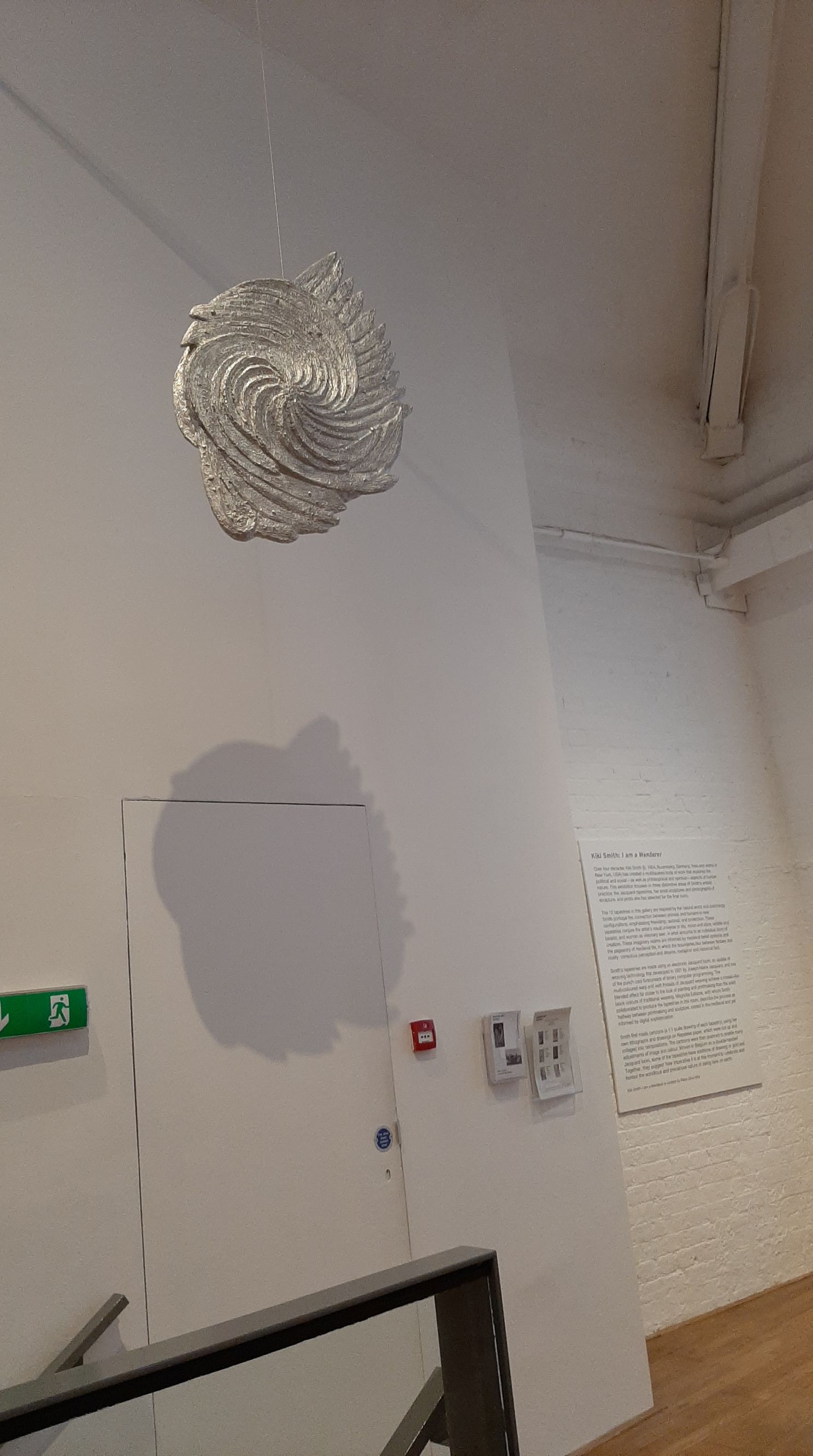
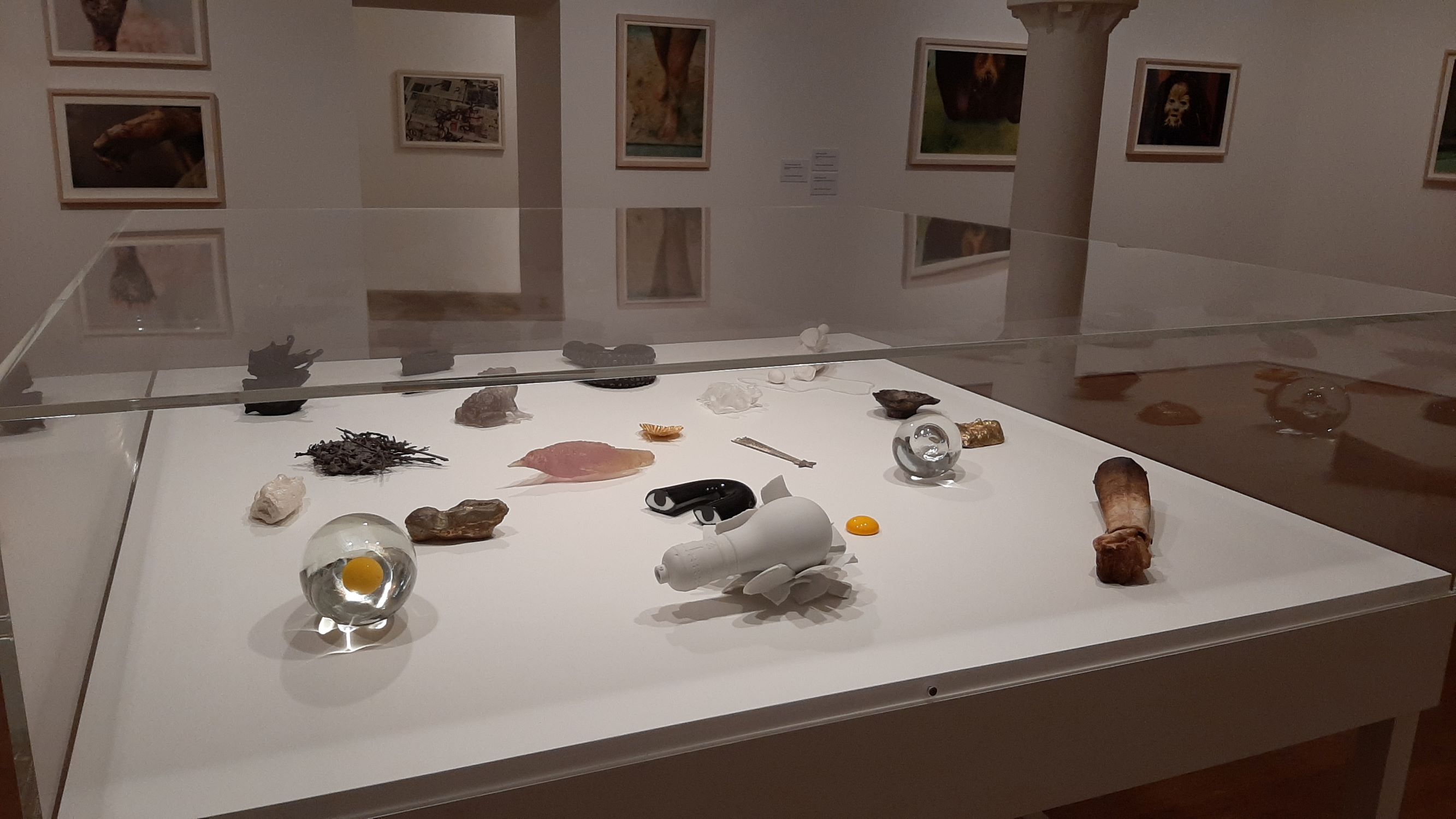
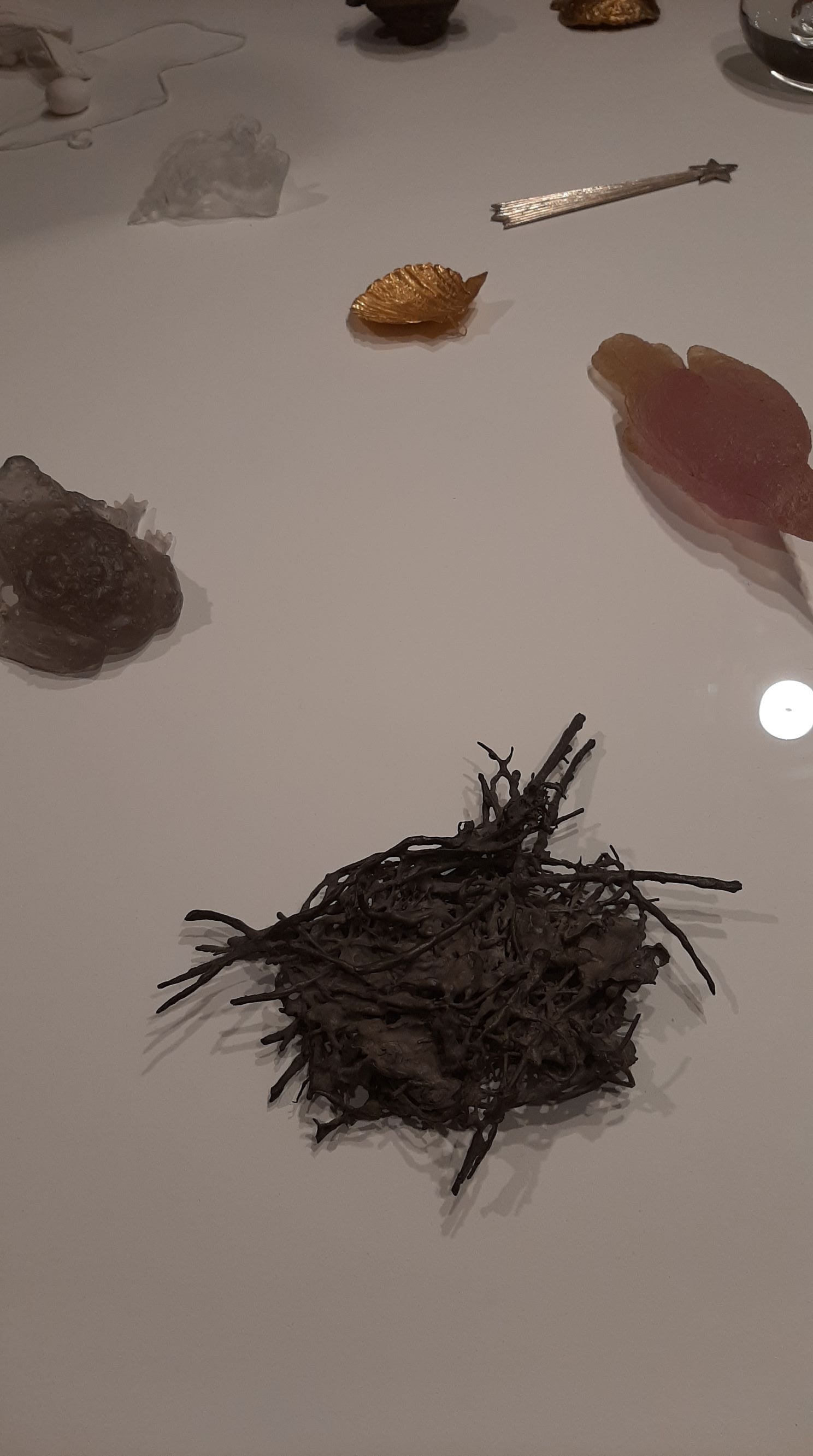
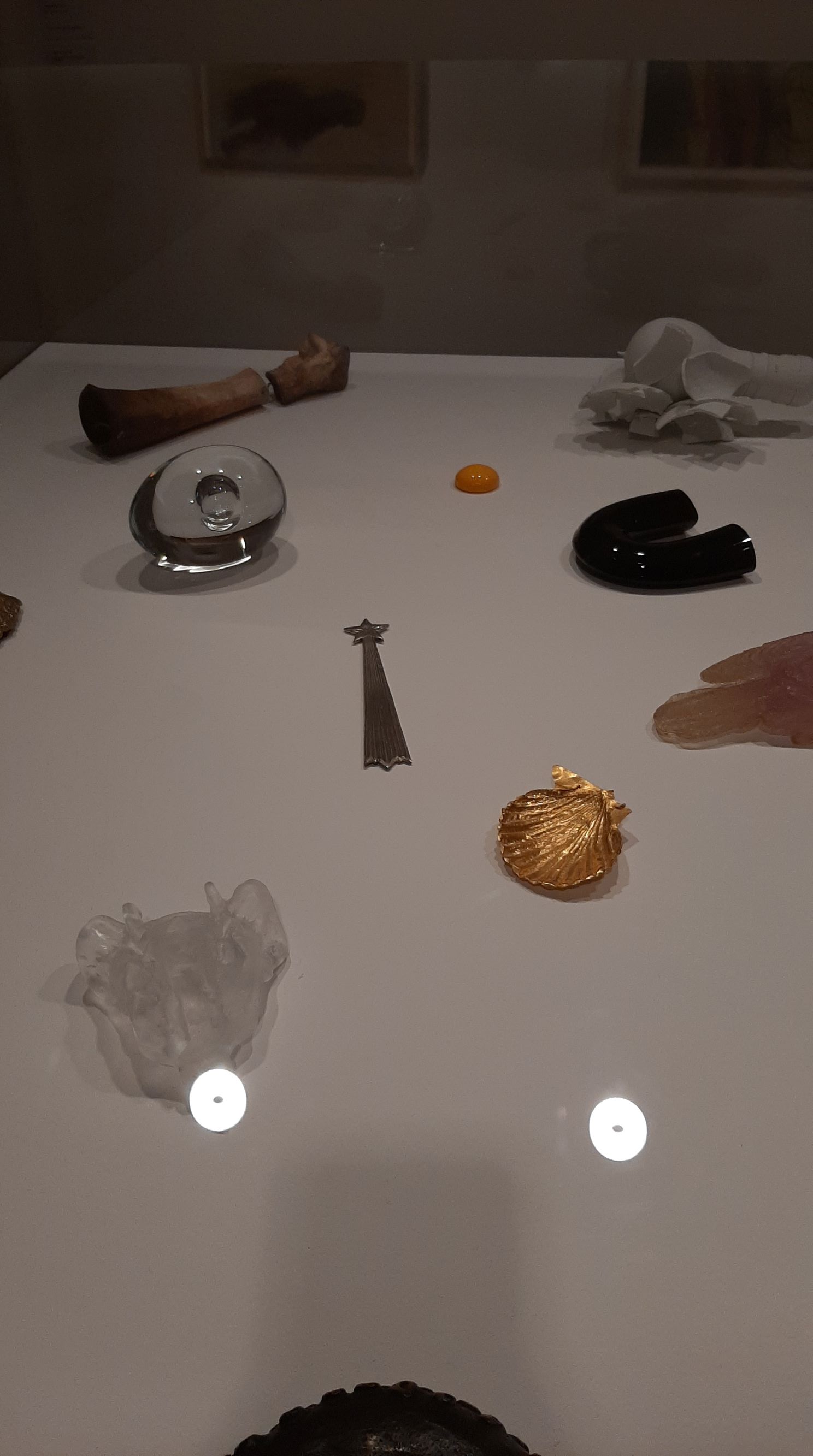
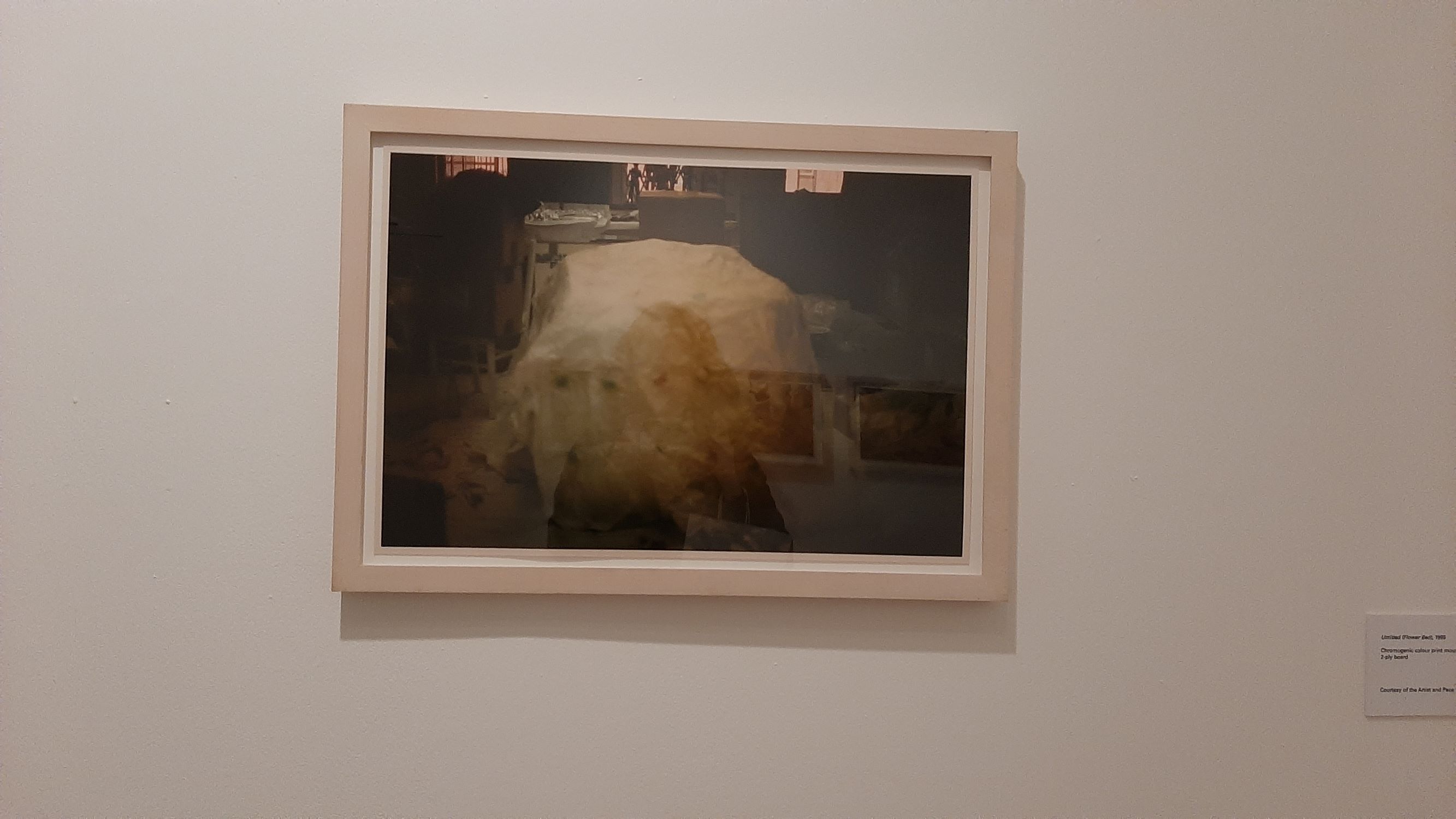
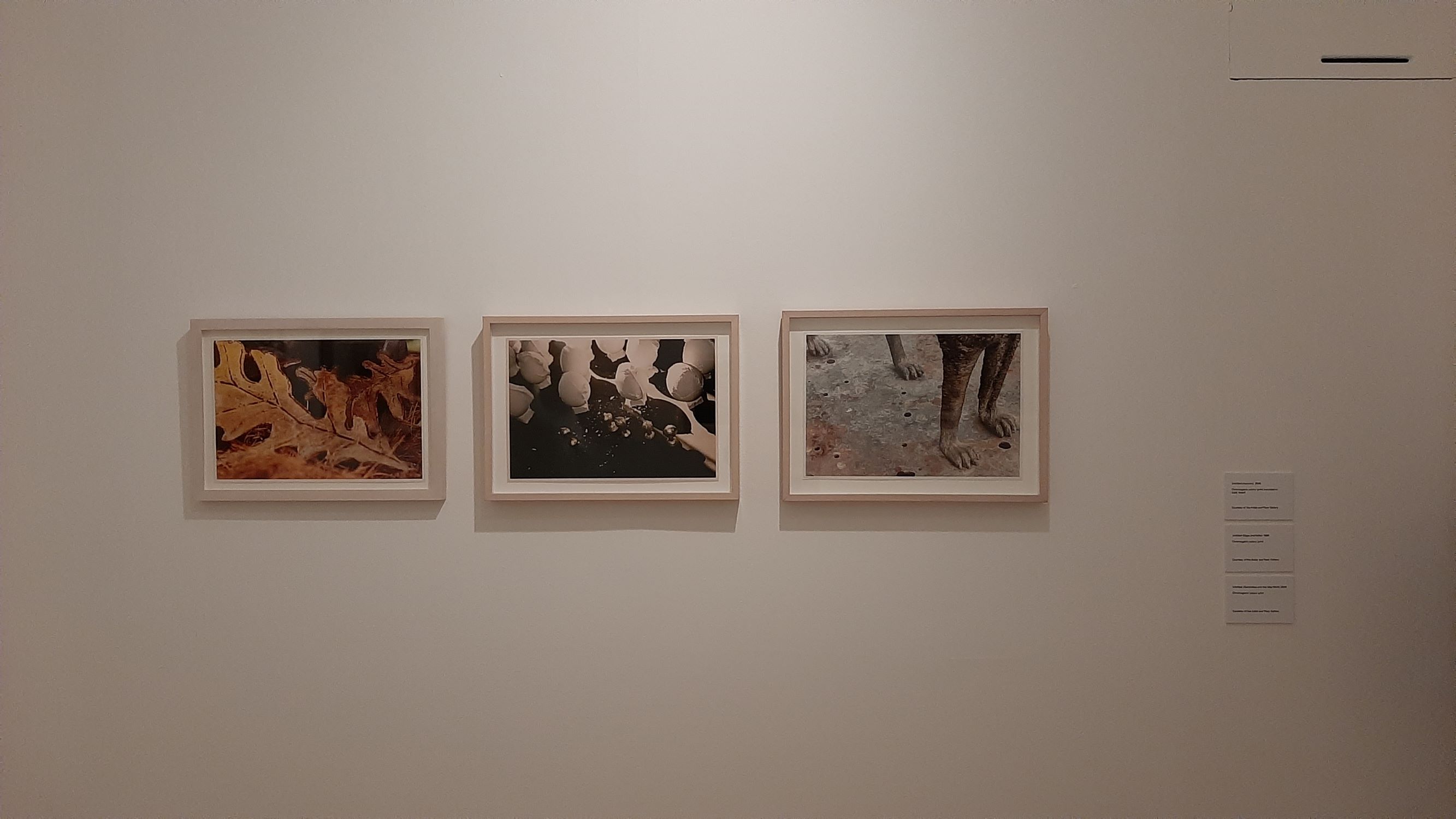
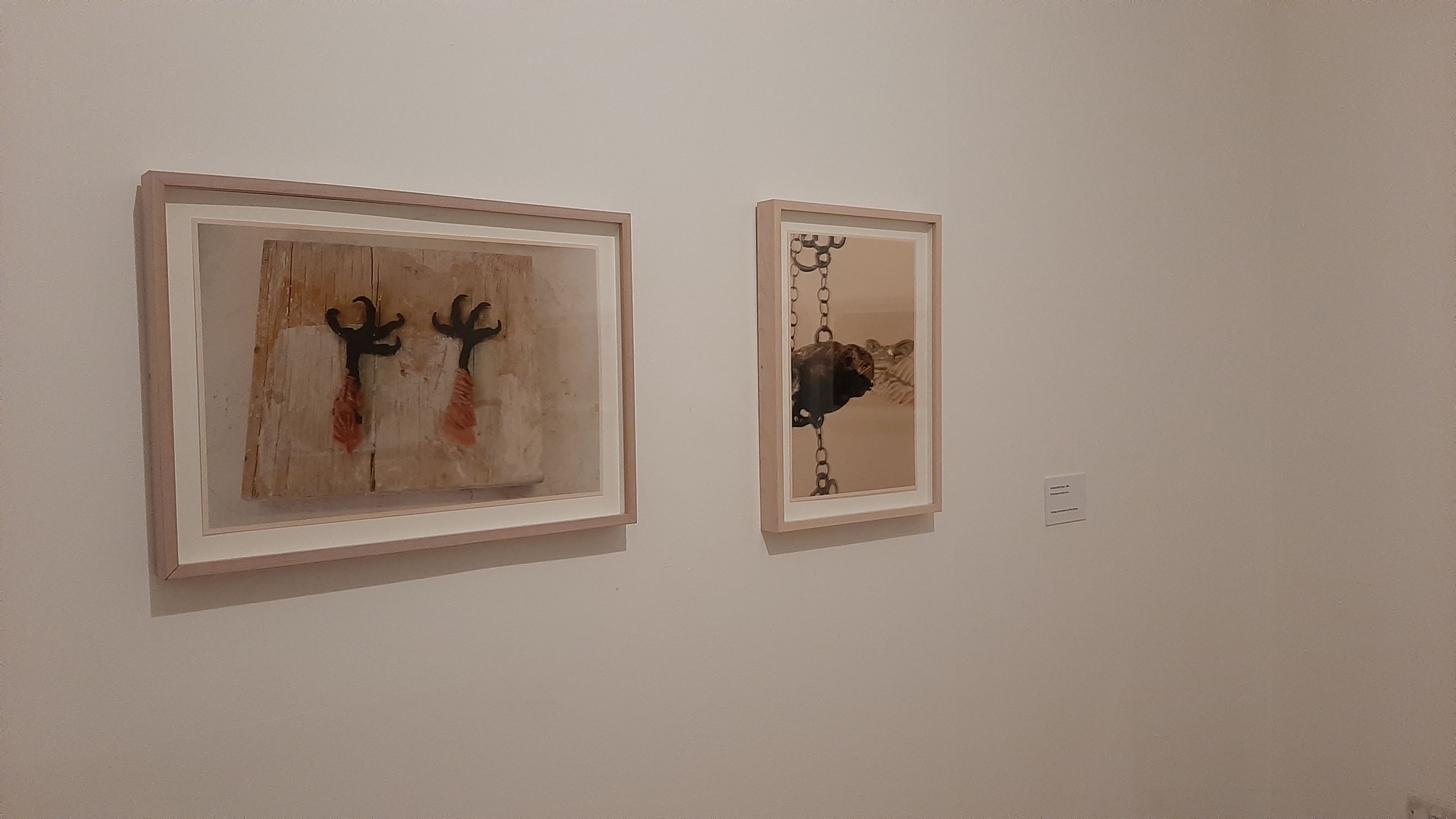
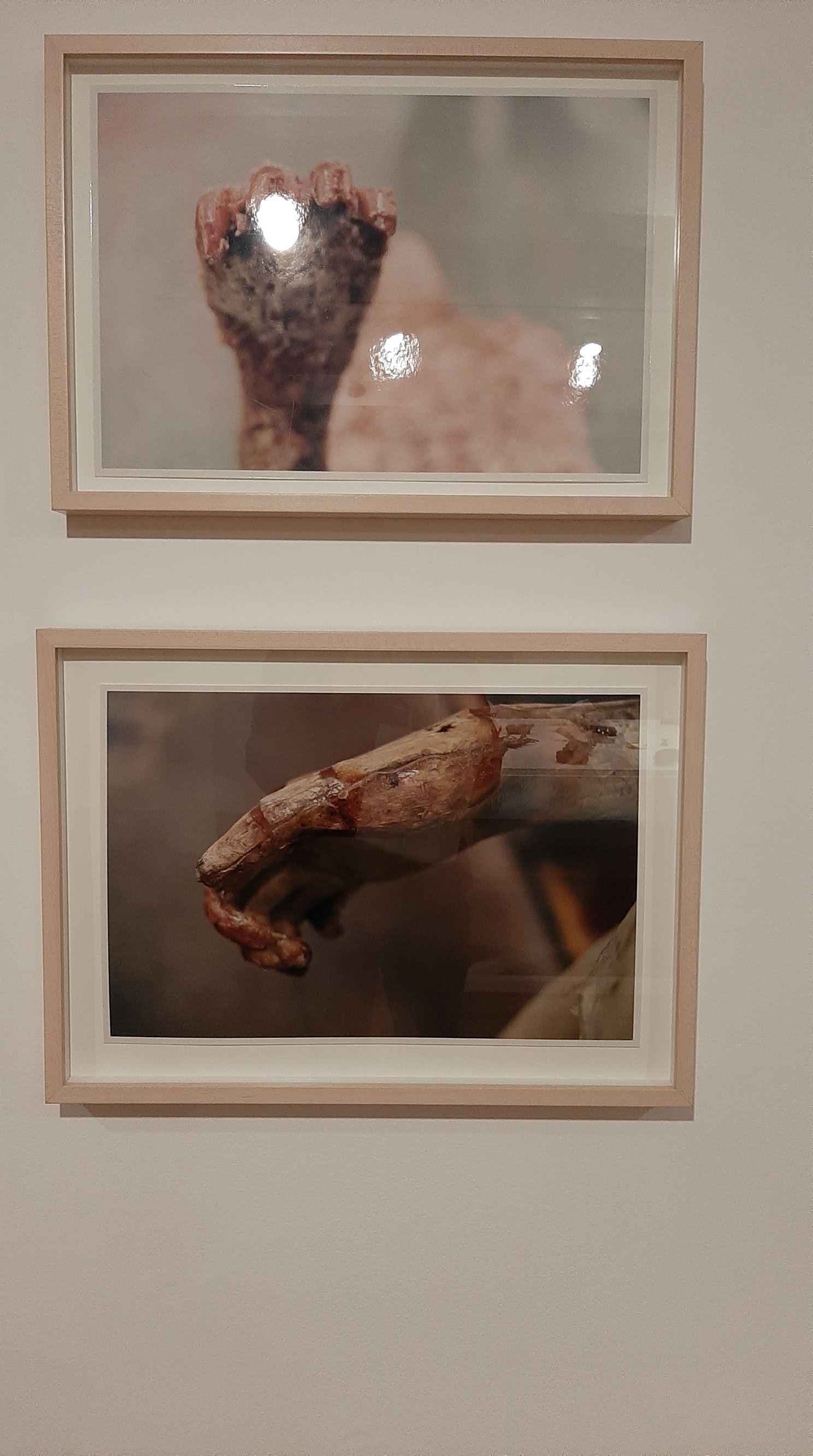
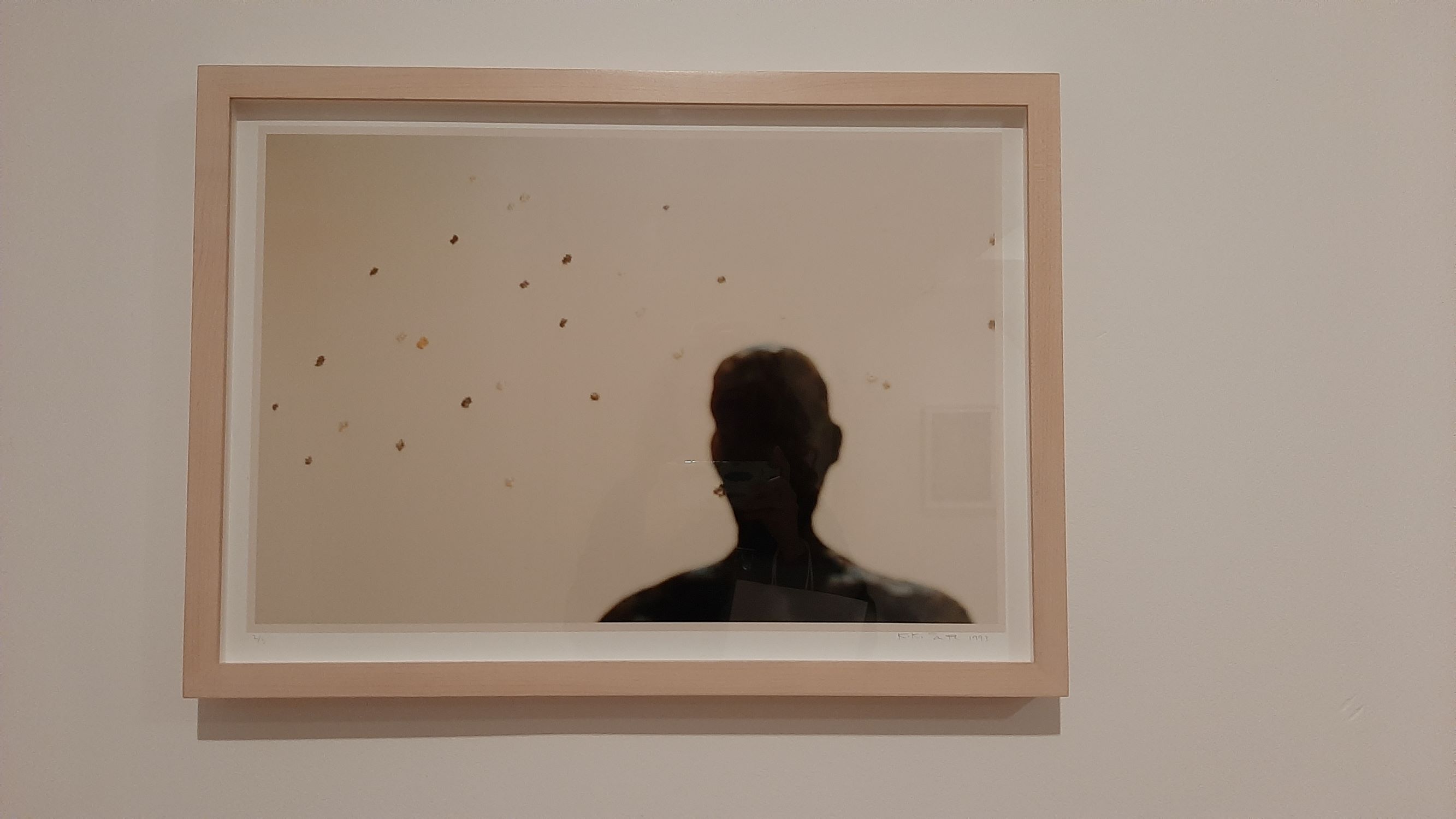
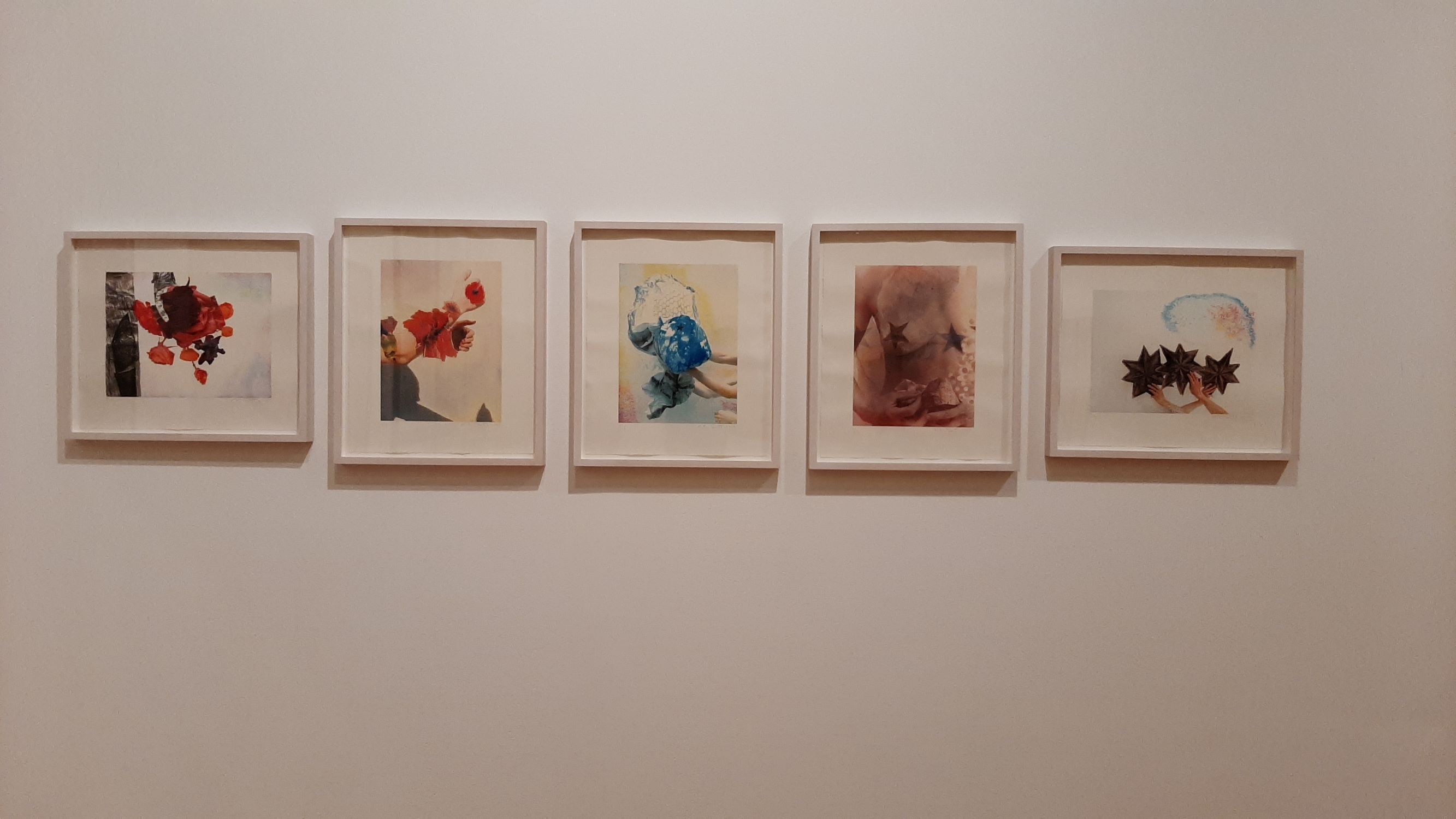
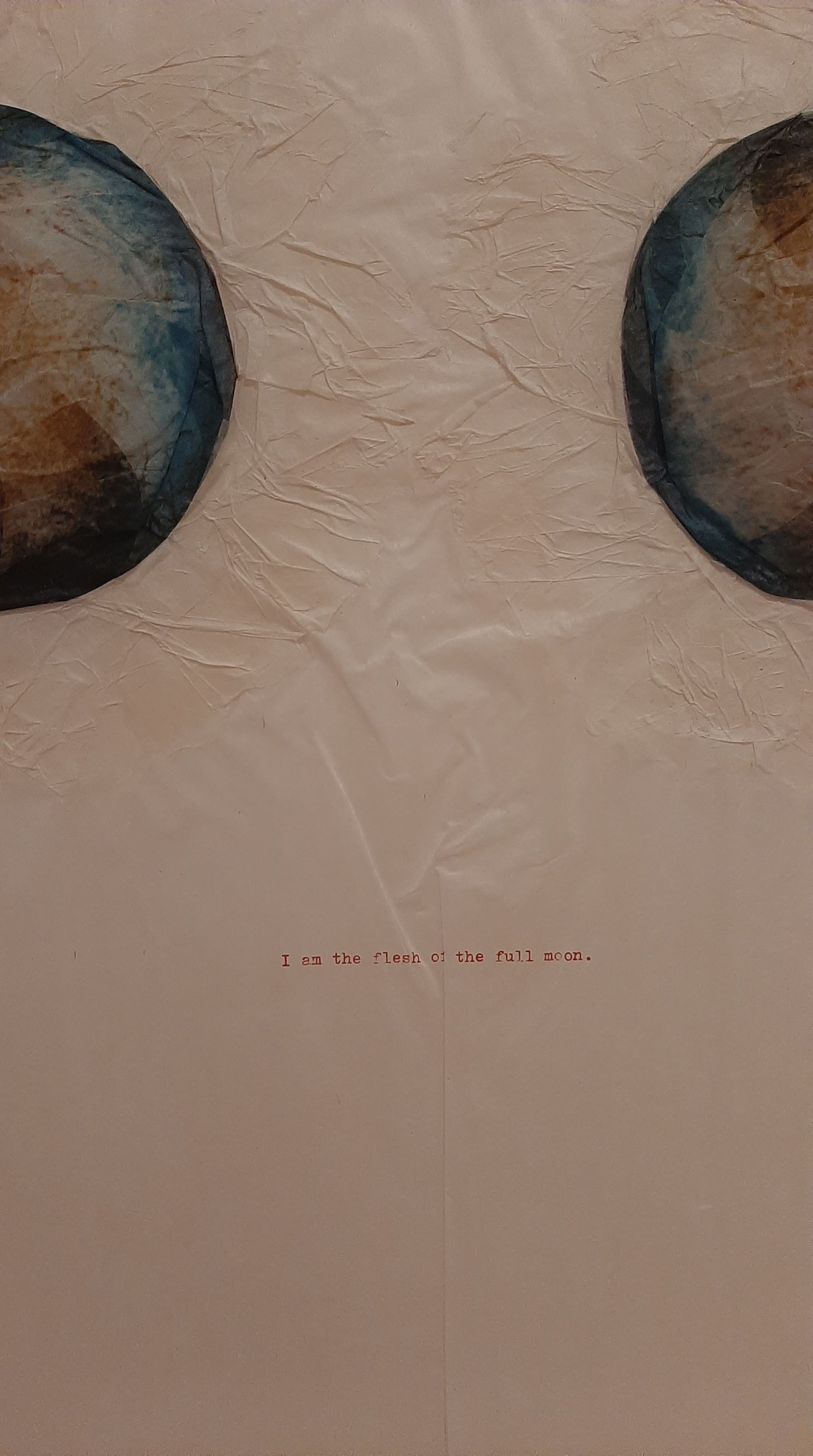
The middle gallery contains a selection of photographs and small sculptures. The sculptures, many created through artisan methods, are collected in a display cabinet in the centre of the room. Some are evocative of dismembered body parts or the human form, while others are ‘hybrid creatures’ or ‘natural phenomena’. They are all produced as one of a limited series – a multiple – and the collection as a whole spans a wide range of media. The pieces are small, a comfortable size to fit in the hand, which links again to this idea of sacred or superstitious objects (‘relic’ or ‘talisman’): the title of ‘cabinet of curiosities’ plays into this as well.
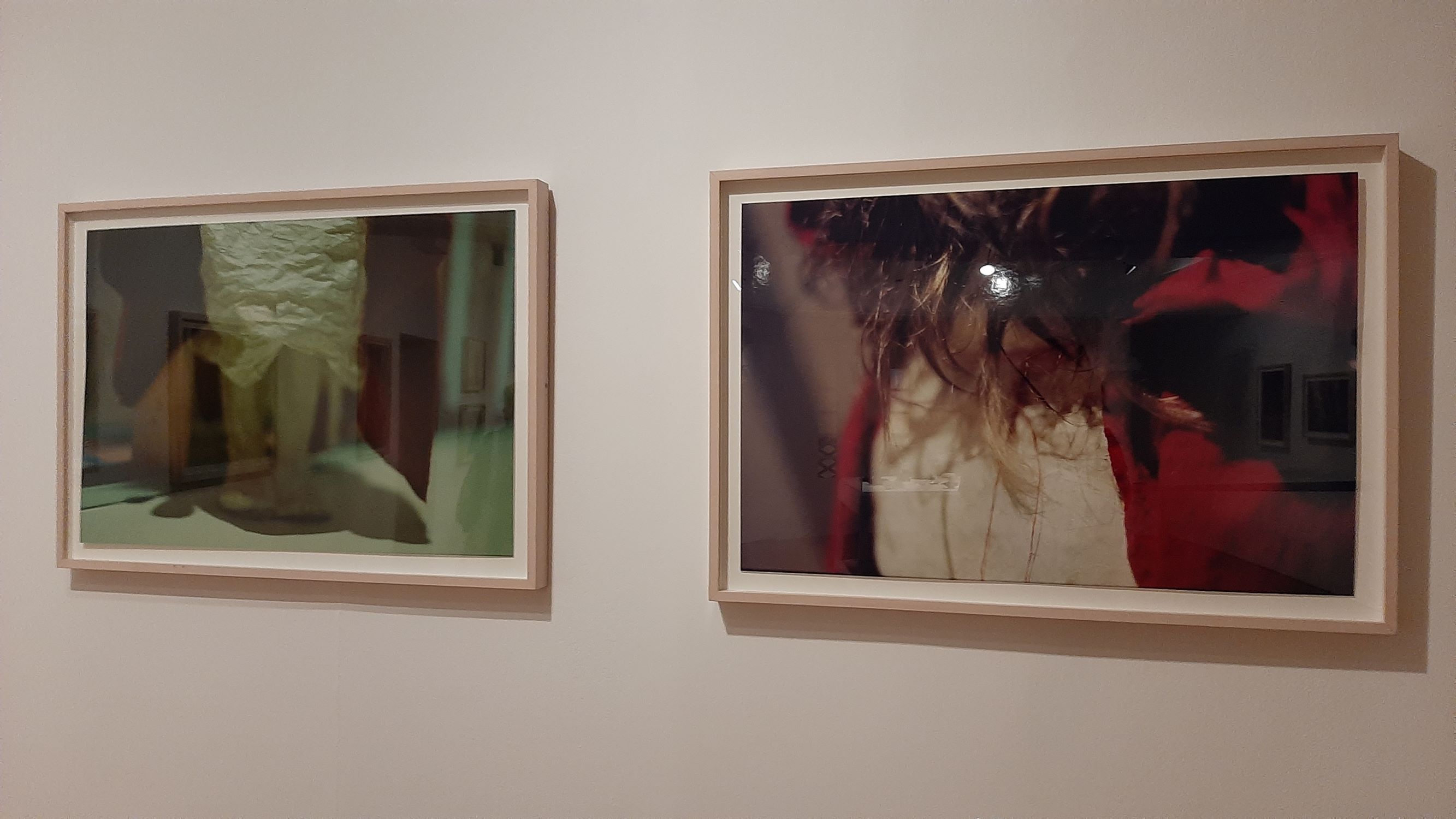
The photos are both of work-in-progress sculptures and of finished pieces, in the latter case using photography as a way to explore new perspectives and ways of viewing the sculptures. In some cases the photography of detail, such as in Jersey Crows, means that the item ‘takes on the treasured status of a religious relic; a fragment standing in for the whole’. Photographing the sculpture in different locations and from different angles ‘interrogate[s] the afterlife’ of the pieces, and again is something I could consider bringing into my own practice – it could be interesting to take sculptures I have made, such as the paper rocks, and photograph them back in location among other rocks on the beach, for example.
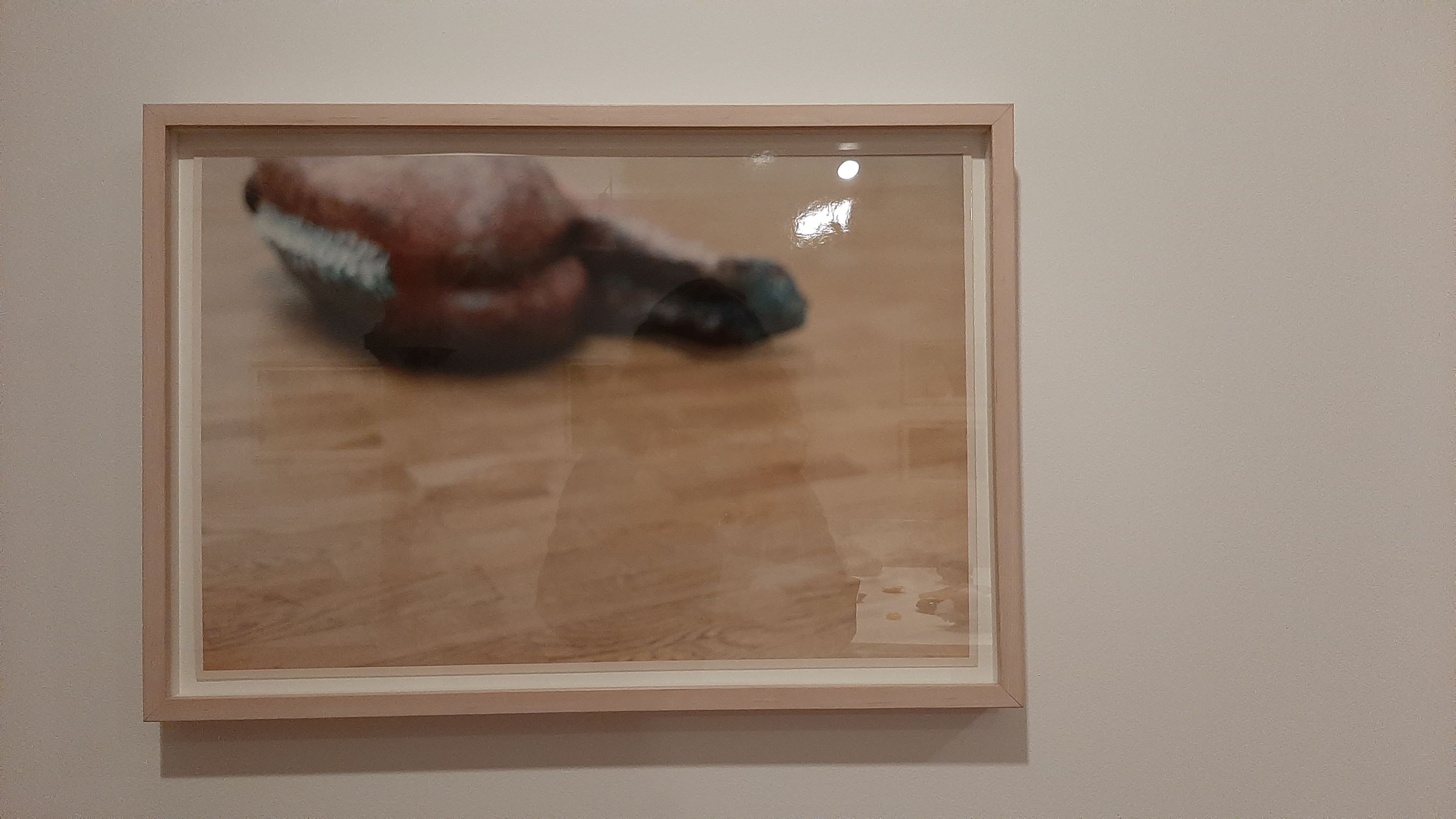
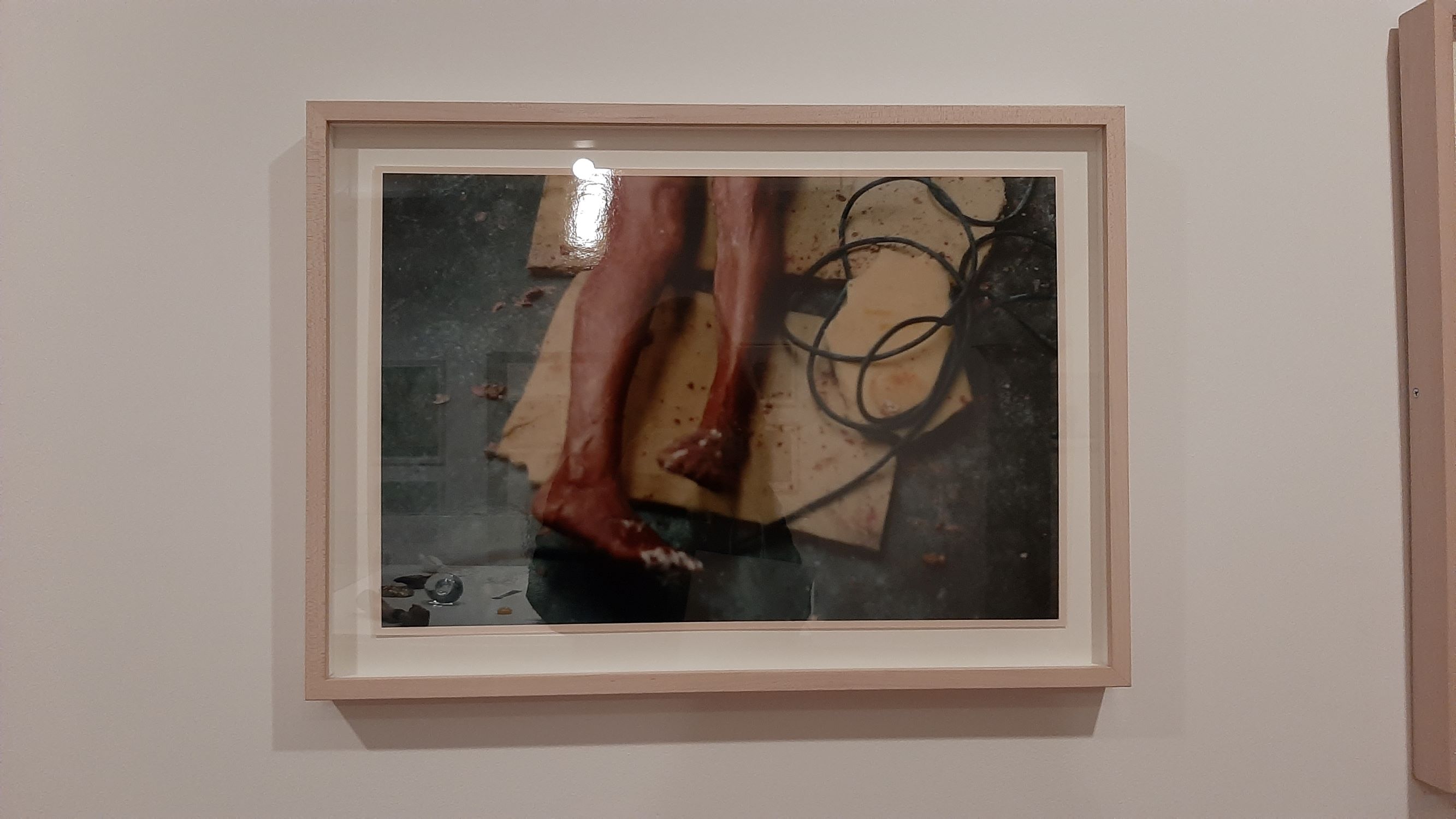
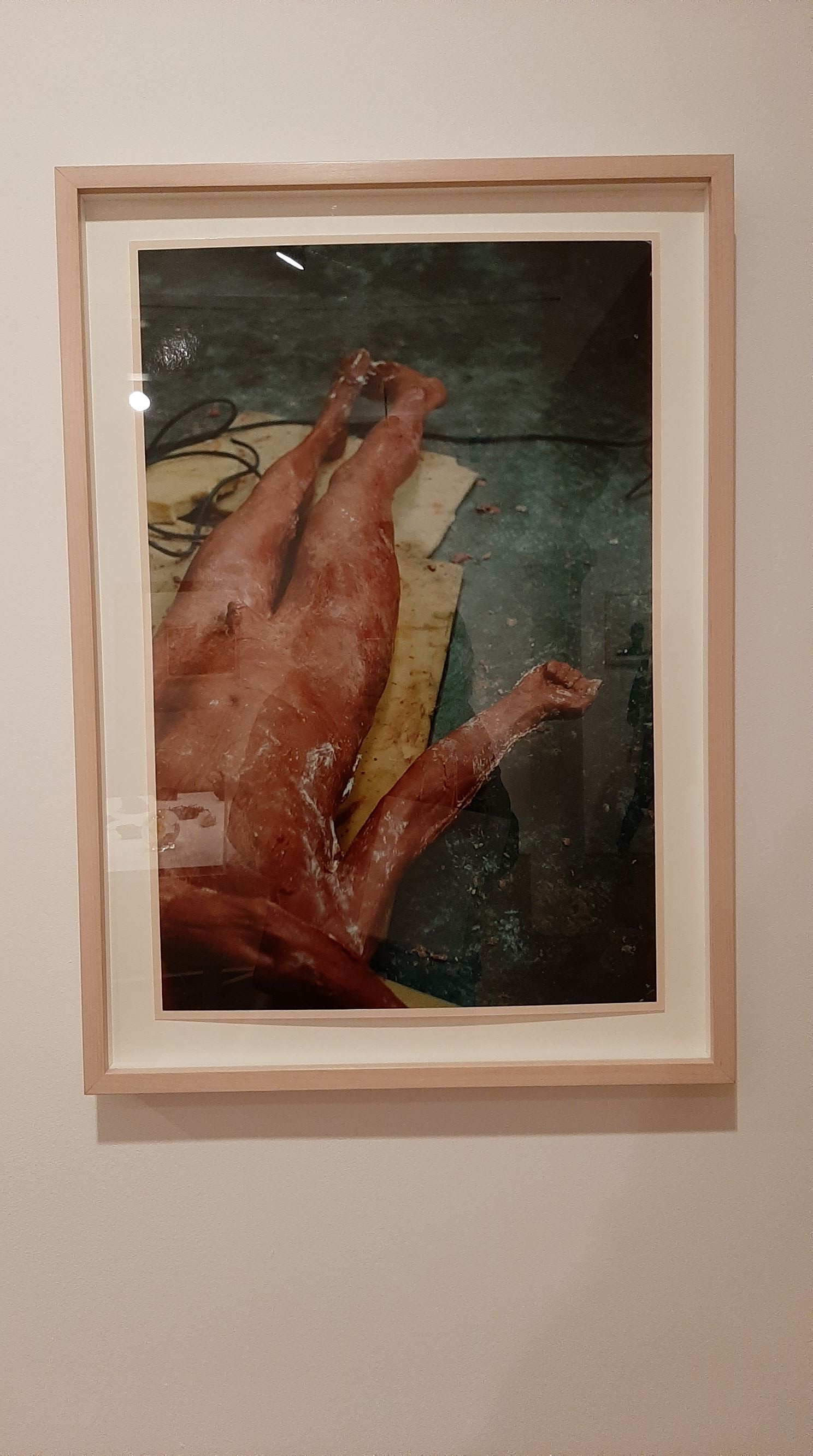
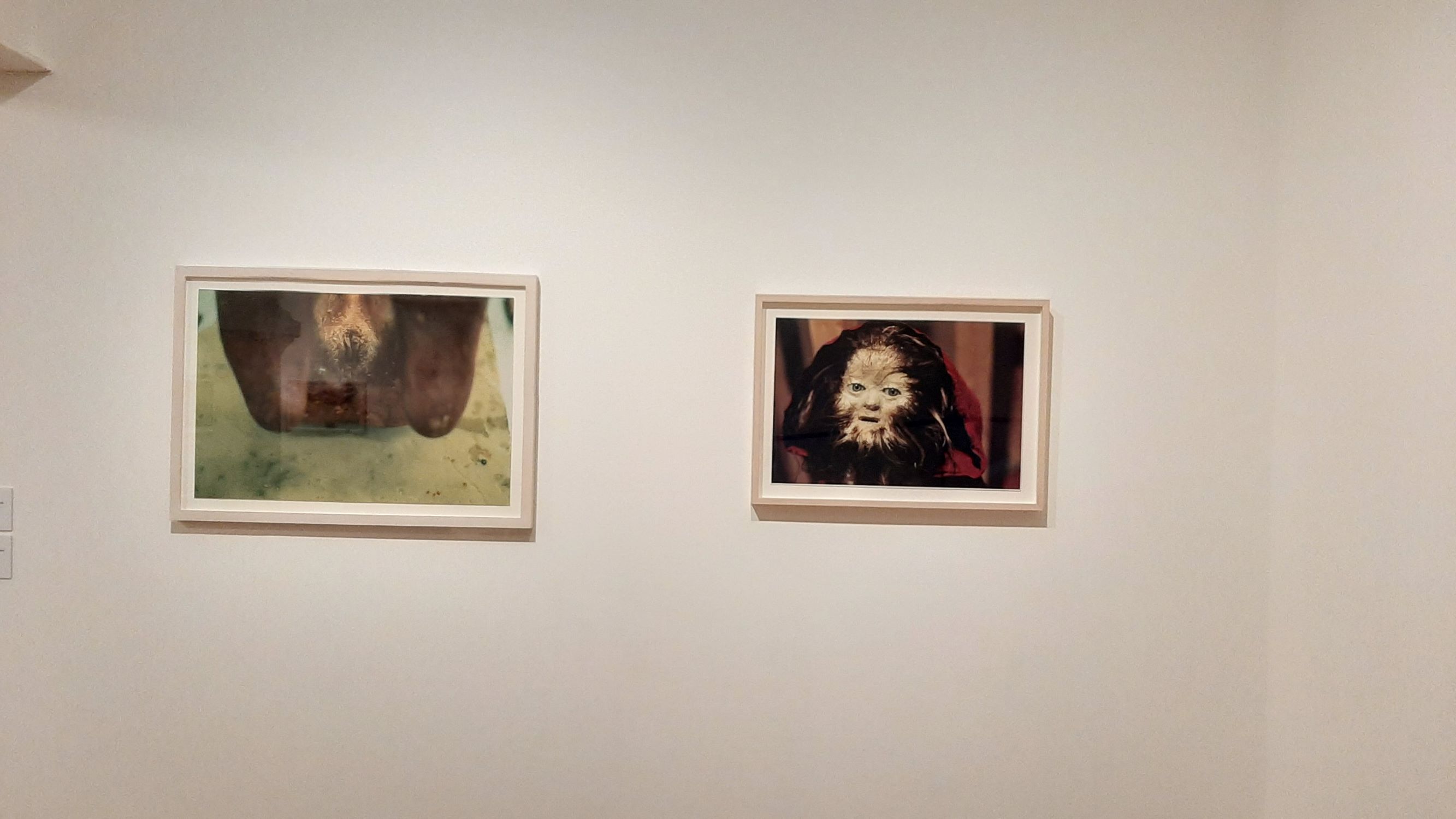
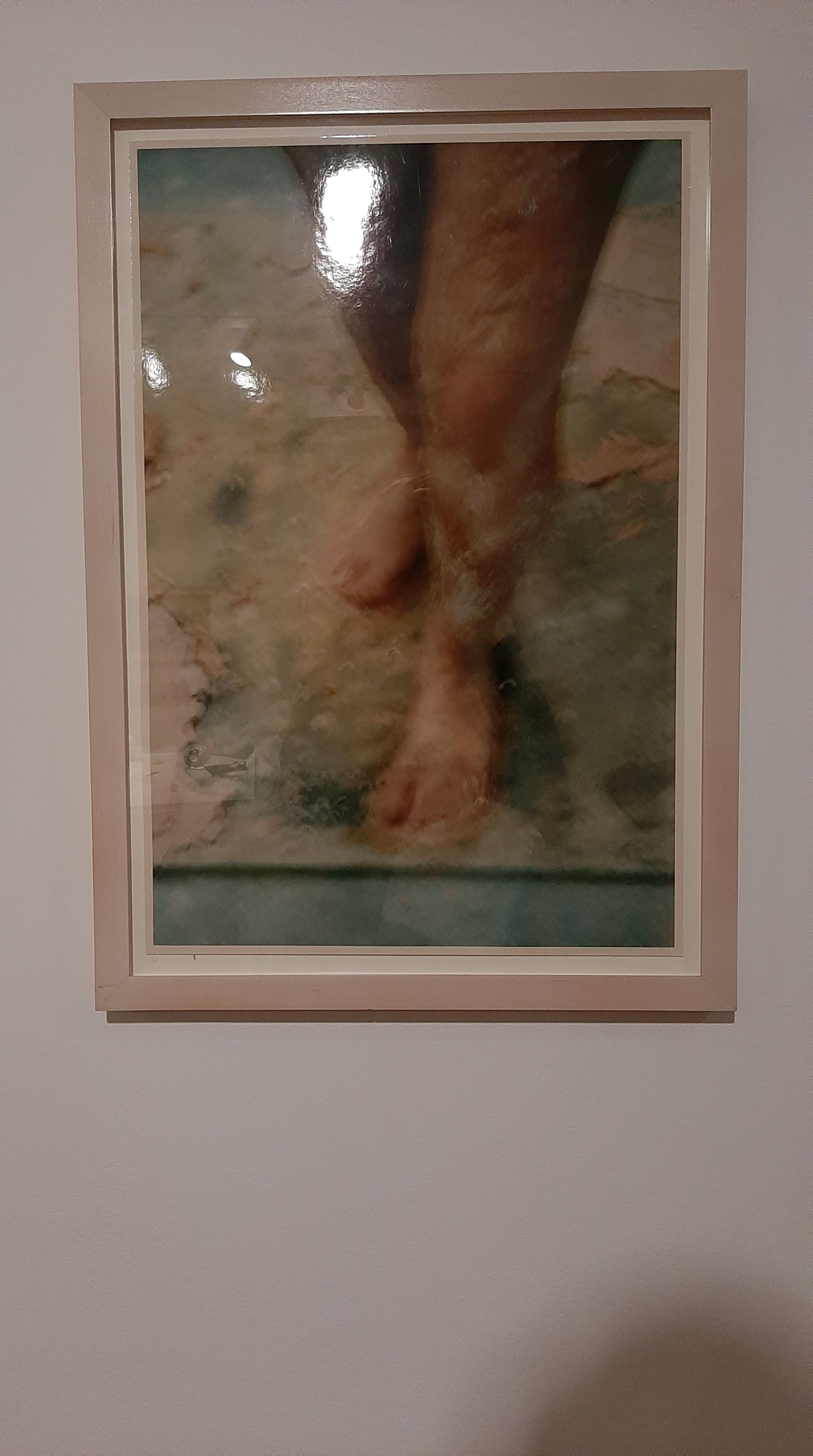
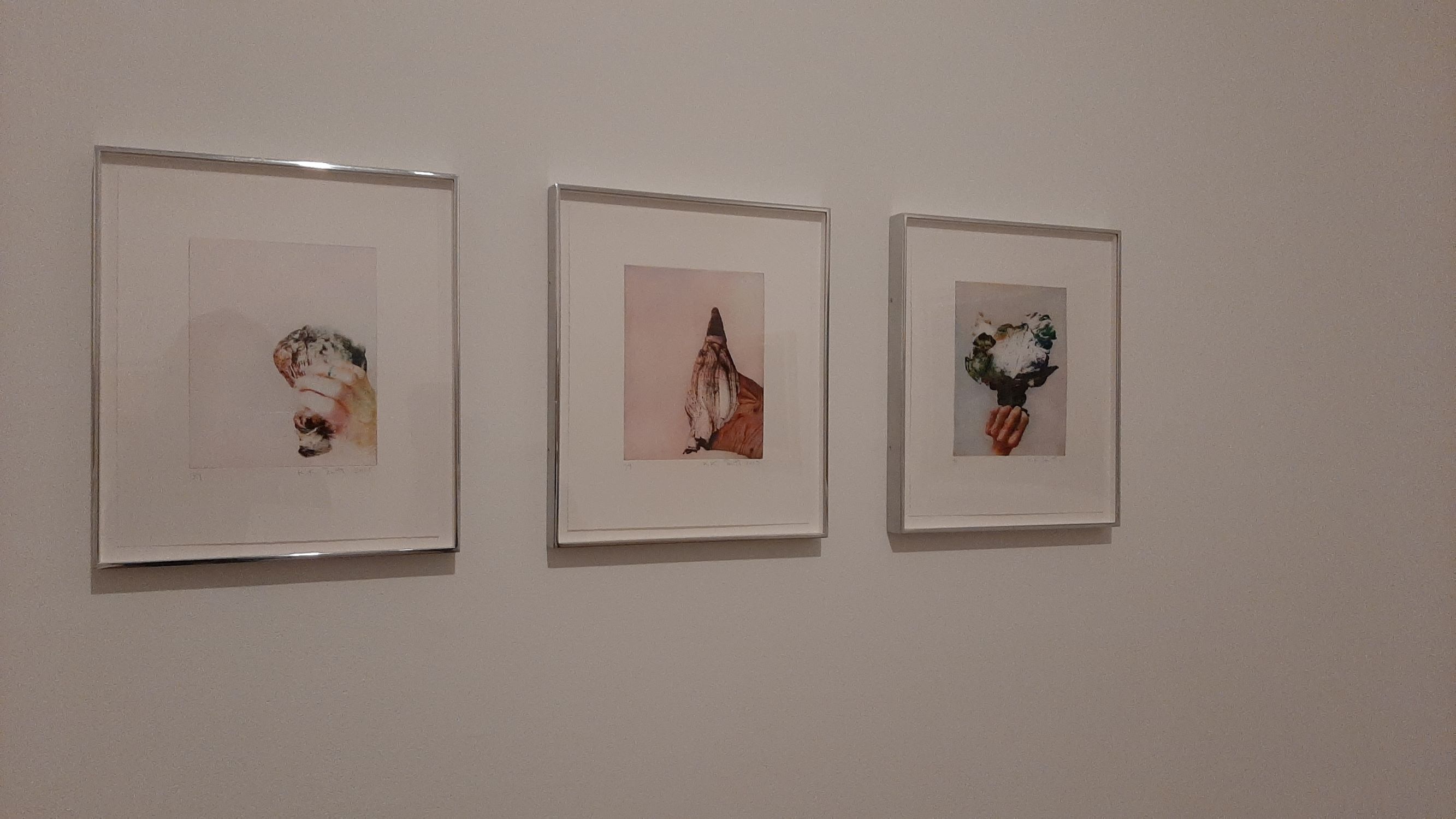
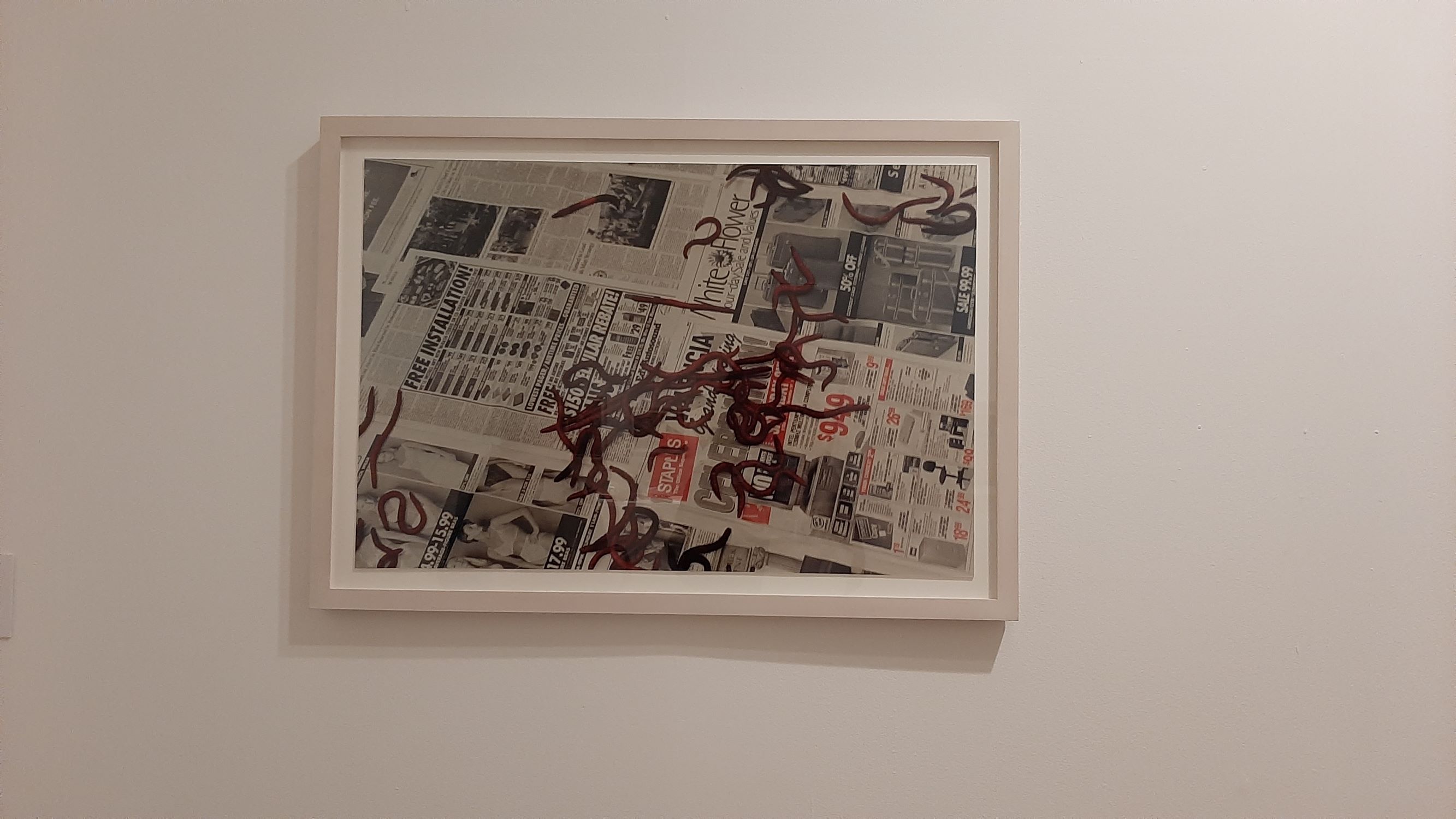
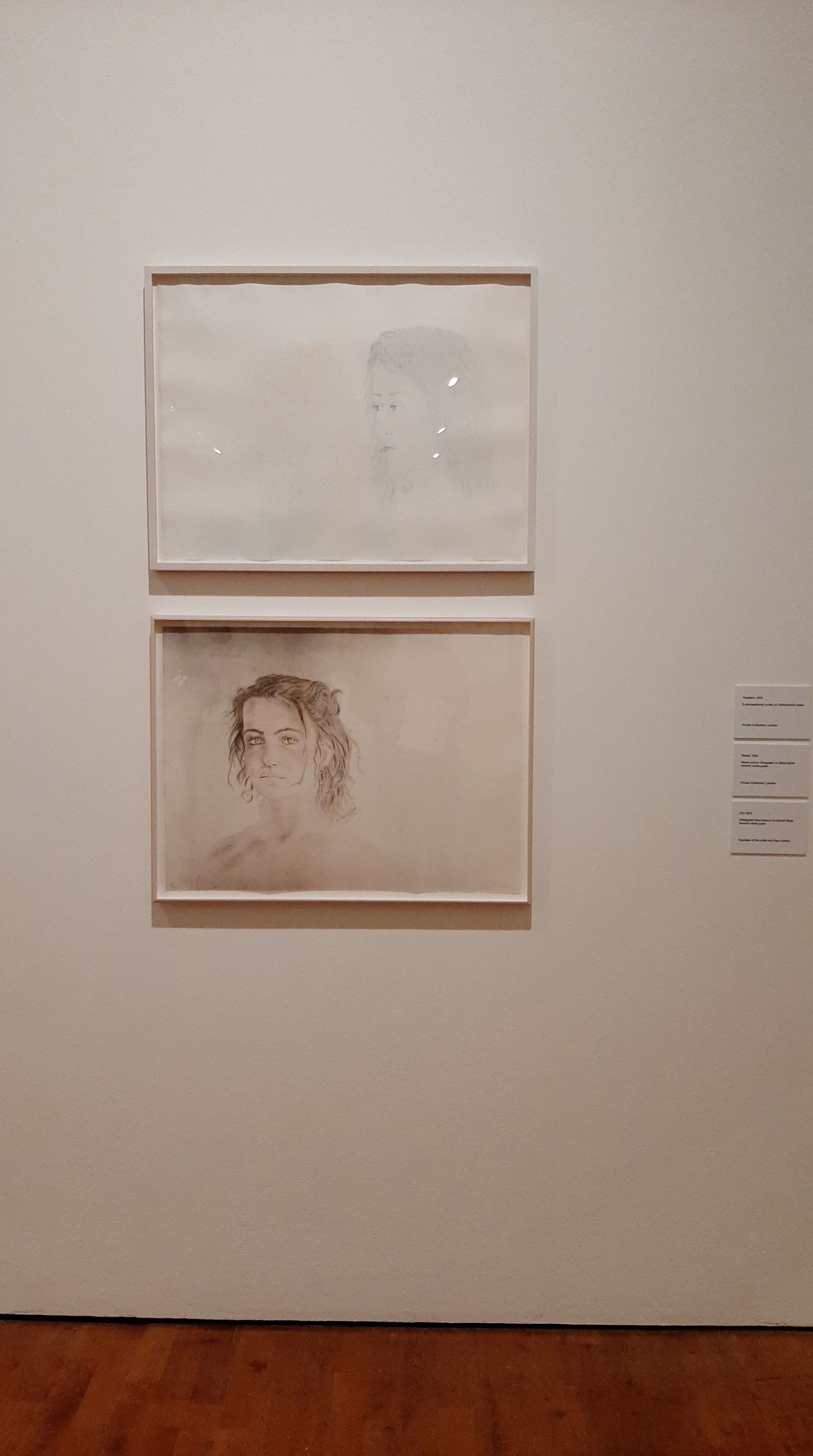
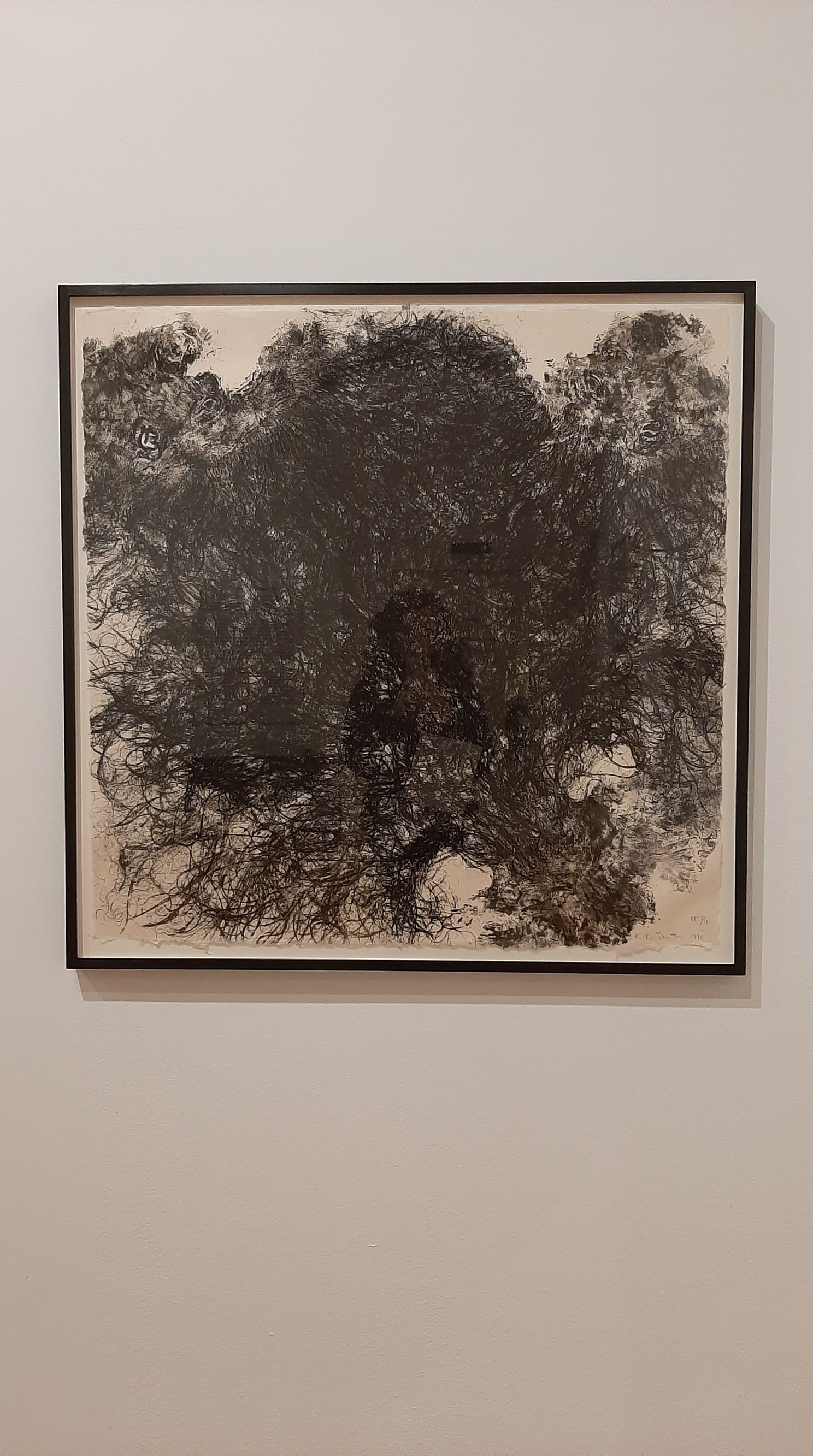
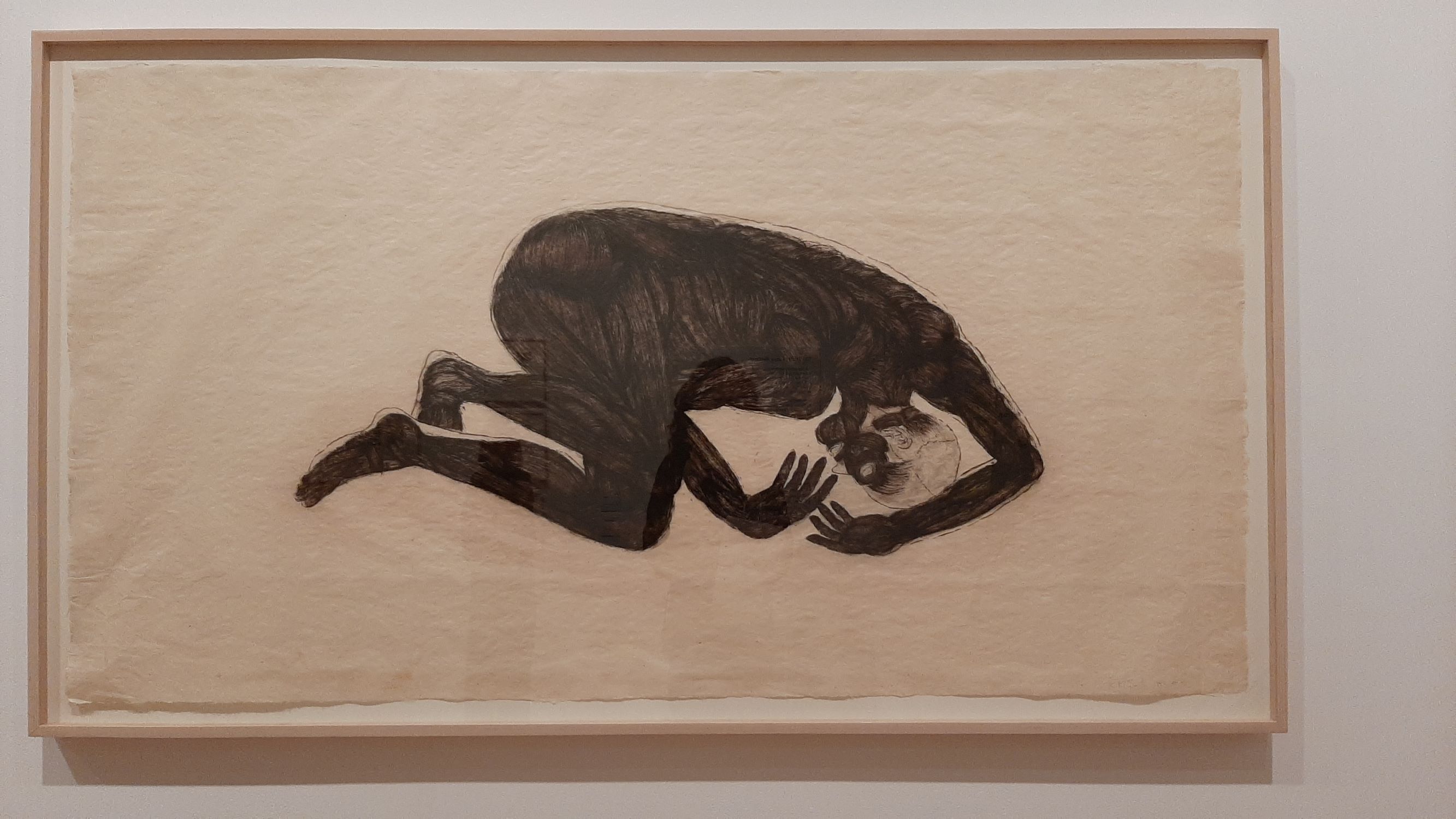
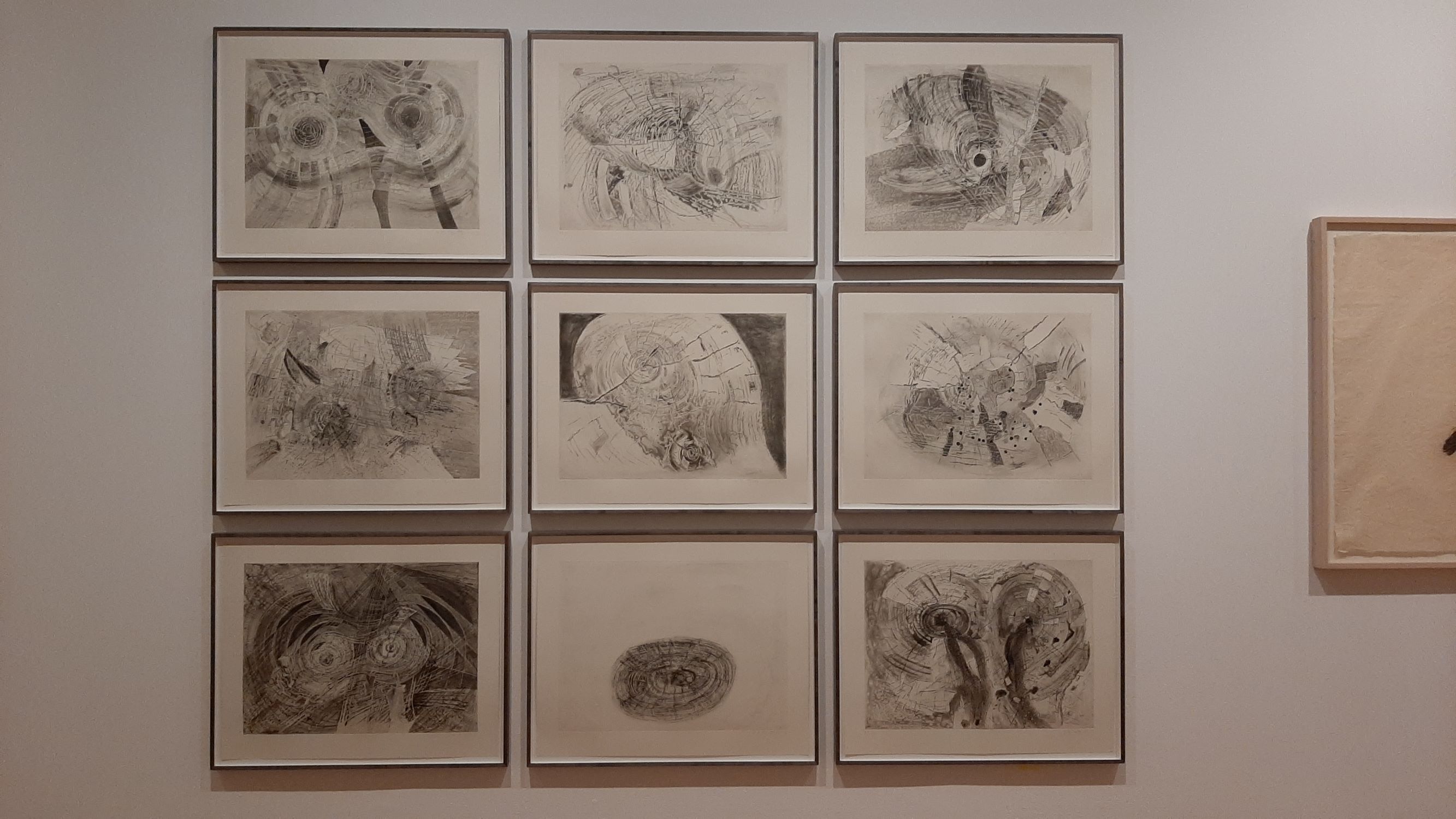
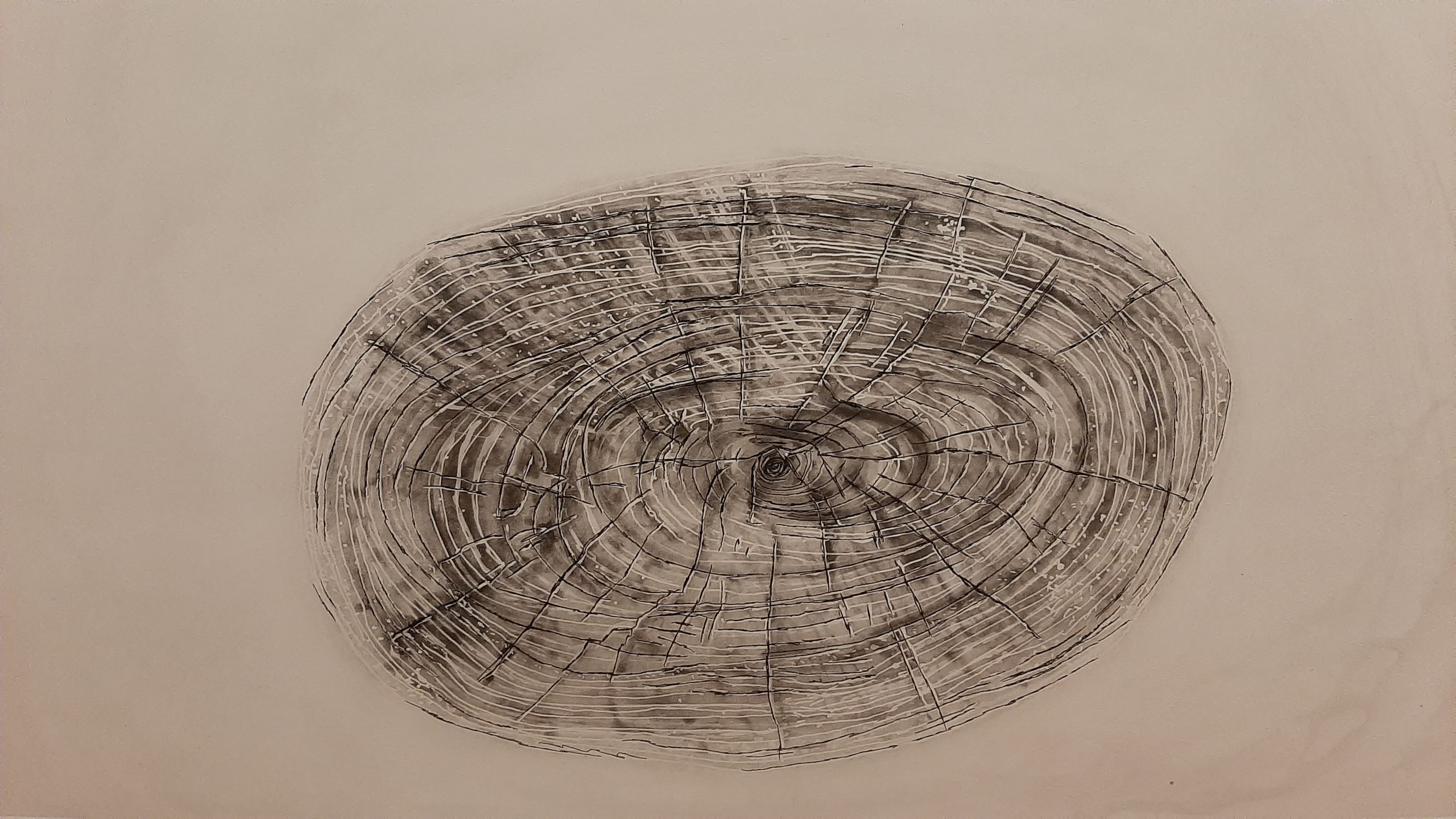
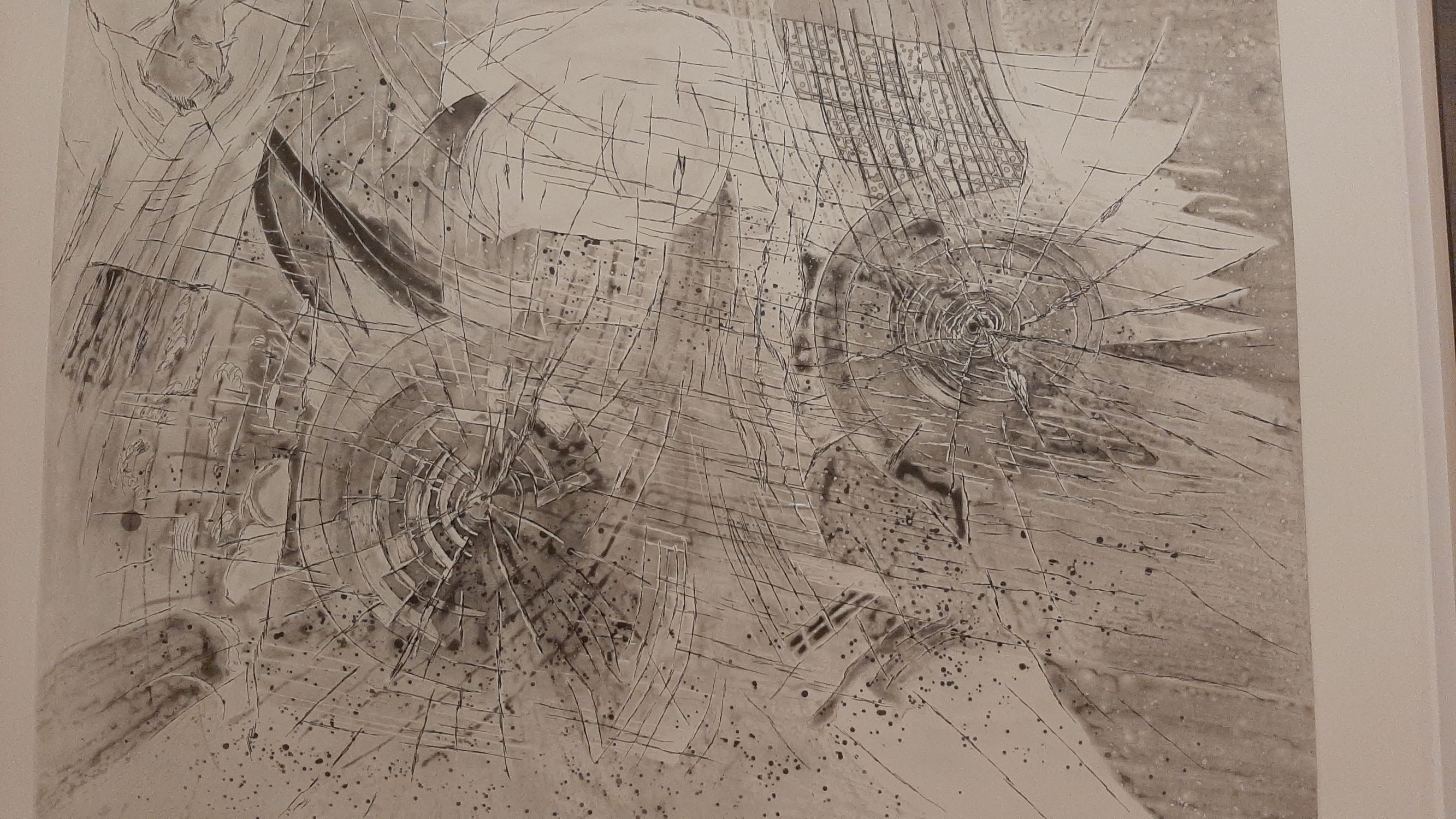
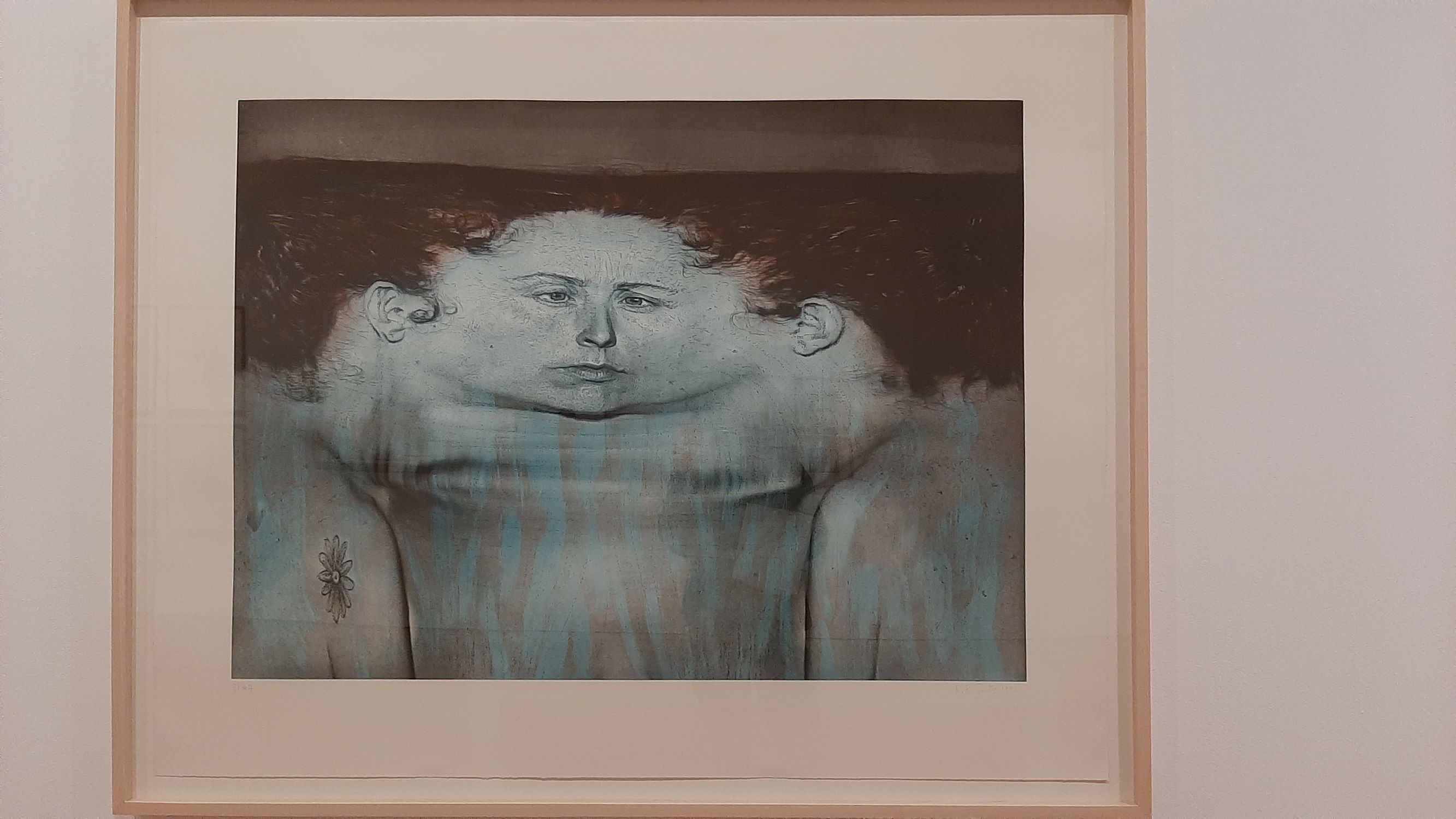
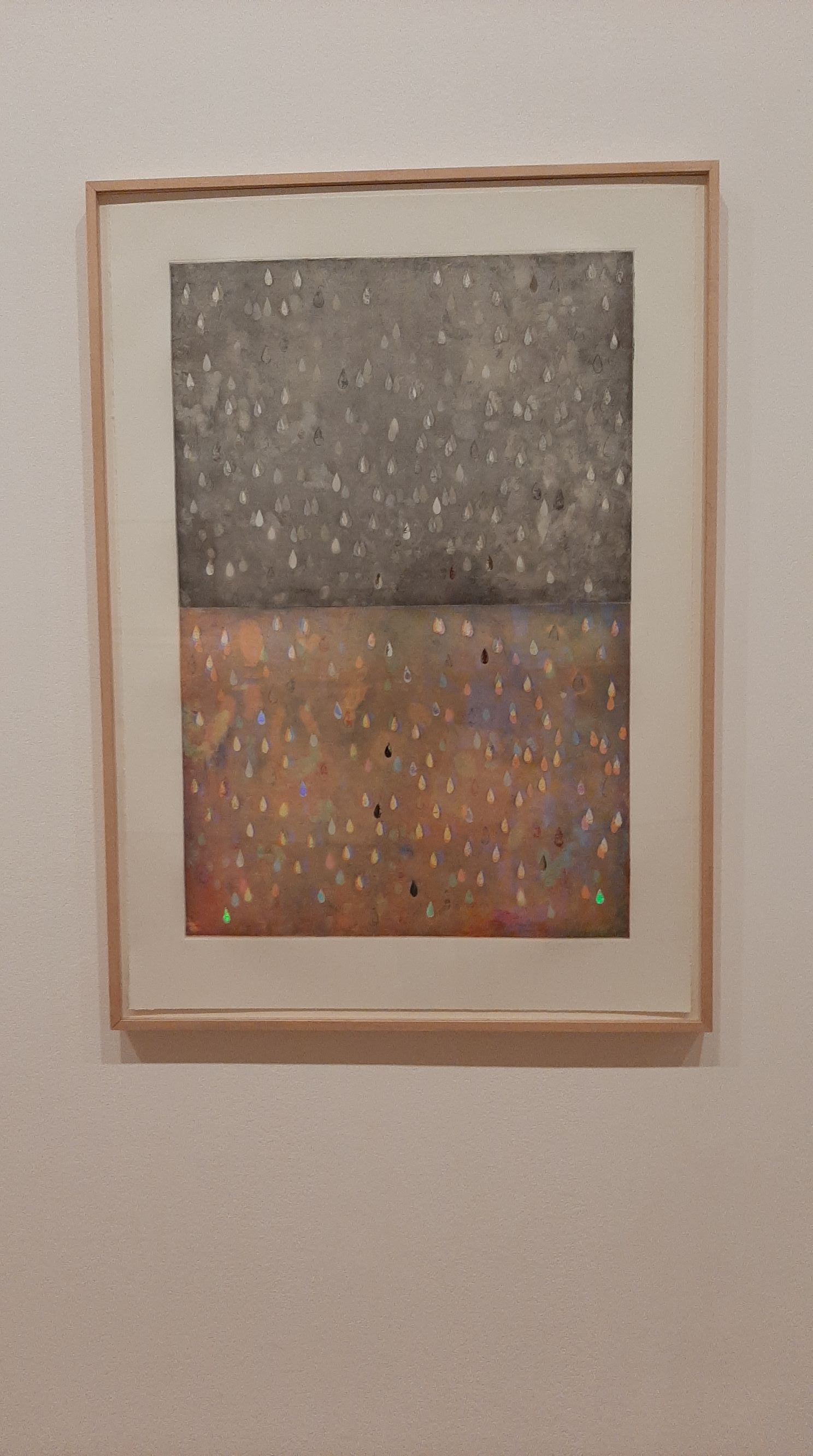
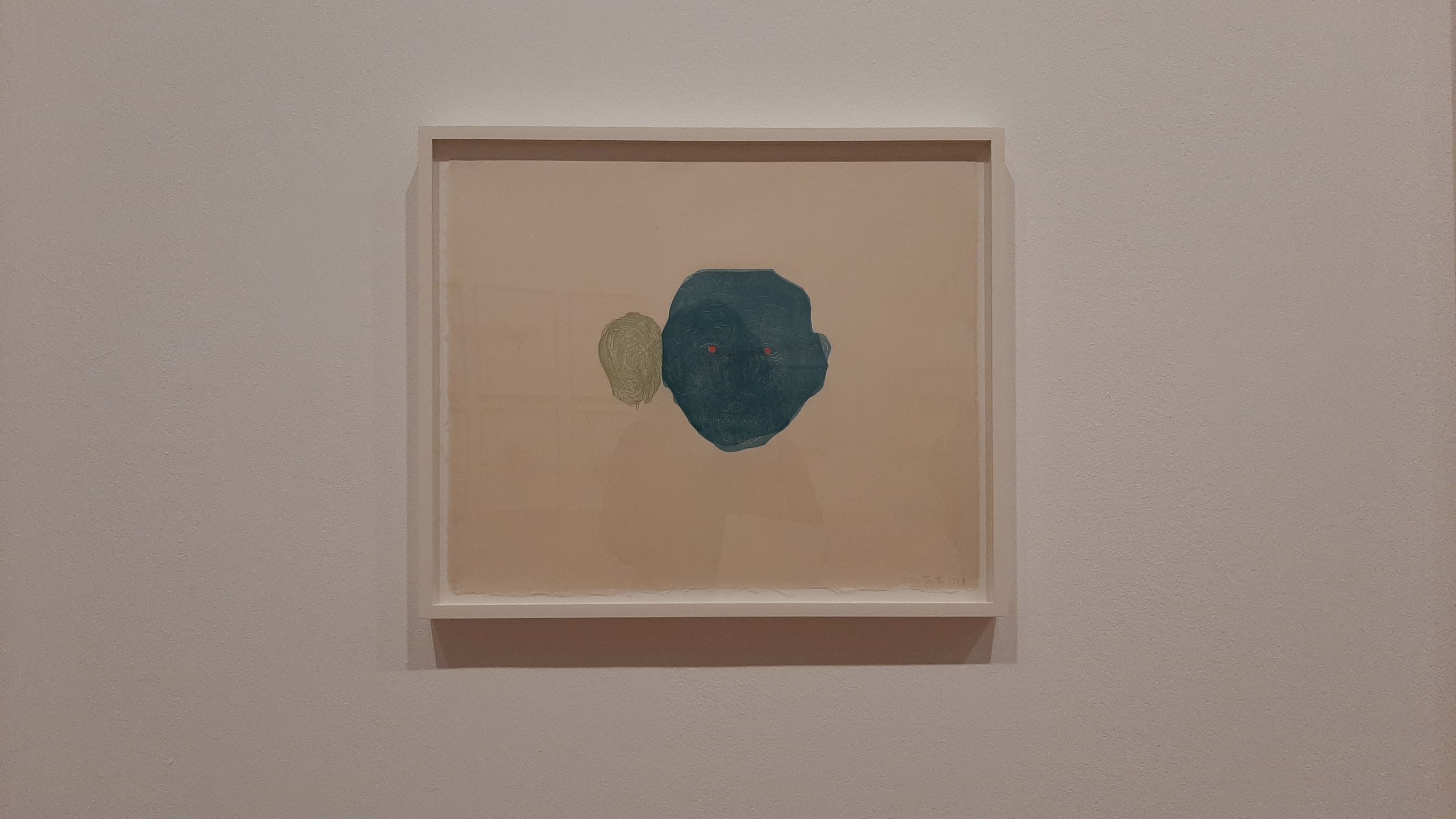
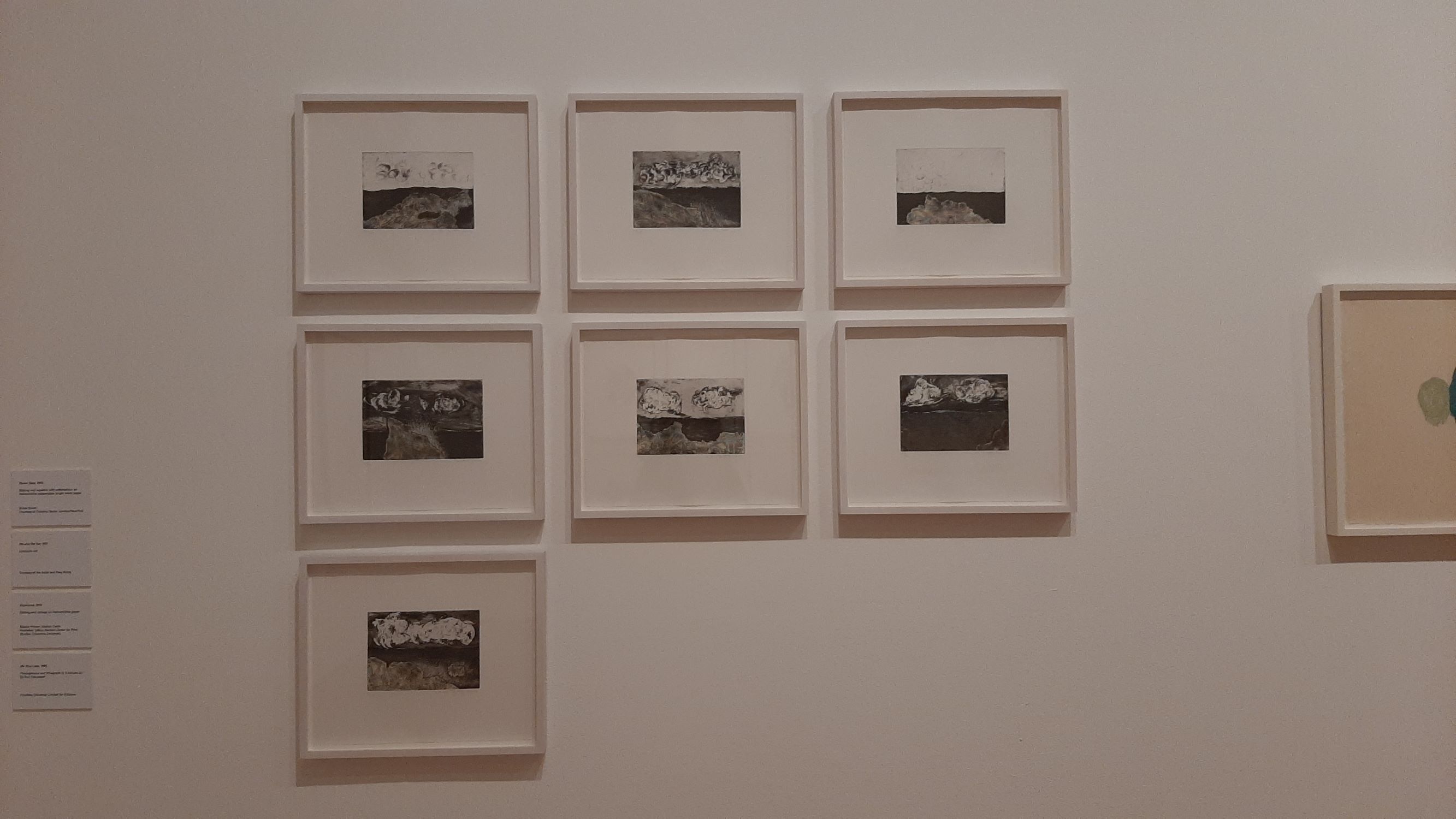
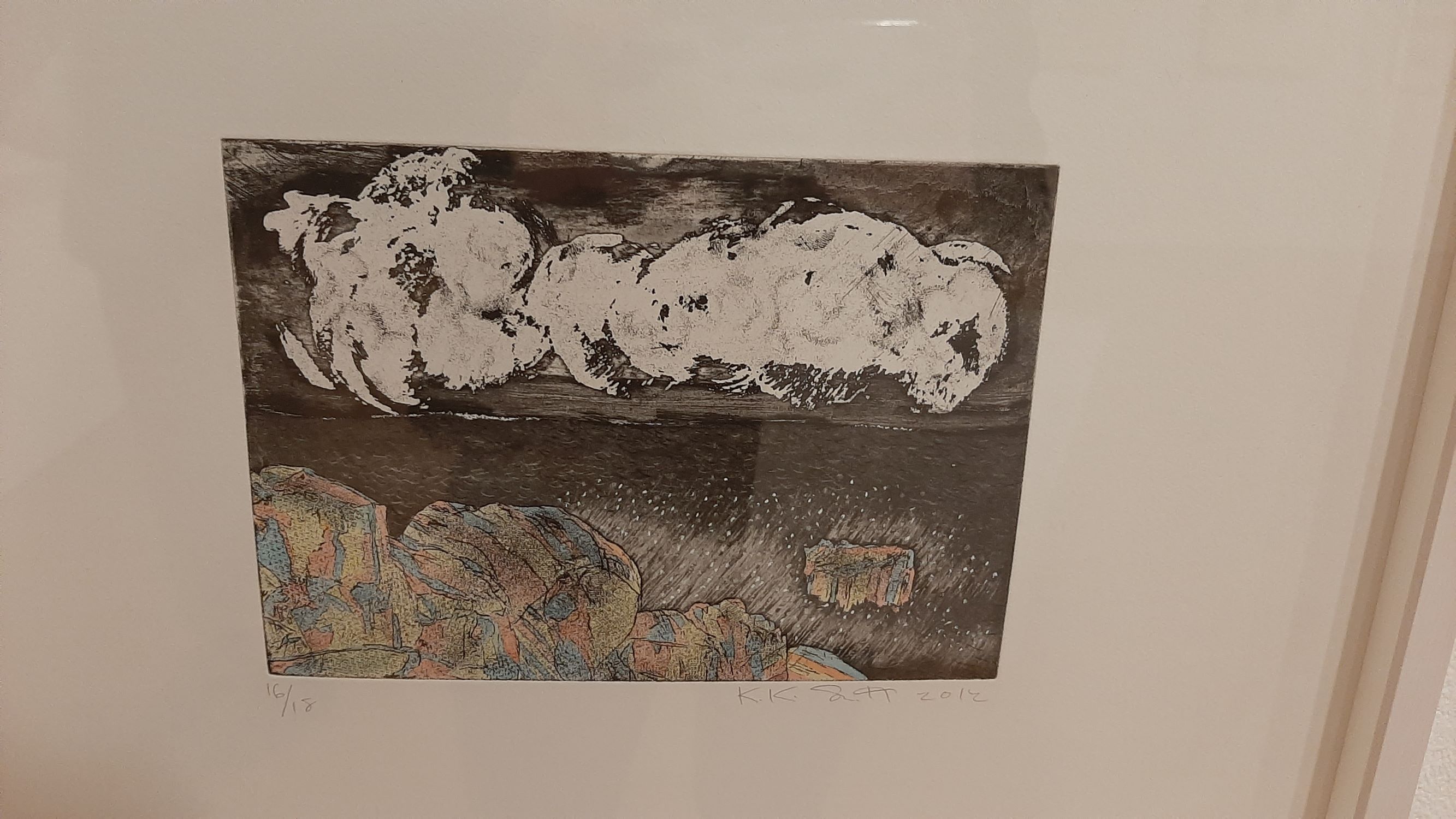
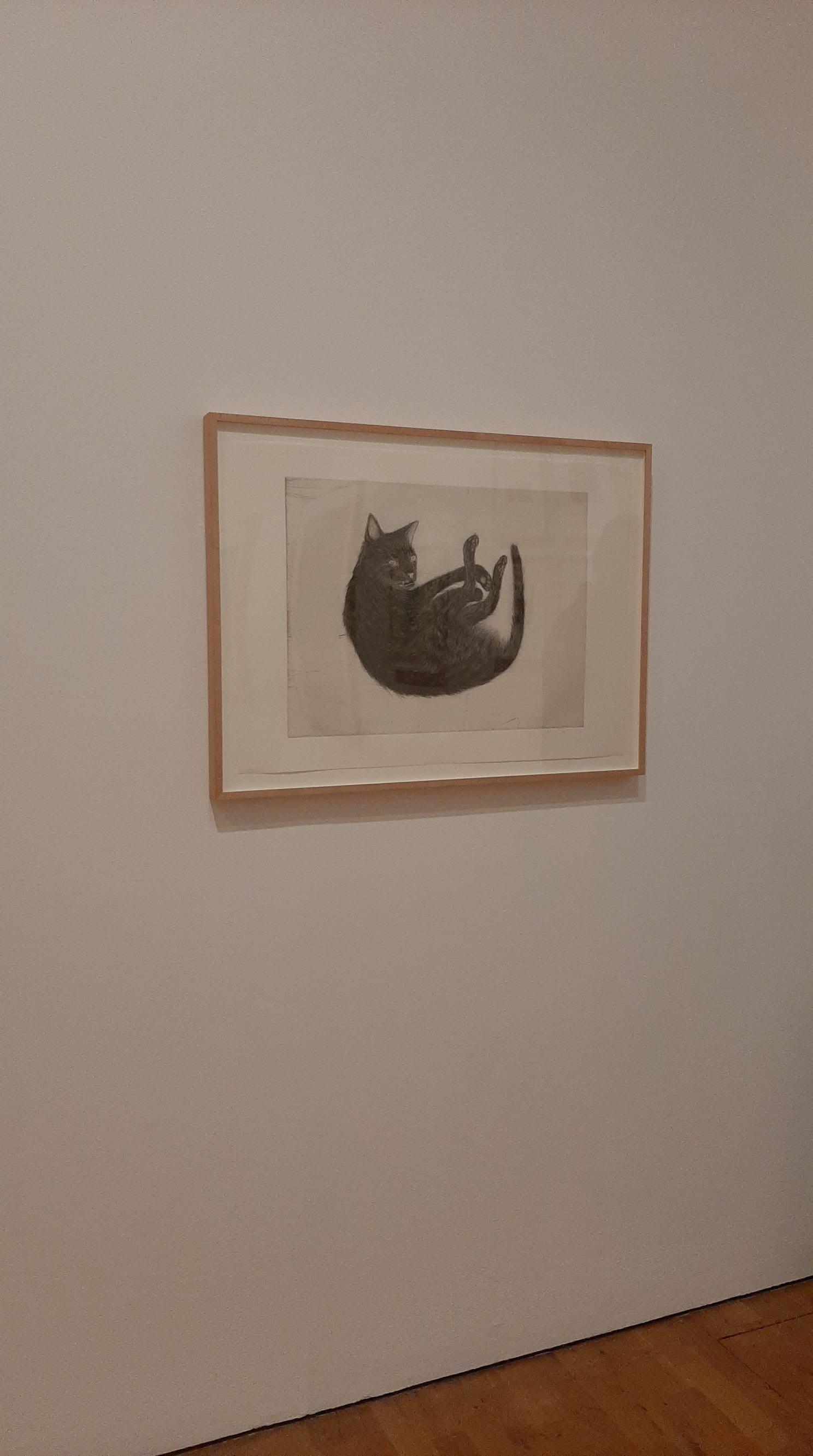
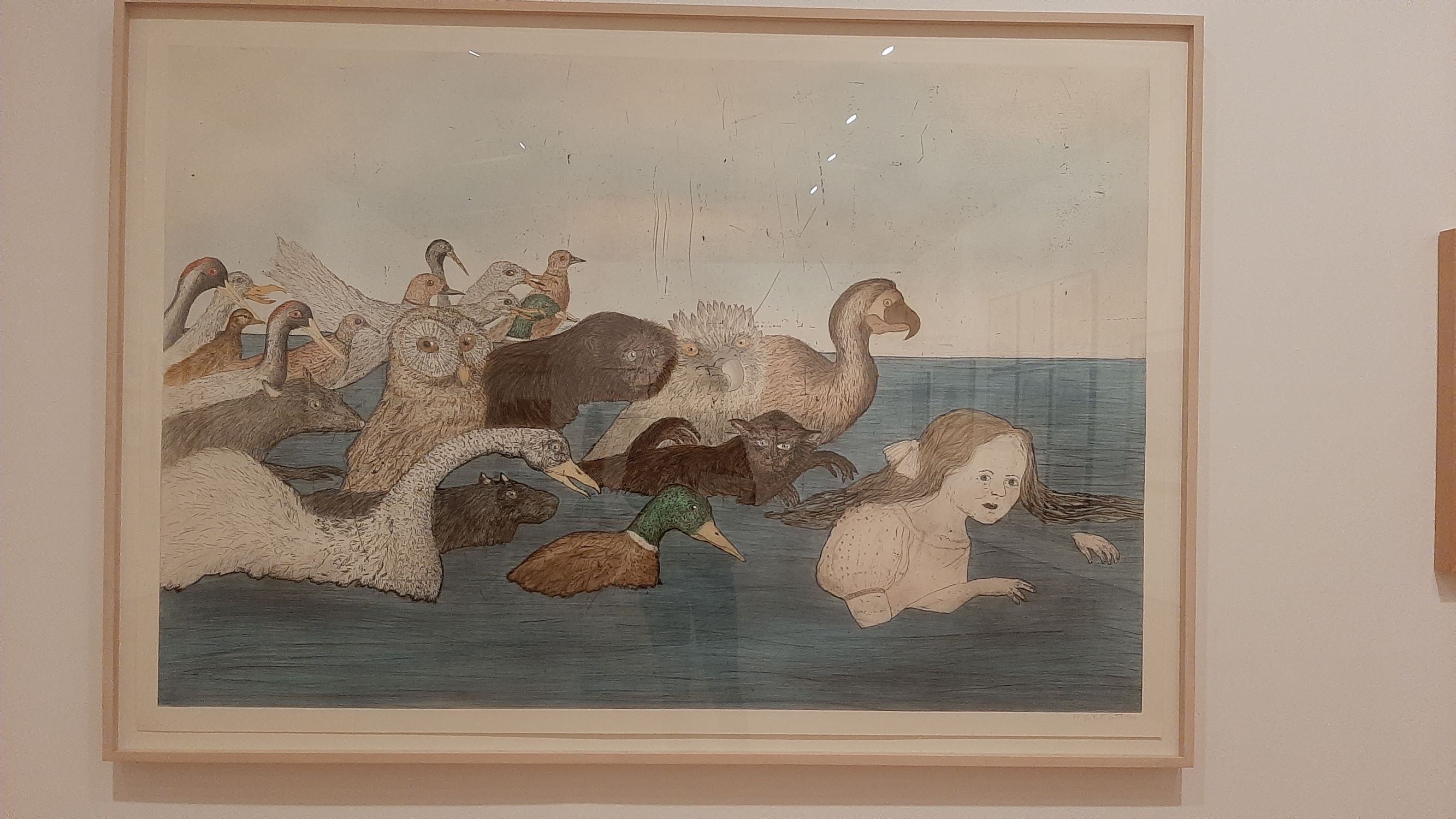
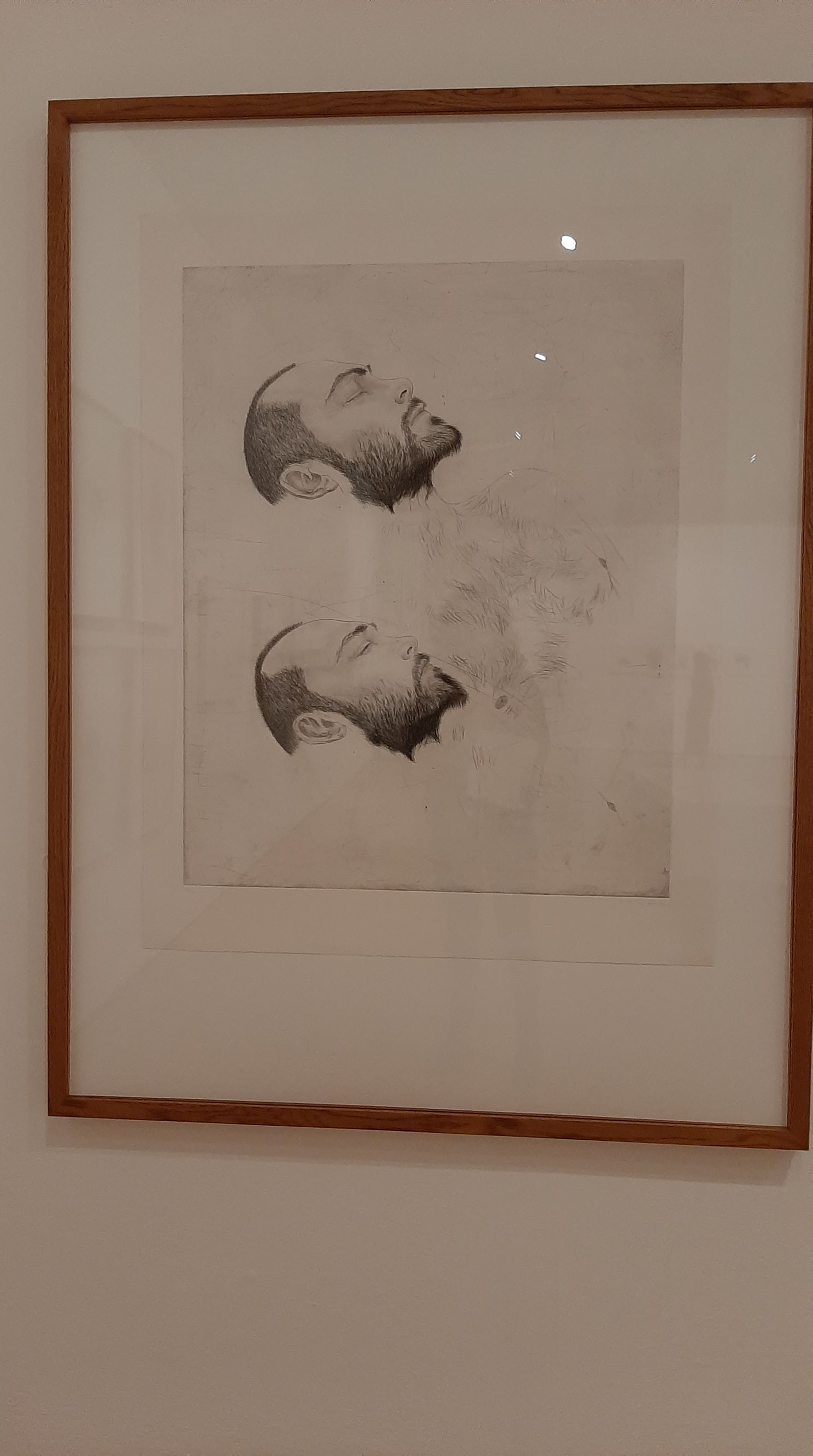
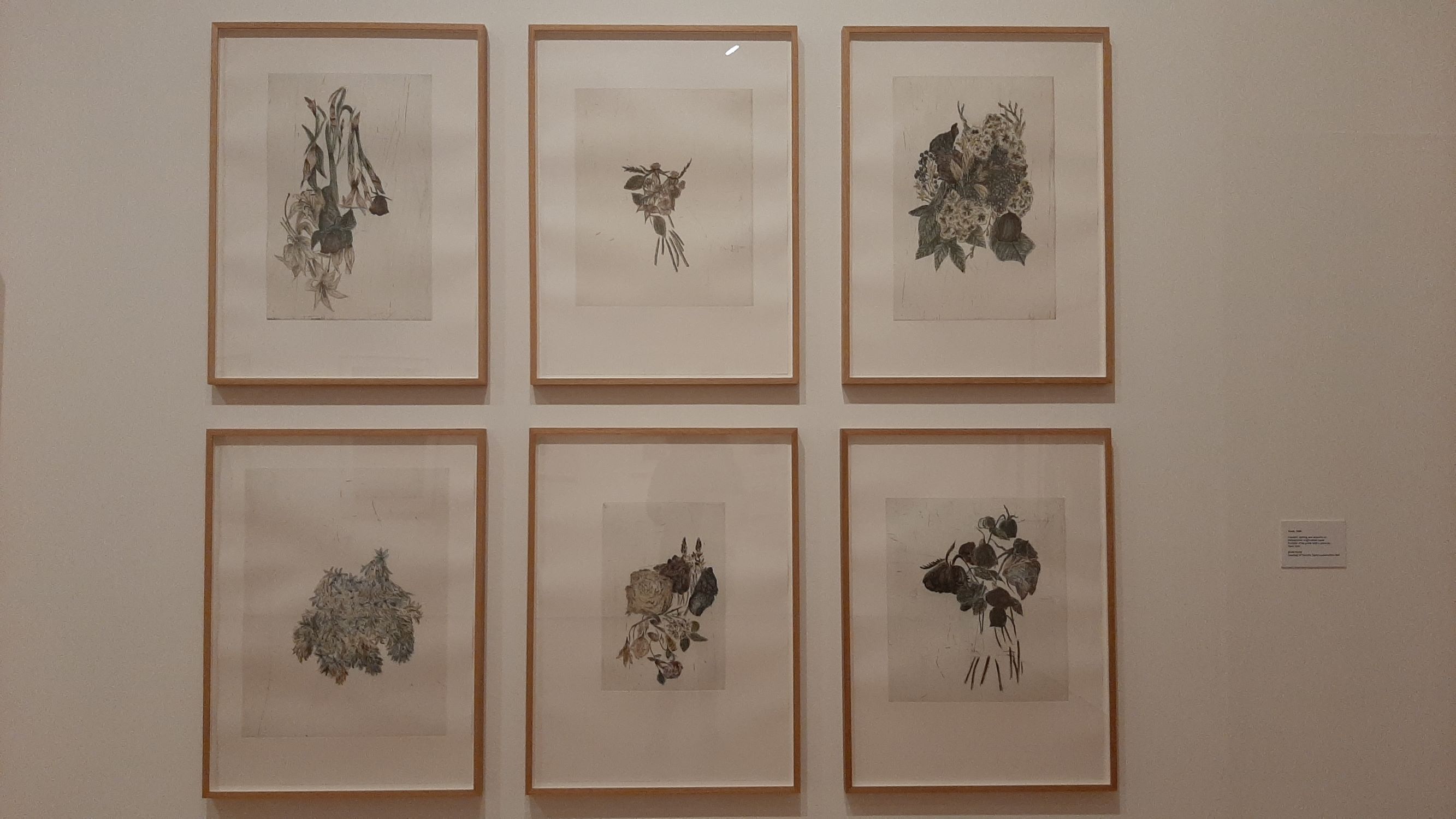
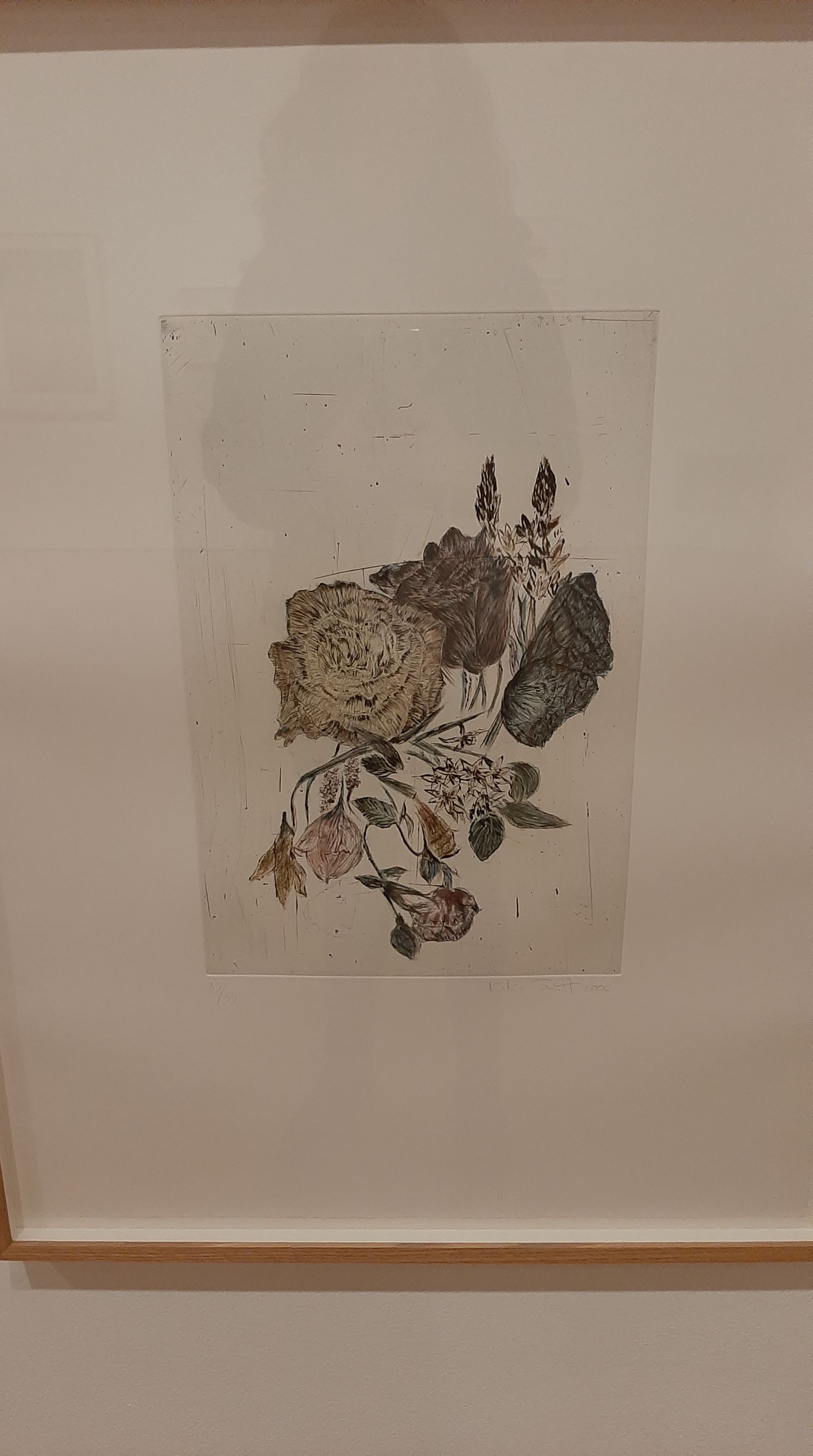
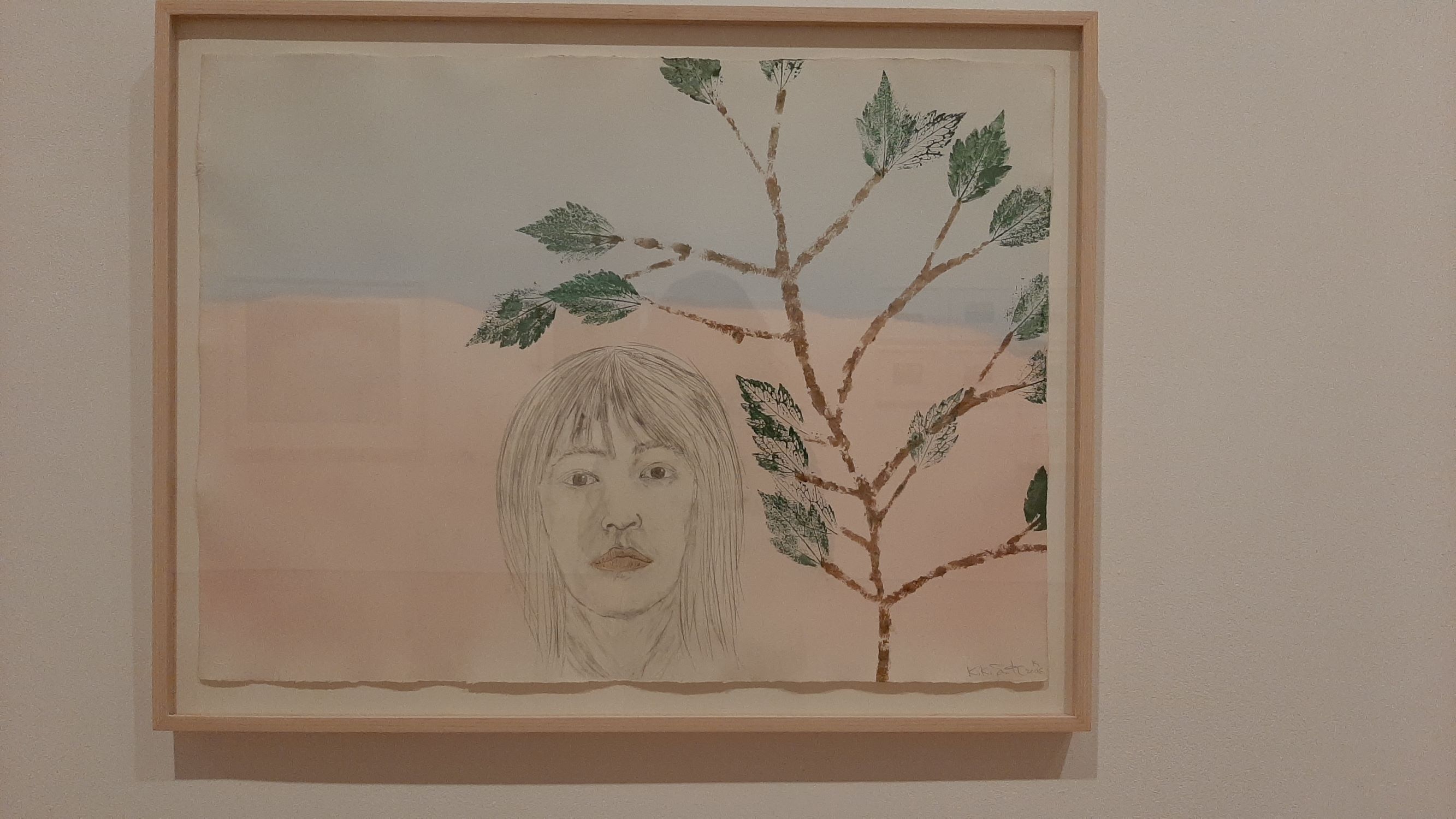
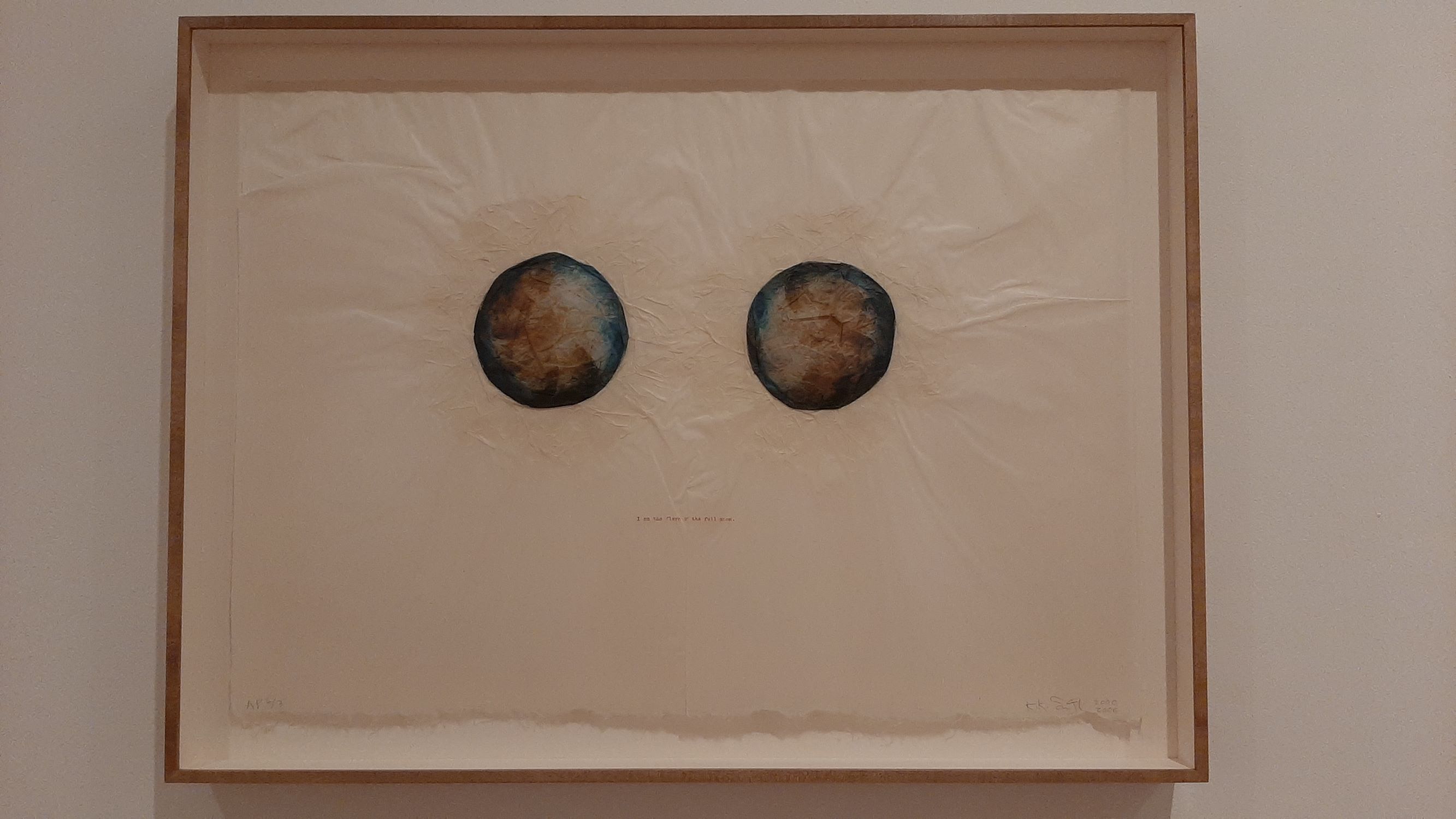
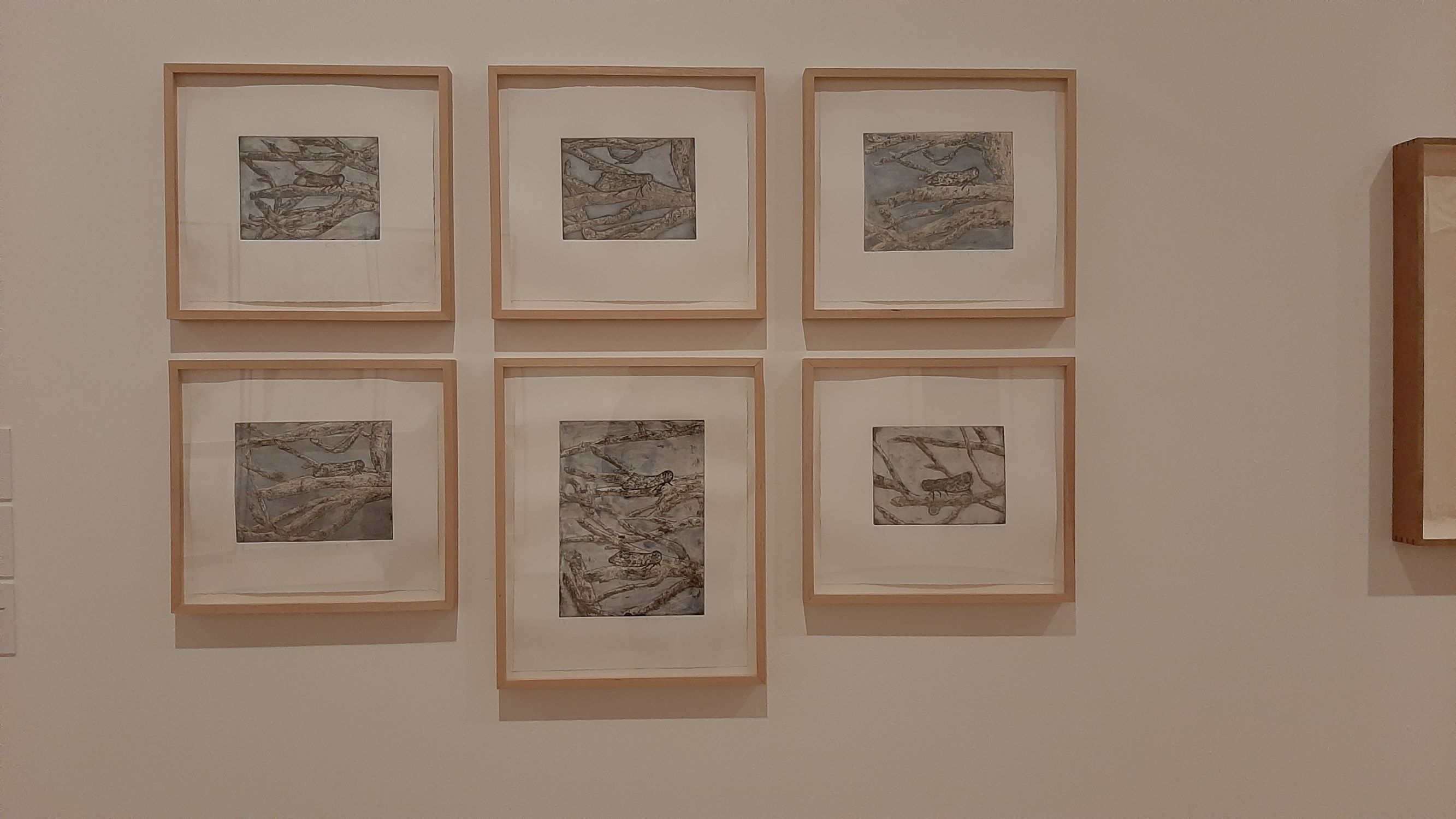
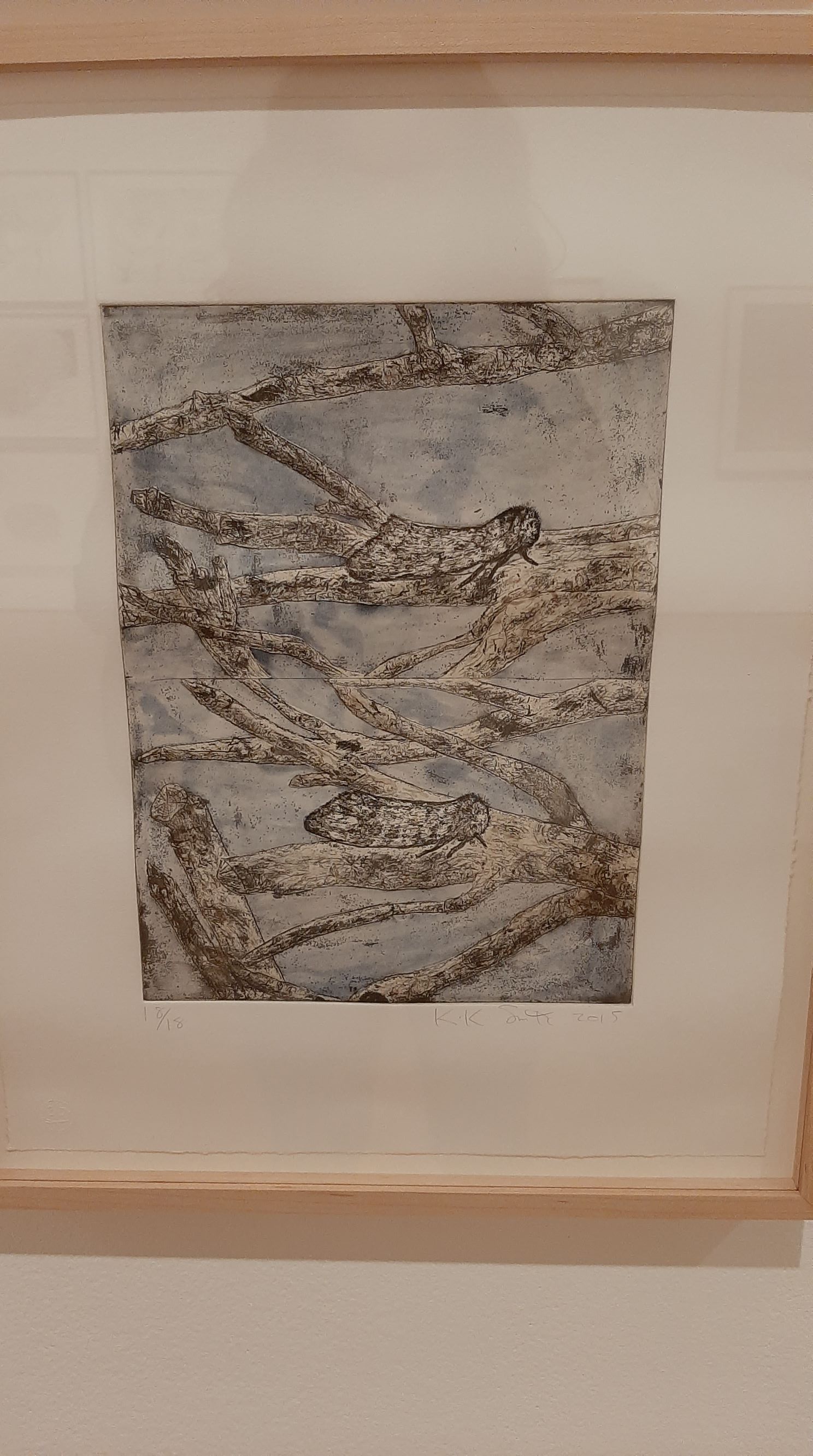
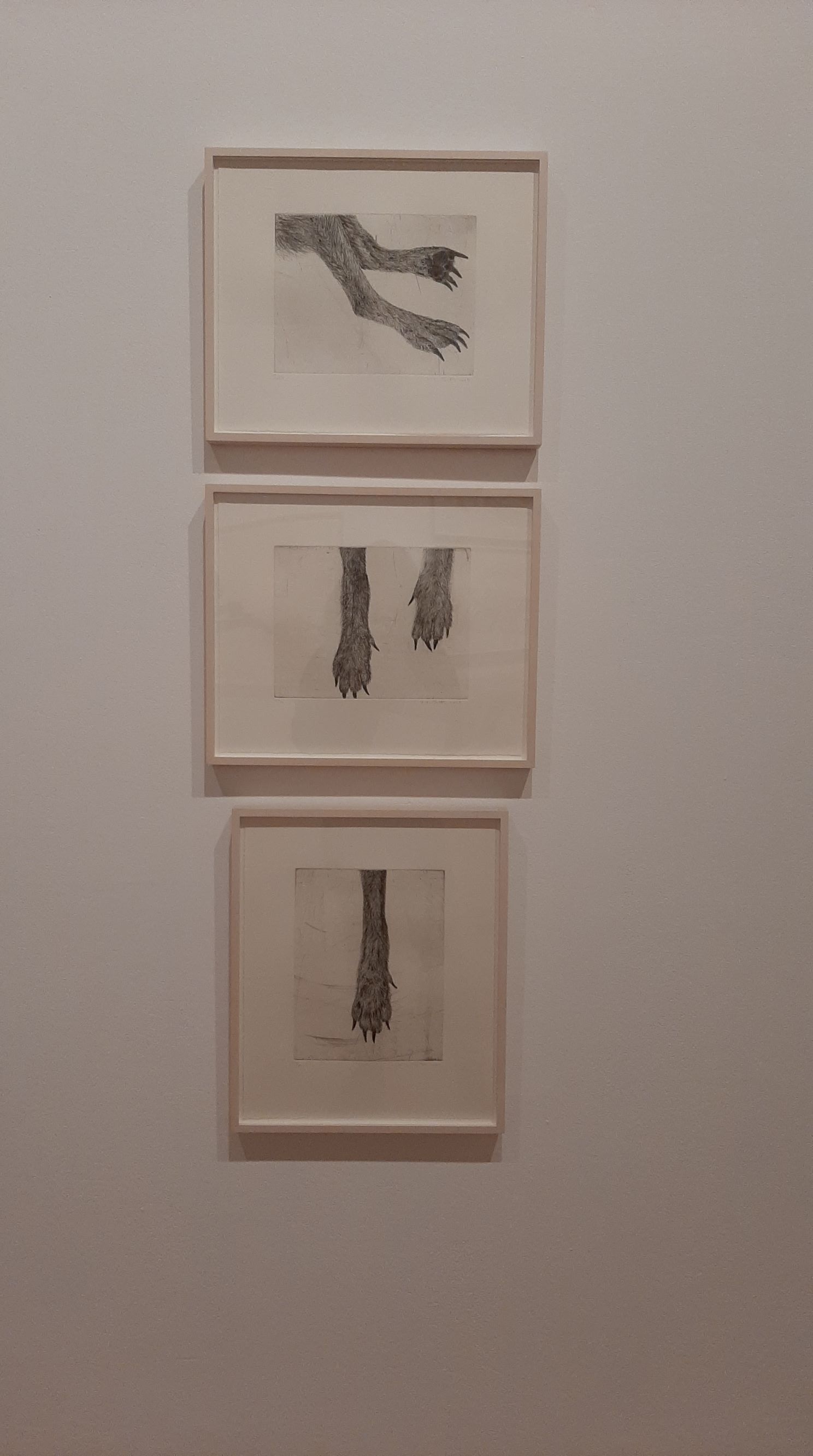
The third room is filled with a selection of prints spanning most of Smith’s career. Printmaking is reflective of the way she makes much of her work: transforming imagery from one surface to another, from one medium to another. She often will transfer her prints into sculpture or other forms, and says of printmaking ‘prints mimic what we are as humans: we are all the same and yet every one is different. I also think there’s a spiritual pattern in repetition, a devotional quality, like saying rosaries’. ‘I like that your mark is distanced, it gives you something that your own hand can’t, even though it comes from your hand’. The prints continue the themes that have run throughout the exhibition: a mixture of mythology, hybrids of human and natural forms, spirituality and imagination. The diverse range of subjects she has explored and incorporated, as well as the media she has used, are useful to see at a time where I have many areas of interest within my work and opportunities to try out new media. I find it interesting what Smith says of her own artistic journey: “I do see a path of subject matter in my work…But that’s only in retrospect. At the time it’s more that certain materials interest you, and you go in that direction.”
References:
http://www.petersprojects.com/kiki-smith-woven-tales
exhibition leaflet and gallery display boards

 Anna Harris