Towards the start of term, around the same time I was doing a lot of experimental drawing, I started playing around with the book/zine format as a way of working. On my foundation course I had a workshop in zine making where we had to bring along images to work with and from, and we played around with photocopying and cutting out sections; my end zine had a very rough and ready feel to it as there were so many different elements sewn together, and I really enjoyed the tactile, mis-matched nature of it. As it was such a good, visual way of research and thinking through making I thought it would be useful again at this point – I mentioned in my blog about the drawings that I spent the start of term gathering photos as a way of generating lots of first-hand material from which to work. Although the drawings were an interesting outcome, I felt the zine format would allow me to work more directly with the photos I’d gathered, especially as I had amassed so many over time.
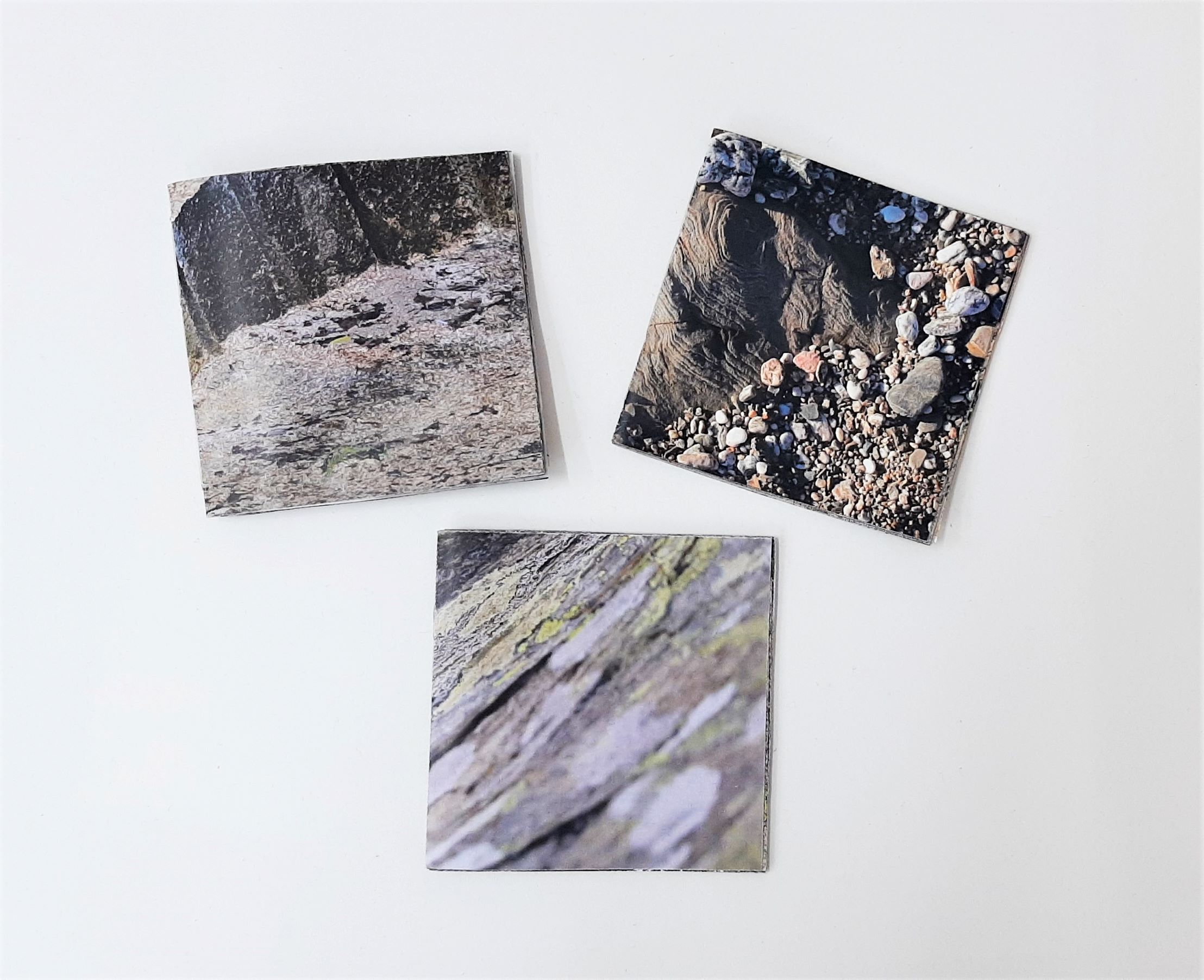
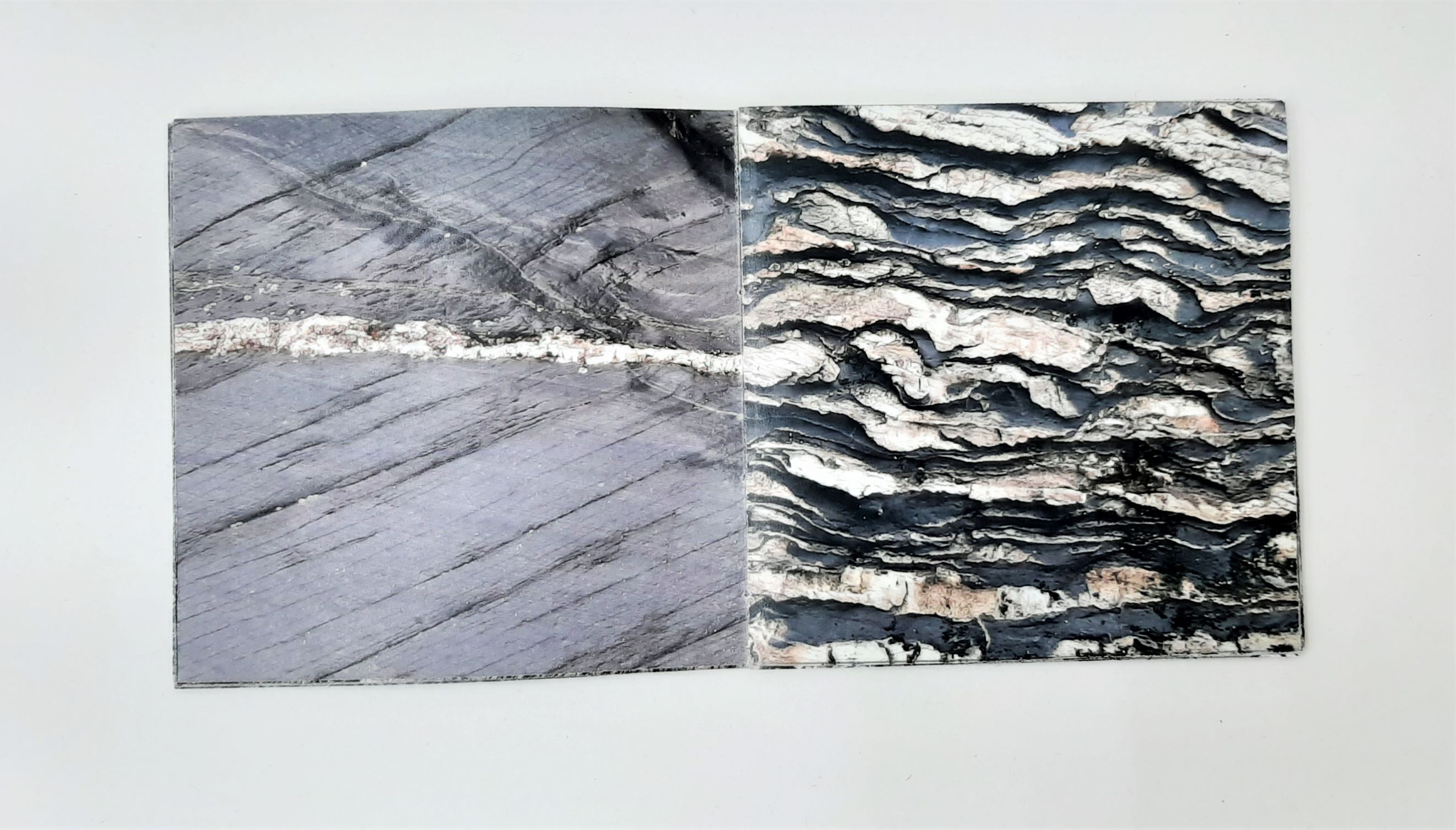
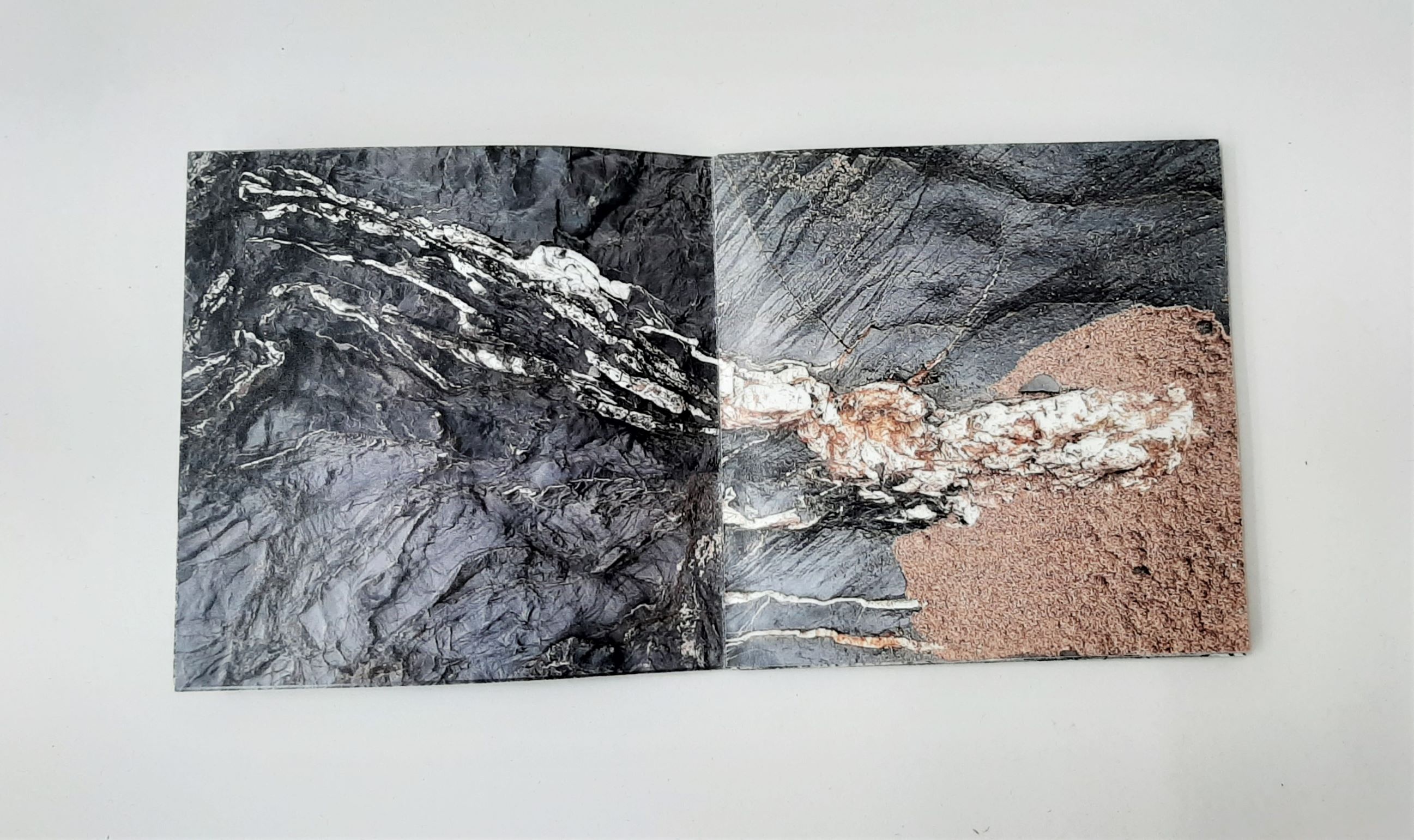
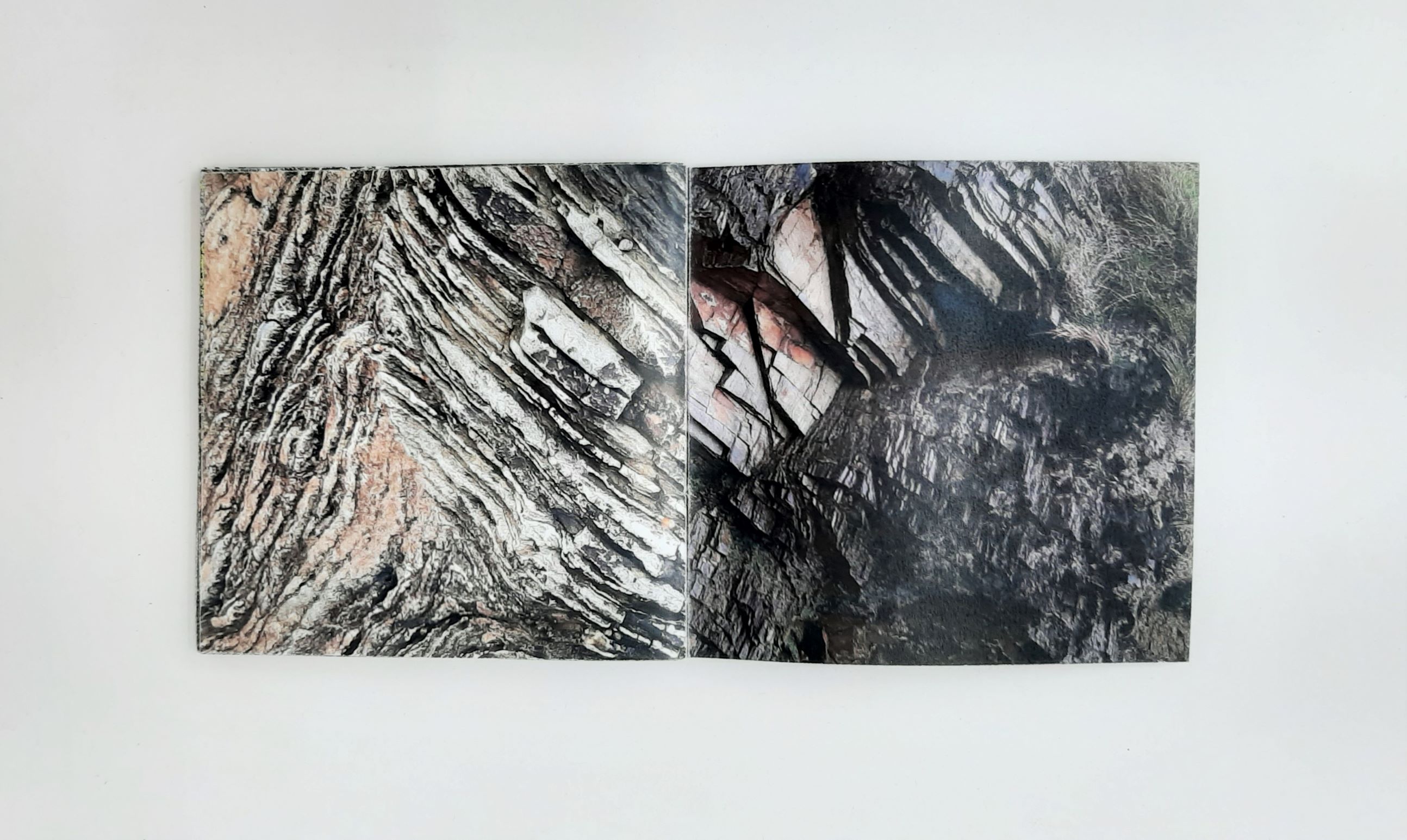
I approached it in the same way I’d approached the ones I’d done before; I didn’t digitally plan out layouts beforehand, I simply printed out the images randomly and began to experiment with cutting them out, drawing from them and stitching them together. I ended up with two zines: one purely photos and the other more experimental with drawn sections and cut out sections incorporated. Like the drawings, they were primarily organised/generated visually, rather than with a conceptual driving force, focussing mainly on the intricate details and patterns of the rocks. The small, hand-held nature of the books is a successful way of cropping down into these patterns, abstracting them almost, encouraging the beholder to look closer. In the zine where I cut sections away, I tried to further this abstraction by cutting away any of the rock’s surroundings (e.g. grass, sand etc) so the patterns are visually isolated: there is nothing to give a sense of scale, so the images could be at a micro or macro scale.
As mentioned above, the book is a useful media for collating and collecting visual research, and then, by extension, being able to draw links between the gathered information in retrospect. To an extent I encouraged this element through my assembly of the first book; where possible I tried to line up aspects of different compositions to create some sense of continuity throughout. By extension this may encourage the beholder to then consider what other links there may be, or why certain images have been placed next to each other. While I like these links that I was able to create by chance, it does imply that there was some pre-planning which then reflects oddly on the pages that don’t tie together. Perhaps I could take this idea of pre-fabricated links further and create a book where all the pages link?
The book as a medium also has associations with narrative which isn’t something that I particularly explored here, but again has definite room for future exploration. It would be interesting to research other artists who use the book as a form for their work to get some inspiration for different formats and content, as well as its position within the contemporary art world. There is perhaps also an educational quality associated with books, often designed to impart facts or morals to the reader, whether fiction, non-fiction or zine. Again I wouldn’t say this is something I explicitly explored here (although once more there is potential for future exploration, particularly combining the educational with the narrative, maybe looking into old folklore etc) but to an extent they are objects that encourage curiosity: they are small, hand-held, inviting the viewer to pick them up and take a closer look, much like the paper rocks I made before Christmas. This is an emerging theme in my work that I’d like to continue – the small, personal, intimate objects that want/need to be held to be understood. I like how it contrasts with the stereotypical gallery etiquette where everything is to be looked at only, not touched. To an extent, allowing the objects to be handled, especially in the case of the paper rocks, would further their conceptual merit – it is, after all, the age of the rocks, their past, how they’ve formed and how this shows on their surface that is of interest to me so being able to read from the surface of an object that it has been handled, maybe dropped, only goes to emulate this further. This exploration of the story/stories behind a particular object could be extrapolated and developed further through the use of the book.
I also like how the books have a clear sense of an inside and an outside, how you can go from seeing one to delving into the other. This idea of inside and outside, interior and exterior, is another theme that I have been looking to develop since seeing Antony Gormley’s exploration of the body as a container.
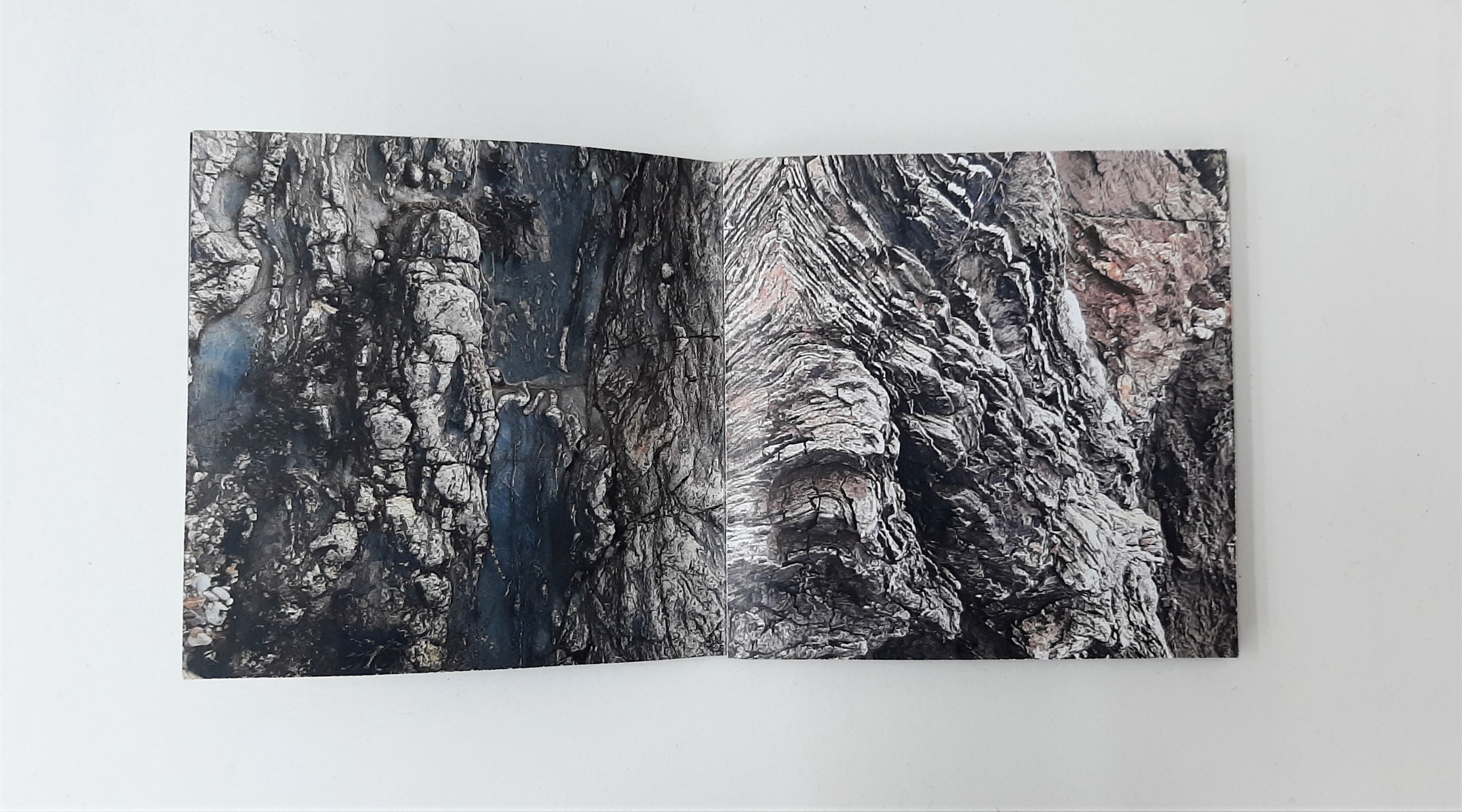
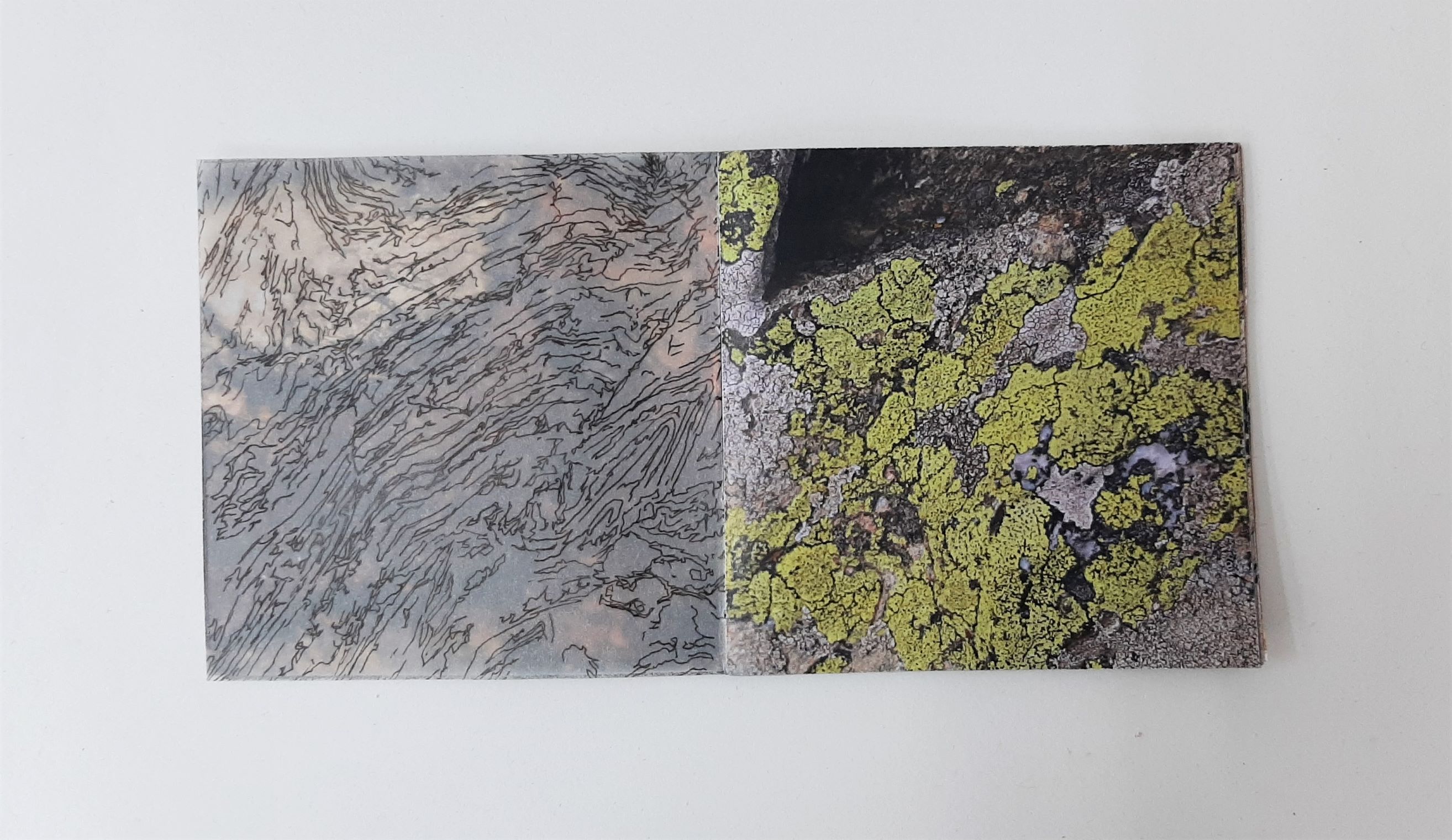
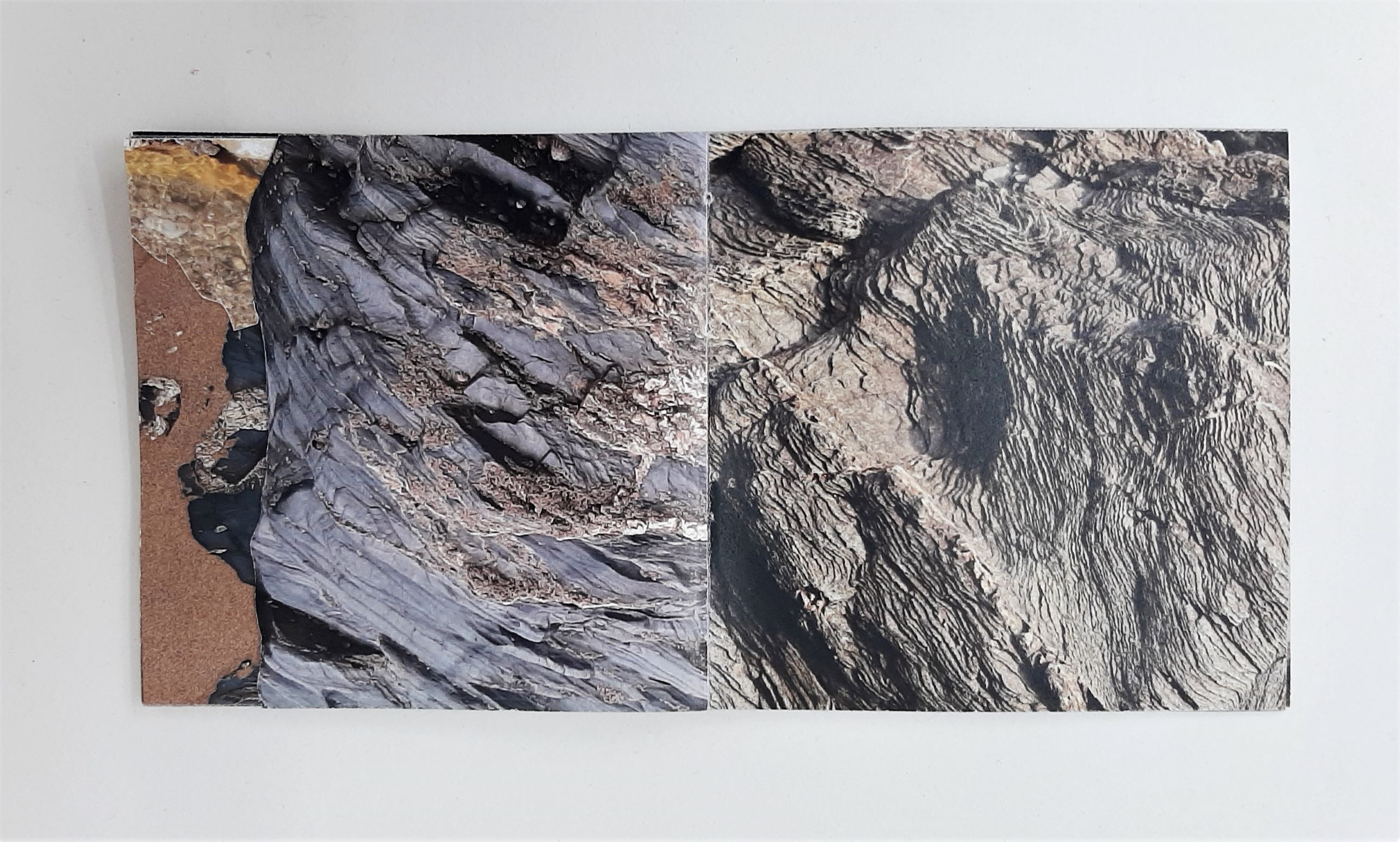
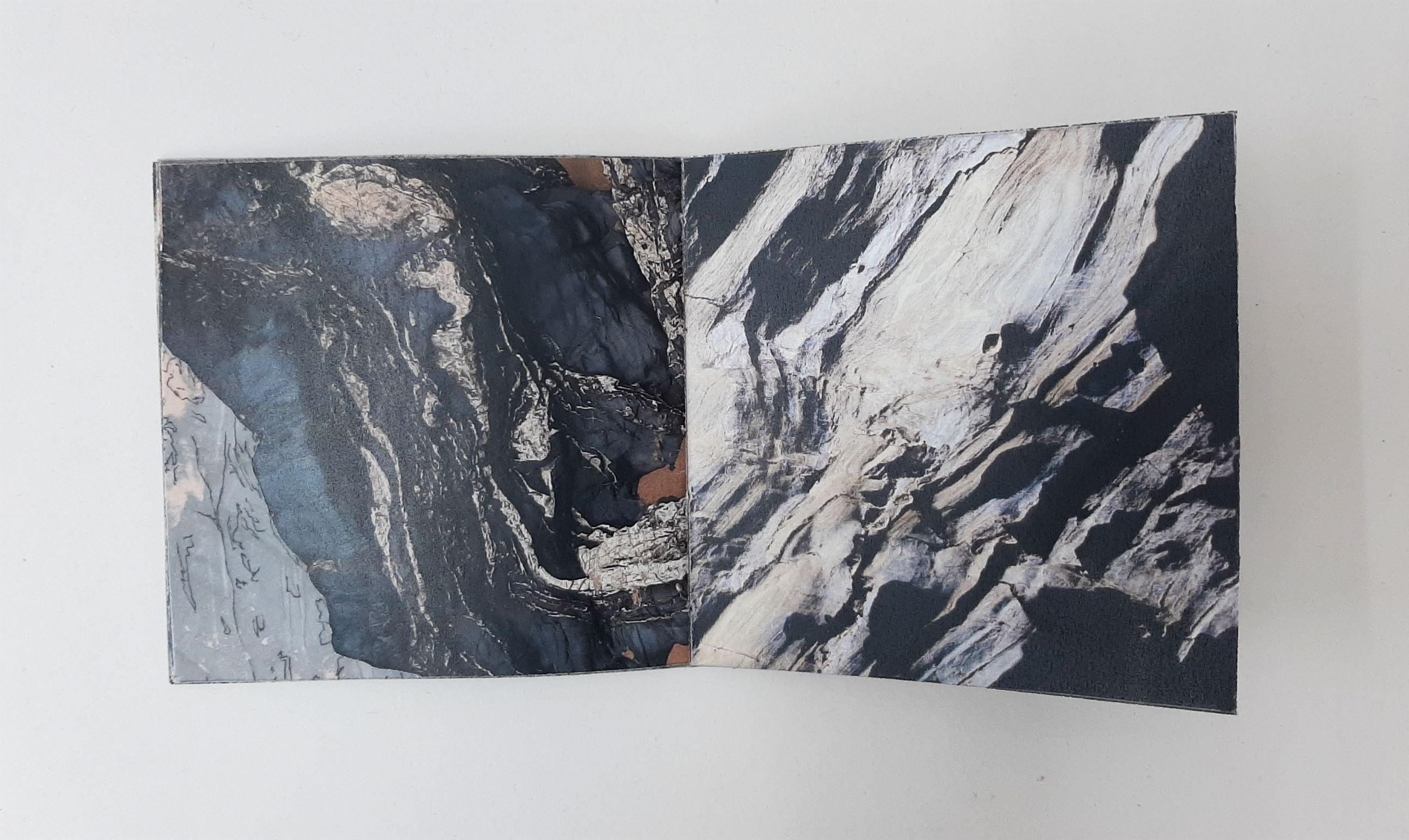
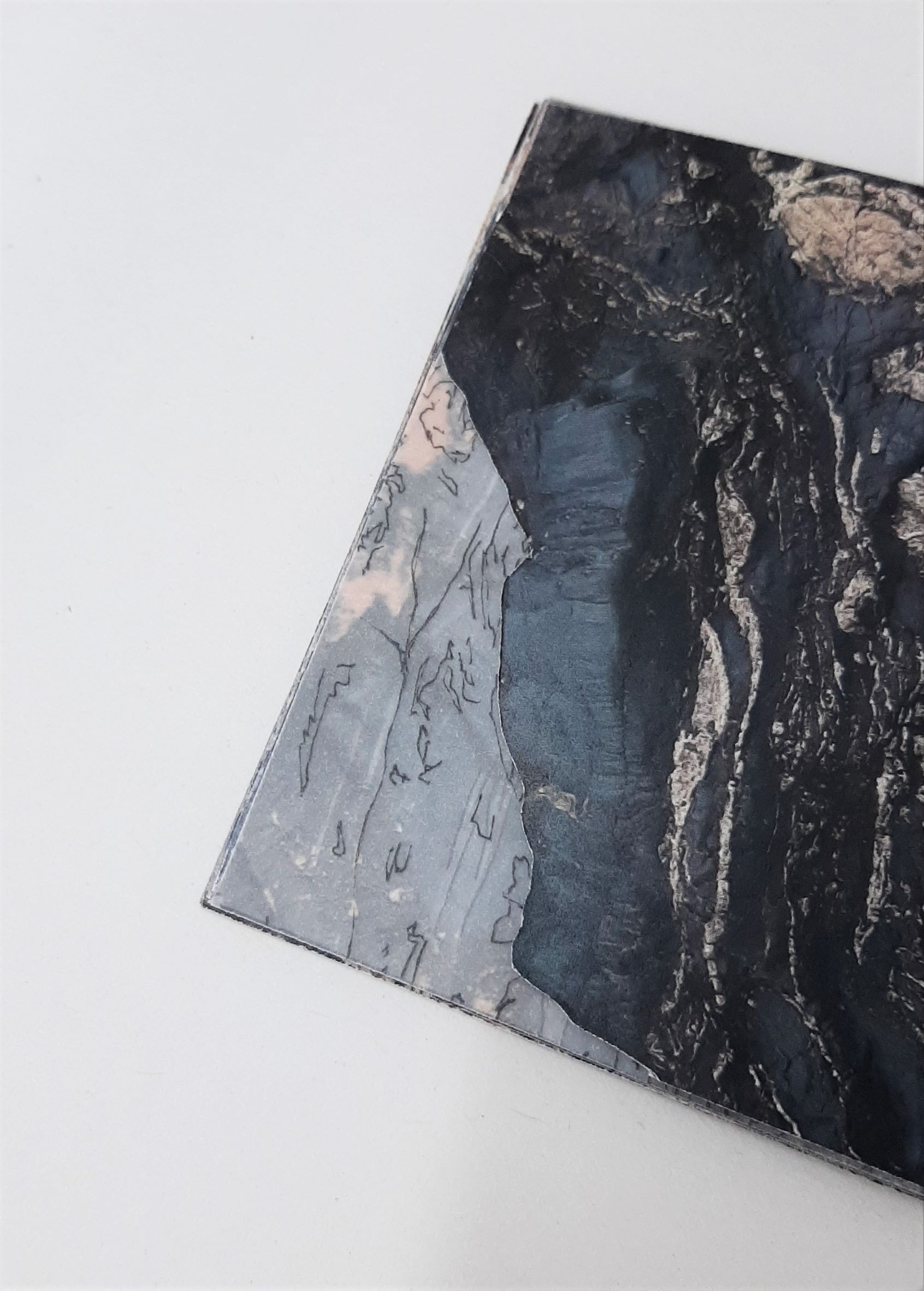
As mentioned in my previous blog post, I needed to create a piece off the back of the quarry trip, exploring a sense of place. As I had gathered lots of factual information from the quarry trip I felt a similar format of zine would be a good way to create a piece that could incorporate all I’d learned. I used photos of granite – in all stages from being taken from the ground to its finished masoned form – as well as aerial shots of the quarry to once again play with the idea of scale, the macro and the micro. I thought this represented quite successfully all that I had learned about the quarry, from the detailed facts about types of granite to the quarry laws and quarry communities and history of granite that build a more wide-reaching picture. The piece was then discussed in a seminar (notes below, as well as some useful artists/links that I was recommended) and one of the key things we discussed was immersion; often ‘immersive’ artworks are thought to be installations, big pieces into which audiences can walk, however smaller pieces, like the zines and paper rocks (as mentioned above), have a different quality of immersion as they draw the viewer in, immersing them instead in details and, hopefully, thought.


Interesting Links:
- https://www.theguardian.com/artanddesign/2019/aug/24/simon-starling-interview-a-a-b-b-modern-institute-glasgow-turin-fiat-125-tiepolo
- https://en.wikipedia.org/wiki/Rose_Ferraby
- https://www.christies.com/features/David-Nash-on-his-free-range-sculpture-Wooden-Boulder-7525-1.aspx (particularly interesting in regards to sculpture + story)

 Anna Harris