One of the most interesting elements that I took from Antony Gormley’s RA show was his portrayal of the body as a vessel, a container for experience that we all share. He encourages his audience to consider the body as a physical place that we inhabit, especially accessed when we close our eyes and are alone in our own dark space. Many of his works convey this through creating a ‘bodily black hole’: in Cave you could physically walk into and explore this dark space, but in works such as Body and Fruit or Fruits of the Earth, as well as his well-known body casts, the space is more implied, totally concealed from view and left up to the imagination of the viewer.


Body and Fruit, Antony Gormley 
Fruits of the Earth, Antony Gormley
I began to consider what this could mean when used in my own work; instead of using it to approach the human body, what would it mean if applied to rocks and/or other inanimate objects? Instead of being vessels for universal shared experiences, could we instead consider them as vessels and containers of experiences outside of us, whether known or unknown. By provoking thoughts of what the object is, what it could look like, perhaps then the mind will wonder further onto the story behind it, how it was made/formed, how it came to be where it is today, where it has been, how old it is – the story behind it, the object’s ‘soul’.
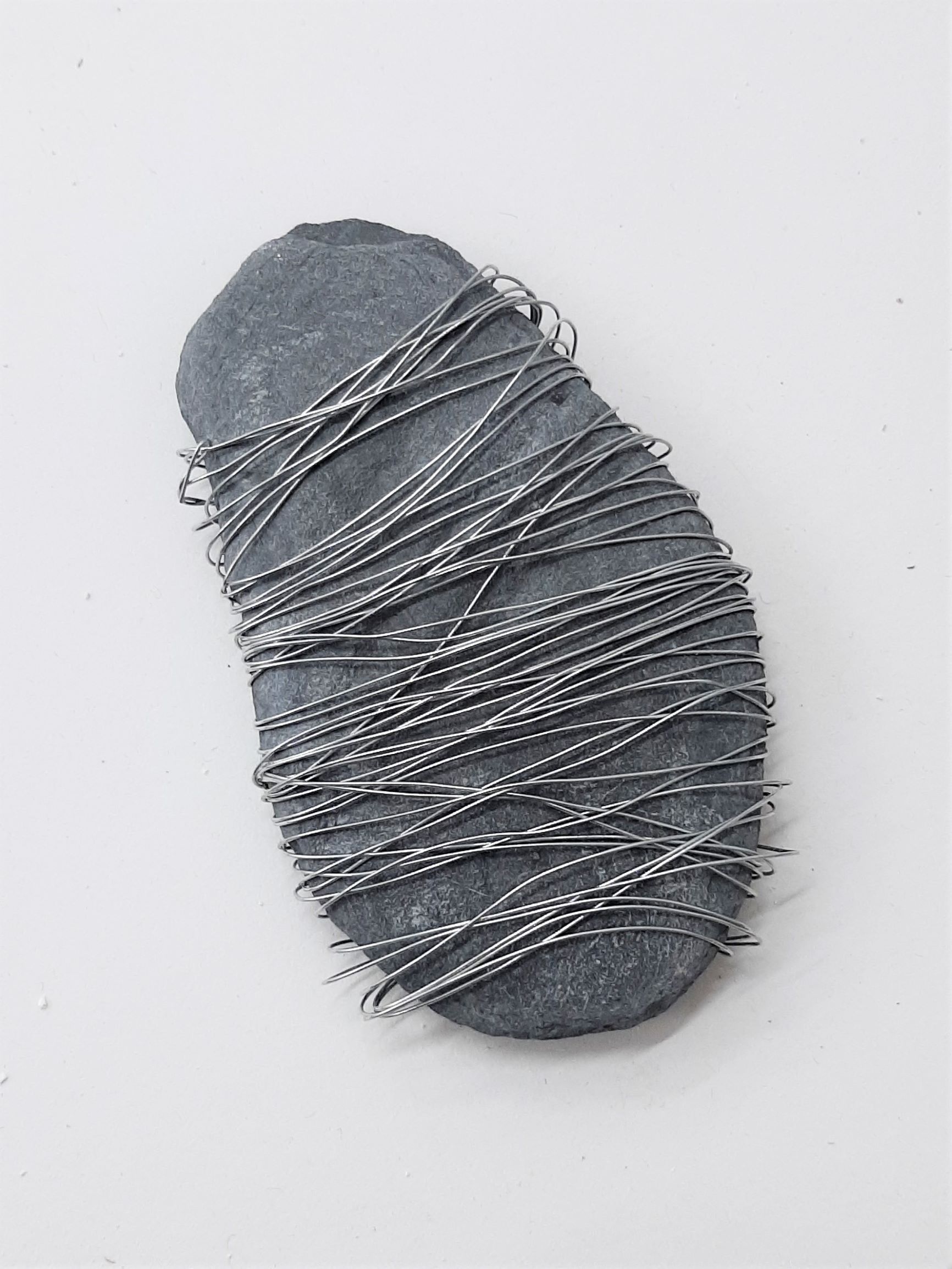
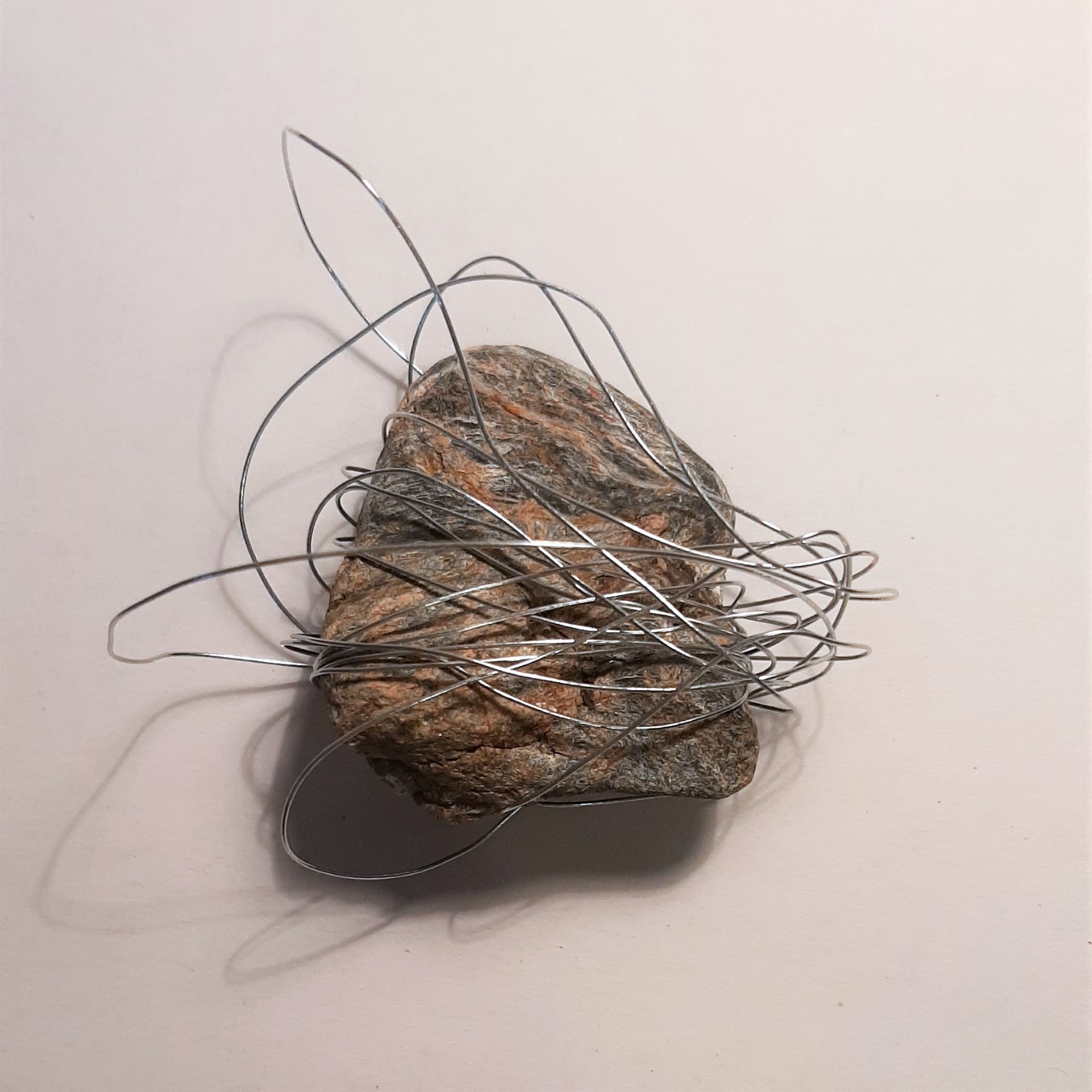
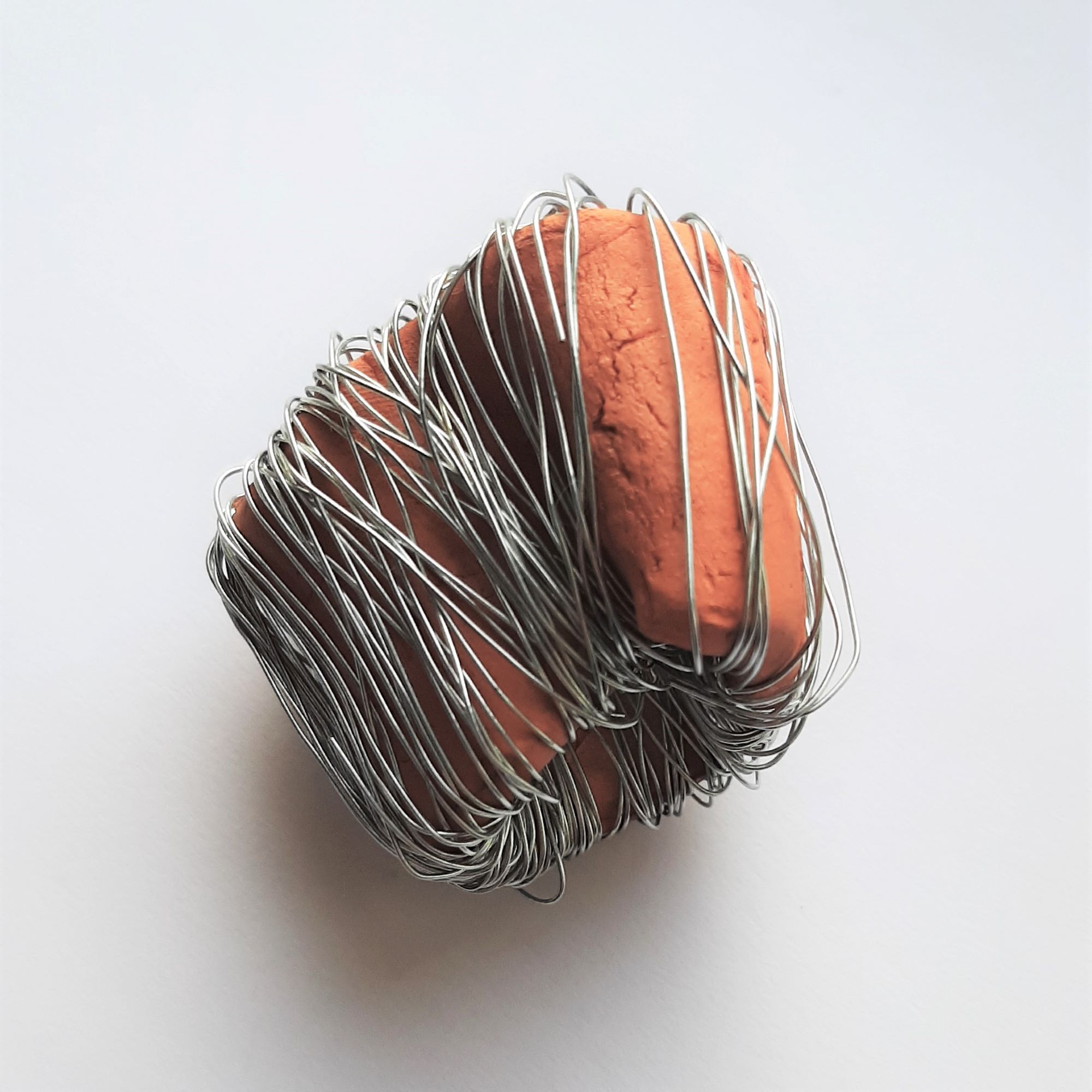
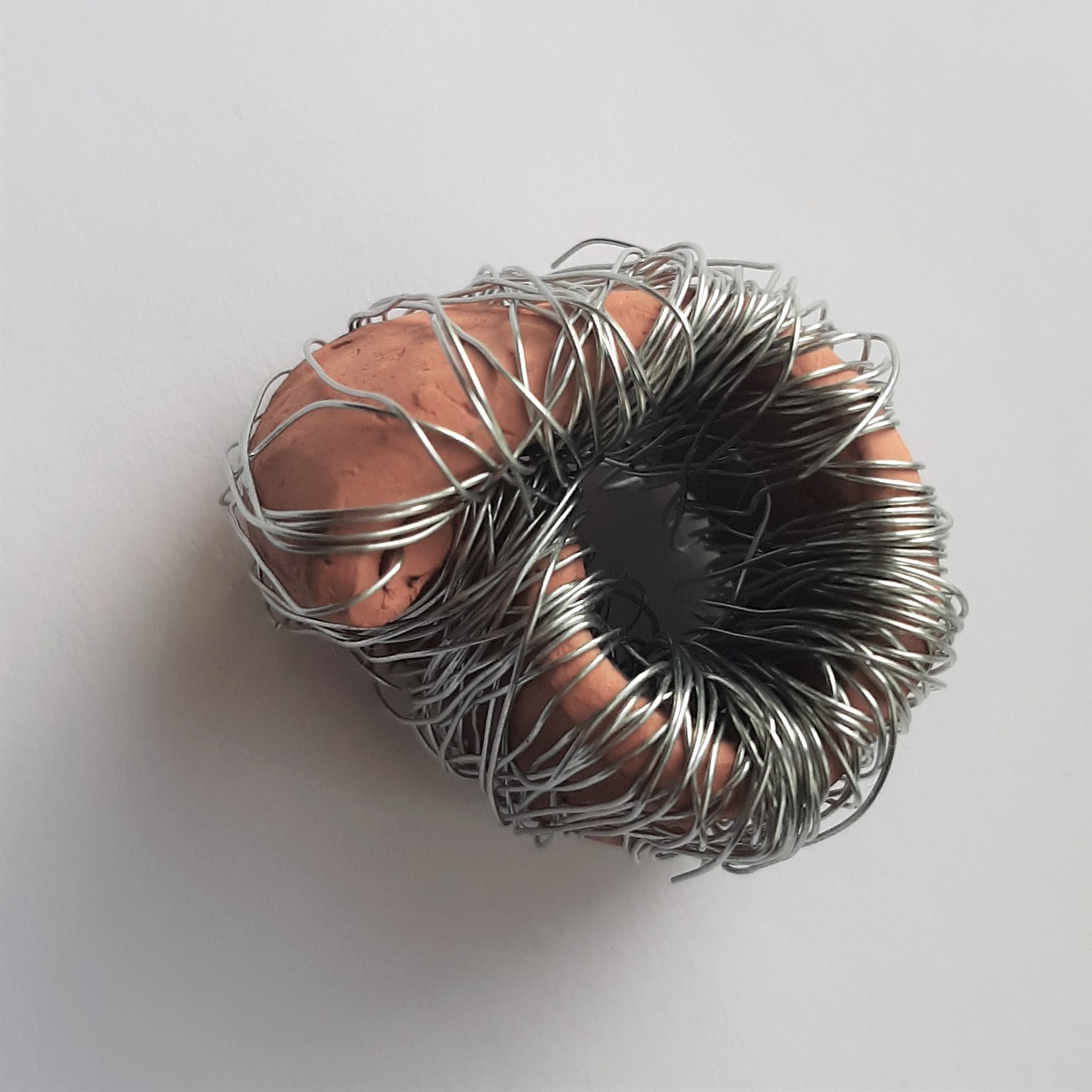
I have therefore grouped together several of my recent experiments under this umbrella of exploring different ways of concealing or containing an object to reflect on how this stimulates the imagination of the viewer. The first material I used was wire – perhaps not the most obvious material to fully conceal something but I felt it was a natural extension into three dimensions from all my drawn line work. The intention here was not necessarily to fully conceal – I experimented throughout these pieces with the balance between full concealment and leaving areas exposed – but to continue exploring the energy/flow lines around the rock, influenced to an extent by the work of Andy Goldsworthy. Out of all the experiments here, this one is still more explicitly considering the external of the rock, not the internal as the others migrate towards. To an extent this was due to the choice of material: it is hard to make wire fit snuggly around a mass, especially if it is uneven in form, so it breaks away from forming a skin-like layer to flying off into the surrounding space. I suppose I therefore see these pieces as more of a three-dimensional exploration of the principles covered in my rock lines; it is primarily included here as a bridge between the two.

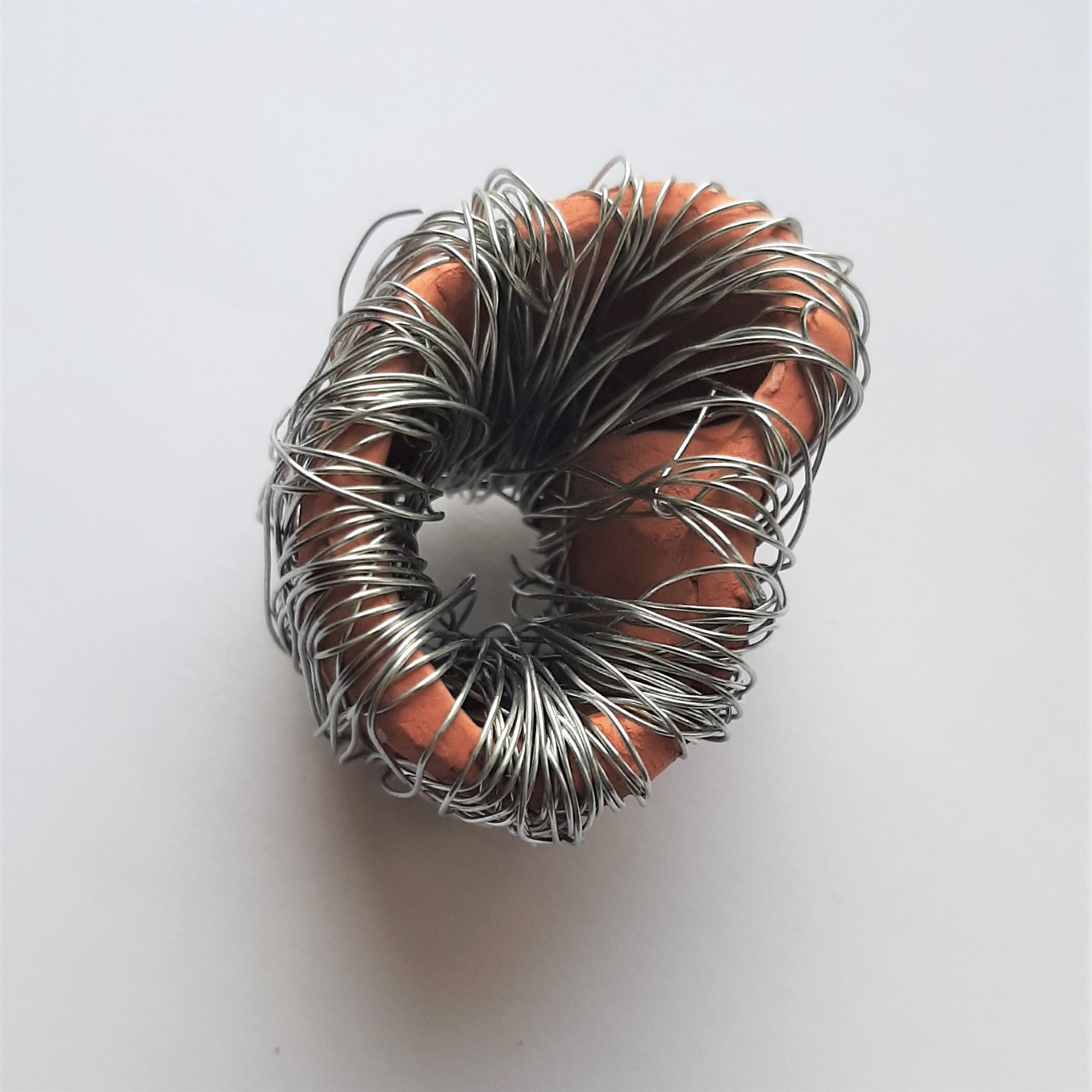
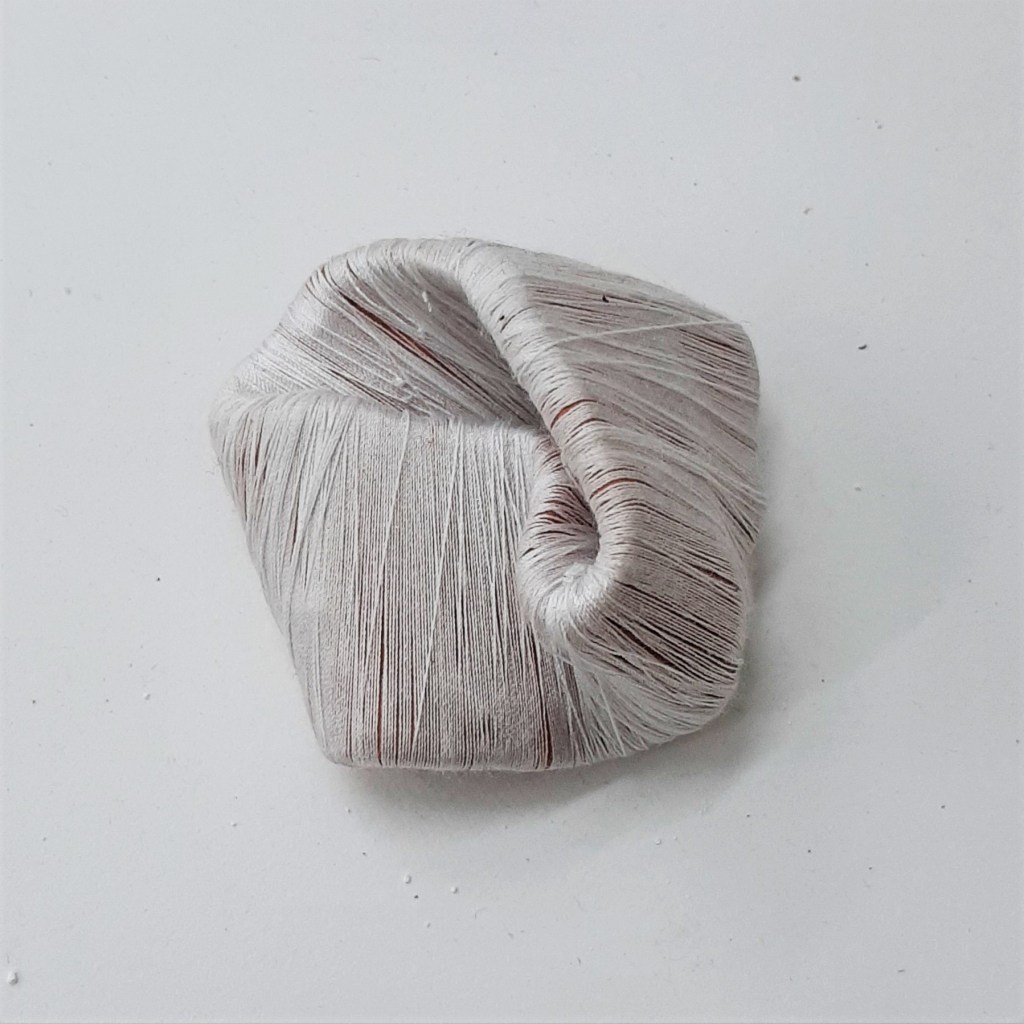
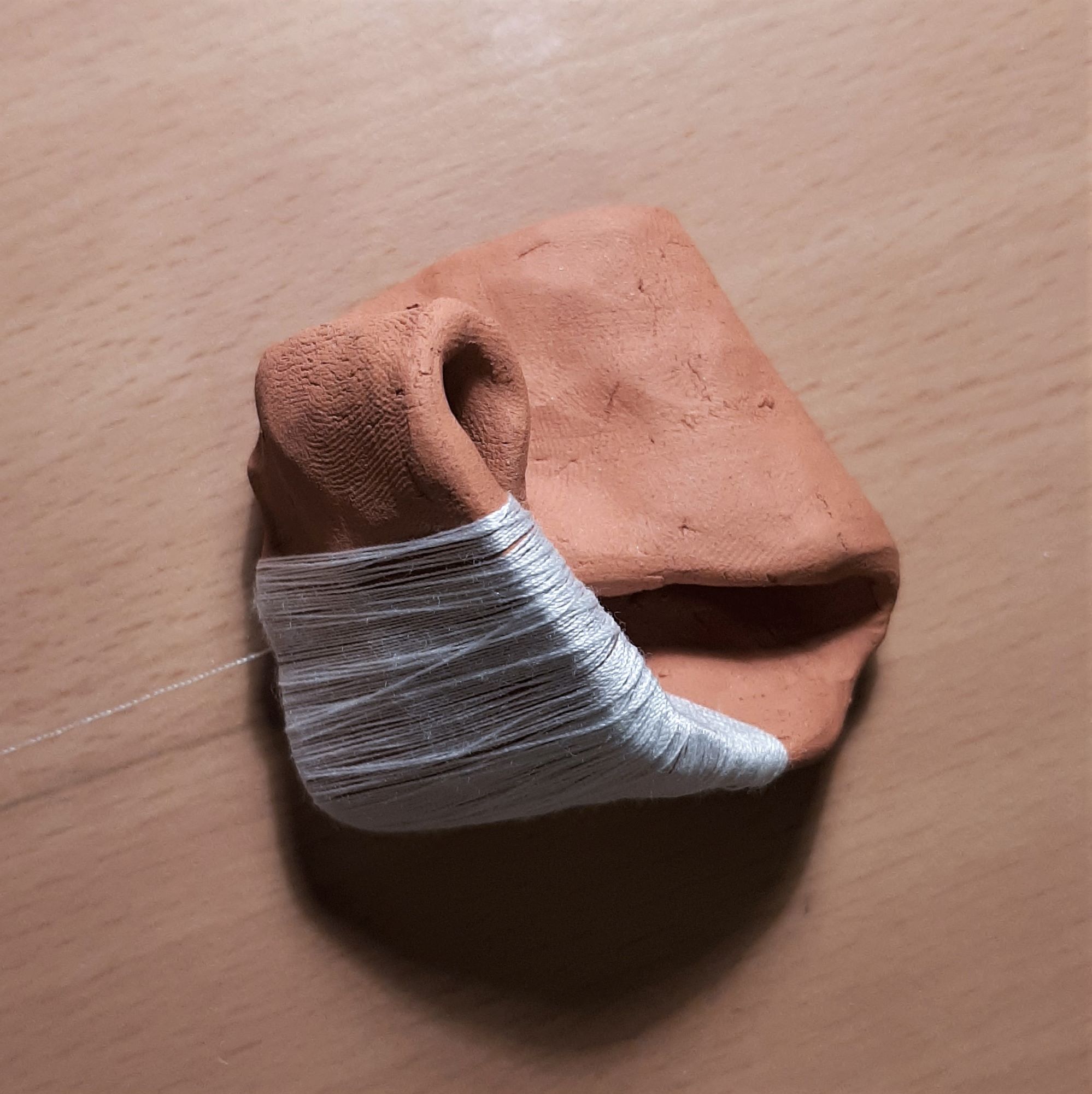
The next material was thread, a natural progression from the wire which constantly resisted being fitted close to the surface of the rock, to a material which was much gentler, domestic even. The domestic associations are interesting as they weren’t something I considered at the time, but yet had considered a lot earlier on a project in my foundation year. Wrapping an object, especially in a domestic material like this, has immediate connotations of comfort and protection, yet when covered as extensively as this it begins to border on overprotective, smothering or even suffocating. When considering this before I was wrapping up plants – living organisms – so perhaps it doesn’t translate as well with inanimate objects but it is still worth considering the connotations of wrapping something so tightly. It is also worth mentioning that I was using a ceramic piece I’d made out of terracotta, rather than a rock. I felt the form would be easier to wrap thread continuously around and I was also just playing around with the idea of introducing these ceramic pieces that I’d been creating in workshops, and seemed to be sitting just outside my practice, into my main body of work. I’m not sure if this was successful as to me the end product seems to be mainly an aesthetic exploration, with the thread reducing the ceramic back to purely its form, and without there being a huge amount of intrigue into what is contained by the thread. The shape of the ceramic to an extent encourages the exploration of interior and exterior as it has somewhat of a central void, but it doesn’t go beyond this into the very centre of the material itself which is what I was roughly aiming for. The highly repetitive nature of wrapping the thread does link back, again, to my earlier work with the rock circles and paper rocks: both very accumulative pieces where there is a certain element of time bound up in their creation. This maybe isn’t an overly strong link, and not one I was aiming for, but is an interesting by-product nonetheless. Of all the materials, the thread was the closest to embodying the idea of an object’s ‘skin’, a delicate membrane coating the object, perhaps letting a little in and out, a barrier drawing a line between the world and what’s contained within.
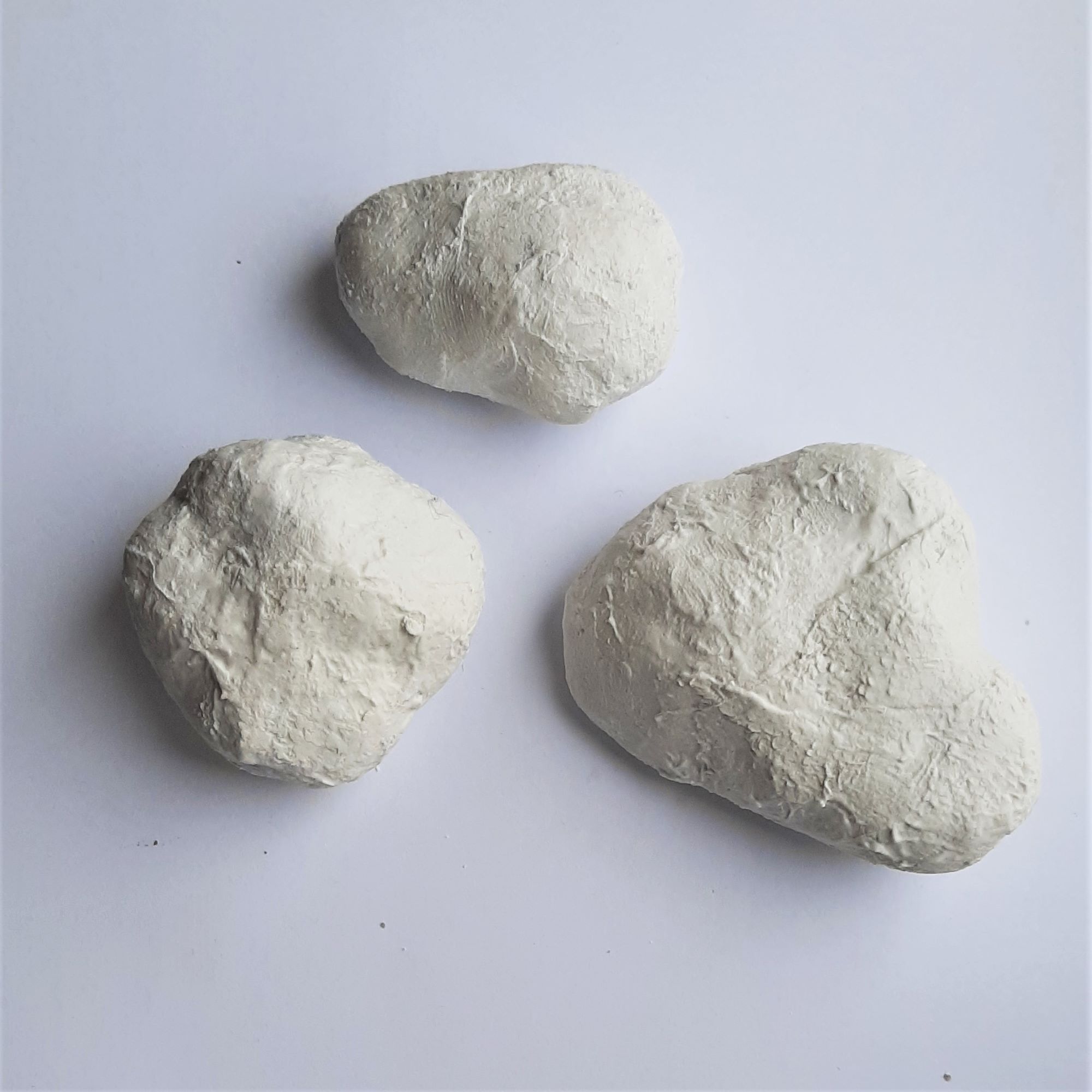
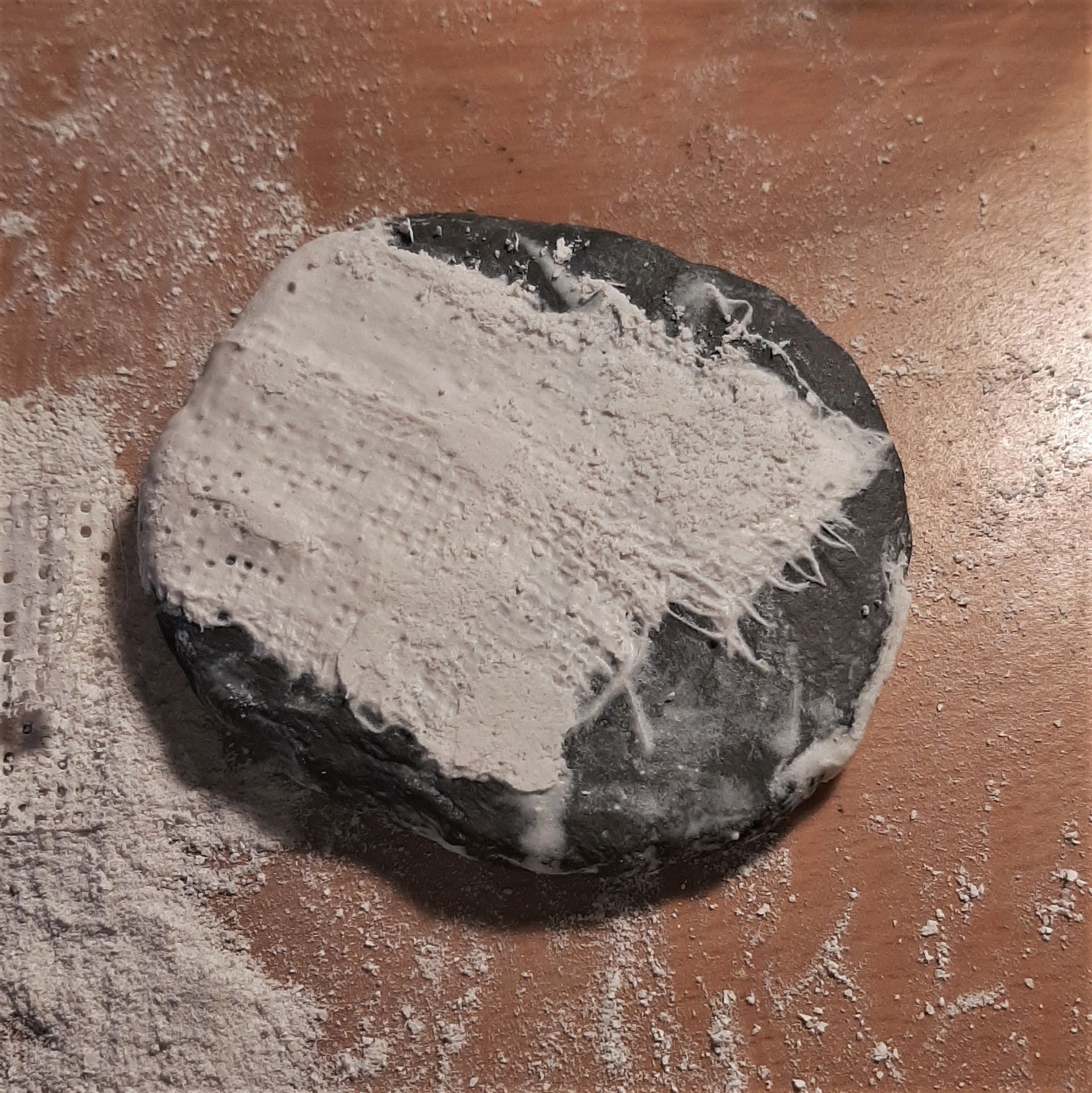
The next material I used, this time back on rocks, was Modroc. I got the idea of using Modroc from using it to strengthen a mould in the casting process; it formed a solid outer layer, obscuring what was inside, and yet was predominantly only there to be broken open again once set – an intriguing and somewhat juxtaposing combination of properties. I found it to be most effective when applied to rocks that were a little more irregular in shape as they were more apparently rocks once coated. Equally, perhaps something new is added when the concealed object is ambiguous – the mind is left to wander more. Much of the viewer’s mindset towards a piece like this is determined by the information made available to them; does writing sit beside it explaining what’s within, does the list of media presented alongside it act as the only clue, or is simply nothing offered? I can’t say I know the answers to these at the moment – it is something I could begin to consider and play around with when nearer to exhibiting. Perhaps I could present them as a series, with differing information offered about each one, or with the differing forms being left to speak for themselves. I do feel these pieces would work well as a series, presented together, rather than standalone artefacts, particularly with their visual similarities to the paper rocks I created previously. They are not similar enough that they could be visually confused, but it does lean towards the idea of facsimile, particularly between different media. Before Christmas I created an entirely realistic fake rock so perhaps I could return to this idea, using unseen differences in material to question the essence of two comparable objects.
In one of the Modroc experiments I joined together several rocks to make some kind of amorphous amalgamation. I was aiming for the individual rocks to look as though they were intersecting one another, defying their materiality and sharing physical space. I thought this might lend itself to encouraging thoughts of interior and exterior but in reality I’m not sure it achieves this. I think this would be more successfully attempted through casting but even then, as rocks can form in such uncanny shapes even naturally, it may not be immediately evident that this is in fact multiple rocks somehow intersecting in space.
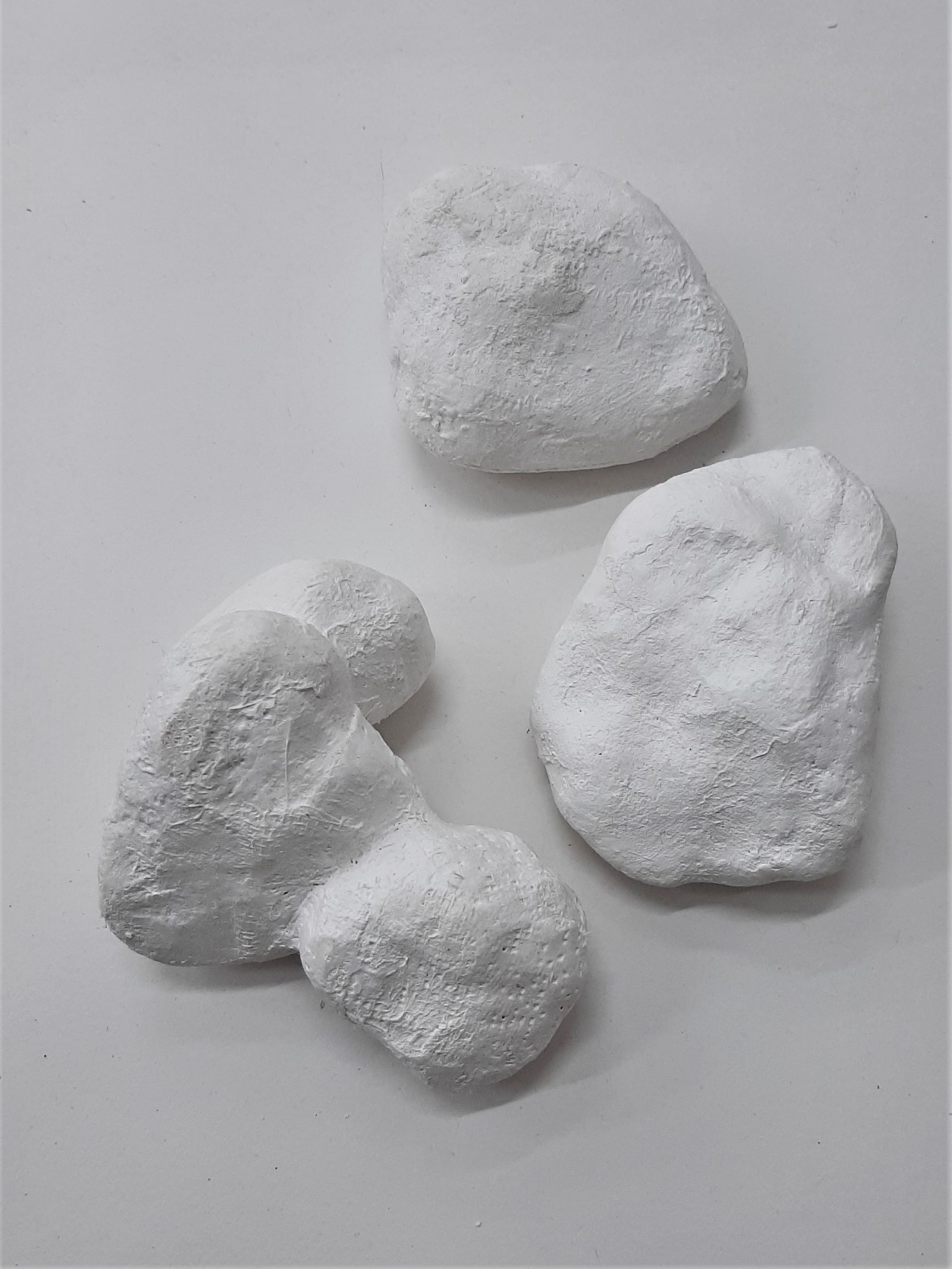
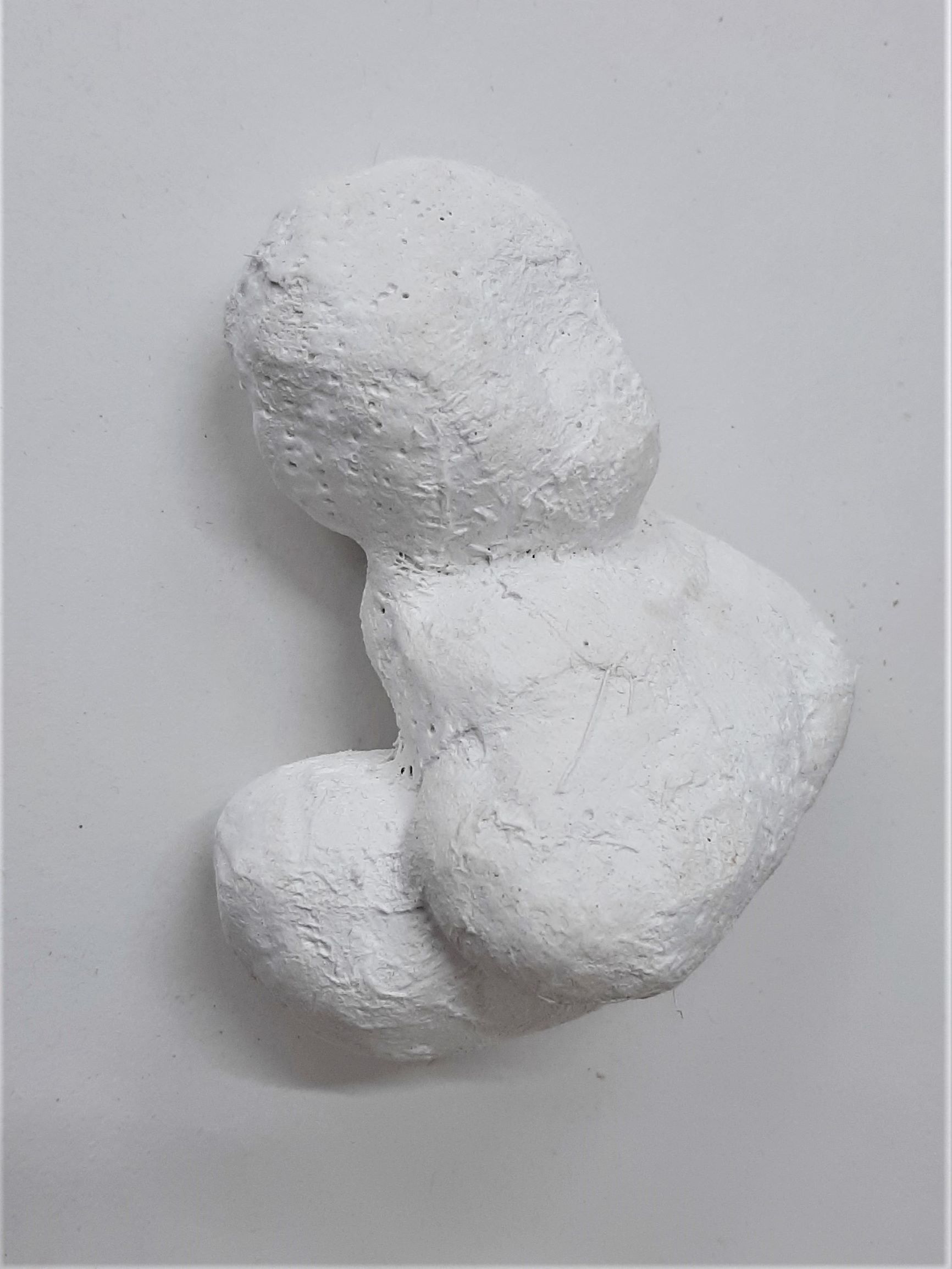
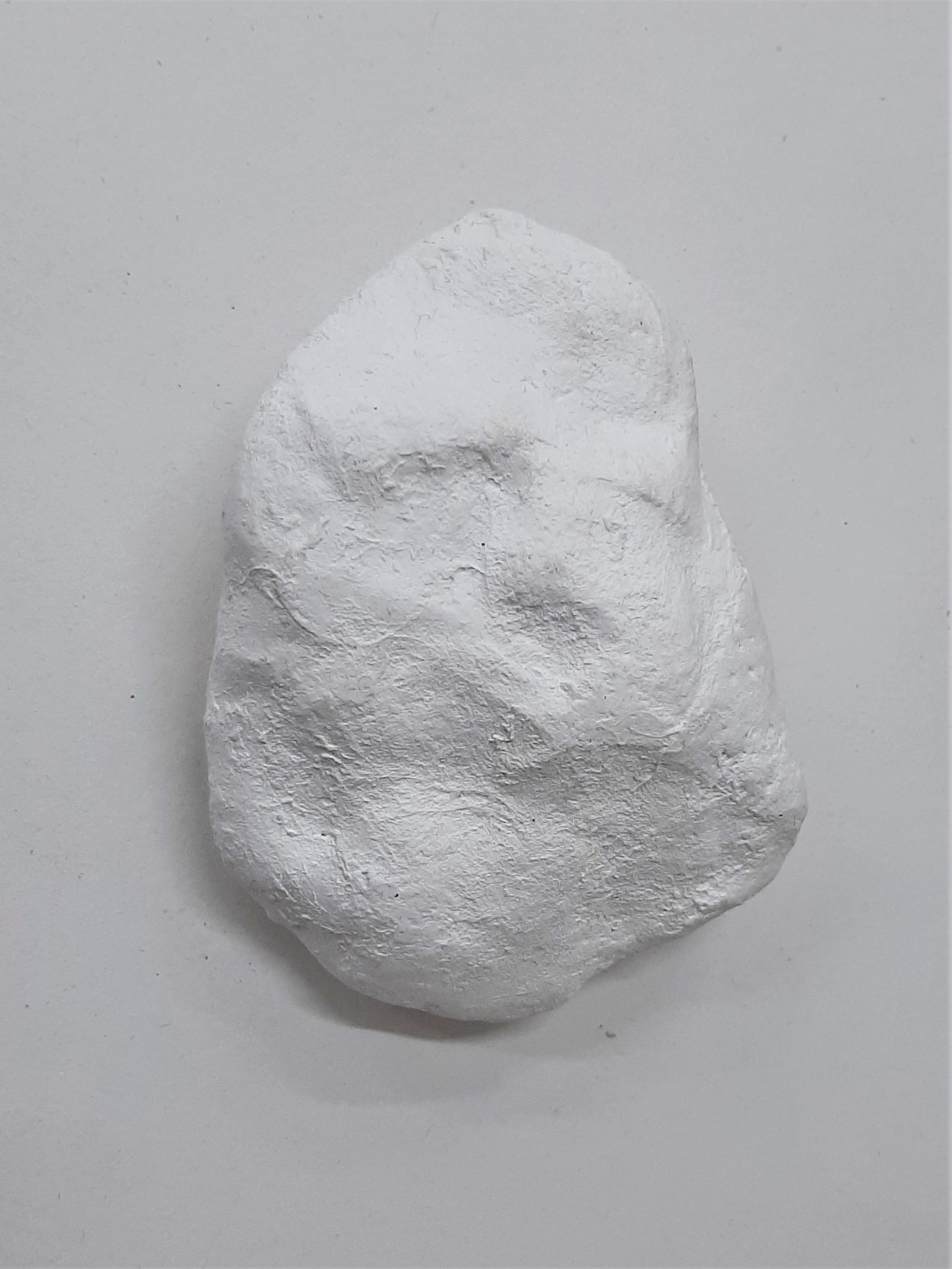
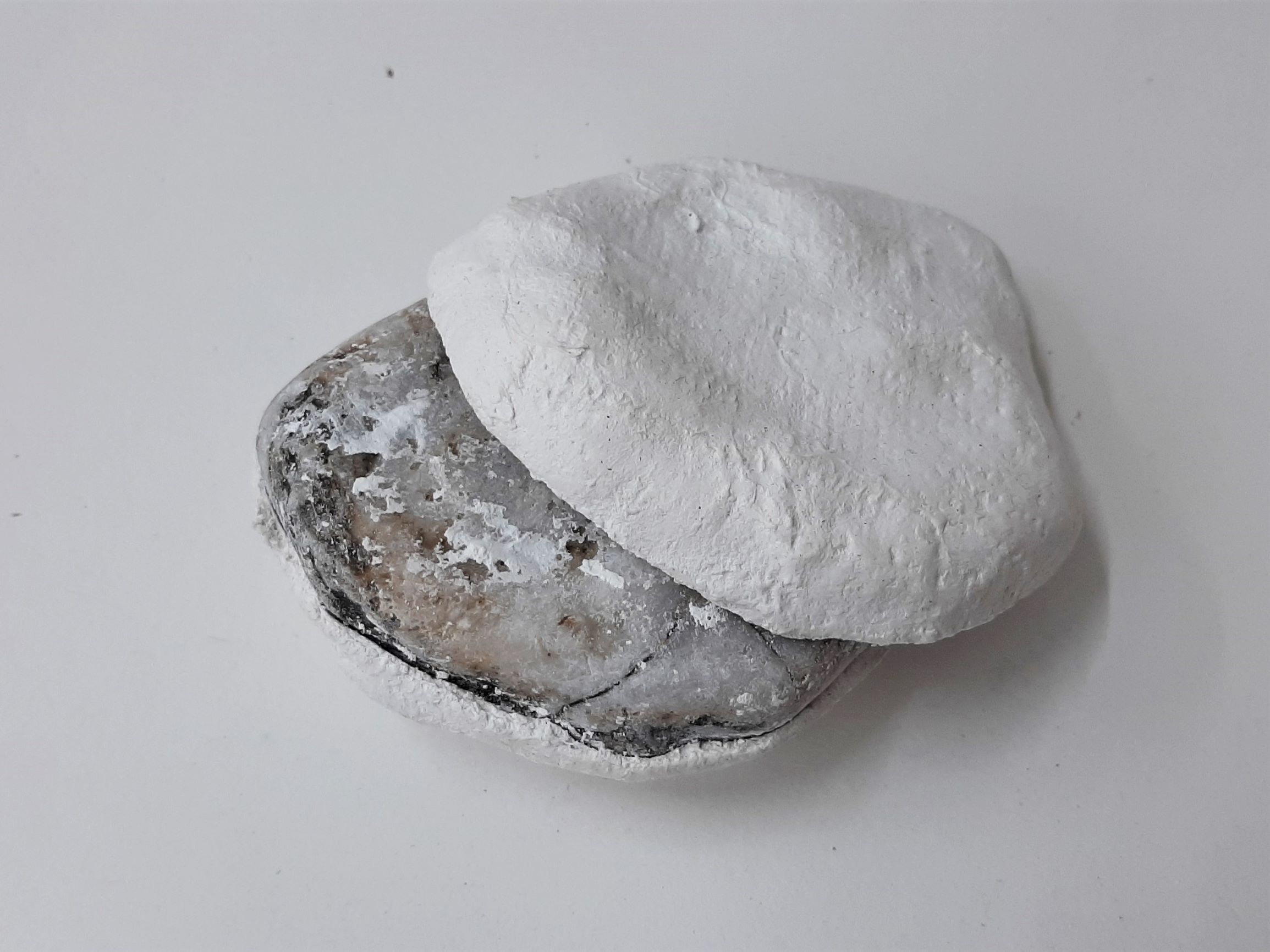
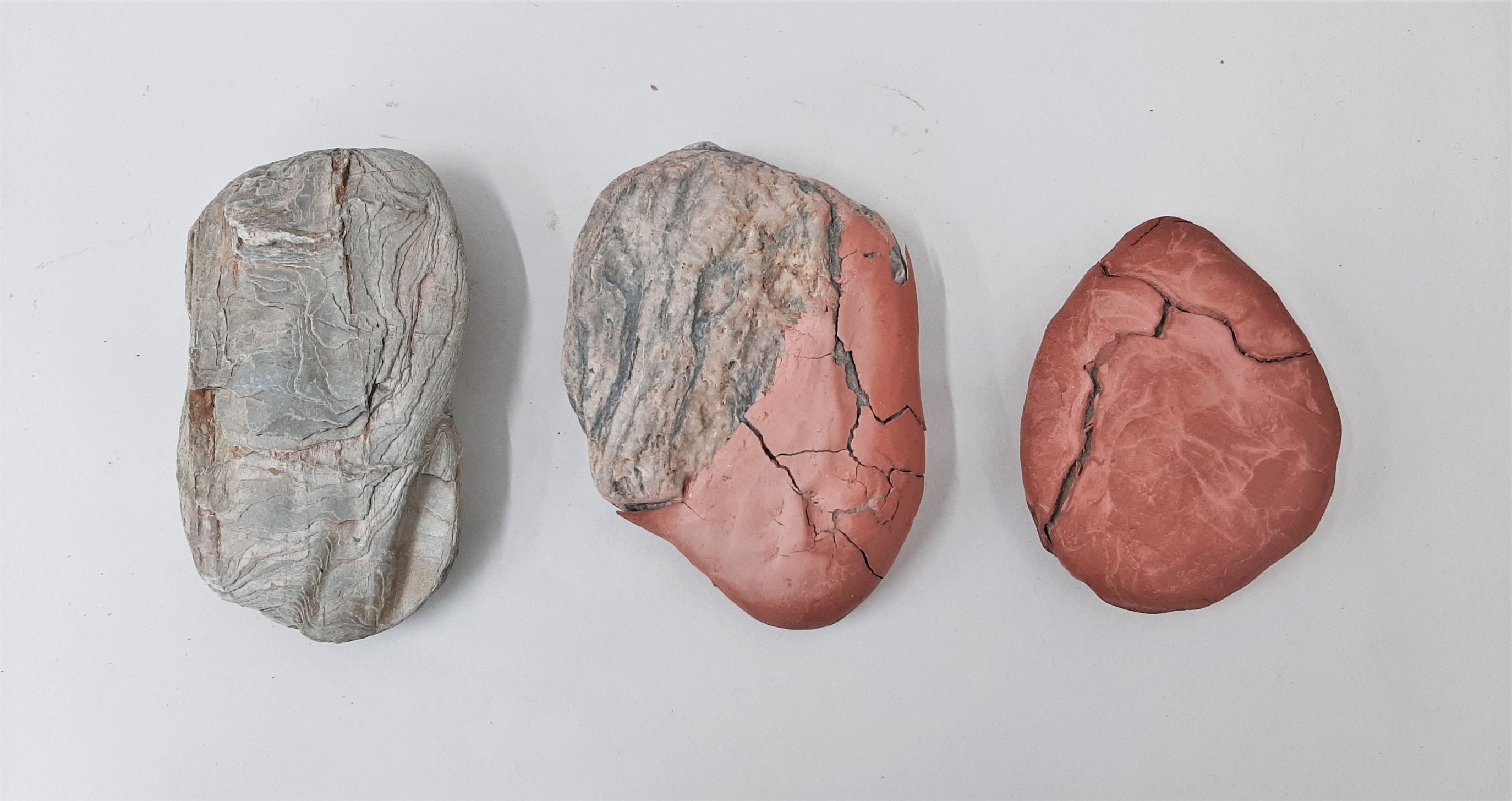
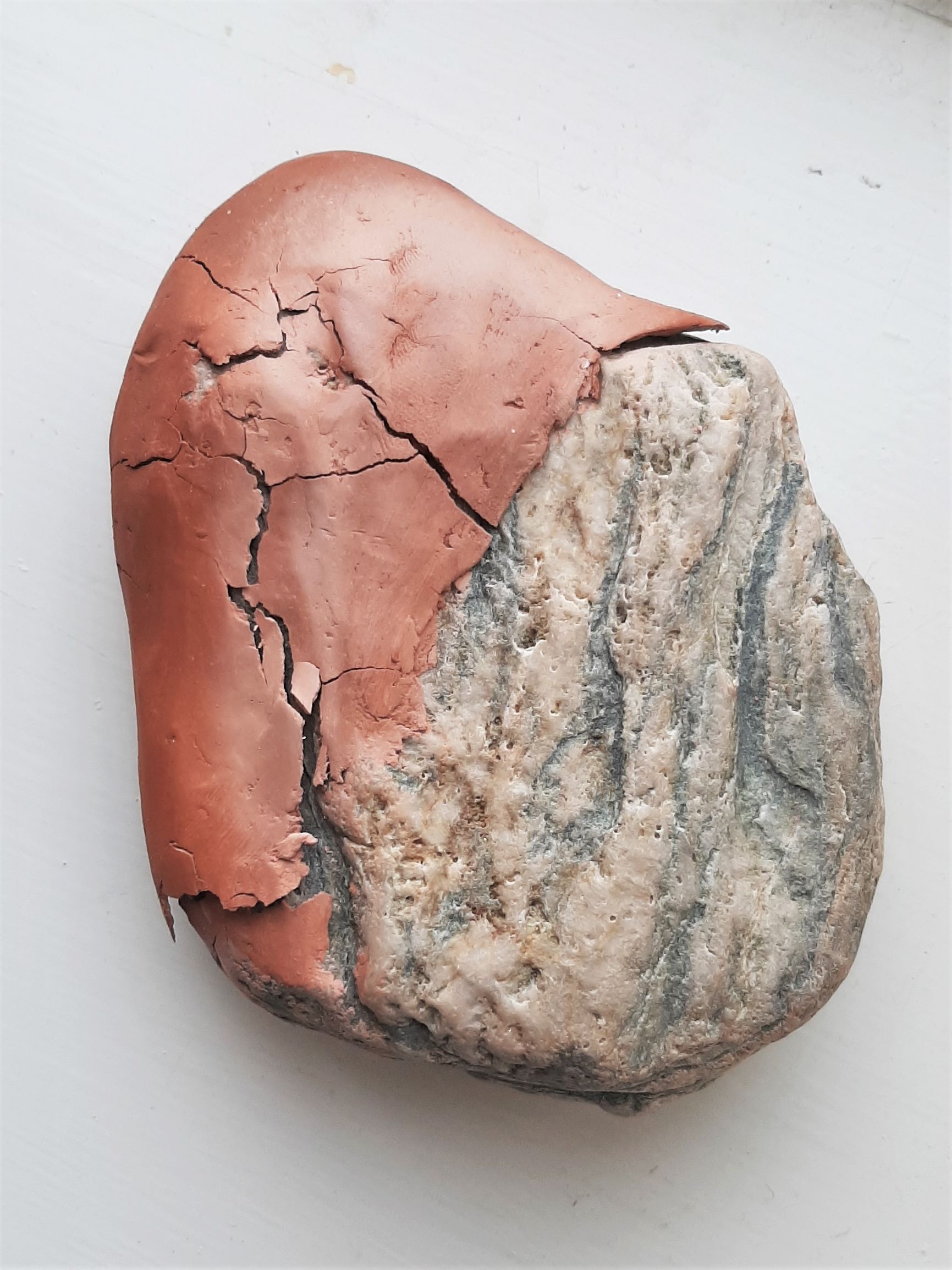
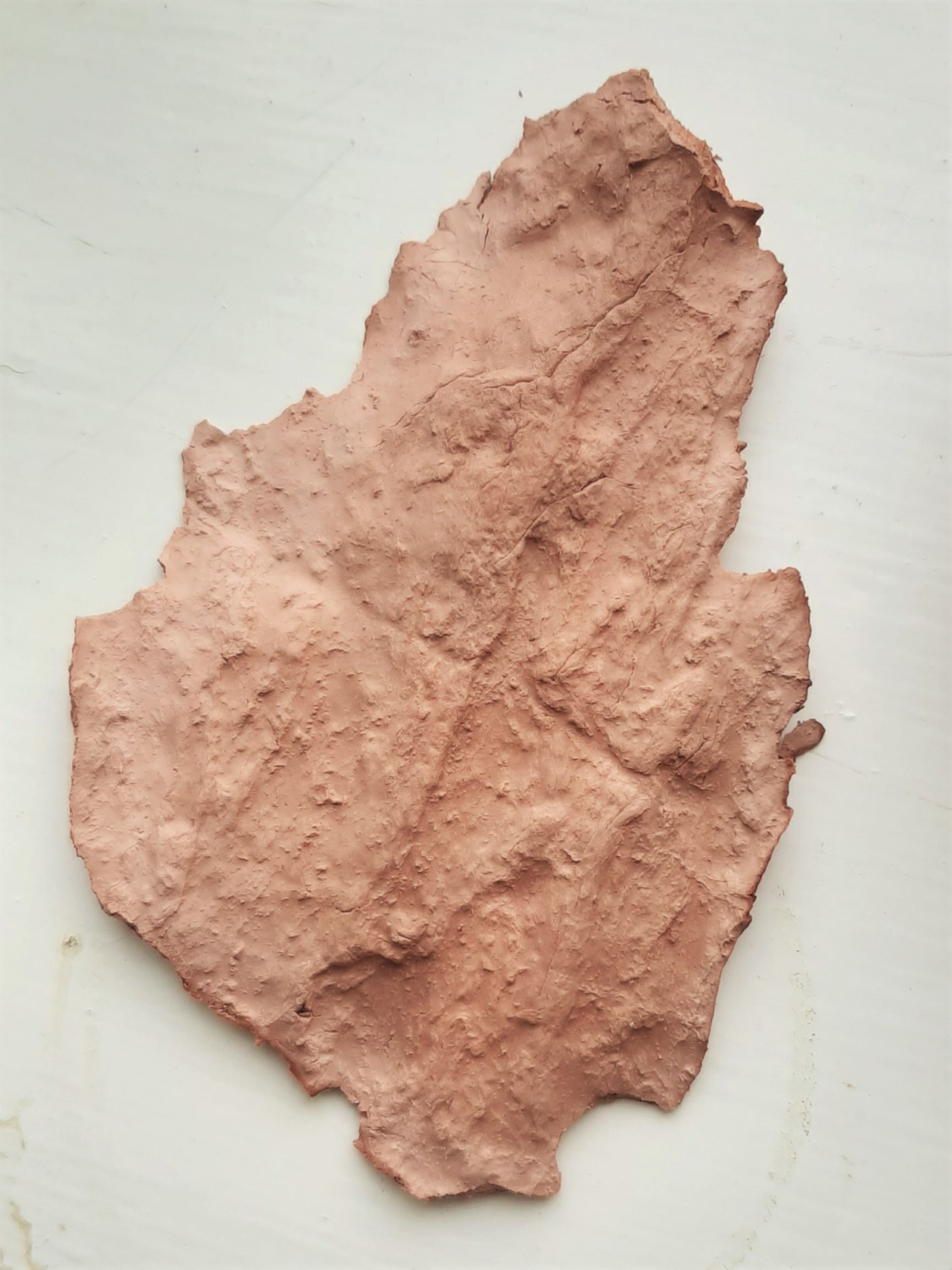
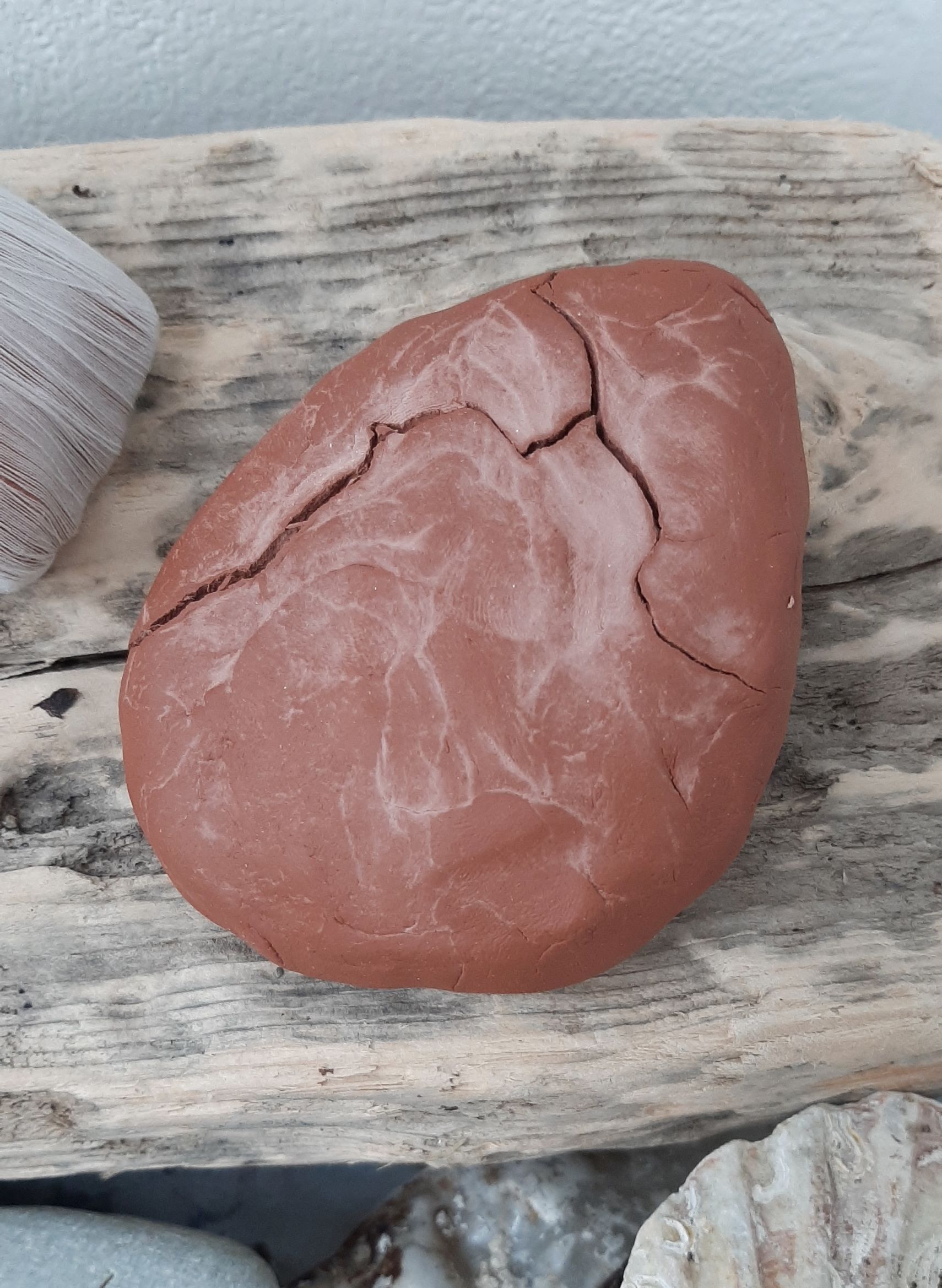
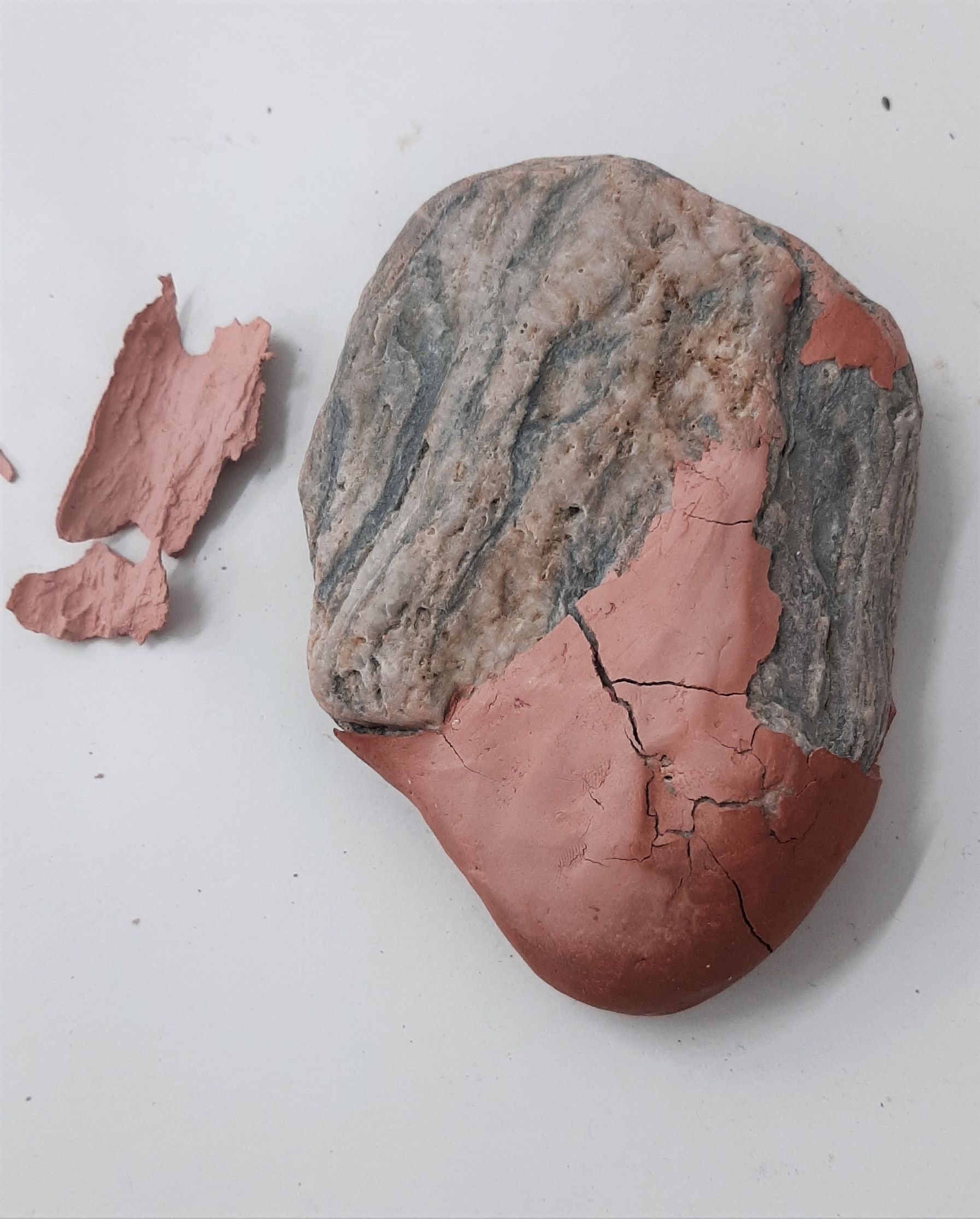
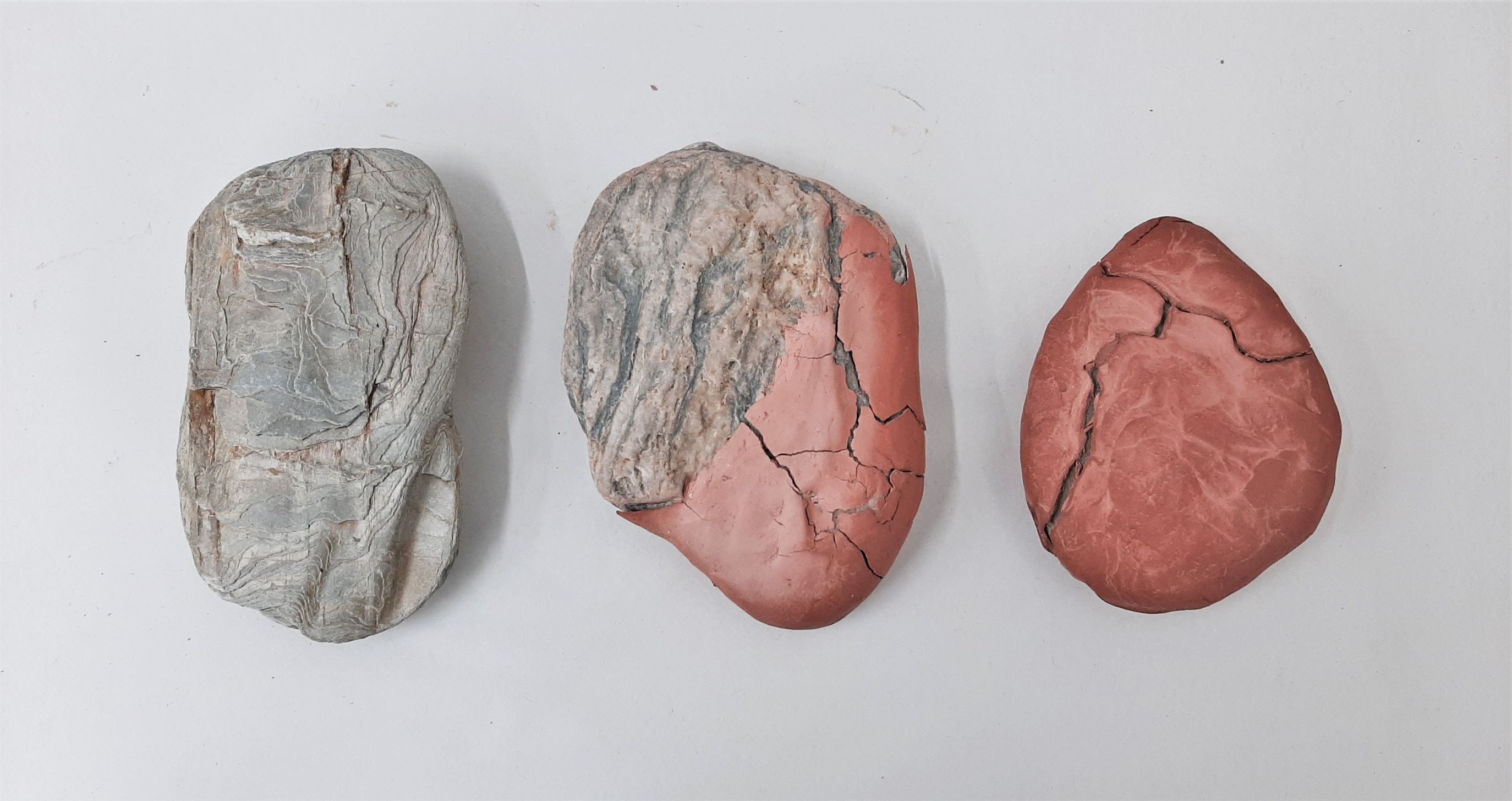
Although I didn’t leave any of the rock exposed in any of the Modroc pieces, I did take pictures of the work in progress, mid-wrapping, as there was something interesting about the duality of being half-exposed and half-swaddled. I then took this further with my clay pieces by leaving one in this state to dry, as well as also incorporating in the idea of series that my Modroc pieces started too, creating a small set that ranged from entirely exposed to entirely enclosed. The terracotta clay has a very organic/natural feel to it that I feel nicely compliments the rocks, but potentially I could also research further into the origin of terracotta to maintain a sense of material integrity in the work.
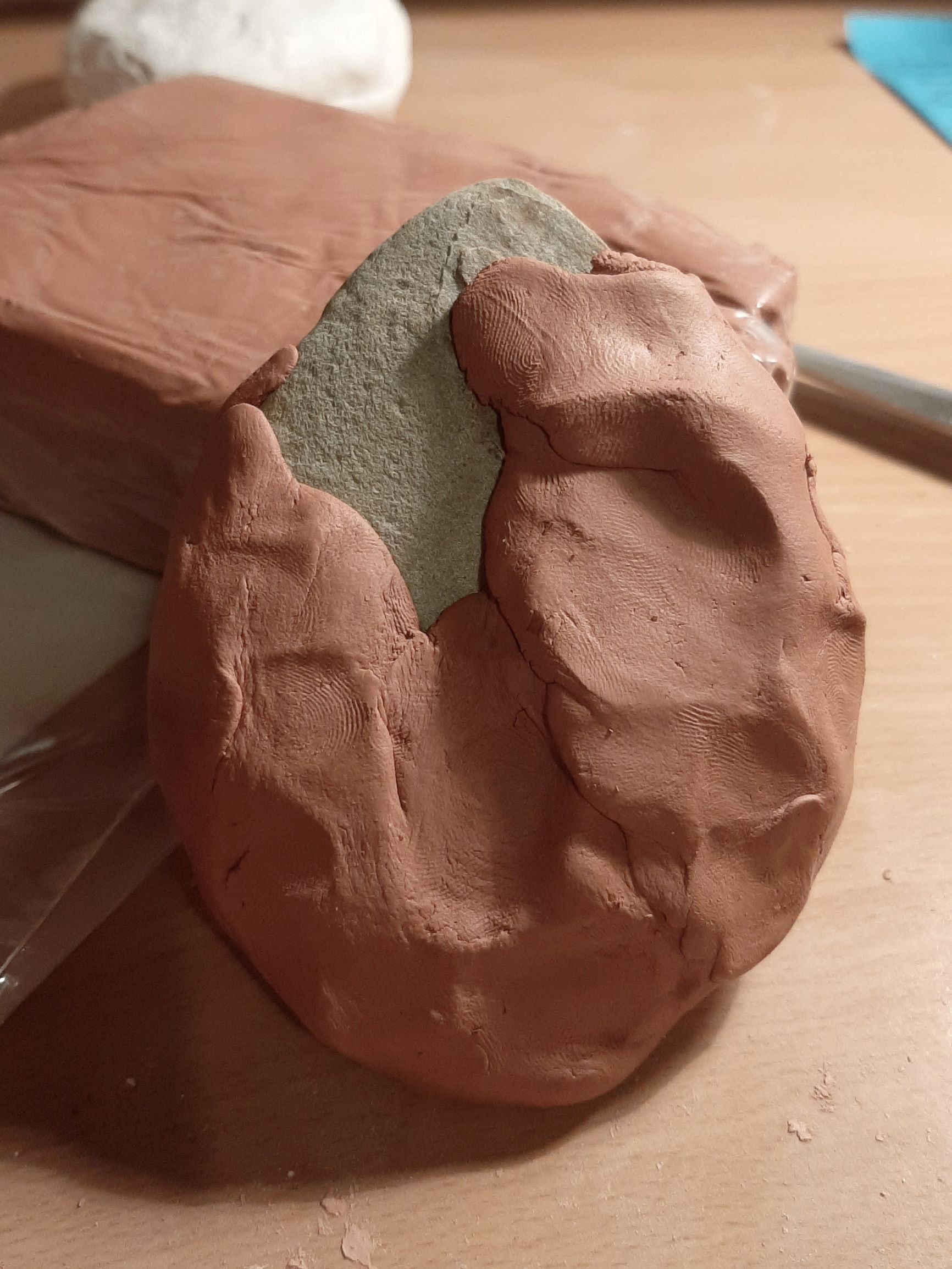
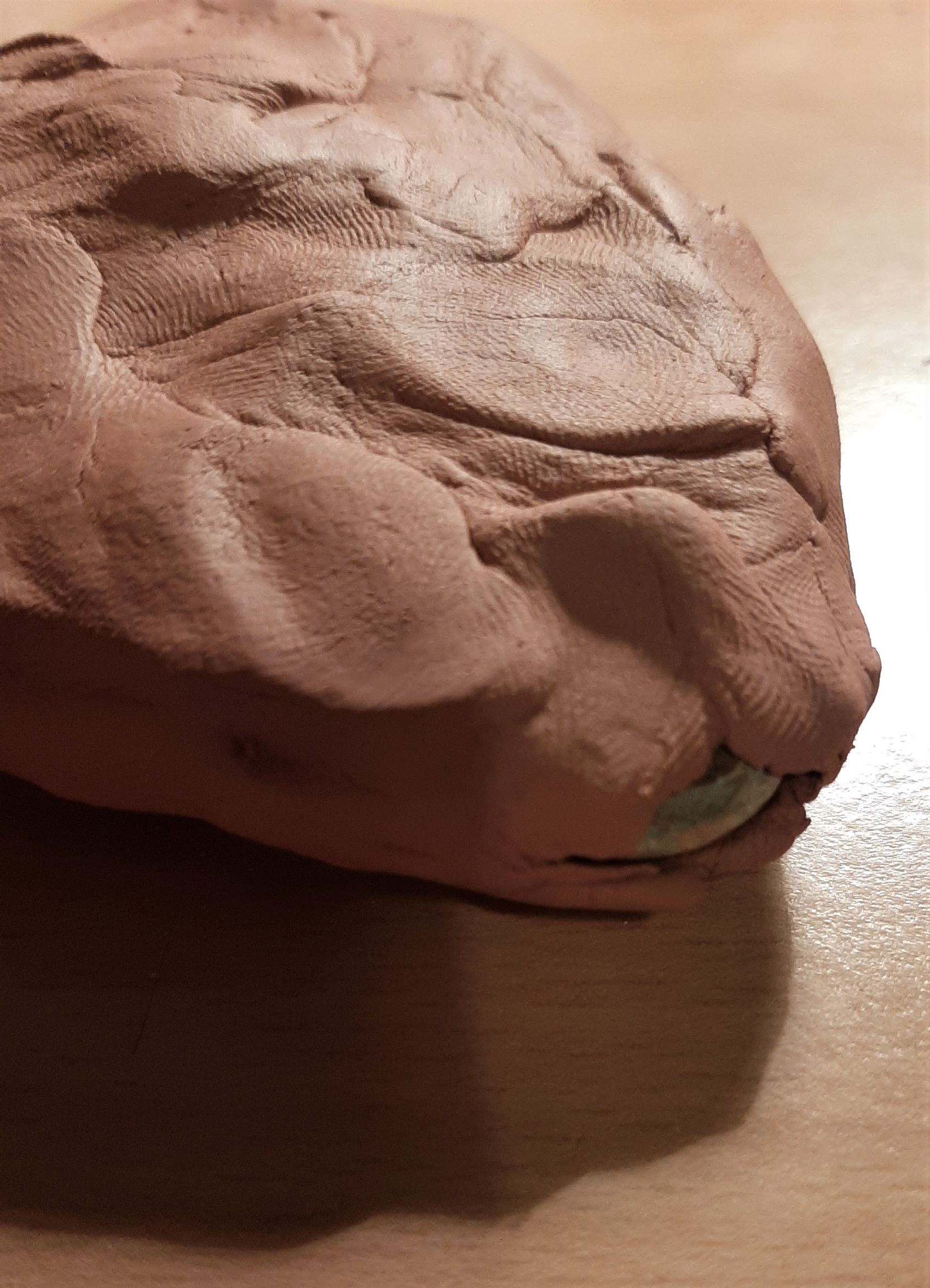
Where I created a very obvious element of reveal with the Modroc piece with two opening halves, the cracks formed by the clay explore this same idea but a little more organically. It appears as though the rock is almost hatching, especially in the half-covered one where the clay was so thin in some areas in began to fall off in flakes, like a shell. This maybe even suggests some kind of sentience to the rock, linking back to the earlier idea of an object’s ‘soul’. The cracks in the entirely enclosed piece don’t allow enough visibility to see the rock inside, but do encourage, or lead, the viewer’s mind to consider what might reside within. In both of these cases I feel as though the clay pieces take this playfulness of concealing and revealing that began in the Modroc pieces and explore it in a way perhaps more fitting to the subject matter. The fact that the development of the cracks cannot be controlled – that the pieces form independently and organically – ensures that even the process is suitable, fitting in with the random and uncontrollable nature of the rock’s formation in the first place.

 Anna Harris