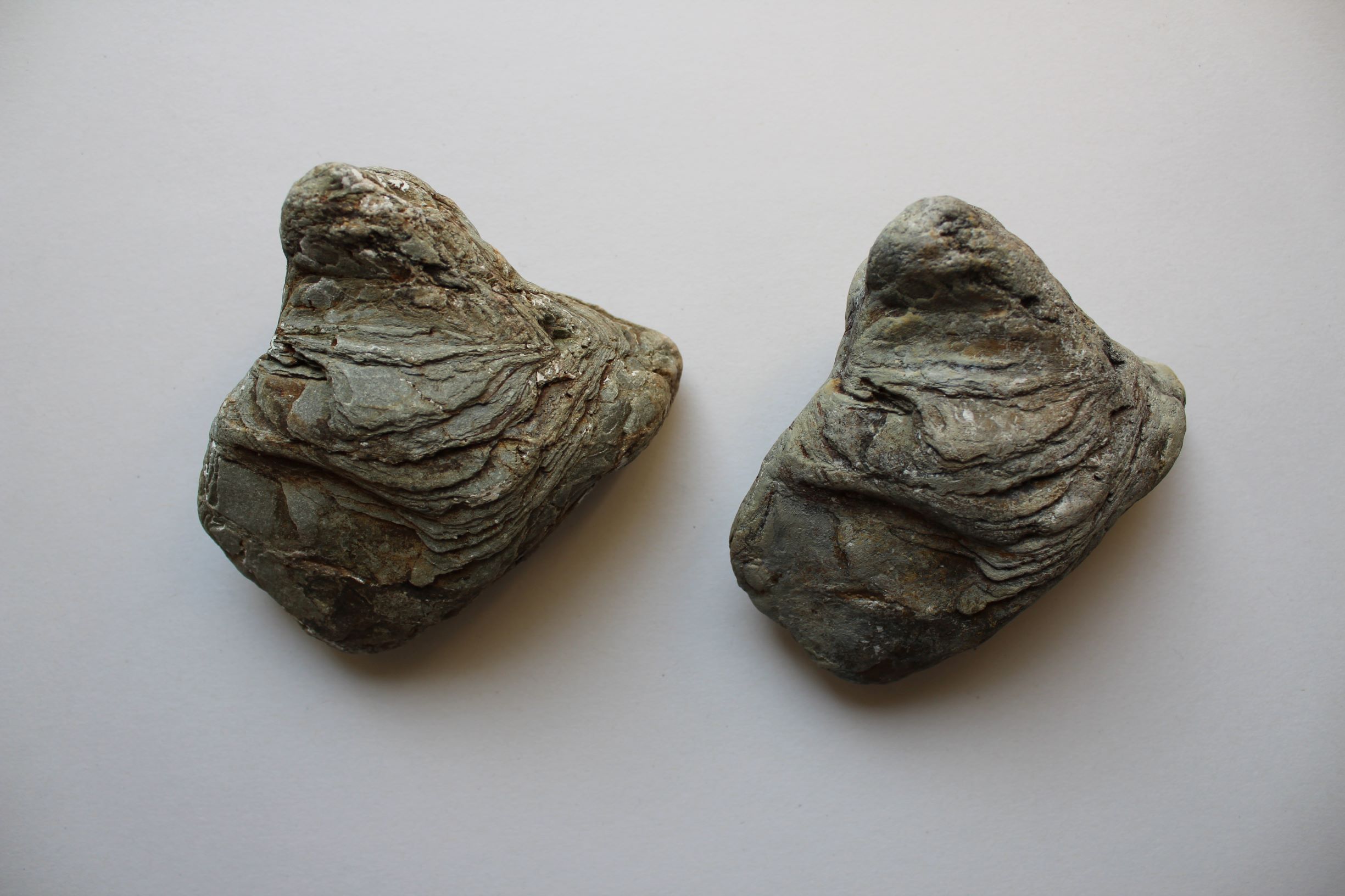
After my tutorial discussing how best to critique rock as an object, drawing attention to its age in comparison to our own, I began to investigate the idea of simulation, the real and the fake, the copy and the original. I had already played around briefly with making a fake rock previously, so I began by revisiting this idea.
Whereas the previous cast I’d made had been created through a very basic clay mould formed by pressing the rock into some clay to form an indent, this time I used alginate in the hope of creating a more sophisticated result. The rock I’d chosen to cast, too, was a lot more complex in shape and pattern so I hoped that I’d be able to push the skills I’d learnt the first time around a little further. I did have some problems with bubbles forming in the plaster during the process but I learnt how to fill these in with a plaster and PVA mixture and then carve these back to the shape I wanted. I also had a few issues when it came to painting the rock; the first few times I did it the paint would lift off the surface over the next few hours/days, developing a growth-like formation coating the cast. While this was an interesting effect, it wasn’t what I was looking for so I removed it, waited for a few days and tried again; I think the problem was perhaps it wasn’t fully dry so moisture was still pushing out once the paint had been applied. This process of repeated painting did go some way to inadvertently create a weathered look on the surface which perhaps worked a little to my advantage. The end result is a convincing rock, although I did struggle to get the level of detail I would have liked.


(paint lifting off the surface) 


(bubbles in plaster)
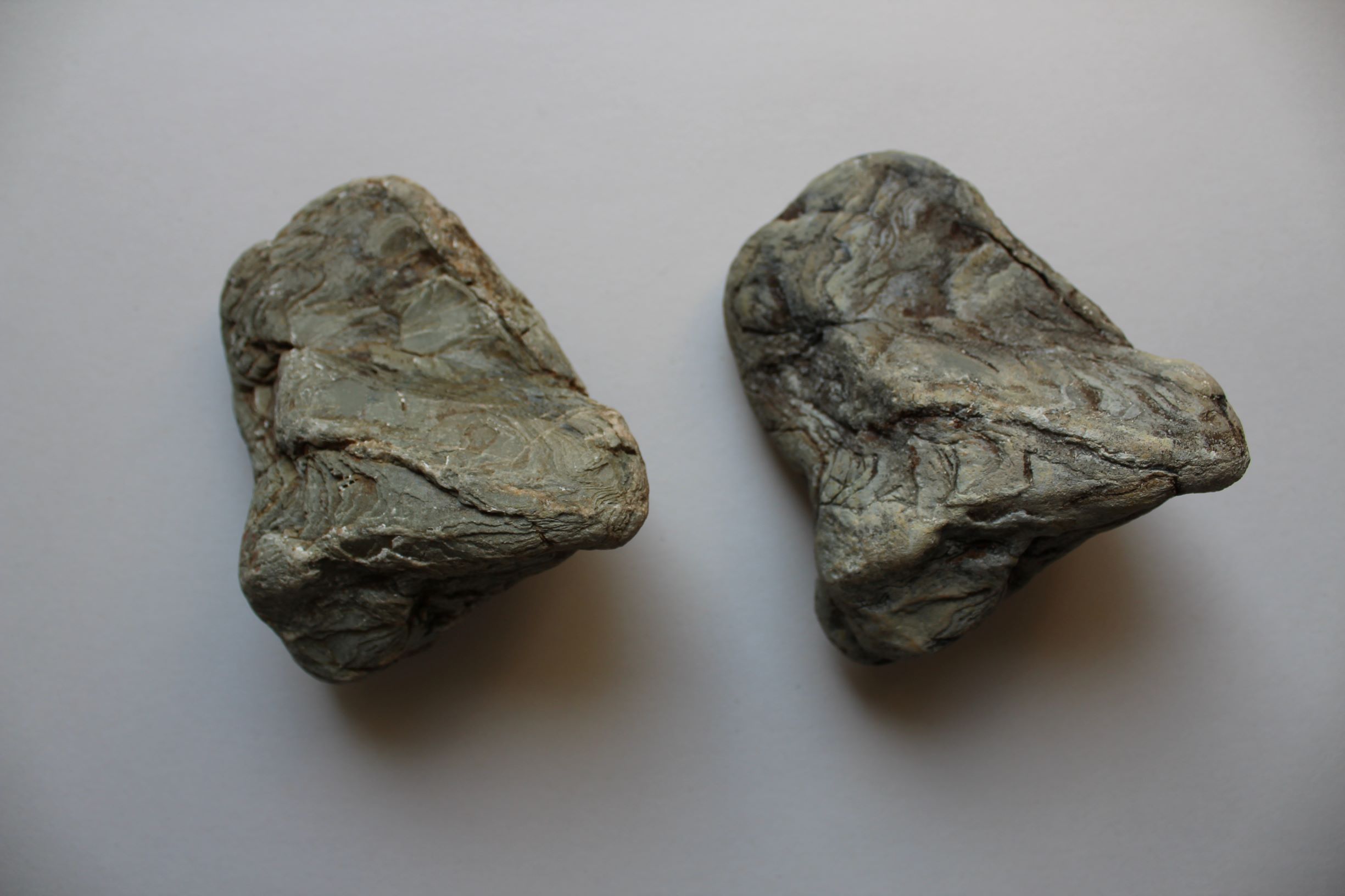
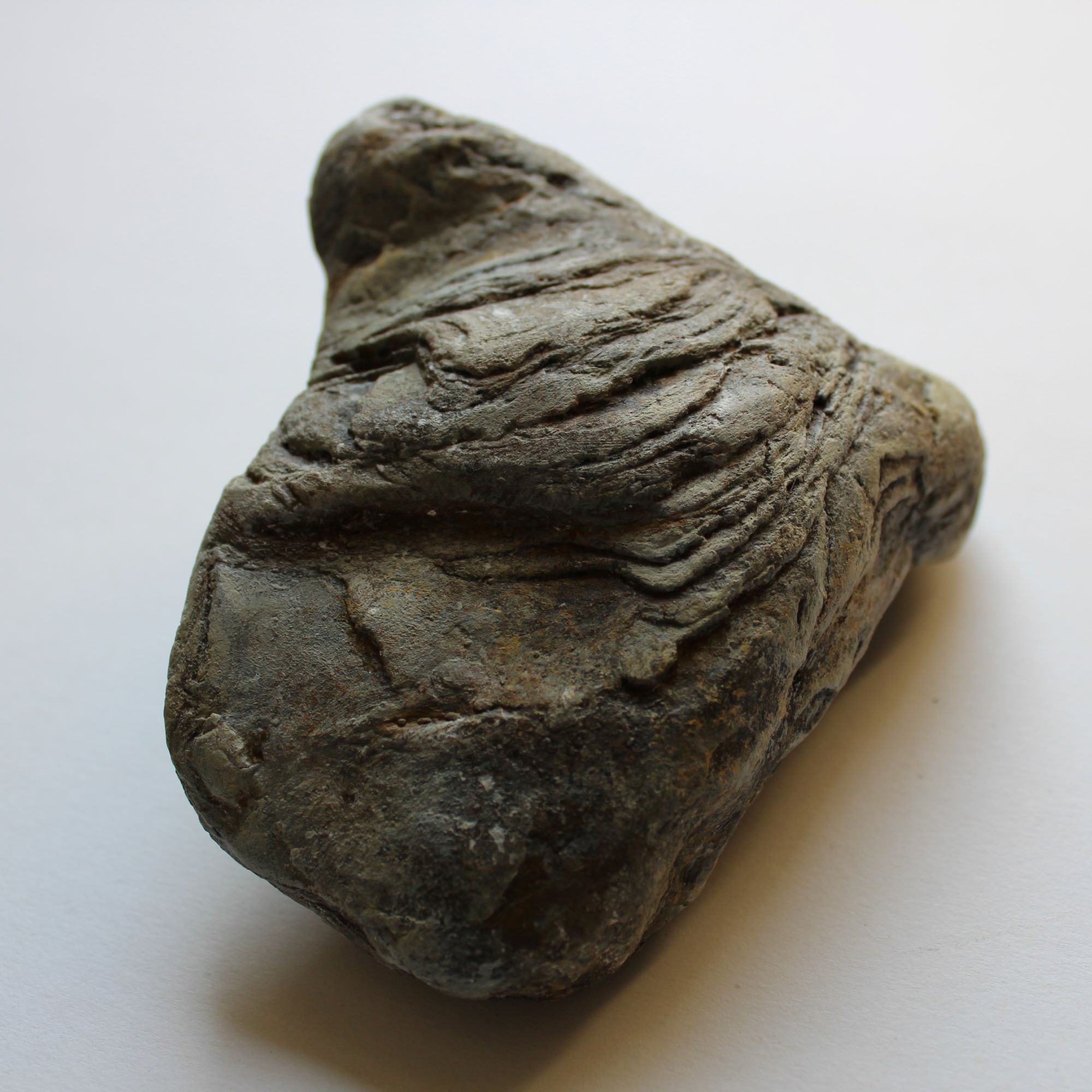
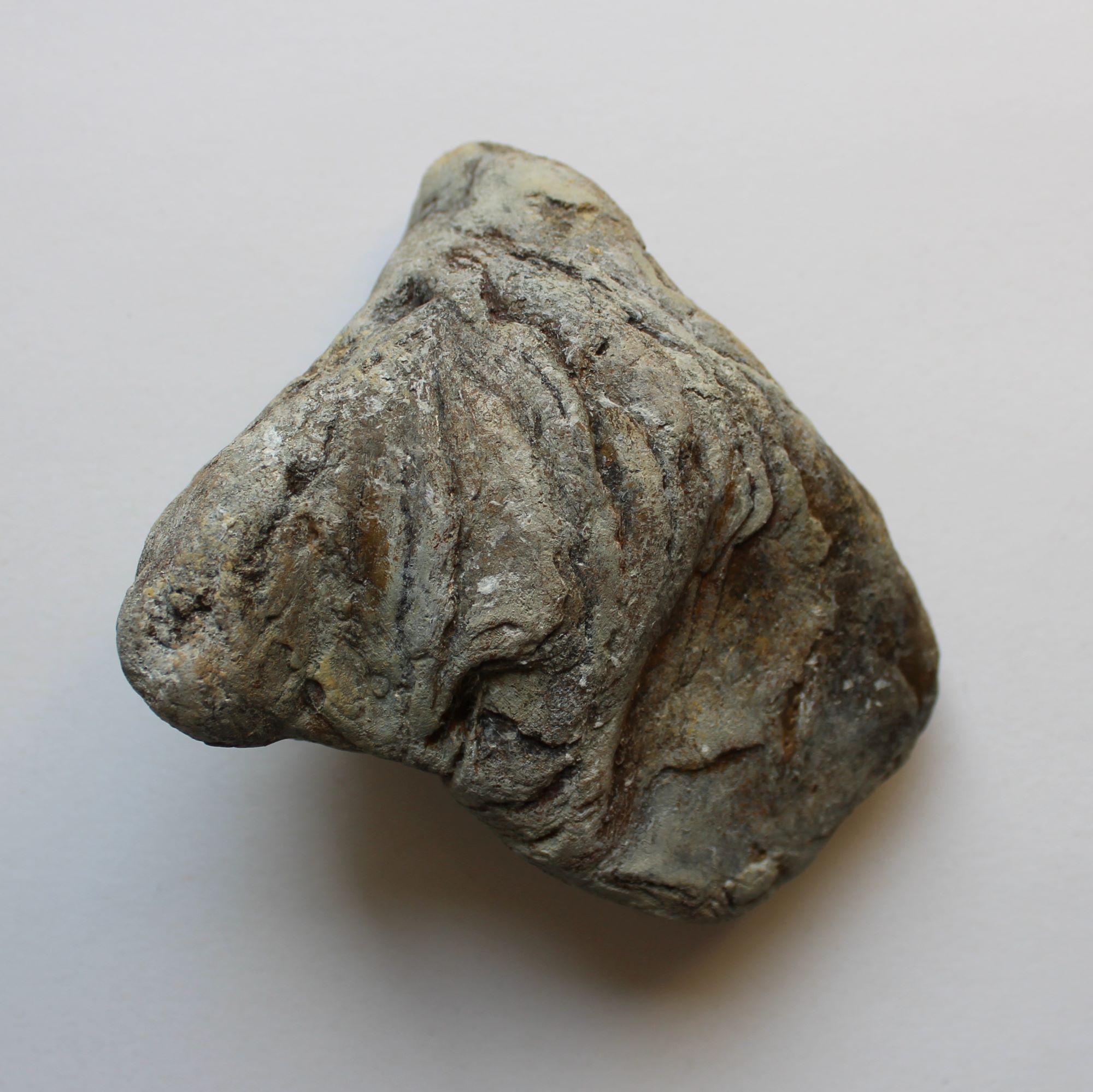
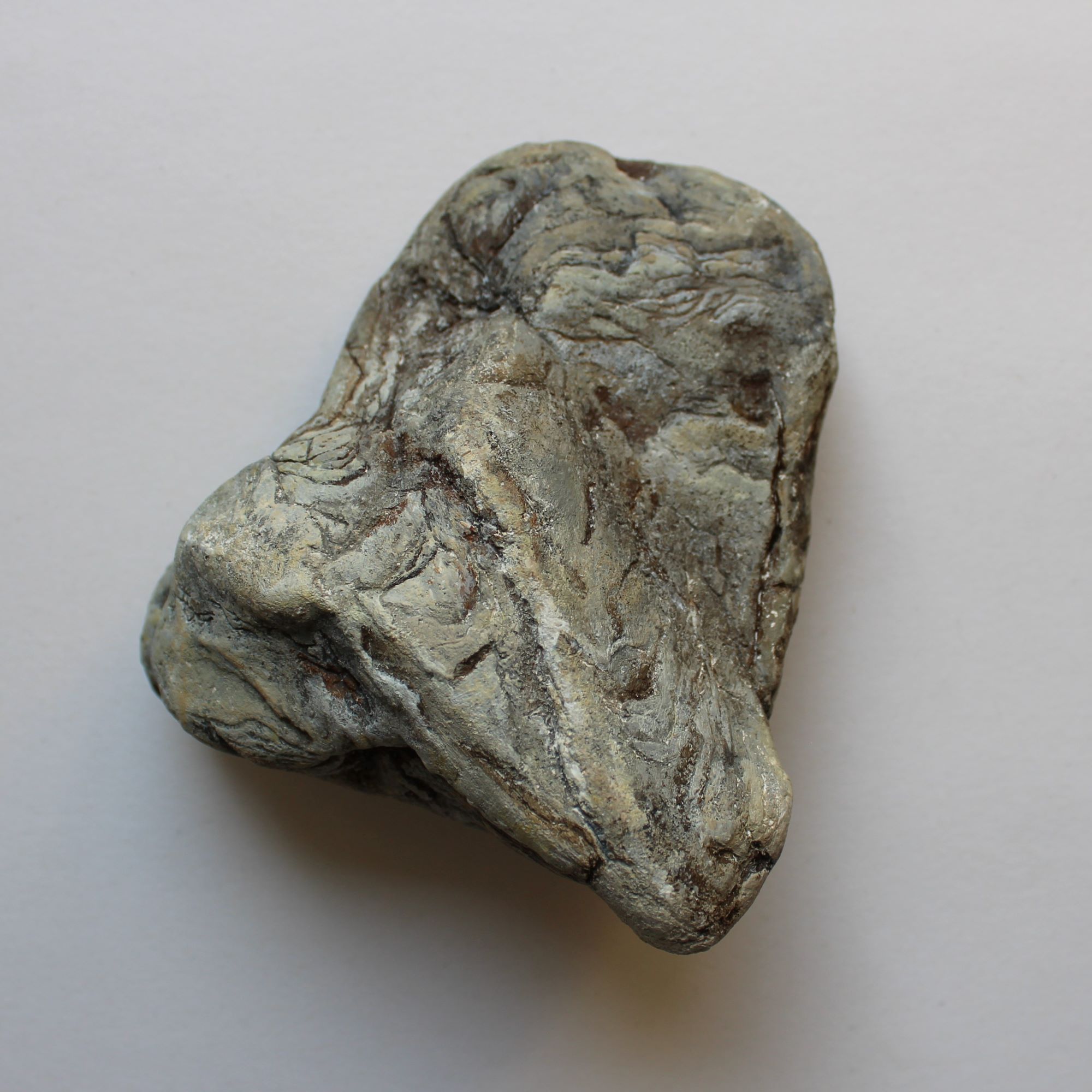
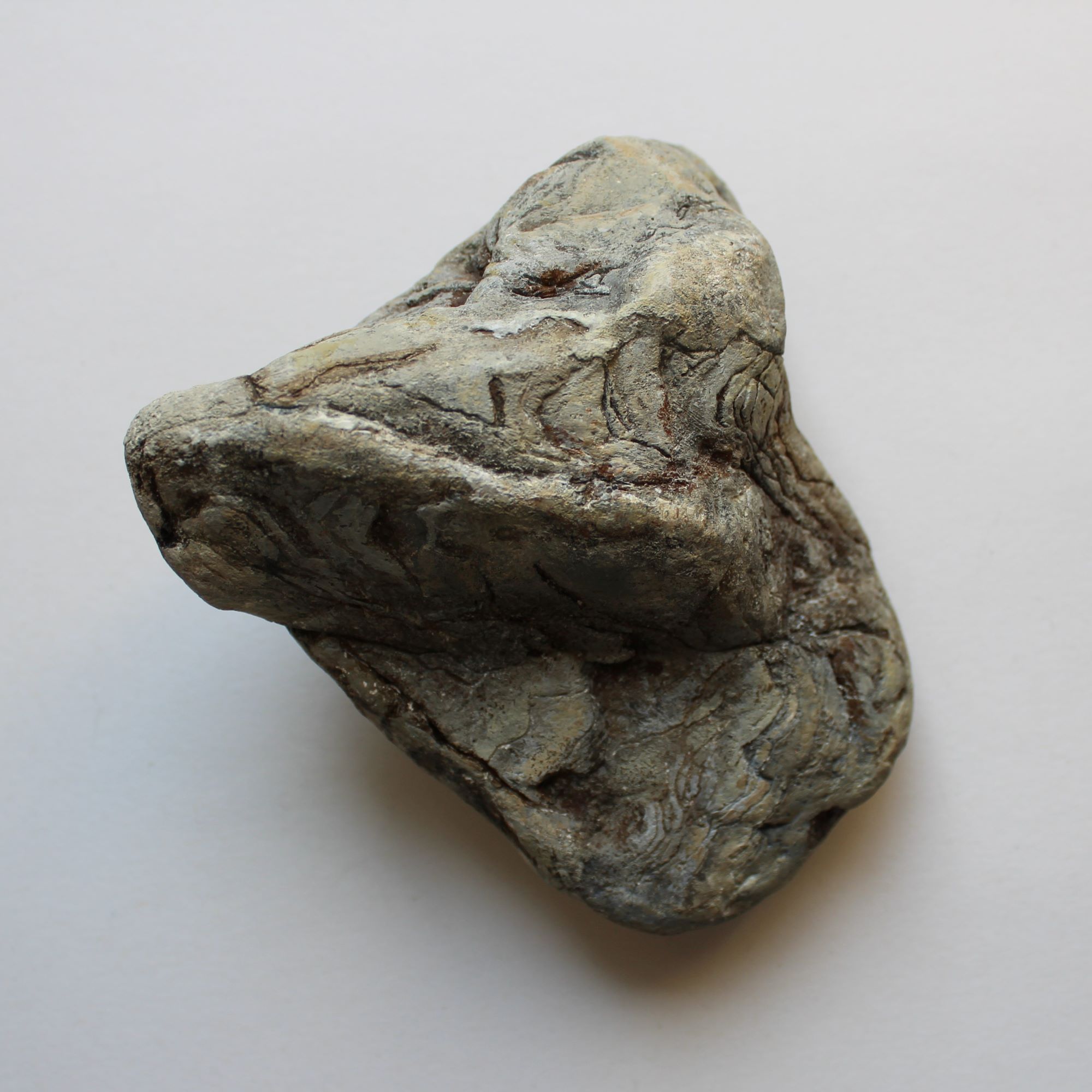
Aside from the visuals of the ‘fake’ rock, it is an interesting object conceptually. By our very nature when we see two objects that are seemingly identical, especially when as unlikely as two naturally occurring rocks, we are drawn to try and find some difference, to question what we’re seeing. Exactly how the objects could be critiqued by an audience would depend on how I were to display it, particularly if they were able to handle it and feel it themselves. I like the idea of an audience being able to do this – investigate the materiality for themselves – and in the process the usual stiff art gallery barrier/distance between art and audience is broken down; the piece can become intimate and immersive (I discussed how smaller artworks can be immersive here). Other than being potentially interactive, I am yet to decide what might be the best format for exhibiting. If I want the audience to question the authenticity, perhaps I could include questions: are all of these ‘real’ (for example)? Or would this then be too leading: by even asking this question I would be strongly implying that at least one wasn’t ‘real’ which maybe more effective if discovered independently? I could throw them off the scent by asking the question about real rocks first (which in itself could throw up some interesting ideas – what about the ‘real’ rocks make them ‘real?). Or perhaps I could have them come back around to it, leaving the first inspection entirely up to them and then reveal that some are fake and they can come and re-investigate? Having two genuine identical rocks would be really effective here, but obviously this would be very hard to find naturally. Instead I could find two similar rocks, made with the same type of rock, and chisel them so they appear to be the same. Equally, perhaps further into the future if I keep making these rocks, I could present a large collection, almost as a ‘fake beach’, either a collection of entirely fake rocks or a mixture of both (this way people could search through for pairs even? [link to Vija Celmin’s piece spoken about here]). Either way, there are a huge number of possibilities, all of which have their own advantages and drawbacks so I suppose it comes down to exactly what it is I would want to get out of it.
The aim of the ‘fake’ vs the ‘real’ rock is, as mentioned above, to critique the original; when presented with the original alone, the mind is left to wonder around an abundance of connotations that could stem from it – just because my mind is drawn primarily to its age, this doesn’t mean that everyone’s is. If presented with the two my hope is therefore that the viewer will have to look beyond appearance (which may be many’s initial response), further to the substance of it: the ‘essence’ of what makes it different. This also links partly to the concealment I spoke about before: it is, quite literally, what’s inside that makes the difference between the two objects.
Although I am happy with what the object conceptually embodies, I still think it could be completed to a higher standard, both in terms of the casting and the painting: the fewer physical differences apparent between real and fake, the more the viewer is pushed beyond the visual differences to the material/conceptual. I could perhaps use silicon for future moulds as this would achieve a higher standard of finish, and would also allow me to create multiple casts from the one mould. This brings up the very interesting possibility of mass-producing rocks, an idea that in itself is evidently contradictory. This interaction and crossing over between the stereotypically man-made and the stereotypically natural could be embodied in many different ways: serial numbers stamped into these mass-produced rocks, bar-codes, ‘Made in China’ etc.

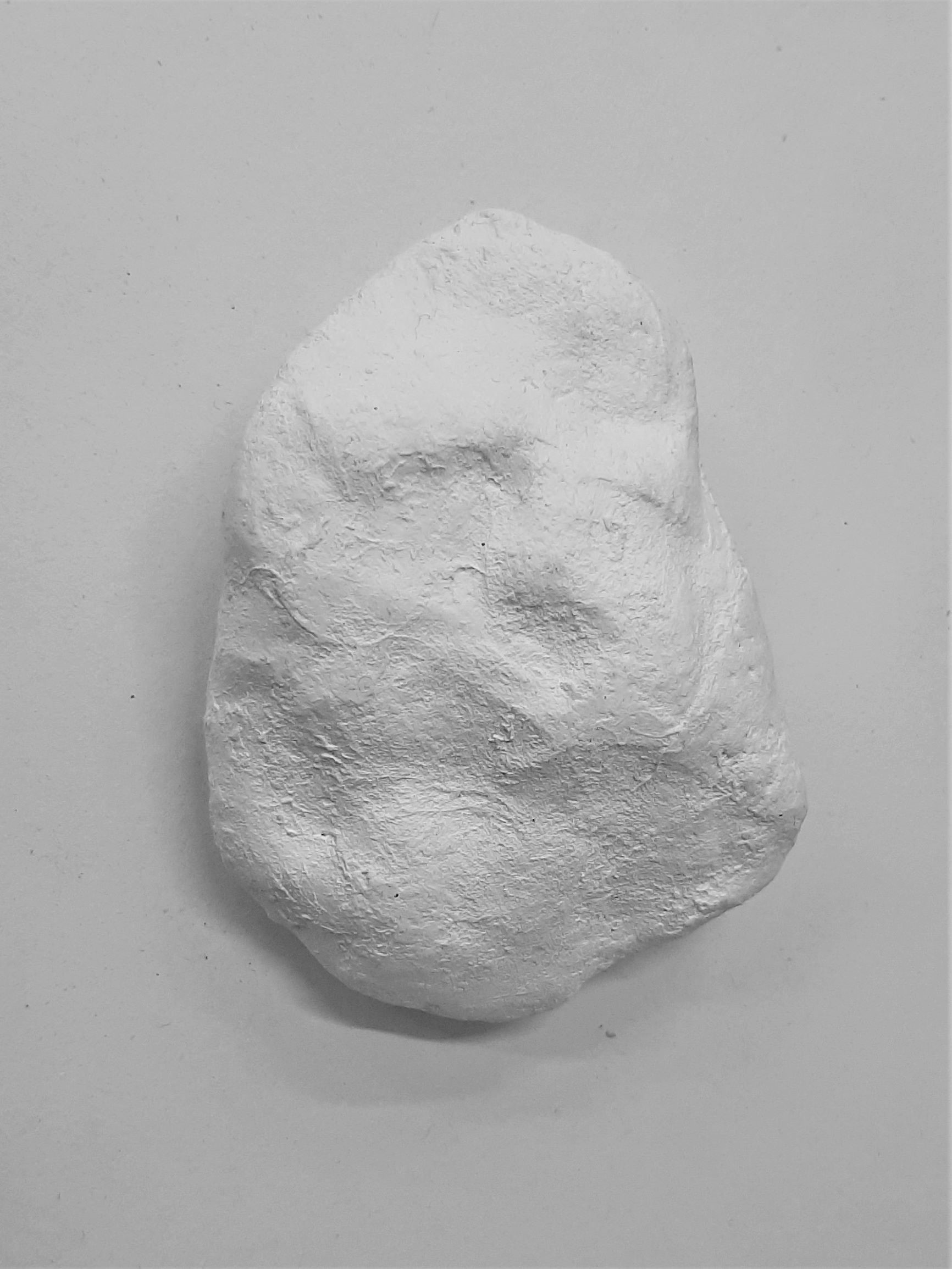
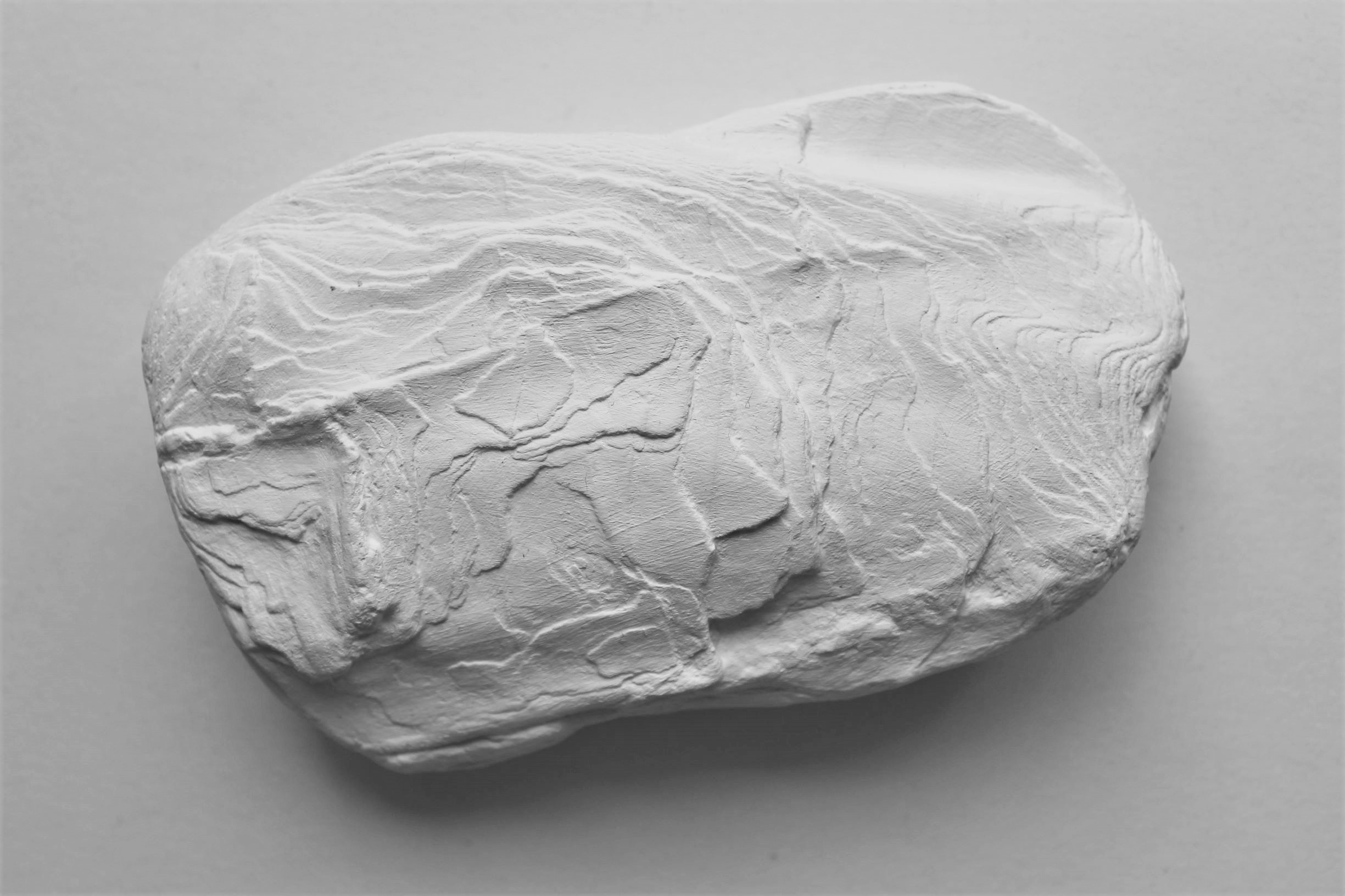
As well as the cast rock, I’ve also made another couple of experiments that I feel explore similar ideas. One was inspired by the plaster stage of the cast rock, before it had been painted, when the shape of the rock was correct, but not the colouring. I took a real rock and reversed the process, painting it white and removing all detail from its surface, leaving only its form: taking the real rock back to its ‘plaster cast’ form. To an extent, this reversal of the man-made making process echoes a kind of reversing of time, although of course this doesn’t fully translate as the making process of the plaster rocks isn’t the same as how the rock itself formed.


The material I used to coat the rock with was white acrylic; quite a plastic-y paint, highly processed, not in keeping with the raw earth material which it is enveloping. This reminds me of the quote ‘humans are poised to stamp an unprecedented legacy deep into the earth’s geological memory’ (Frankie Schembri in ‘Underland: A Deep Time Journey’, Robert Macfarlane) and how this might be visualised: one plastic layer among the thousands of sediment layers laid in the aeons leading up to our lifetimes. I like how there is a subtle environmental message suggested at in this way: not overbearing, only implied through the materiality of the piece if the viewer should wish to consider it in this way. It is also a physical representation of my own intervention/interaction with the object; for all the rocks I collect and use I am altering their path, as they alter mine – it is a two-way interaction, as are most encounters in life – each having an impact on the other’s path in some way, however slight. In this particular case I have imposed myself quite heavily on the rock in question, completely altering its appearance (although not its interior/materiality – the ‘true’ and ‘whole’ object is still in there in its entirety, echoing the ideas of skin and concealment that were discussed previously).
The neutral coating it now bears, as I have discovered with similar objects such as my paper rocks, will pick up on interactions with the world: it will become marked, scuffed and scraped quite visibly. It could be interesting to return it to the beach, somehow tracking it (can rocks be micro-chipped?!), and record its changes over time – eventually its surface will become a record of what has happened to it, the white paint becoming all but worn away (not sure about the environmental impacts of this?). Taking an object from where it was found, altering it and returning it links to Katie Paterson’s work Inside This Desert, so this is something I should look into more were I to do that.
The visual similarity to some of my other pieces (the paper rocks, the Modroc-covered rocks) is also something I could explore. If presented alongside one another, mixed together, this curious assortment could merge together to form a more comprehensive exploration of ‘truth’ and materiality than any of them succeed in doing individually.
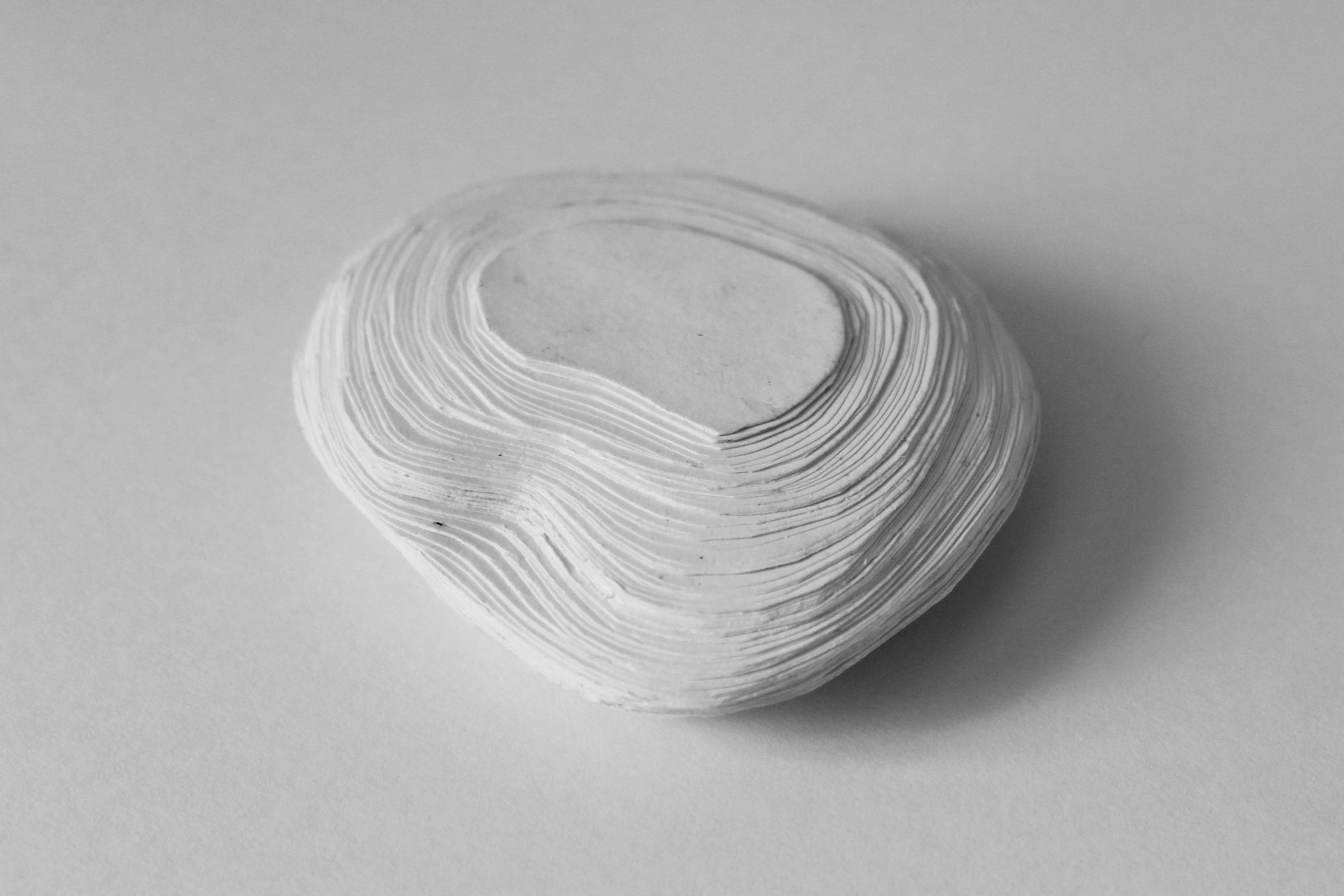
The other of my experiments was again an idea I got from the process of the previous one; the white plaster-cast-esque form I’d made by painting the rock white seemed to want to be painted again, to look real, as would be done with a plaster cast. Initially this felt a little bit of a pointless idea but upon reflection brings up some more interesting questions. It forms almost a double bluff as upon first glance it appears real, then by closer inspection fake as the painted surface becomes apparent, then when handled feels real again. To me this alludes to ideas of simulacra, particularly Sherrie Levine’s After Edward Weston (or other series): a means unto its own end, re-creating/replicating what’s already there but simultaneously creating something new. There is a merging of the copy and of the original: does the original still exist? Is the new object a copy or the original? ‘Simulacra’ is a copy without an original – this piece doesn’t quite fulfil this criteria, but it certainly verges on it, skirting around its edges.


The next step could be to make a copy without an original – to fully embrace simulacra – by creating rocks that are not directly based of a real rock, exploring exactly how hard nature’s precise entropy is to replicate/simulate by hand. I should perhaps research artists who work in this field of the hyper-real sculpture (if that’s how it can be described), maybe starting with someone such as Jeff Koons whose balloon sculptures engage in this same form of material illusion. I could also experiment with painting other pre-existing objects to appear as rock, or other ways of blurring material boundaries, simulating and questioning the ‘real’.

 Anna Harris