For this weeks’ research seminar we were to ventriloquise another artist’s work: that is, appropriate, re-purpose and use for our own means, although likely still acknowledging its origin and having its initial meaning and purpose incorporated in some way.
There is an interesting consideration here for how you tell the story of an object/artwork – if the artwork has an associated story does the text explaining this then become an important part of the art? Is it even going to be text, could it be spoken word or even performed in some other way? In regards to my own work I found this interesting to consider that in some ways I am leaving the stories up to the imagination, deliberately obscured, or drawing attention to the unknown and forgotten stories behind an object.
The task itself was an interesting one, and one that took me a minute to wrap my head around. As many of the artists that I have been looking at make sculptural work I initially found it hard to work out how to ventriloquise their work without physically being able to handle and respond to this/add on to it in this way. Text seemed a good way of getting round this, using it to somehow emphasise or add something of my own to a work.
However I also began to consider ways in which I could physically alter an image of the sculptural work myself and realised that a simple technique I have used often before is to simply invert an image. I find it an intriguing way of quickly and simply changing an image into something quite radically different, and often abstracting it but in a way that retains a strong sense of the initial subject. I chose to invert some images of Rachel Whiteread’s work, particularly focusing on her resin pieces as I found that when inverted they became these strange ghostly, ethereal, glowing objects within a dark space that were particularly captivating.
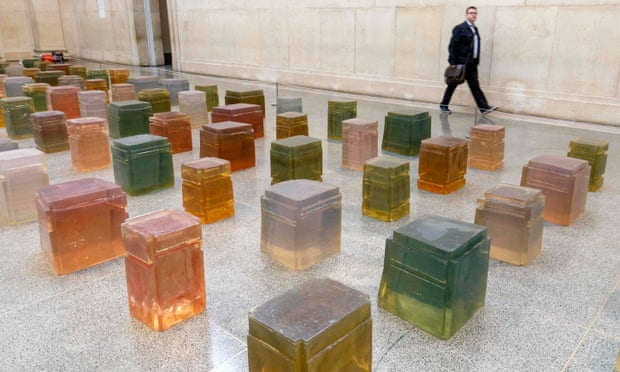

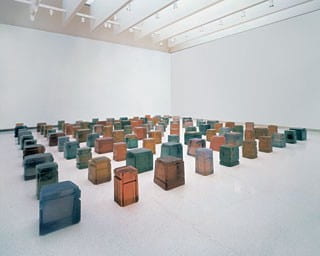

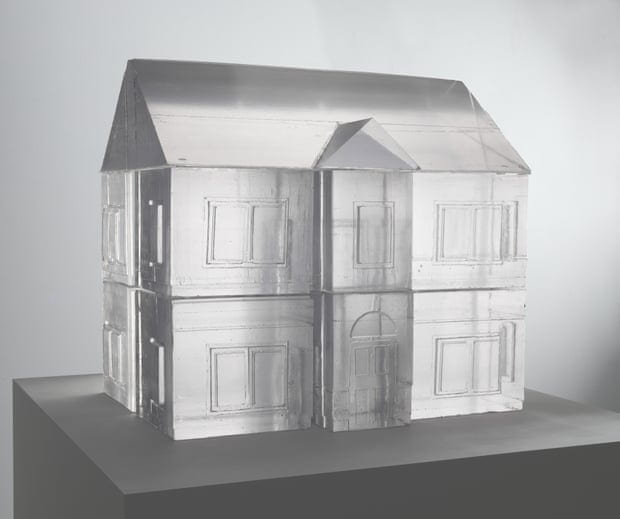
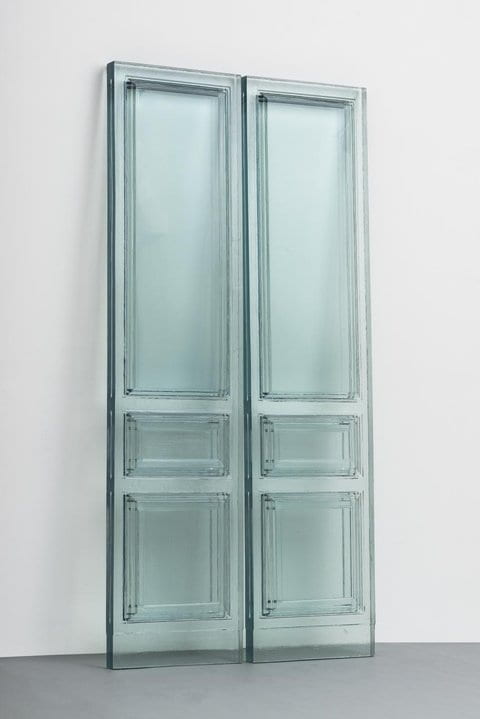


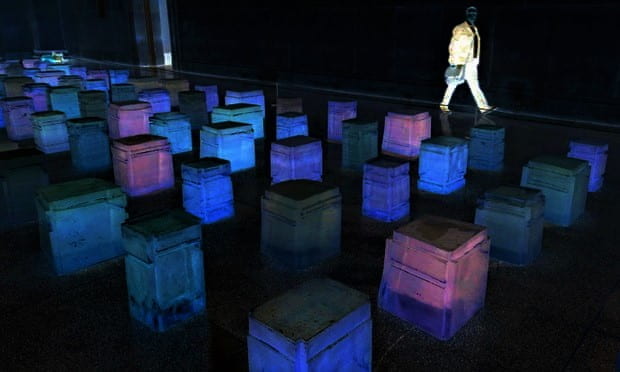
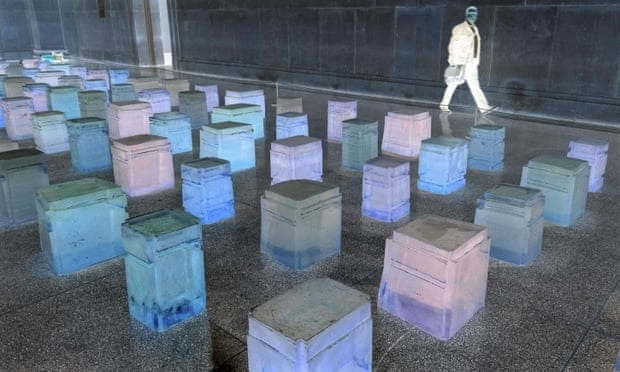
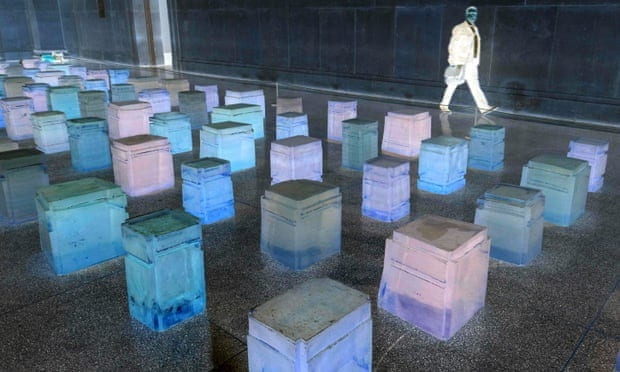
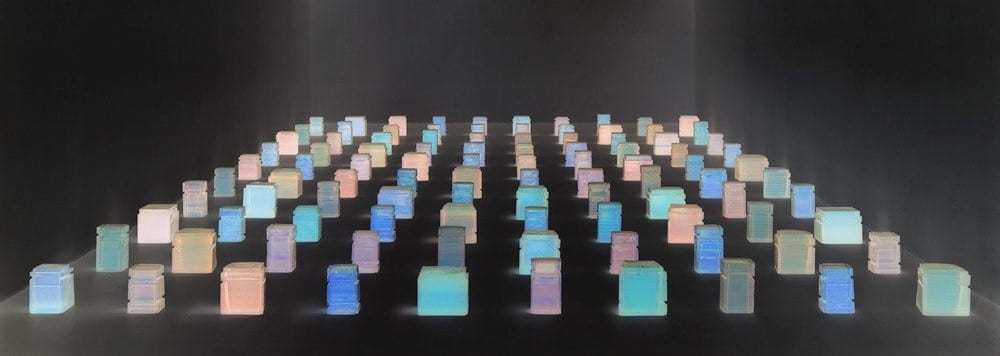


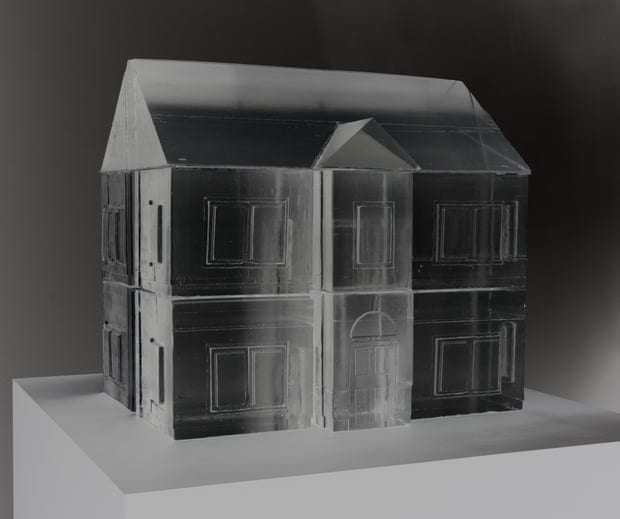
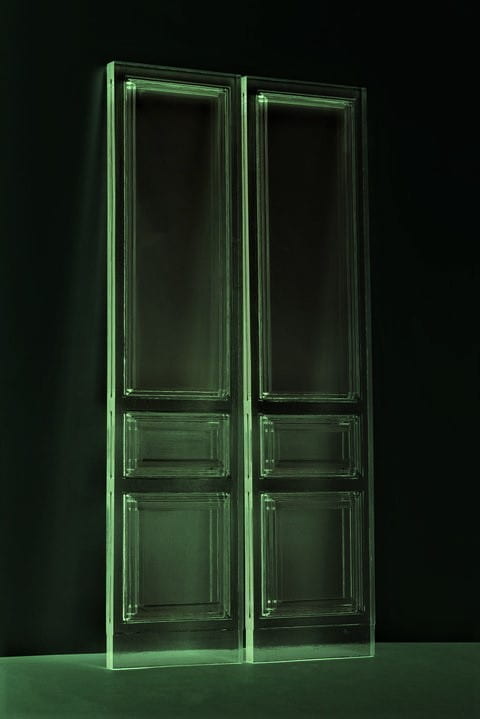
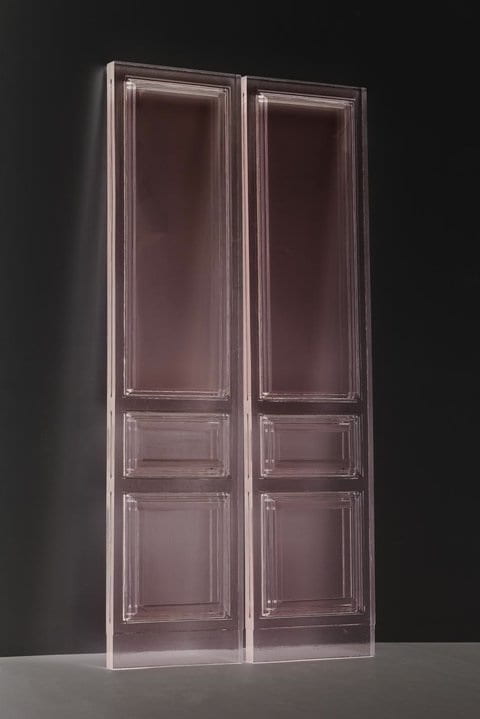
Initially I began by emphasising the glowing quality, upping the contrast, but then began to realise it was the more subtle results I preferred, highlighting this faded, ghostly quality. I also particularly enjoyed the playfulness of having the image with a figure in to almost comically emphasise this idea of the ghost, and as such the two images I presented back to the group were:
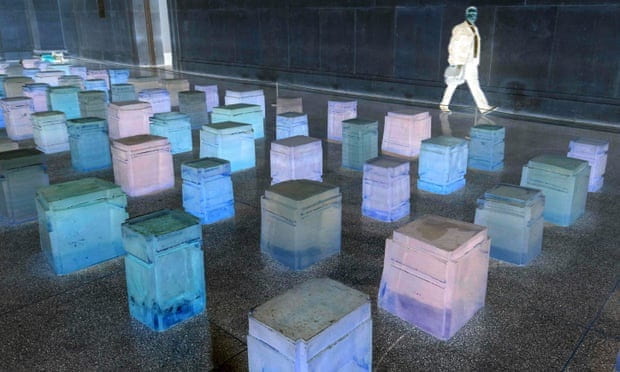
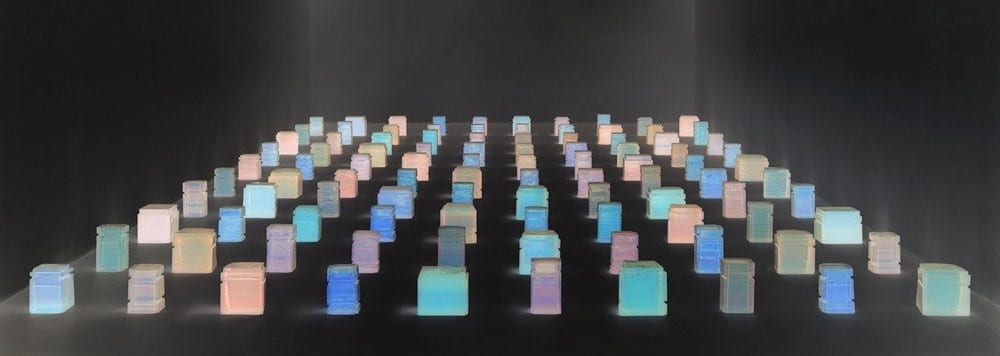
I also wrote the following text to go along specifically with the image without the figure:
Bearing weight
A human presence
Feet shuffling
Chairs scraping
A growing silence
A fossilised absence
I limited myself to 25 words as I find this a useful writing exercise that in this case especially forced me to be subtle with my storytelling, leaving as much as possible to simply be alluded to. (For context the piece I used was One Hundred Spaces which is casts from the space under one hundred chairs.)
I found the discussion that ensued after presenting these images quite fascinating, and the notes I took are as follows:
- there is a certain playfulness to inverting an image of a sculpture that is already an inversion of matter – something quite cyclical and self-fulfilling about it
- reminded people of a photographic negative, and the fact that this in itself is almost a trace now, a forgotten way of doing things
- also odd to think about making the analogue through the digital and the irony of digital apps that make ‘analogue’ photos (e.g. making you wait 24 hours for the images to ‘develop’)
- Tacita Dean piece at Tate – eulogy to analogue film making?
- Boredom Research snail mail piece and the associated invisible journeys of post
- the idea of ghosts and traces, although oddly looks like colourful gravestones, an odd contrast
- also look like a small world, little apartment blocks?
- the idea of mourning and of monuments – the art of monuments articulating an absence in an abstract yet tangible way that allows for individuals to project upon it
- building a language around loss
- The New Black by Darian Leader (book)
- Susan Hiller?

 Anna Harris