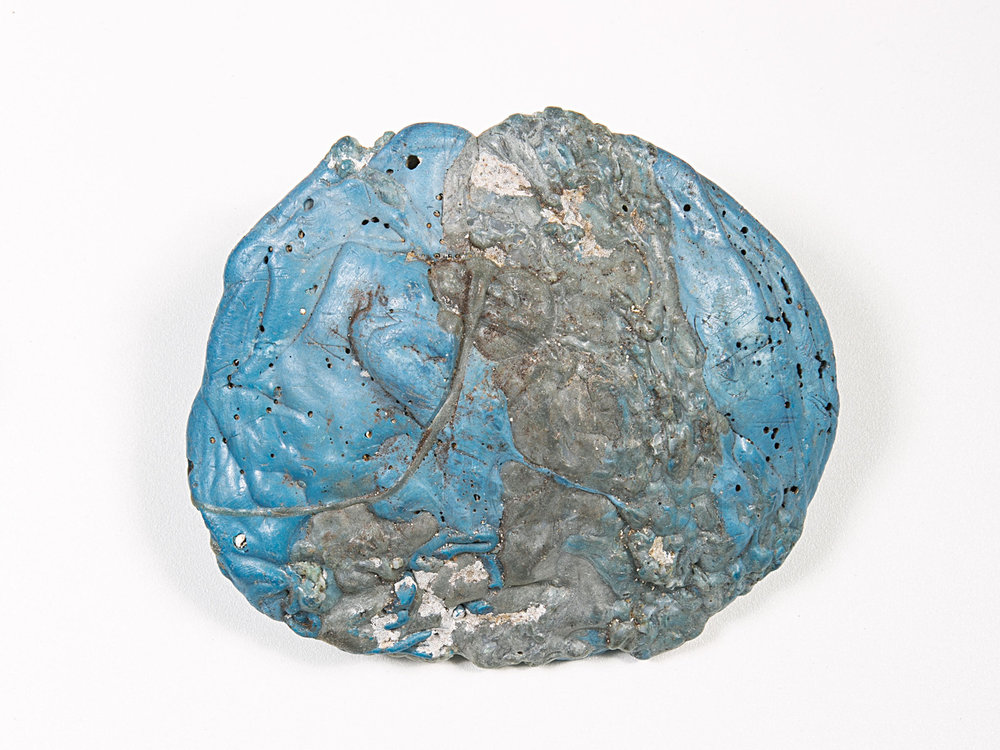
https://www.sciencedirect.com/science/article/pii/S0078323420300245?via%3Dihub – article entitled ‘Artists in the face of threats of climate change’
archaeological-style exhibition but of plastics: https://cas.oslo.no/in-depth/arv-mankind-s-unpleasant-cultural-heritage-article3110-1167.html called ‘Arv’: Mankind’s Unpleasant Cultural Heritage
- “While scholars have written ‘volumes’ about the symbolic and economic value of things, she said, the fundamental ‘materiality’ remains a largely unexplored topic. ‘It is exactly this quiet, enduring “thing-ness” that the research behind this exhibition challenges and creates a theoretical framework for,’ Broch-Due said.”
- Idea of contemporary archaeology – a romanticising of the past and opposed to a hatred (?? Too strong?) of now – but how much does this come down to the genuine climate crisis and how much of this ties into the lack that we feel, a yearning for another existence that we can project onto the past
- “‘This exhibition explores how mankind has influenced the Earth’s geological and ecological development,’ Broch-Due said. ‘Our footprints and our things press down on the Earth’s crust, breaking it apart and mixing it together to form new objects.’” – very anthropocentric (!!)
- (haven’t finished reading)
(first article that comes up in the library when you search plastiglomerate – Published by: Center for Sustainable Practice in the Arts and written by Kirsty Robertson)
- Artist Kelly Jazvac
- ‘It shows the connection of all matter, from the macro to the micro.’
- ‘What does it mean to understand part of the geologic record as a sculptural object? Can art make visible a problem too large to otherwise understand? What can art tell us that stratigraphy cannot?’
- Plastic as an invention to stop us draining the natural resources we were using before – interesting take tbf (is that what fake meat is?!)
- ‘Take, for example, a sample collected from Kamilo Beach that is clearly a lighter and sand. And yet it is not. These are not two substances glued together, but multiple substances that are one another. The lighter was likely one of the billion plus made in China and Taiwan each year from parts sourced all over the world. It had already travelled the globe prior to ending up on Kamilo Beach, where it melted, along with other microplastic flakes and confetti, into a single substance, a glomerate with a history as long as the sand and as short as the invention of plastic polymer in a laboratory in the 1950s.’
- ‘The few minutes or days in which it might be used as a takeaway container, a lighter, or a toothpaste tube belies both the multimillion–year process of its making, and the tens of thousands of years it is expected to last before breaking down, finally, into its molecular compounds.’
- (getting a bit e=mc^2 lol, no mass can just cease to exist)
- ‘As a geological artefact, plastiglomerate is an indicator of human impact on the ecology of the Earth. As an artwork, plastiglomerate makes the familiar unfamiliar.’
- ‘Plastiglomerate is a remainder, a reminder, an indicator of the slow violence of massive pollution. It brings together deep geological time and current consumerism. It also takes on the properties of what Jane Bennett calls “vibrant matter,” a lively thing made by certain actions and off–gassing in its own strange geological matrix’
- ‘As Métis scholar Zoe Todd writes, “I think that the danger in any universal narrative or epoch or principle is exactly that it can itself become a colonizing force.” She reminds us that Indigenous knowledges have space for the connection of all matter while by contrast, settler knowledge requires the vibrant matter of a plastic stone to tell this story.’ – **something to research further? – this might be relevant??: http://www.open.ac.uk/ccig/sites/www.open.ac.uk.ccig/files/Chapter%207%20’Political%20Ecologies’%20Vibrant%20Matter%20(Jane%20Bennett).pdf
- ‘Plastiglomerate speaks to the obduracy of colonialism and capitalism.’
- ‘Although there are plenty of artists using plastic to comment critically on waste, labor, and production, those specifically drawn to plastiglomerate seem rather to be oddly inspired by it, occasionally even going so far as to manufacture it themselves. To make such an object in order to question its making seems a deeply problematic tautology.’ – **important when it comes to my practice – good to assess the use of resin but also what to do with items I’ve collected? Don’t just make your own plastiglomerate lol
- ‘Following Todd, Jazvac remarks on her uneasiness with the way that she is often described as having “discovered” plastiglomerate, a word that has strong colonial connotations, and that imagines a manufactured landscape as something like a frontier to explore and possess. […] Perhaps, then, it is an anticolonial and a feminist action to refuse to see plastiglomerate as an ideal object or substance that can be discovered, extracted, gathered, and used to bolster careers in a capitalist system or to highlight the “newness” of an anthropogenic substance.’ – interesting associations with feminism (??), capitalism and colonialism
- ‘The readymade geologic being of plastiglomerate speaks to more than pollution: also geology, the deep time of earth, colonization, human–animal knowledges, currents of water, and the endless unfolding and collapse of life on earth.’

 Anna Harris