For a while now I’ve been trying to bring a more ‘human’ aspect back into my work, especially in comparison to the notion of deep time I’d been looking at previously. I had begun to do this through varying the materials I was collecting and using; rather than just using rock I started collecting washed-up ‘human’ objects/materials such as bricks, ceramic, glass, tiles etc (partly inspired by the Wrecking Season). I really enjoy how these objects have begun to be broken down back into materials, creating brick pebbles and glass shells – an assortment of anthropological rocks and curiosities.
Having recently read Jane Bennett’s Vibrant Matter, I have been trying to recognise an entangled, lively materiality (i.e. Bennett’s vital materiality) in these collections, and to bring this out through my work. I have been struggling for some time with what to do with these object-materials so this was a useful way of experimenting with them with a tangible goal in mind. I hope to begin to break down distinctions between what is ‘human’ and what is ‘nonhuman’, in doing so questioning notions of agency associated with each. I’d also like to explore the boundaries between ‘object’ and ‘material’, and if we might consider a middle-ground of the miscellaneous ‘thing’. Does our identification of an object change how we view and think about it? If an object no longer serves its designated purpose can we still assign it the same name? As Timothy Morton writes in Hyperobjects:
only when a tool is broken [does] it seem to become present-at-hand
Morton 2013: 14
I hope to draw attention to the discarded, inert and broken, imbuing them with a renewed agency, freeing them from the confines of their original assigned roles. I have done this through several lines of experimentation/inquiry. Presented here are a series of ‘tangly sculptures’ (working title?), made with an assortment of connecting materials. First are those connected solely by clay tentacles:
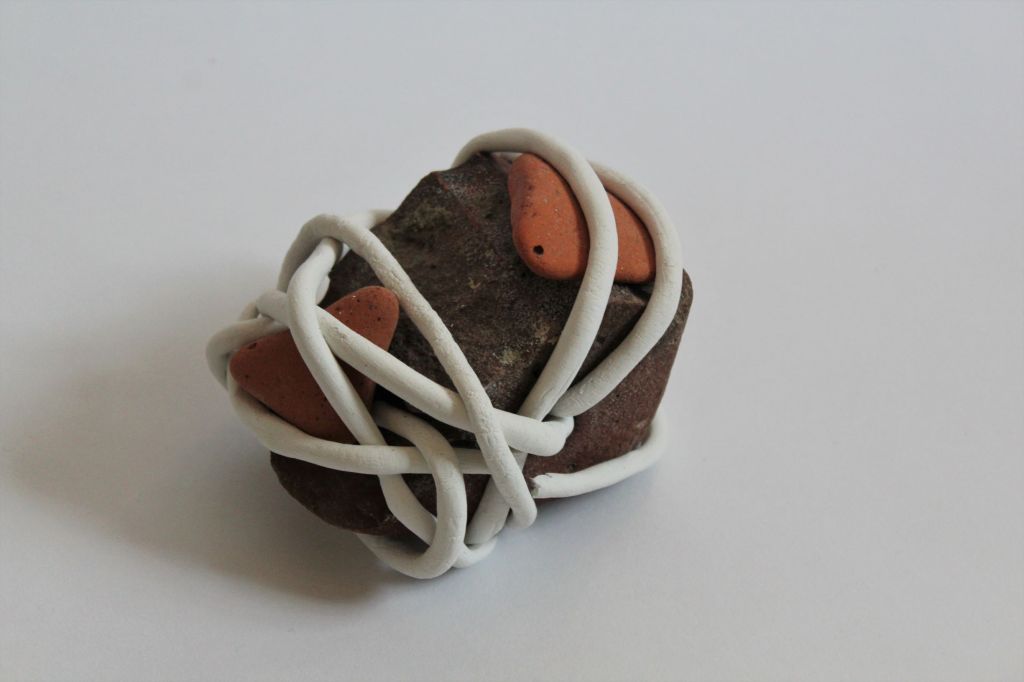

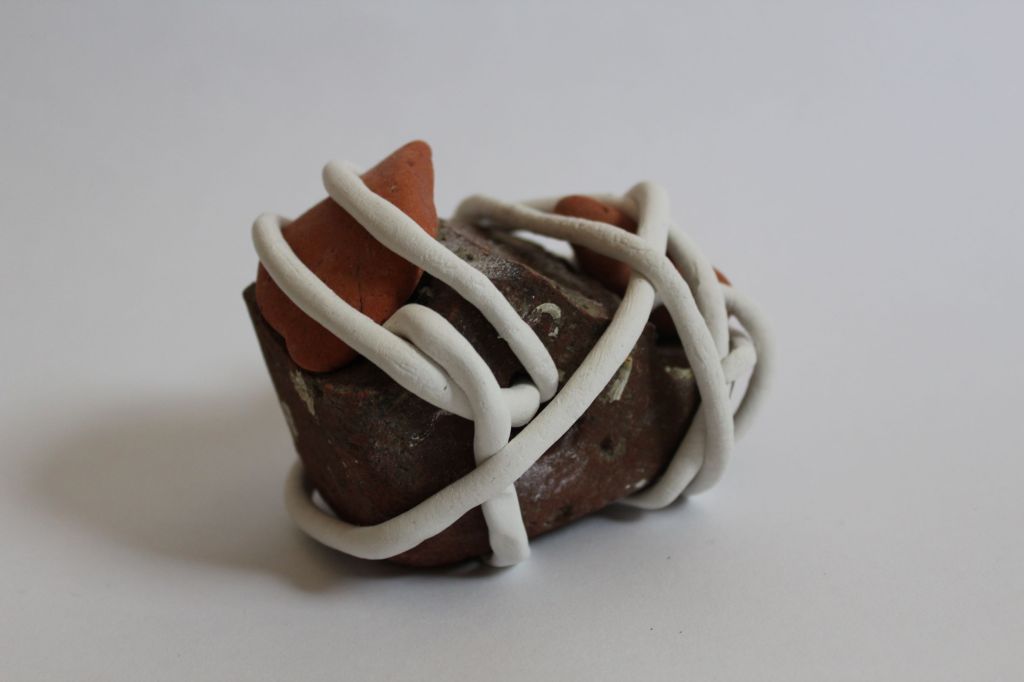
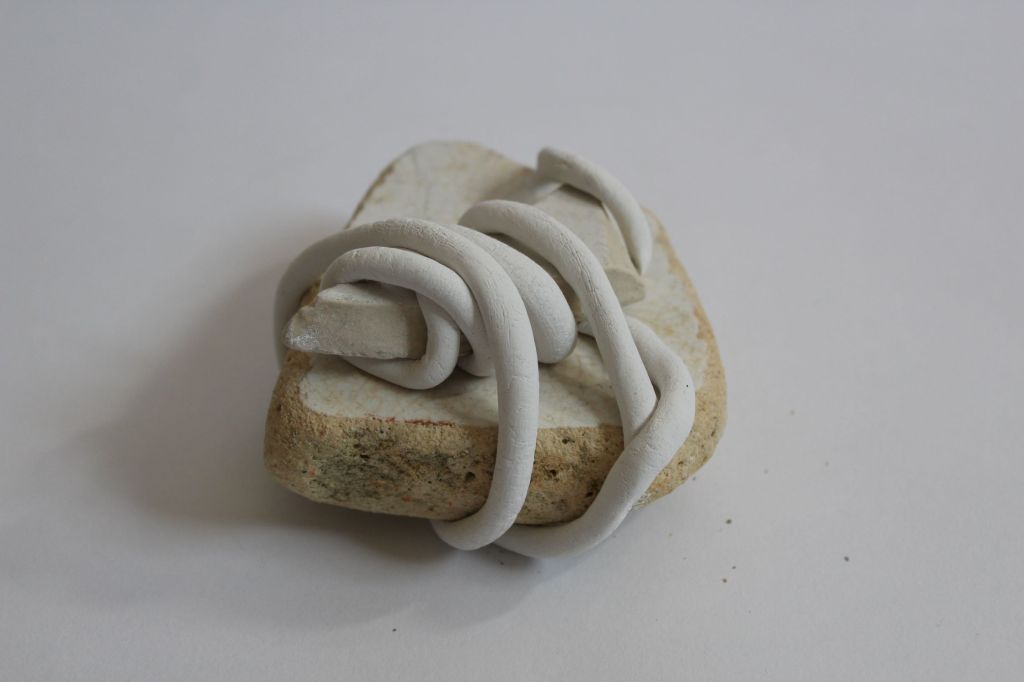

I enjoy these sculptures’ tentacular-ness but they could perhaps be less clean and crisp, a little less intentionally placed and more like Donna Haraway’s earthy, tentacular ‘chthonic ones’: ‘beings of the earth, both ancient and
up-to-the-minute’ (Haraway 2016: 2). The documentation probably doesn’t help with this either, both having been placed on a sterile white background; perhaps it might be better to take them back to the beach and re-photograph.
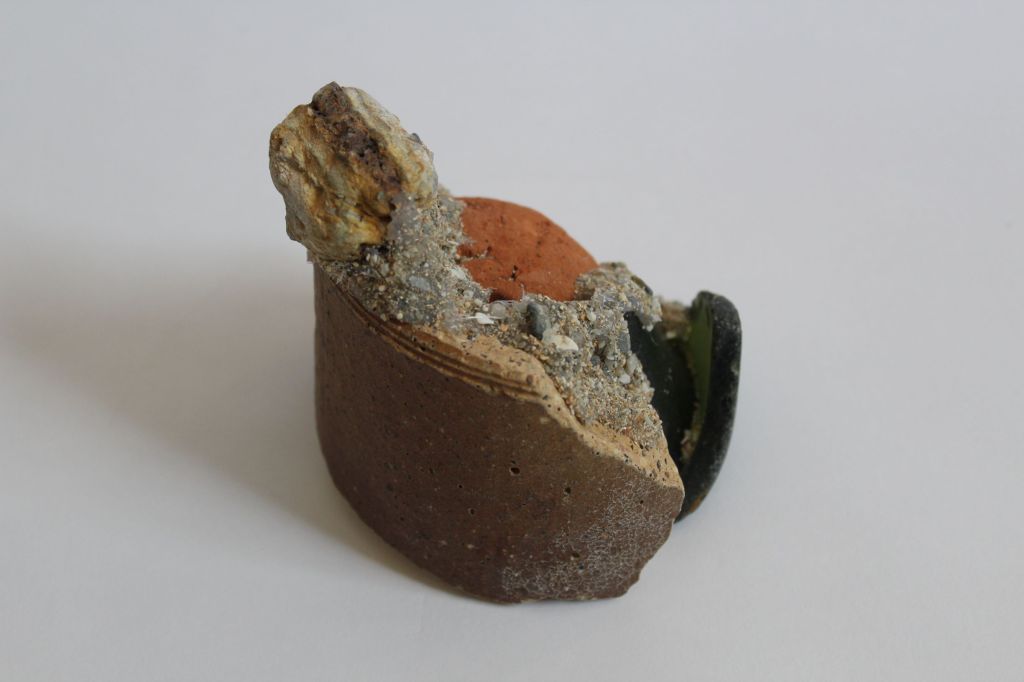
This next piece is held together by glue alone:
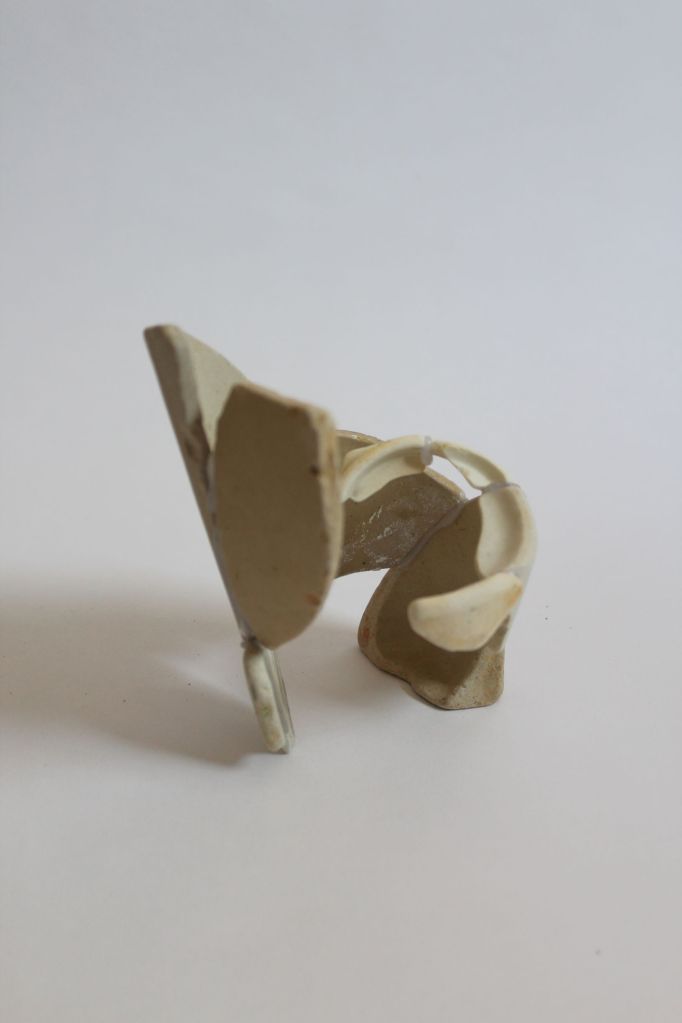
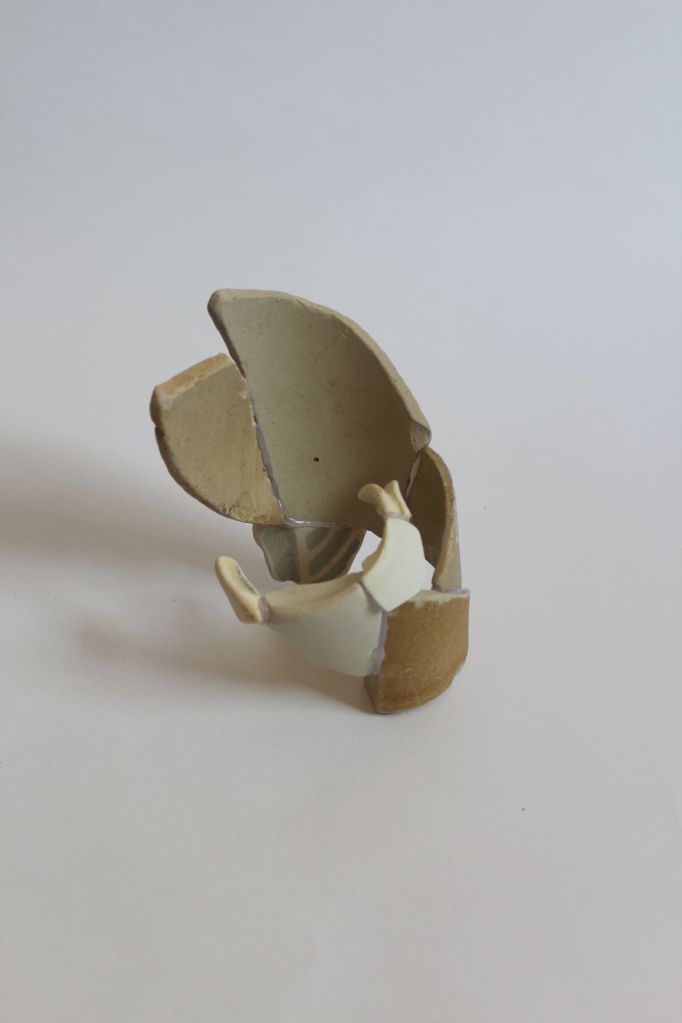

I like the flowing form of this and how it retains traces of its component parts’ previous roles as part of various pots. It seems to be growing and shifting, a Frankenstein pot, echoing elements of the long-gone pots and reconstituting them into something new.
This one in particular I feel plays with the definition of an object – if it is made up entirely of sections of pots then why is it not a pot any more? Is there such thing as a ‘pot’ materially?
My main dislike of this piece is the use of the plastic-y glue. I am trying my best where possible to not bring such synthetic/artificial/toxic materials into my work, out of environmental concern, and also aesthetically as it jars with the other found materials I am working with.
Some other more miscellaneous experiments (which go some way as to addressing this) are as follows:


This one is a bit of an odd one, and I’m not sure I’ll be using this at all going forwards, but it was an interesting experiment nonetheless. It’s essentially a tiny bit of paper mache holding the rocks together which has then been painted roughly the same colour as the rocks to see if I could quite literally blur the boundaries between different objects. Although I like the concept behind this I feel this is a bit of a clumsy way of approaching it so potentially something I won’t be revisiting quite in this way.


Here I have started to combine methods, firstly gluing an assemblage together and then wrapping the clay tentacles around as before. Again, I feel the wrapping is perhaps a little too pristine and neat, although I do like the way it echoes the curves and forms of the piece beneath. I also feel this piece is slightly reminiscent of a figure (in particular reminding me of a piece seen centrally here although almost definitely bearing little relation conceptually), which was unintentional but nice nonetheless. Perhaps it could be built upon as a different avenue for exploring this human/non-humanness through.
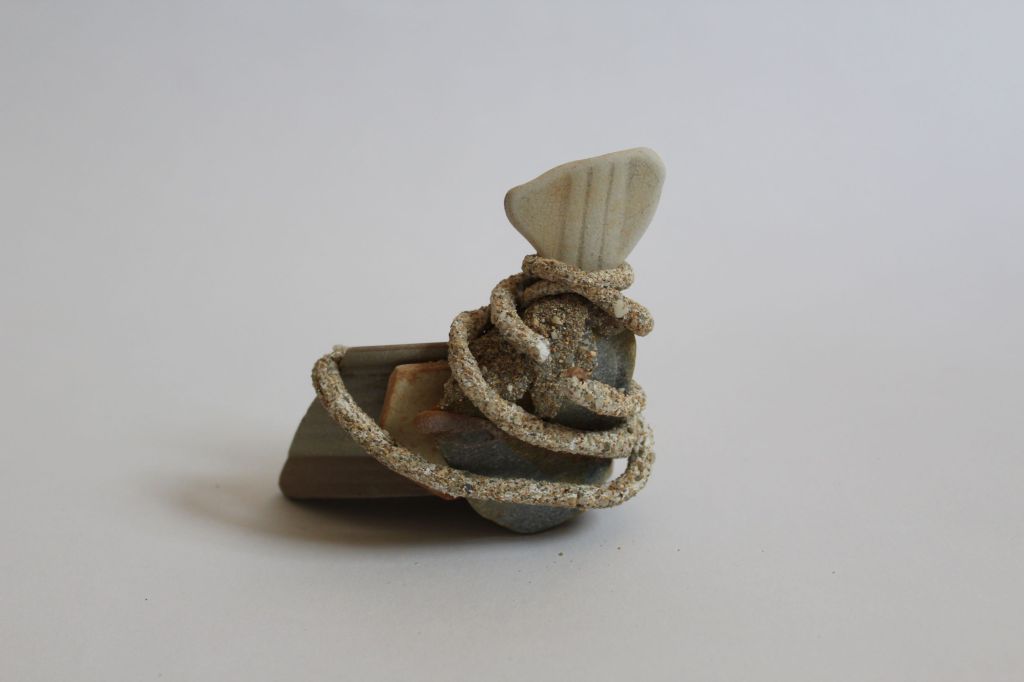
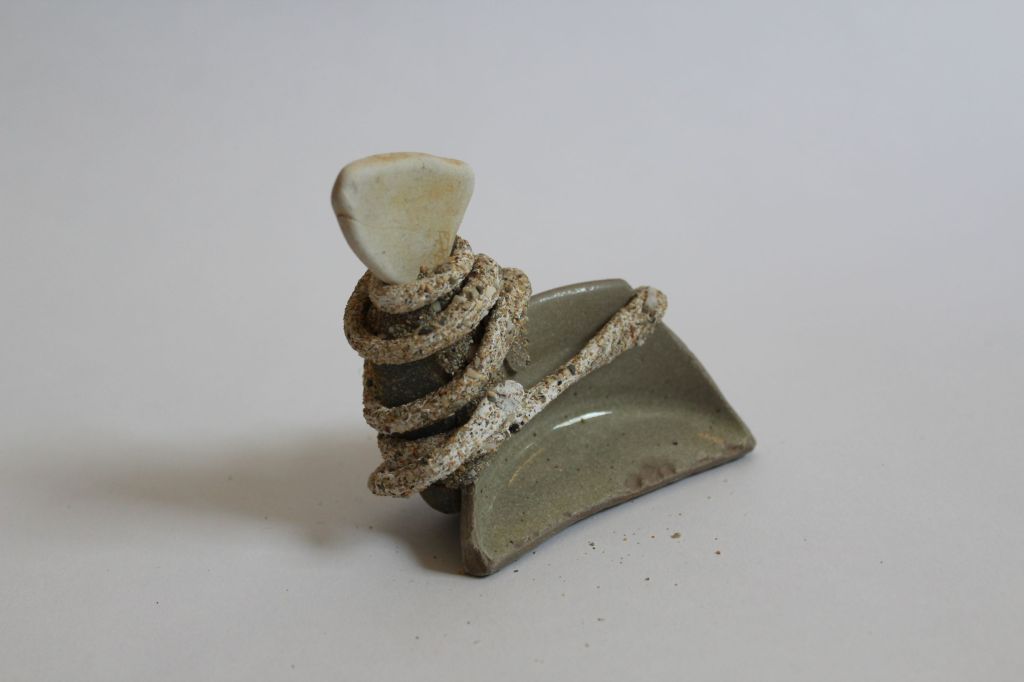
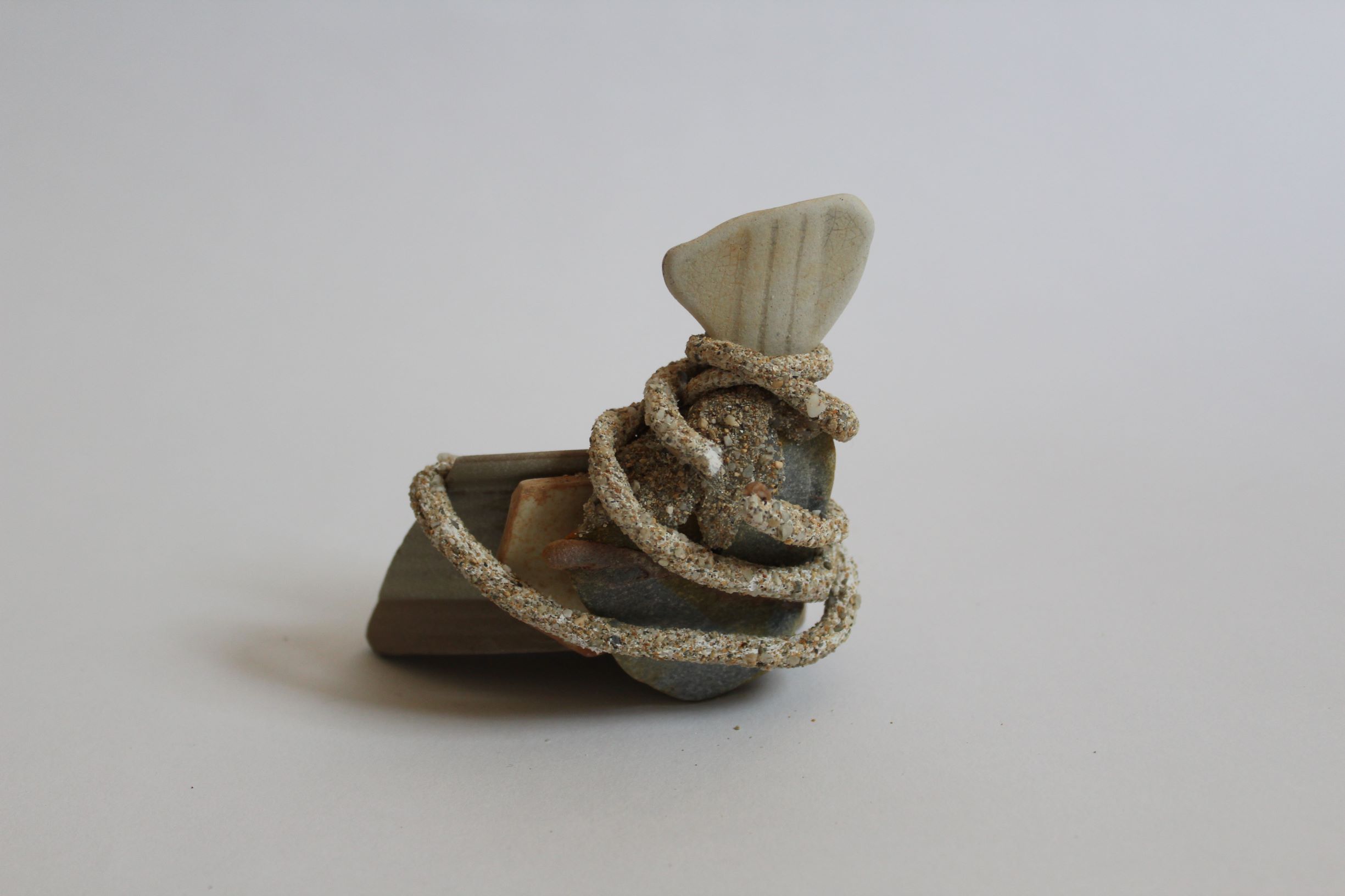
Here I have started to bring the clay back in touch with the original source of the materials, incorporating sand into the wrapping strands. This does go some way to counter the cleanness that I disliked in the previous pieces, but again I do still feel there is more room for improvement in this area as structurally the strands are still very clean and well-placed. However, the clay in this piece did snap as it was drying which I do enjoy in the sense that it starts to highlight this nonhuman agency I mentioned previously. This is something that would be interesting to explore further in the future, especially using air-drying clay’s tendency to crack as it dries (something I have used before). I can imagine some kind of kinetic sculpture wherein I cover an object in a thin layer of air-drying clay and witness the cracks appearing as it dries, reminiscent slightly of Clare Twomey’s Is It Madness. Is It Beauty.


I still don’t really like the use of the glue in holding this piece together but at least here, on an aesthetic level, it is covered. In this next piece, however I have used the glue more intentionally as part of the piece:

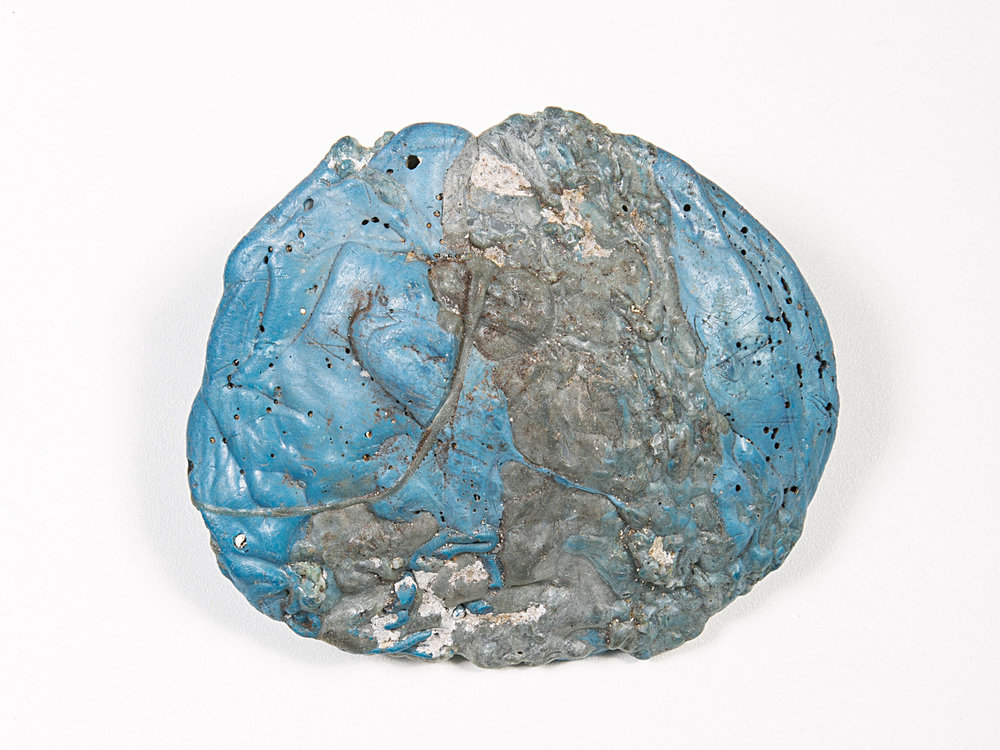
As I wasn’t sure about the clean-cut nature of the clay I started using the glue as a more oozing, organic way of joining the materials, using the sand again as a way of creating a more cohesive overall look. I think this sculpture therefore feels more successful as an merging, peculiar, conglomerated form that shows hints of the initial materials/objects but becomes its own new ‘thing’. Again, I feel this might be interesting to document back on the beach, amongst similar materials, as opposed to this stark setting.
This piece is also reminiscent of plastiglomerate, a rock-like substance made from merged and compressed plastics and other synthetic materials. This again is a fascinating route I could take my work down but also one that is tricky to navigate; it seems slightly pointless to just make replica plastiglomerate as opposed to somehow harnessing and using this human-nonhuman, anthropological substance to some greater poetic extent.
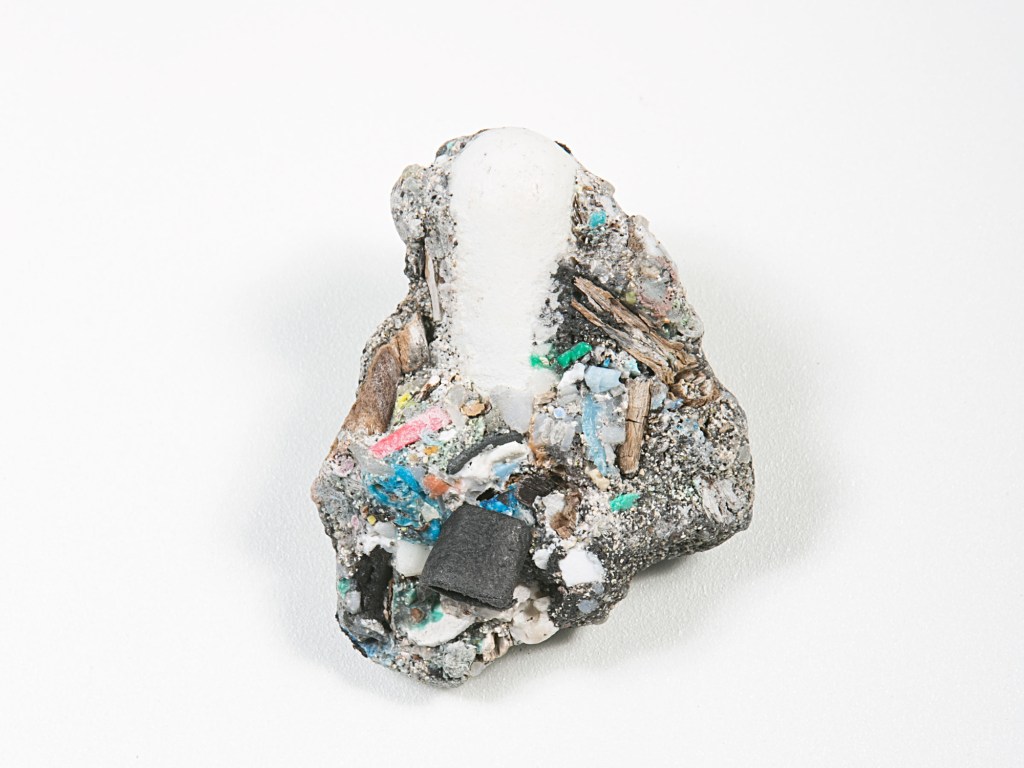
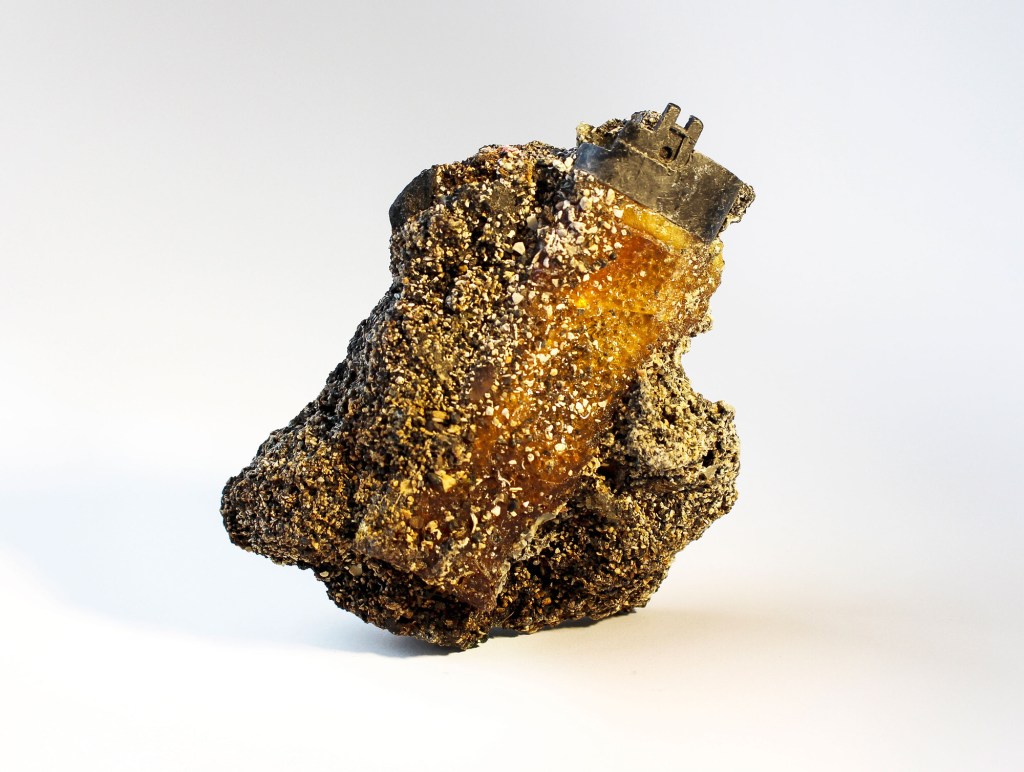
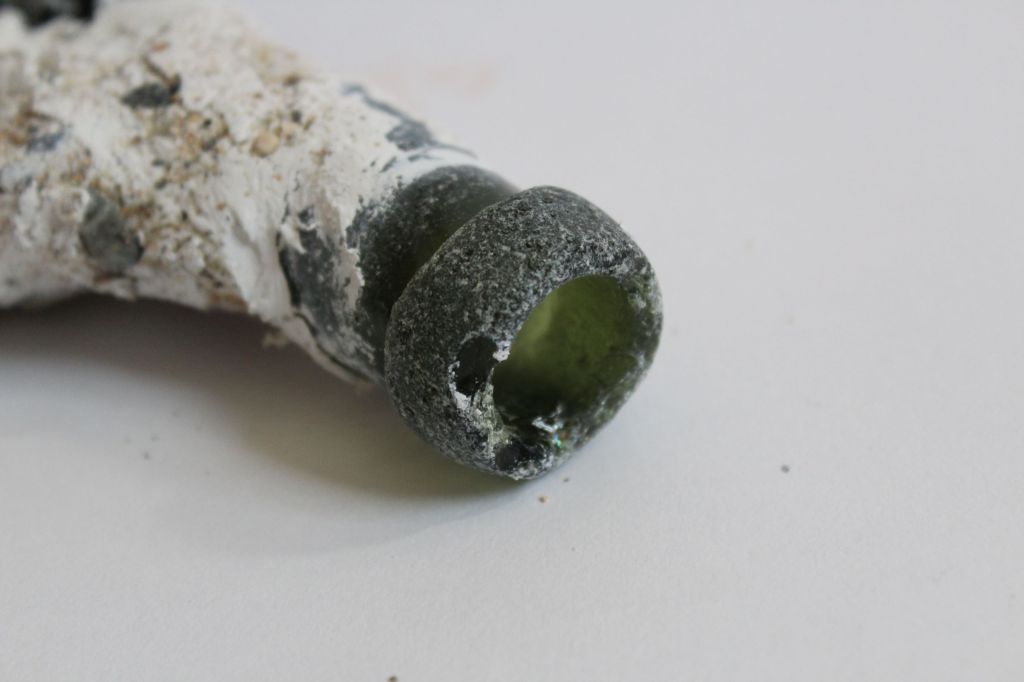
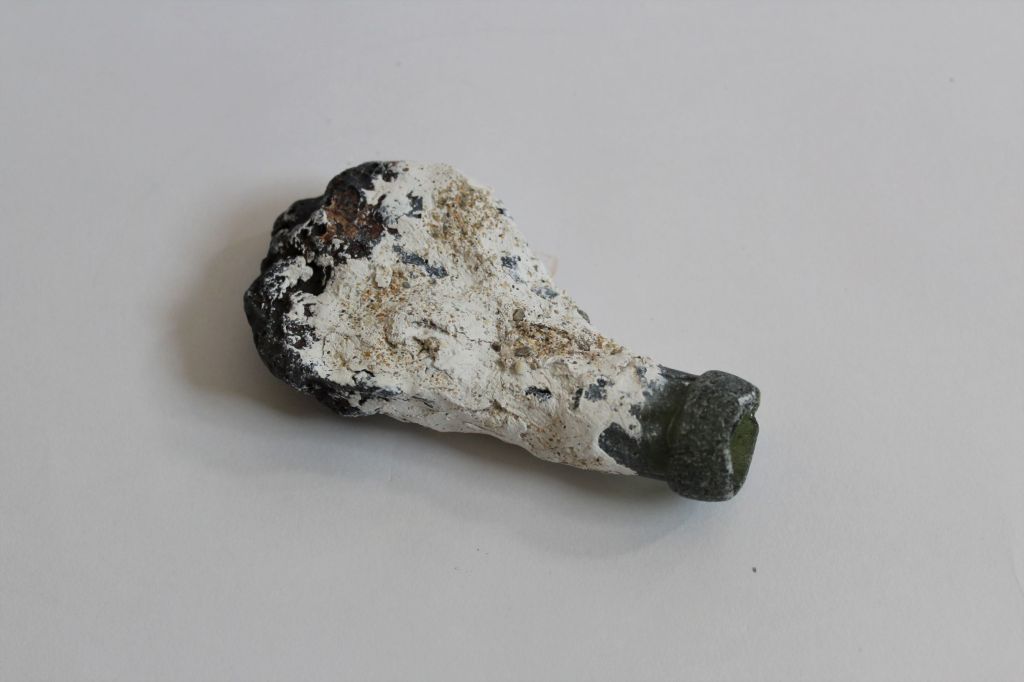
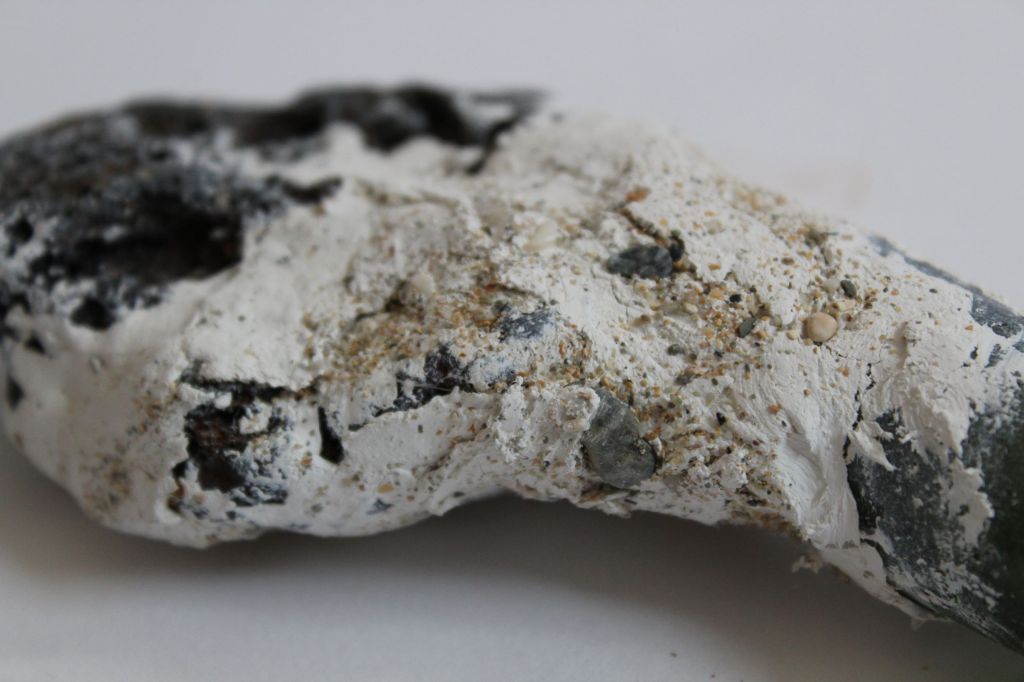

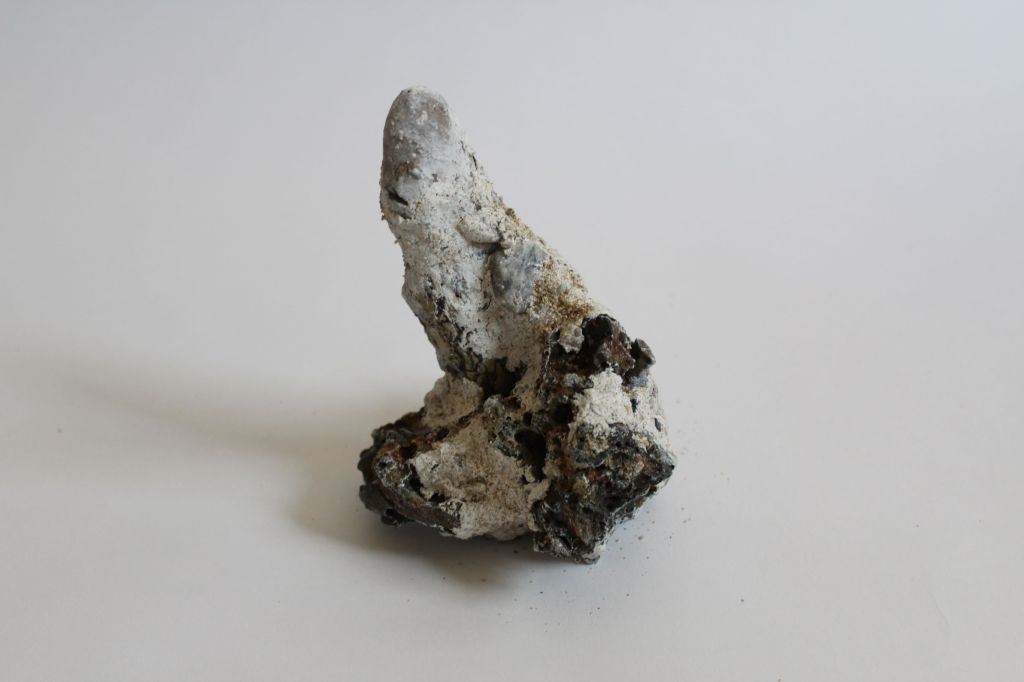

These last two experiments both use a combination of glue, clay and sand to merge the individual parts together, but instead of using the clay in neat strings as previously, here I have used it more roughly. This, along with the use of sand to break it up further, I feel is more successful at creating earthy, tangly sculptures which nicely tread this line between being ‘human’ artifacts that have washed up (particularly the top one with the identifiable bottle top) and encrusted, conglomerated ‘naturally occurring’ things. This combination reminds me of Victoria Adam’s work, particularly how she places human and nonhuman items alongside one another, in doing so establishing a gentle inquiry into their similarities and differences, both aesthetically and in terms of utility.


I am still keenly aware of the synthetic components to these: as well as the glue, even the air drying clay is somewhat artificial. It might perhaps be nicer if I could source my own clay direct from the ground, or even play around with using other earthy materials such as mud or wet sand to hold the pieces together.
It has often been commented that my work can be quite archaeological, and I definitely see this coming through again in these pieces. I think a lot of this might be down to the documentation of the work, which again is something I could explore further, perhaps leaning more intentionally into it. I would also, as briefly mentioned, like to try taking these pieces to the beach to document them to see if this changes how they feel; the busier, earthy surroundings may well bring out a different side to them than the white, clean backdrop.

 Anna Harris