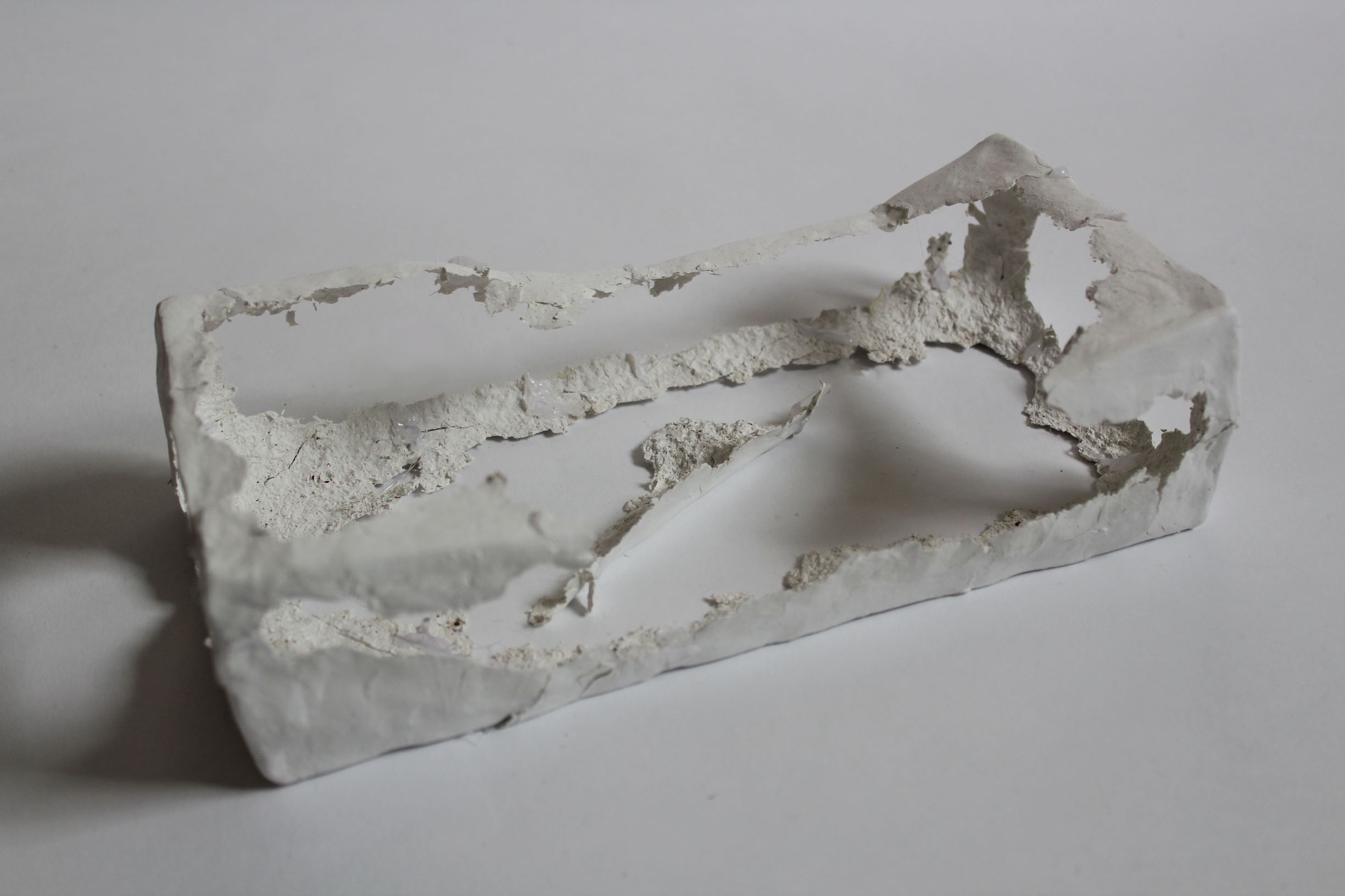
These sculptures emerged from my ongoing experimentation with objects and materials I have gathered from the beach. The items I collect tend to be those that I see as inbetween states – between object and material, human and nonhuman. I’m trying to capture a sense of ongoing-ness, a sense that no material is ever resolved into a final form, regardless of how it may have been designated or labelled as so by the human. These particular pieces emerged from this first piece wherein I took the remnants of a ceramic pot and used clay to re-create what was ‘missing’:
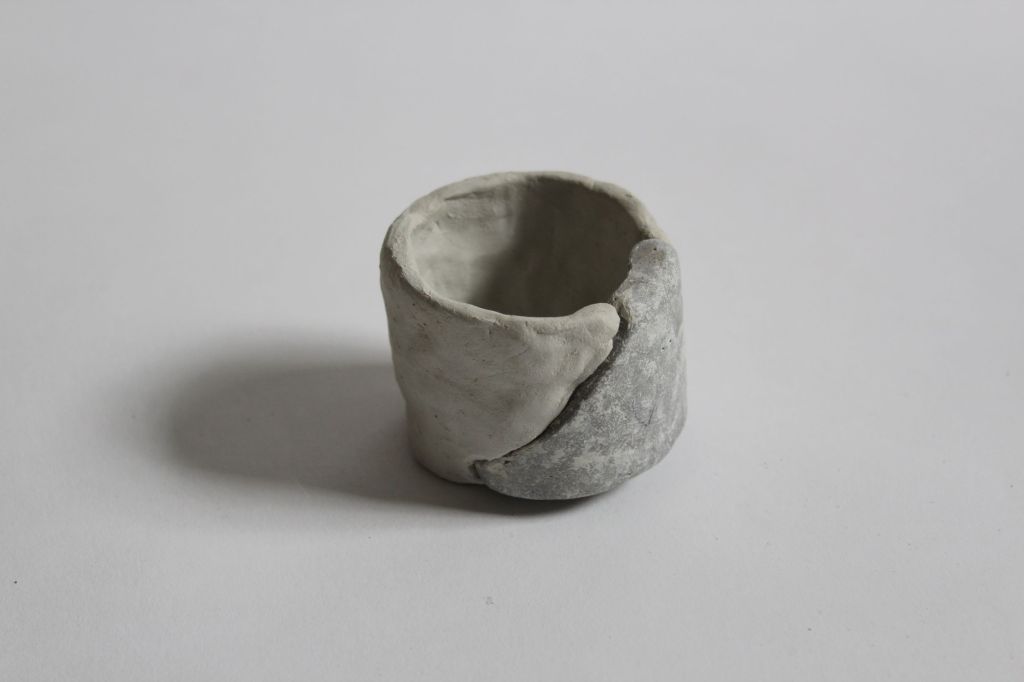

In recreating this ‘missing material’ I hope to evoke a sense of the past of this object, a ghostly form of what once was. In this way I’d like to draw attention to the fluidity of material and the agency nonhuman material can possess; it was not any human actant that changed this item from a pot to a fragment, and yet we all possess the idea that only humans, or certainly anything we deem to be alive, are capable of acting with agency.
As with one of my ‘tangly sculptures’ there is also perhaps a hint of questioning what it is to be a pot materially; if I were to recreate the exact shape of the original with only half the same material do we still consider it the same pot? Or are the long-lost original ceramic fragments, now debris on the ocean floor, what truly constitute said pot?
I explored a similar idea through a series of pieces using an eroded brick as my starting point. Initially I added clay to where the brick had been worn away and then peeled this off in small pieces to create the following collection:
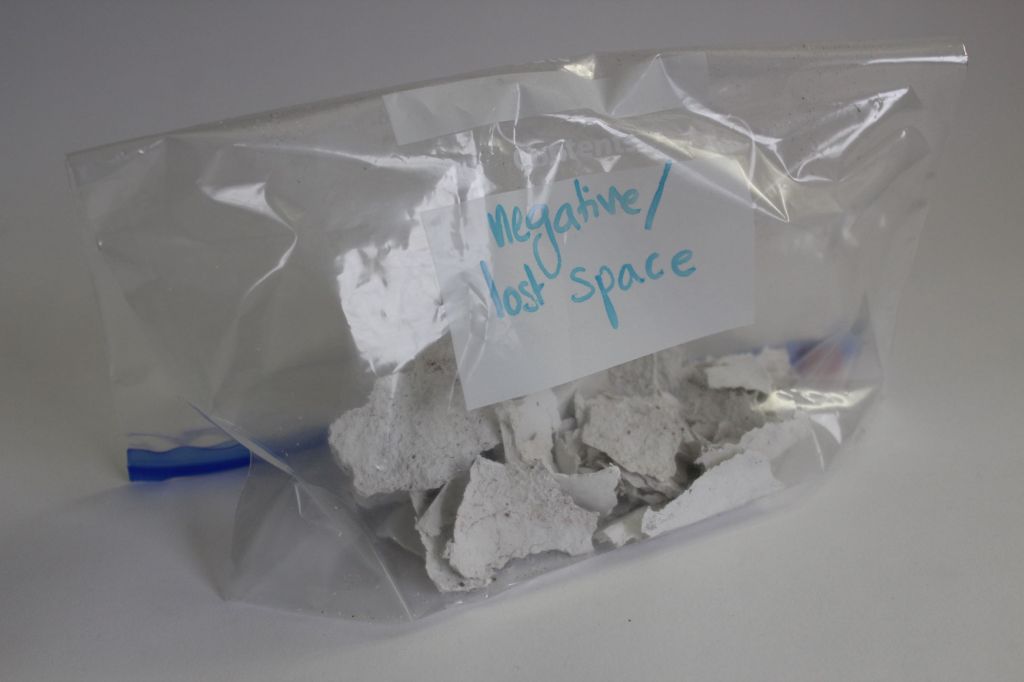


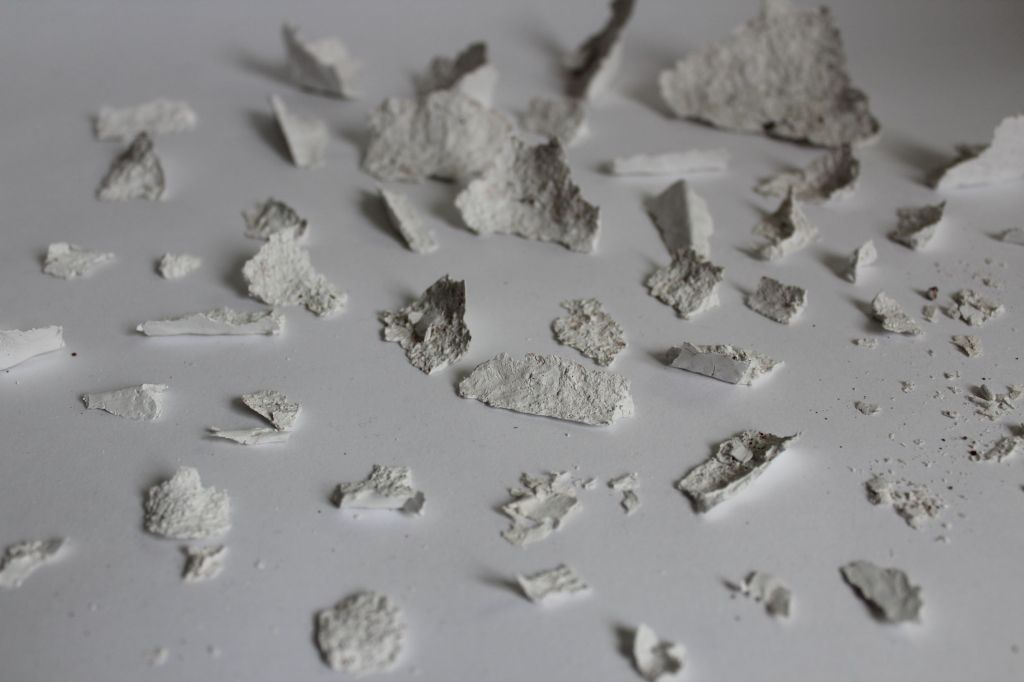
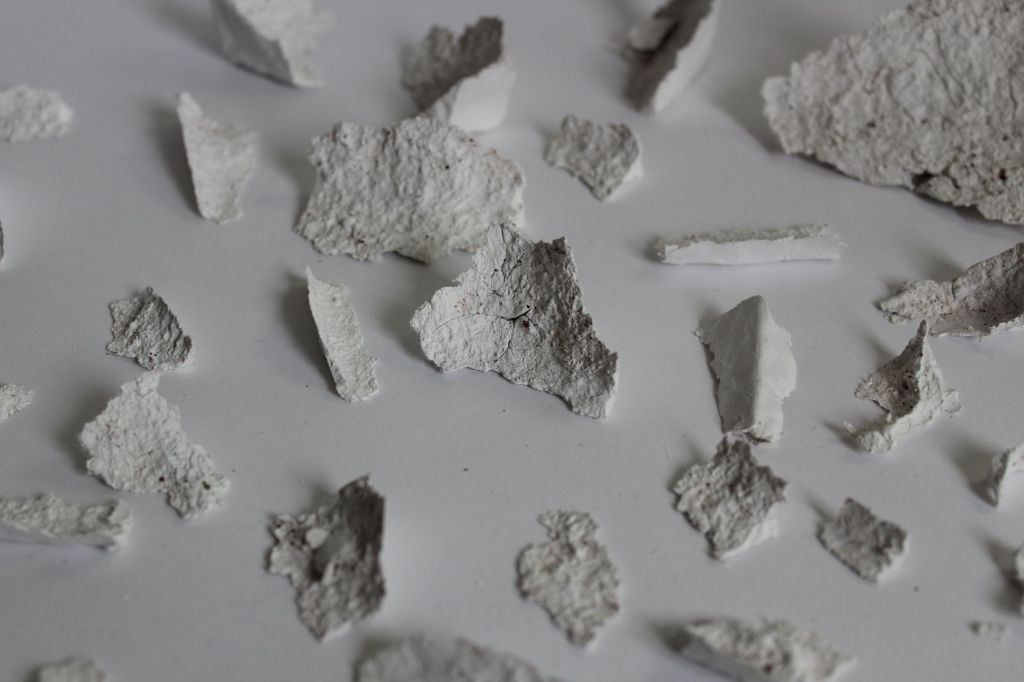

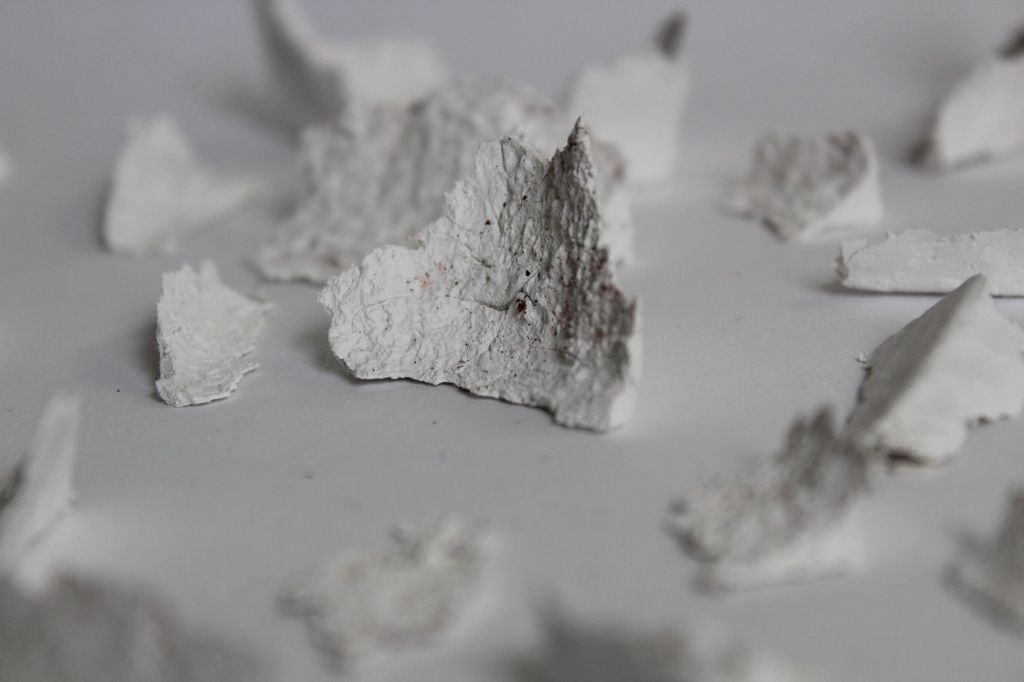
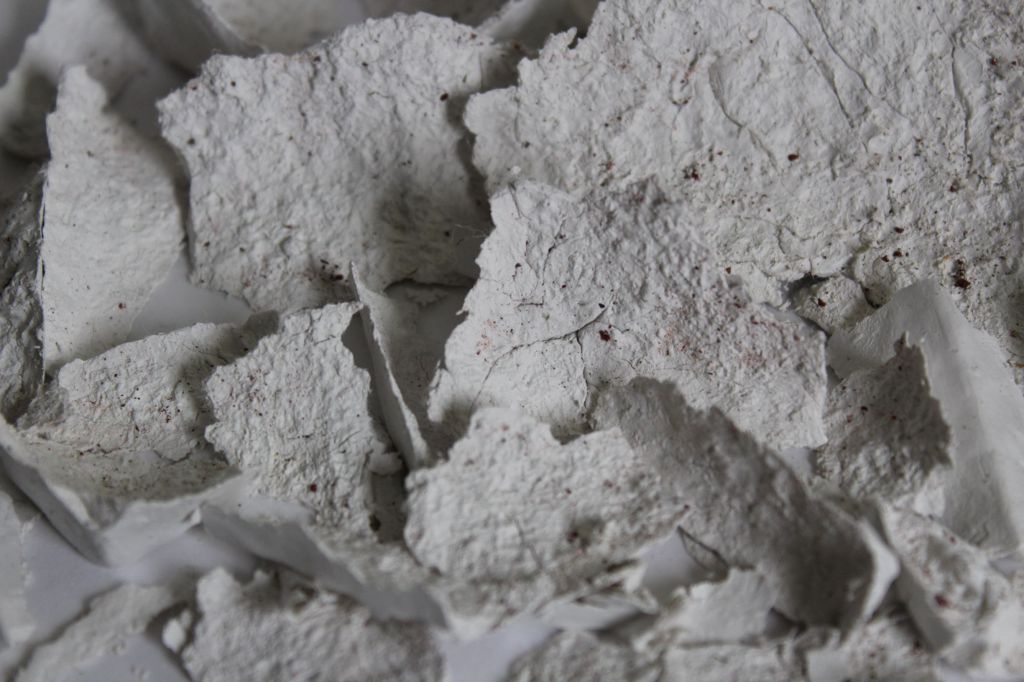
Aesthetically I enjoy that the whiteness of the clay heightens the sense that these fragments are literally ‘ghosts’ of the material that used to comprise the brick. Photographing these white fragments on a white background was also really effective at picking up small details and the slightly darker light levels have given the photos a nicely subdued, even wistful, sense. However I found with this work that it relied quite heavily on an explanation, something that I am not necessarily against but that I potentially would like to minimise where possible. (This dilemma of the explanation comes up a lot in Simon Starling’s work.) Therefore I tried the same approach again but instead of pulling the clay off in small pieces I attempted to maintain a sense of a coherent brick-shaped outline:
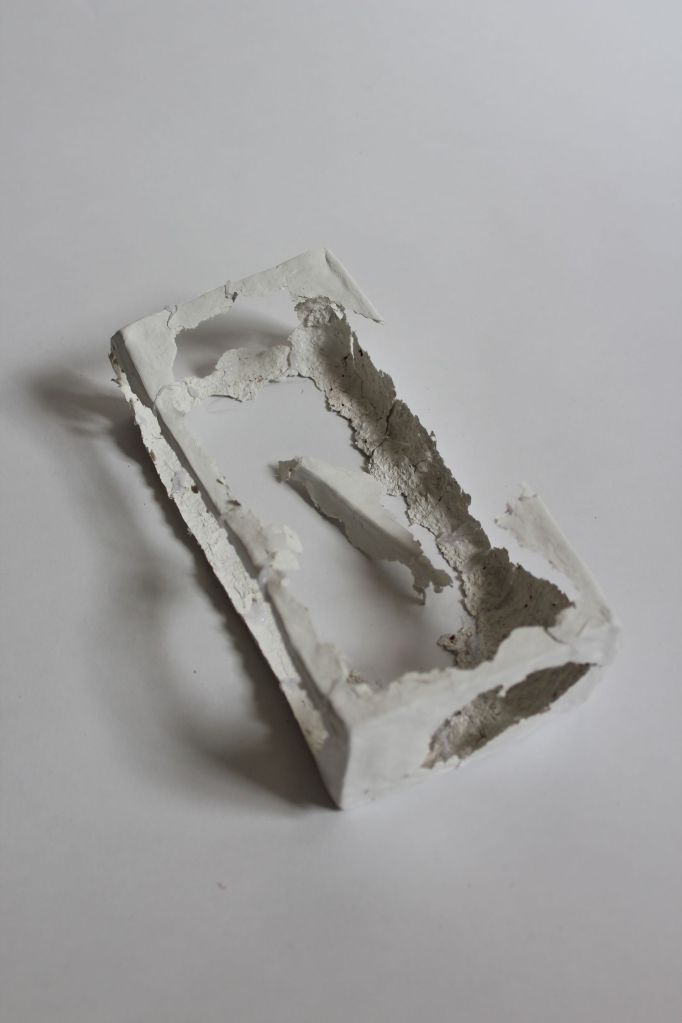
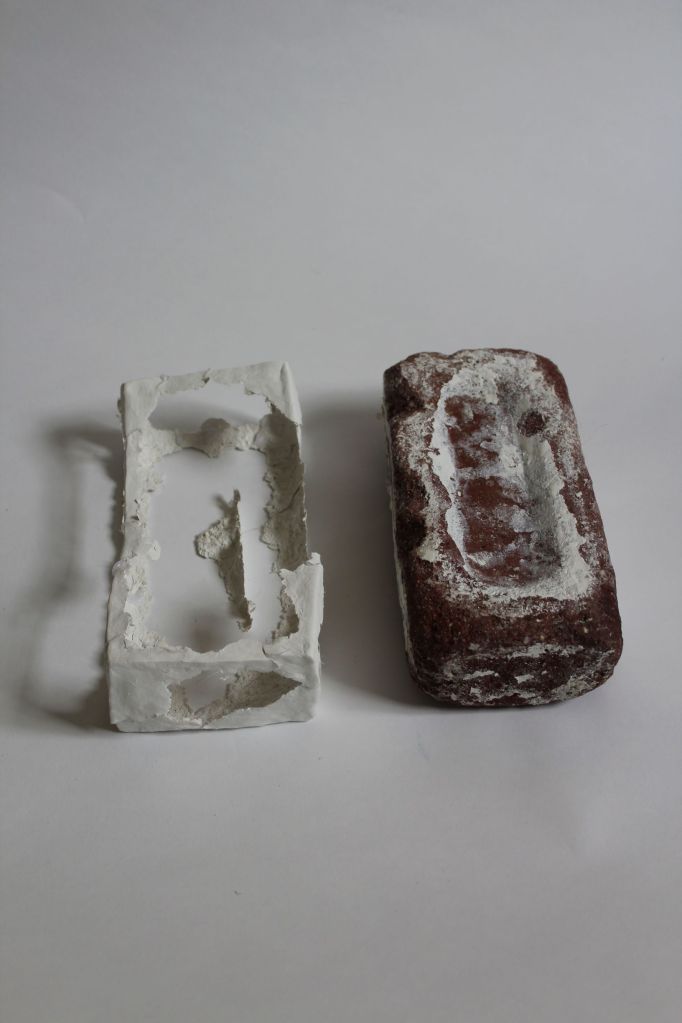

As can be seen in the photos there was a small section that came loose – initially this was attached but over time the sculpture did start to lose its shape a little. With this in mind I chose to make a further sculpture using the same technique but just making the clay a little thicker for better structural integrity:
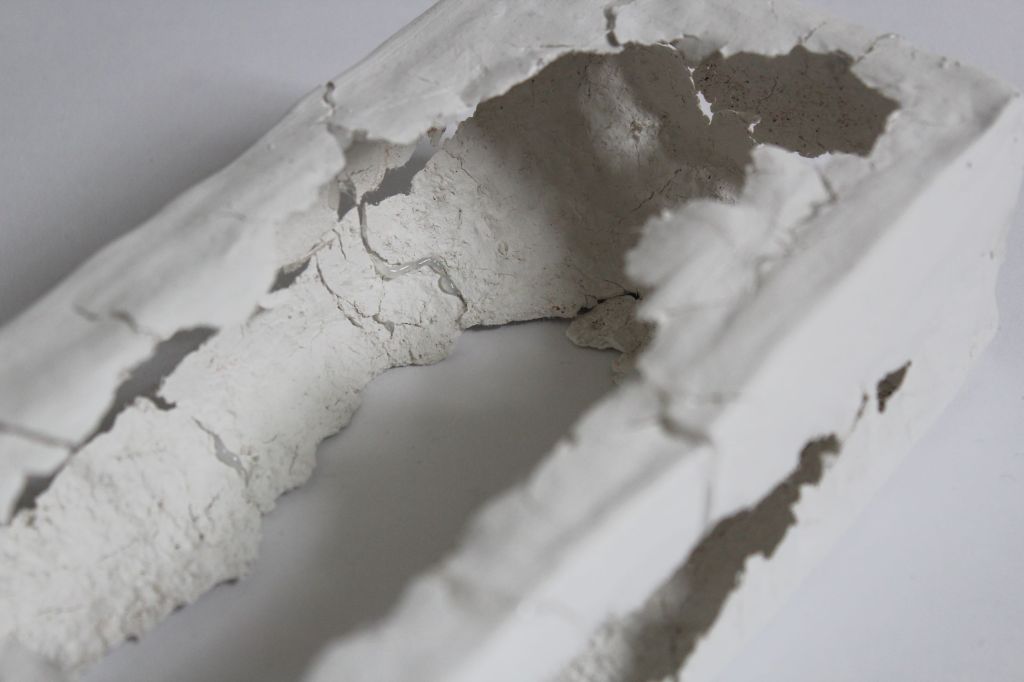
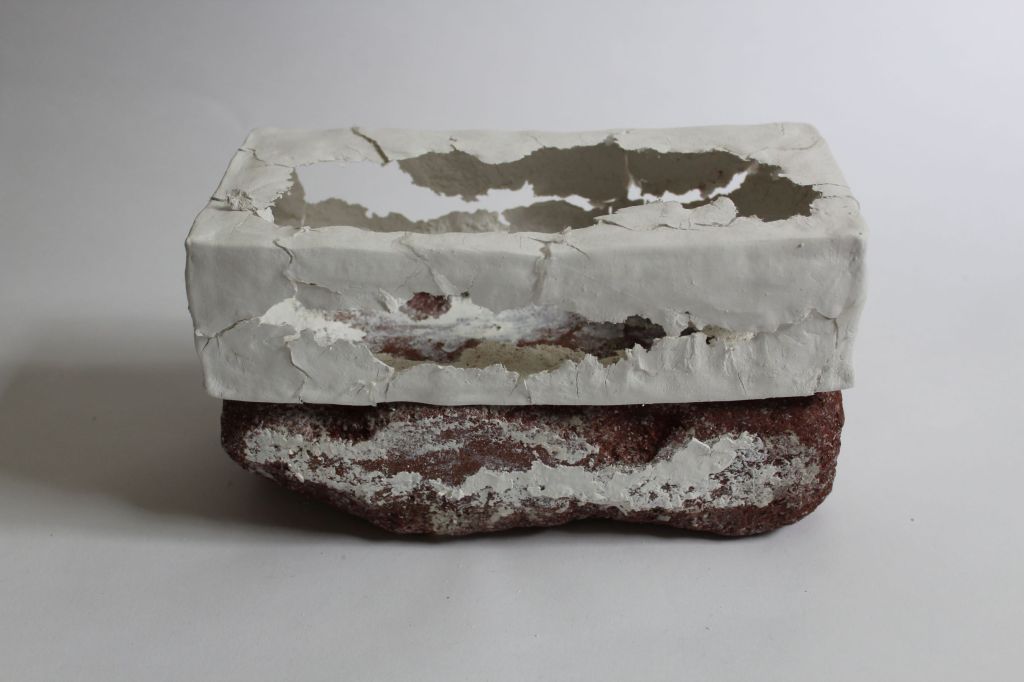

Although this third attempt is more structurally sound, upon reflection there is something I quite like about the fragility of the second piece. It seems apt that this ghostly remnant should be slightly decaying and losing form, adding a slight sense of ephemerality to the piece. I could display the three (or even four with the brick?) as a series but I think I might prefer each on their own as entirely separate pieces. In direct combination they seem to suggest a narrative perhaps a little too explicitly, slightly losing their poeticism as brick+sculpture being two halves of a whole.
The only other thing is whether they still require written explanations to be deciphered. I do feel the explanation is important in their meaning but I am unsure as to if their status as lost material can be inferred from simply the pieces in and of themselves (the last two at least). I may submit this work to be shown in the Arts Festival which would be a good opportunity to show the work and gather feedback on how they are received.
As mentioned, the photographing of these sculptures has also added to how they are received, especially at the moment when digital display is the predominant method of exhibiting work. As such I experimented with a slightly different way of documenting the work as follows:
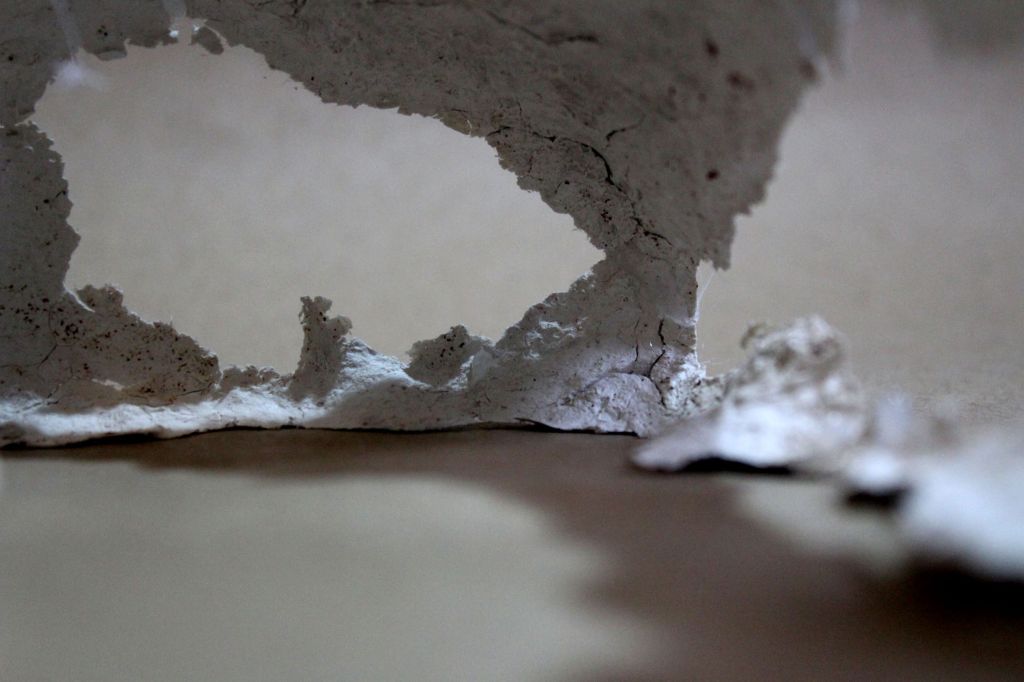


For these photos I positioned the camera almost inside the sculptures which I discovered made these landscape-like images, seemingly reminiscent of peering out of a cave. I like how this ties back to where the ‘lost material’ may now be, washed up somewhere else along the coast or deposited on the seafloor. It also links nicely to an ongoing theme in my work of using imagery that confuses between the macro and the micro, growing whole landscapes out of small details and in doing so often shrinking the human and growing the nonhuman.
I would love to continue this series in some way although I am finding it difficult to find suitable materials to do this with; most materials I collect are either such small fragments it is near impossible to imagine what the ‘whole’ once was, or are from the centre of something so logistically difficult to separate the item from the clay once done. However I am continually collecting new materials so there is strong potential for this series to continue at some point in the future.

 Anna Harris