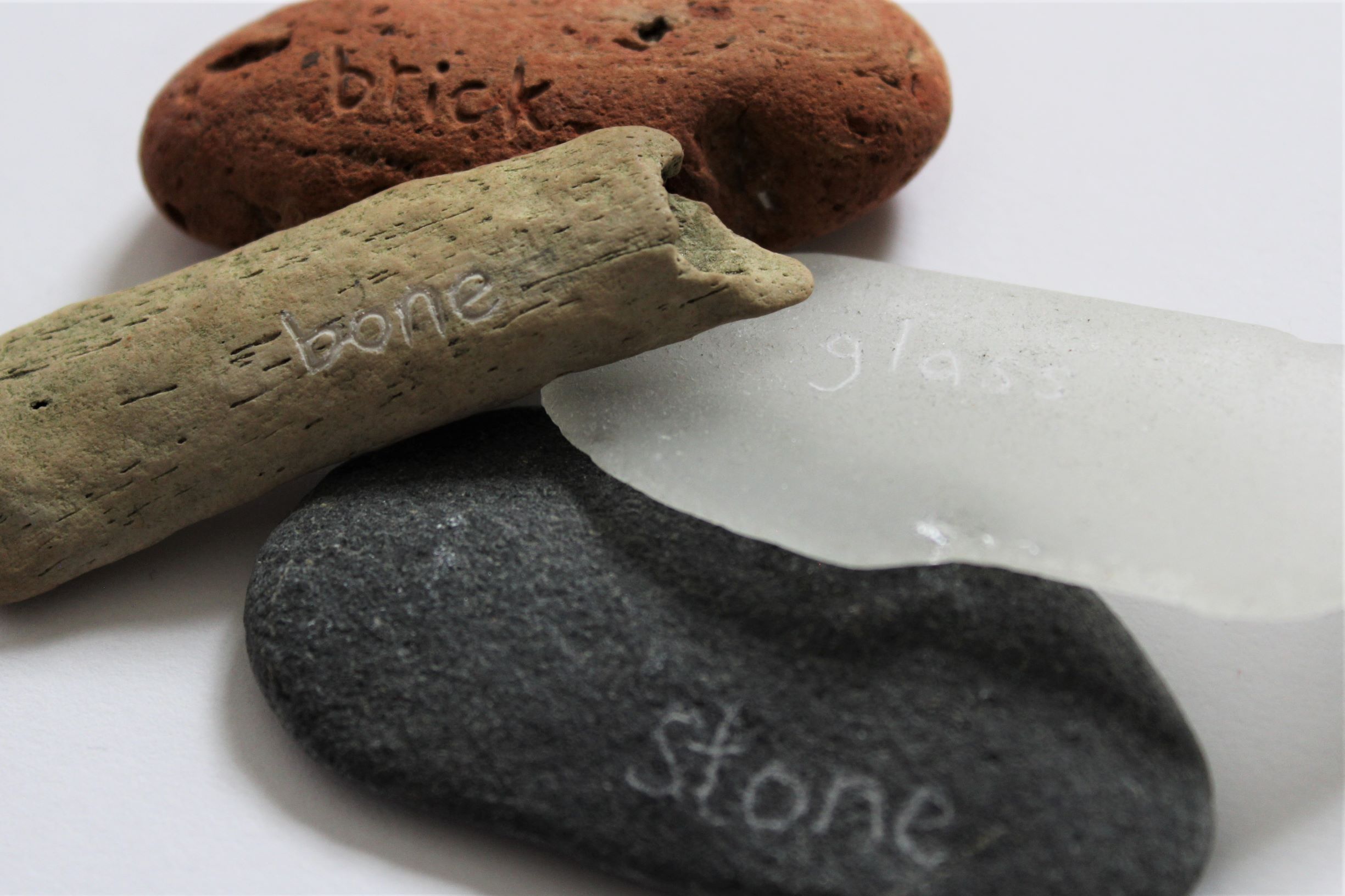
This piece continues my exploration into the margins between object and material, linking also to several other areas of recent research such as Bennett’s Vibrant Matter and Harman’s Object-Oriented Ontology. The use of text within the piece creates quite a literal exploration compared to anything I have made before, particularly with the use of words. They were selected for their unique position as referring to both object and material – brick, bone, glass, stone//a brick, a bone, a glass, a stone – which I felt worked playfully with this object/material distinction.
The following quotes summarise some of the links between my piece and my research quite nicely, in particular through Harman’s Object Oriented-Ontology:
- ‘all of the objects we experience are merely fictions: simplified models of the far more complex objects that continue to exist when I turn my head away from them, not to mention when I sleep or die’ (34)
- ‘the reality of things is always withdrawn or veiled rather than directly accessible, and therefore any attempt to grasp that reality by direct and literal language will inevitably misfire’ (38)
- ‘there is nothing we can make an object of cognition, nothing that can exist for us unless it becomes an image, a concept, an idea’ (69)
They are all exploring this idea of the gap between our understanding/ of the material world around us and its true existence, the difference between our surface-level labeling of an object and an actual thing-ness that continues to exist ‘when [we] turn [our] head[s] away from them’. As Ortega writes:
‘There is the same difference between a pain that someone tells me about and a pain that I feel as there is between the red that I see and the being red of this red leather box. Being red is for it what hurting is for me. Just as there is an I-John Doe, there is also an I-red, an I-water, and an I-star. Everything, from a point of view within itself, is an I.’
Ortega in Harman’s Object-Oriented Ontology (71)
There is also a psychoanalytical approach to be taken here in terms of the interaction/distinction between the Real and the Symbolic as I have previously explored to some extent here. There is definitely far more to be researched and unpicked here in order to fully understand the nuances of these Lacanian registers but essentially they can be used as frameworks again to understand and explore this gap between an assigned word for an object and its true existence. In quite literally inscribing/imposing one onto the other I am aiming to make this interaction a physical one, bringing these words from the Symbolic to the Real – from language to reality.
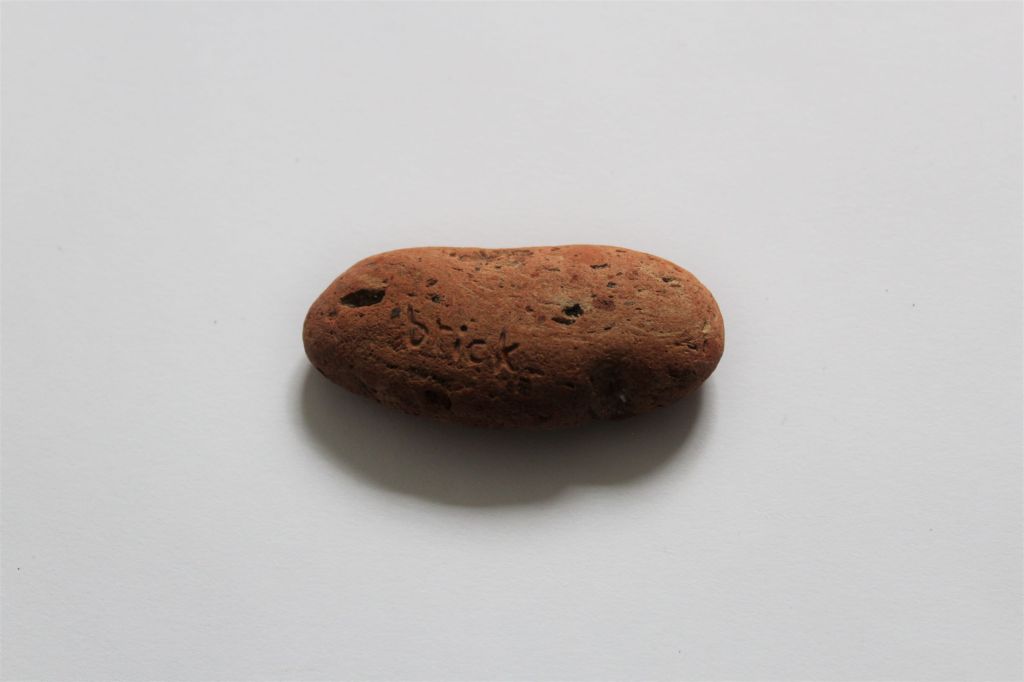
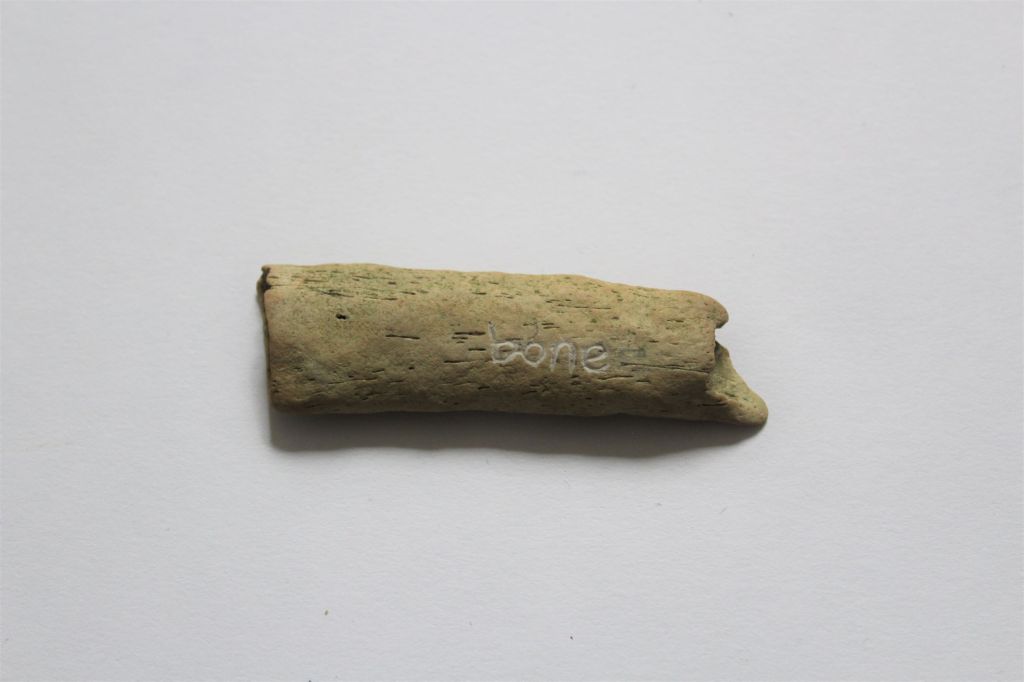


Although I have documented these separately, I do consider them a series that are to be displayed together. I’m not sure exactly how would be best to arrange them, particularly as I quite like the order of brick bone glass stone and would like this to be maintained in their presentation. Below are some possibilities:

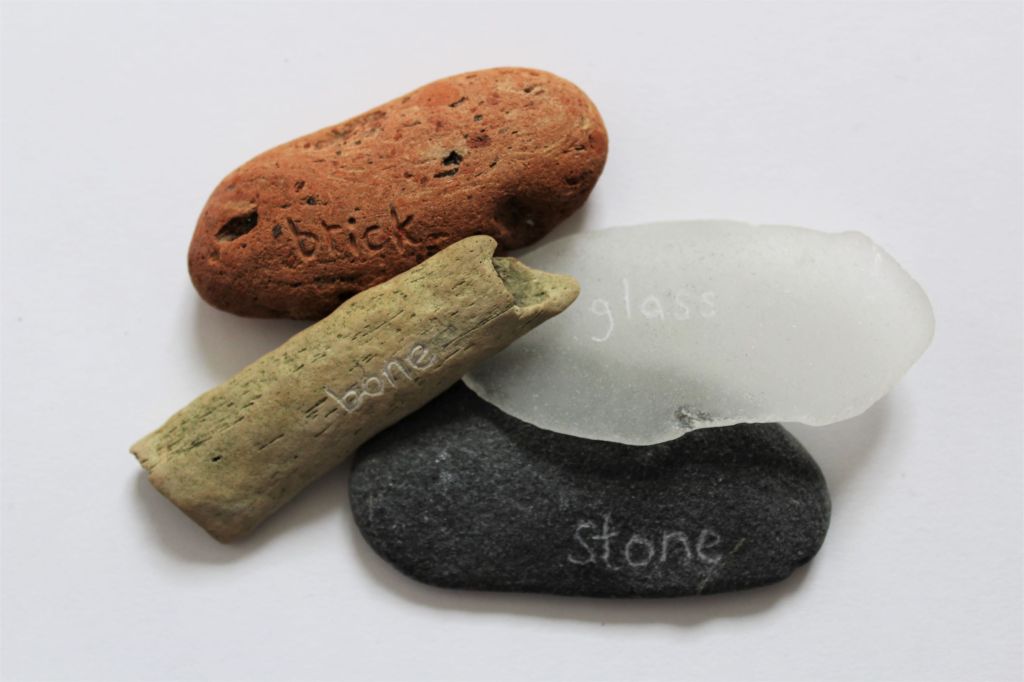
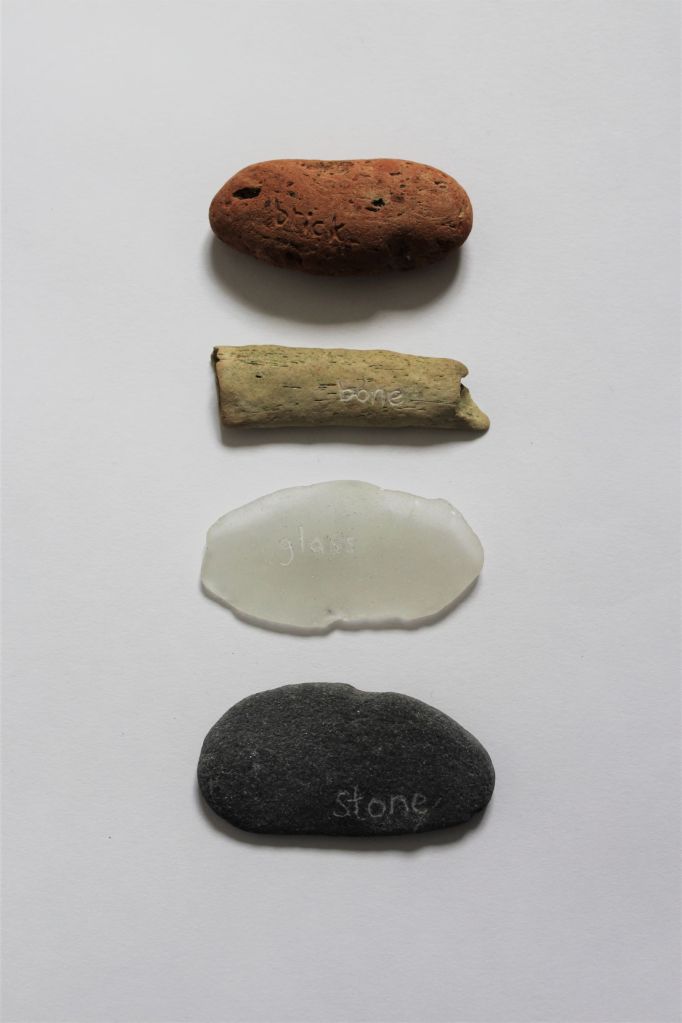
As I have remarked about several of my other works, it may also be interesting to document them back on the beach as opposed to on this clean white backdrop. I imagine the presence of language would interact strangely with the surroundings, most likely appearing oddly, if subtly, out of place.
An aspect of this piece I do particularly enjoy is the minimal use of artificial/synthetic materials: being entirely carved out of found materials there is almost no detrimental ecological impact and could be very easily returned to where they were taken from with next to no negative environmental repercussions. As I have considered before this brings up the idea of permanently returning pieces back to the beach in a more performative, ephemeral piece, connecting my own actions cyclically back to my surroundings.
In all, I enjoy this piece’s playful poeticism along with its simplicity. I have been wanting to incorporate text more into my practice for a while now and this feels like a good start, particularly in terms of materially/logistically how the text sits alongside/as part of a work. To some extent exploring the physicality of text reminds me of Robert Smithson’s A heap of Language wherein, although a 2D work, text is considered as more than just a vessel for language or meaning, instead developing a sculptural agency of its own. I have also been reading Tim Cresswell’s Plastiglomerate: a book of poems in which text is also used to somewhat sculptural effect (such as in Fulgurites), as well as being topically very relevant.

Going forwards, as well as potentially taking these four items back to the beach for documentation or even to be left, it could be interesting to inscribe many objects of the same material with the same word. My hope would be that this would draw attention to a discrepancy between the uniformity of the word and the variation of the different pieces, perhaps even the text becoming sculpturally different on each one as a result.

 Anna Harris