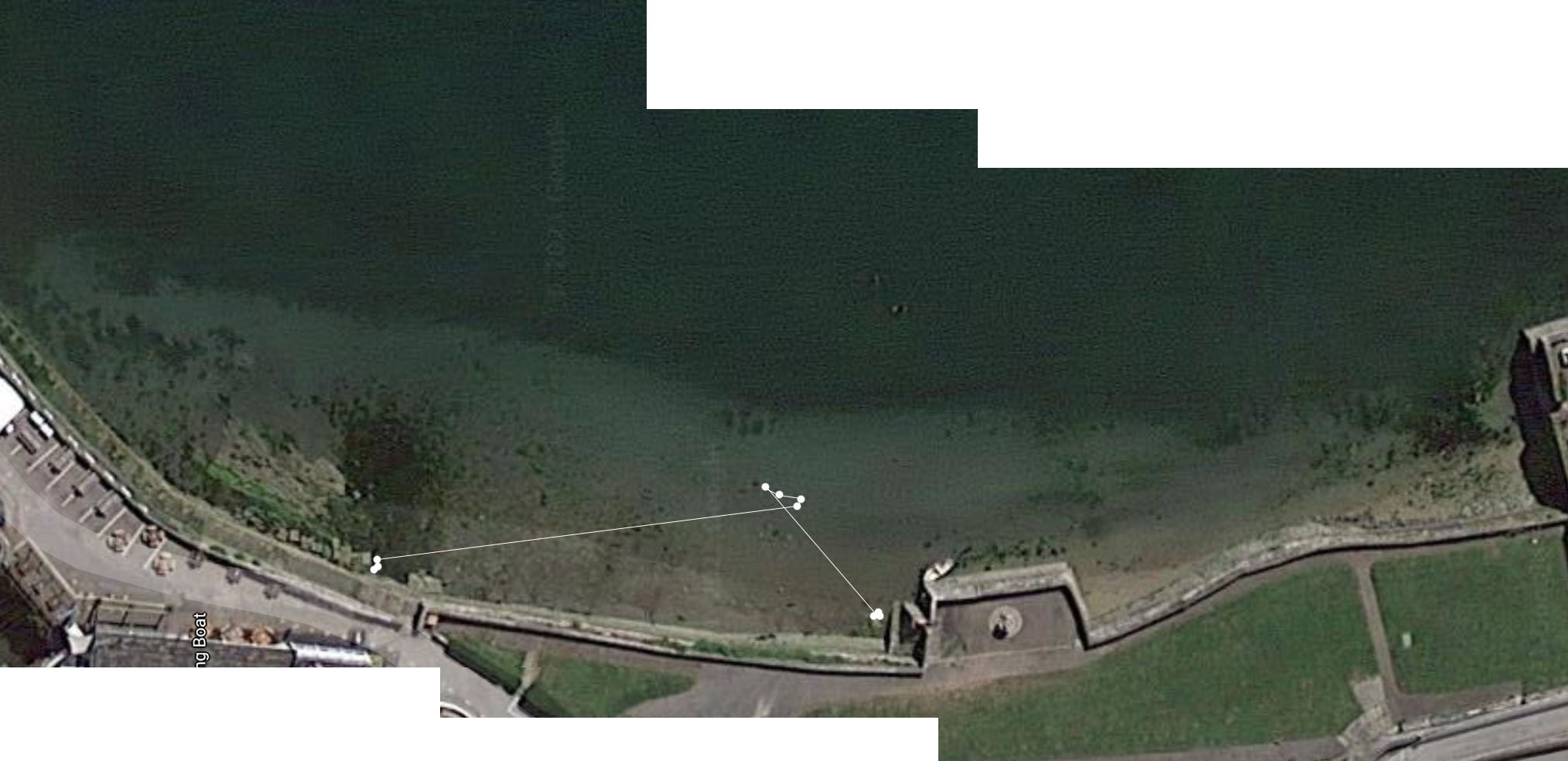
I’ve been thinking about doing a piece where I track a rock for a while, although initially it was in terms of releasing one of my own ‘fake rocks’ and tracking this. My interest has somewhat shifted lately towards exploring and highlighting a liveliness of nonhuman matter (influenced strongly by Jane Bennett’s Vibrant Matter), and if anything I felt this idea had the potential to sum up this vibrant materiality quite nicely. To an extent the piece also led out of my experiments with my paper mache sculptures wherein I documented them being slowly taken apart by the sea, although obviously this piece is far larger, both in terms of the timescales and distances involved.
To begin with I was very unsure about this piece, for one probably because it is unlike anything I’ve attempted before, but also on a practical level I suspected that I would lose the rock within the first day or simply that it would just stay in one place. In actuality it has worked quite well and I’ve been able to track quite significant movement of the rock (whether or not some or all of this could be attributed to human intervention is unknown). Interestingly, I’m not sure if it was the tracking device itself that actually helped me find the rock each day or simply its visibility what with it being painted white. A couple of times the tracker helped me find the location of the rock but for the most part I have a feeling the white paint alone would have been sufficient to find it. In future I could potentially split the two tracking techniques (both used this time just as a precautionary measure because I had no idea how easy it would be to find) and have a series of smaller rock painted white deposited in one place and then slowly disperse across the beach. I could then equally just attach another tracker to an entirely unmarked rock to see if it would be possible to re-find this on another day. (I should also just note that I don’t intend to do a huge number of these tracking pieces for environmental reasons as I don’t want to be unintentionally releasing synthetic materials into an environment where they weren’t originally.)
The following photos show the rock over its journey (which is still ongoing). I have grouped them aesthetically so that each group either focuses more on mapping the rock itself (an interesting side effect of it being painted white is that it picks up marks on its surface), or by showing the rock with regards to its changing surroundings. One of the trickiest parts of this work is how to present it, a similar problem to that I faced with On this beach lies a fake rock, and that I have also considered in relation to the work of Simon Starling. On this occasion I think potentially just selecting one main series of images might work well as in a series they are quite self-explanatory at conveying what the piece is about/how it is made.
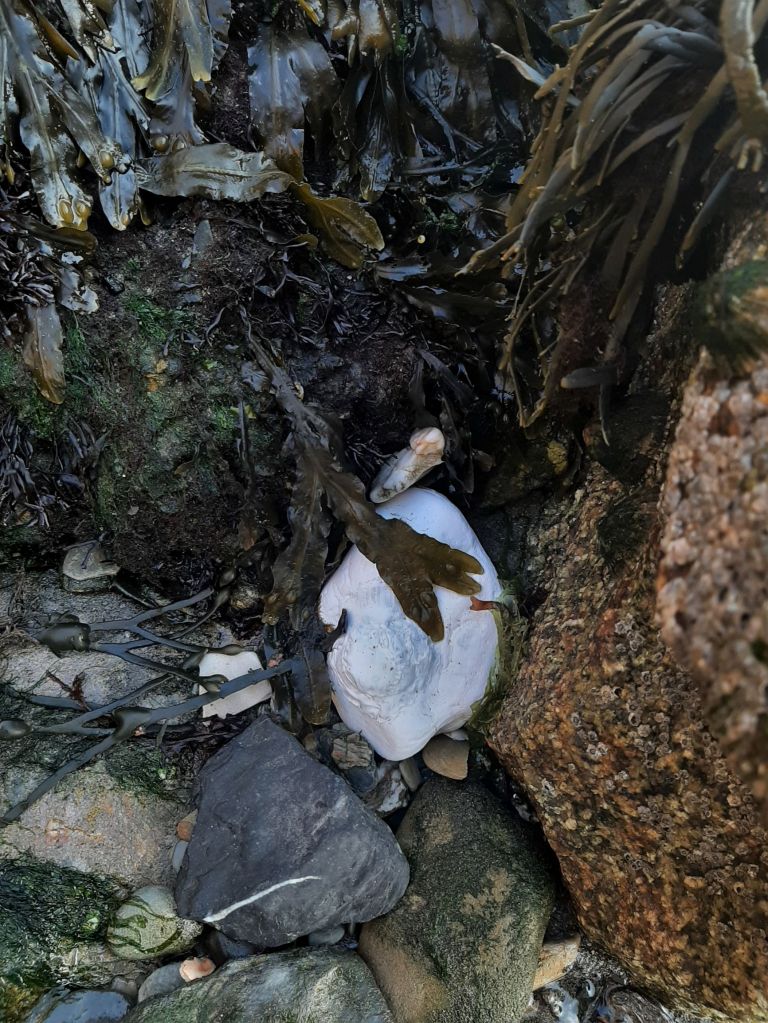
22.4.21 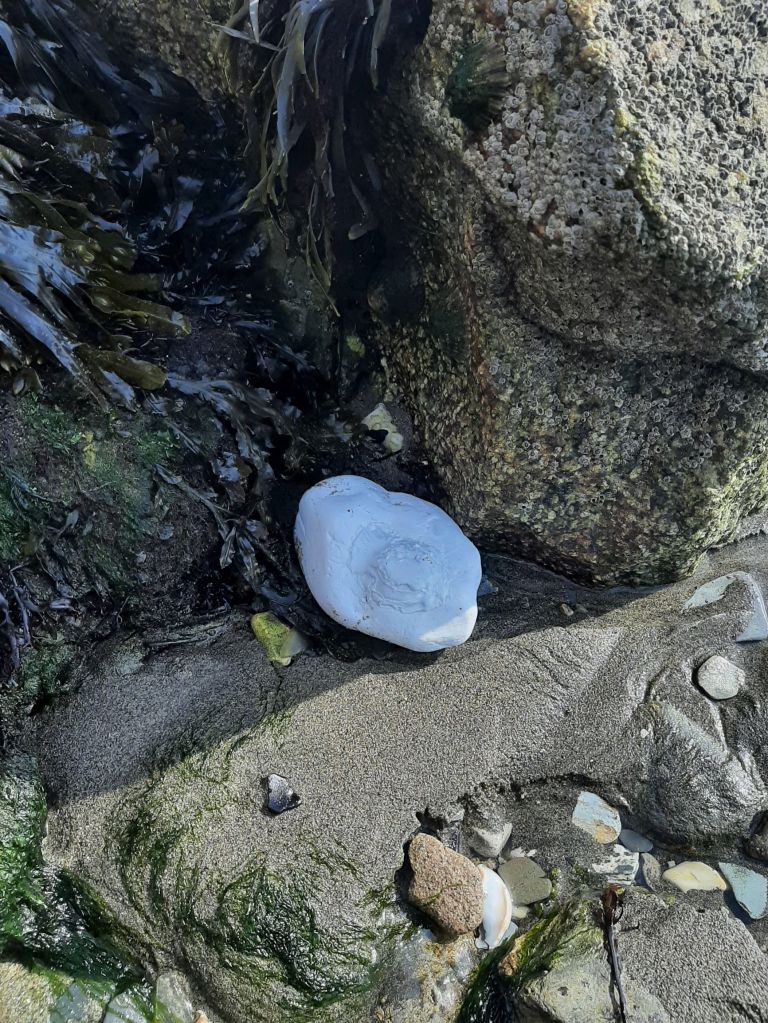
23.4.21 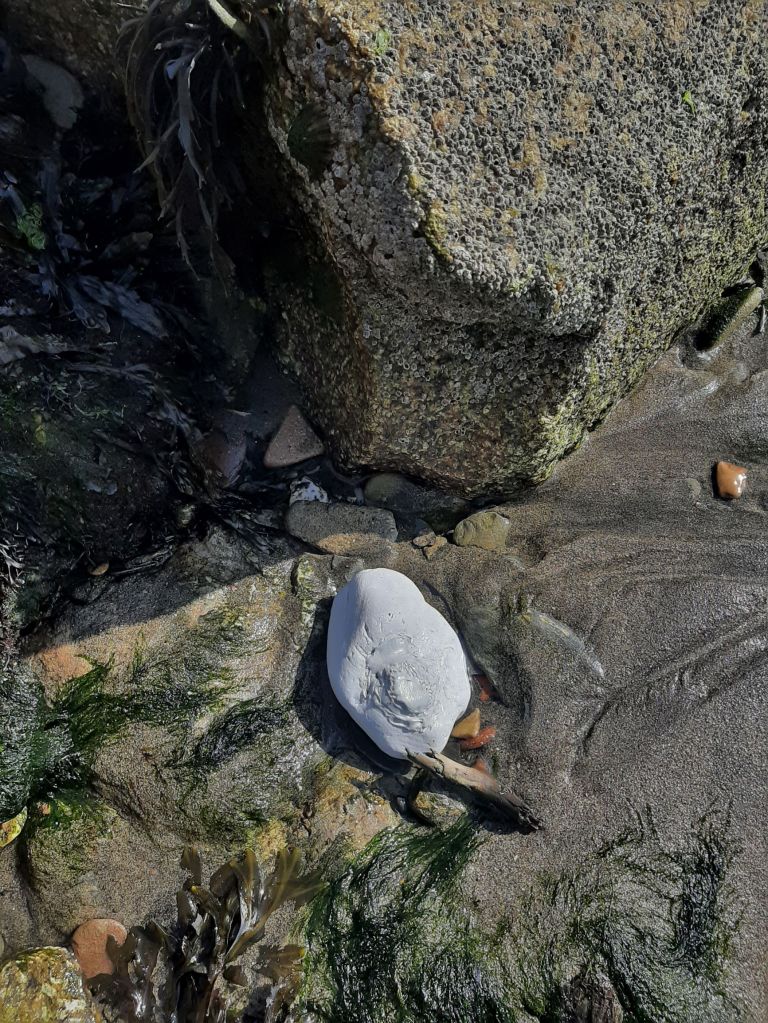
24.4.21 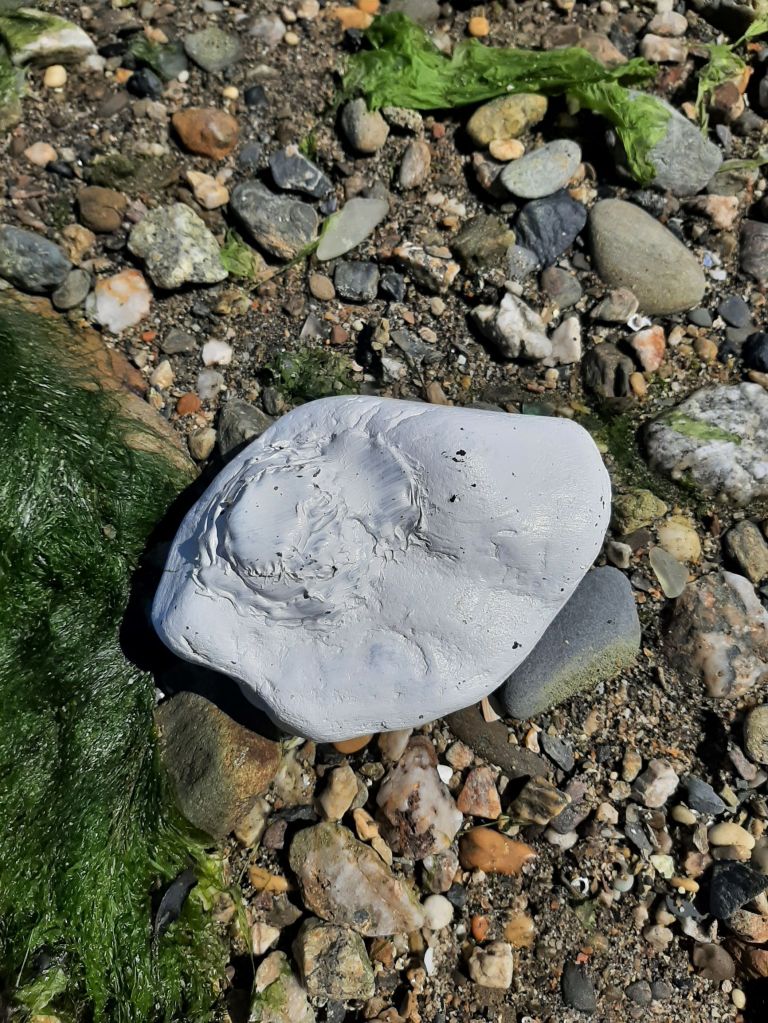
26.4.21 
27.4.21 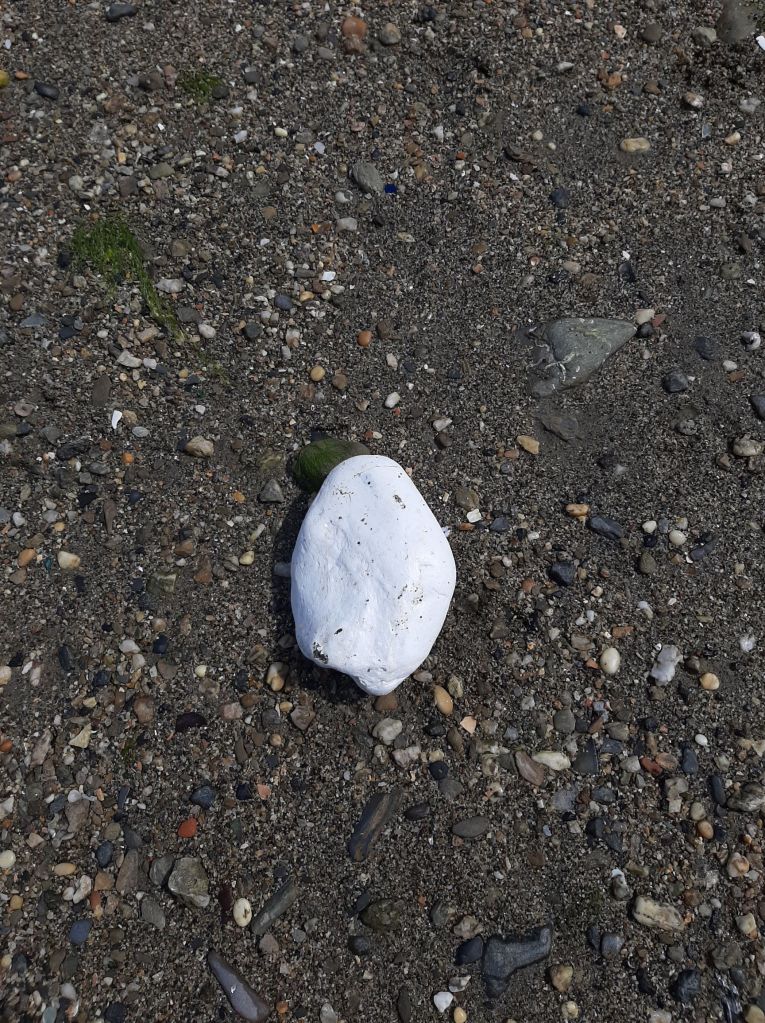
28.4.21 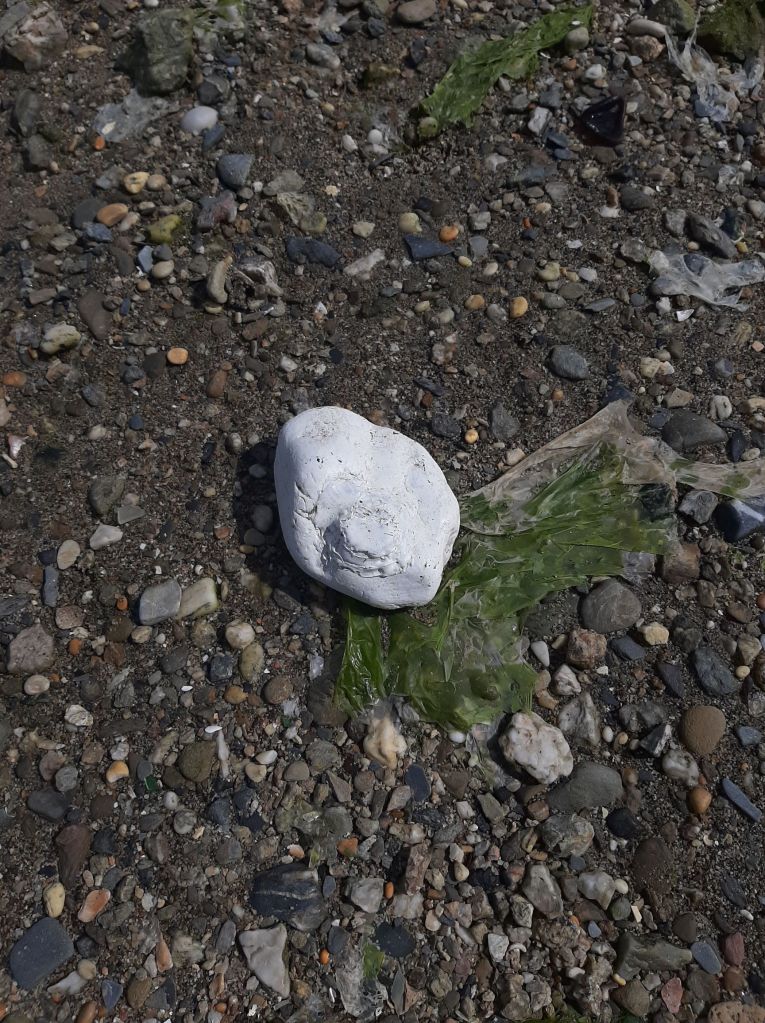
30.4.21 
3.5.21 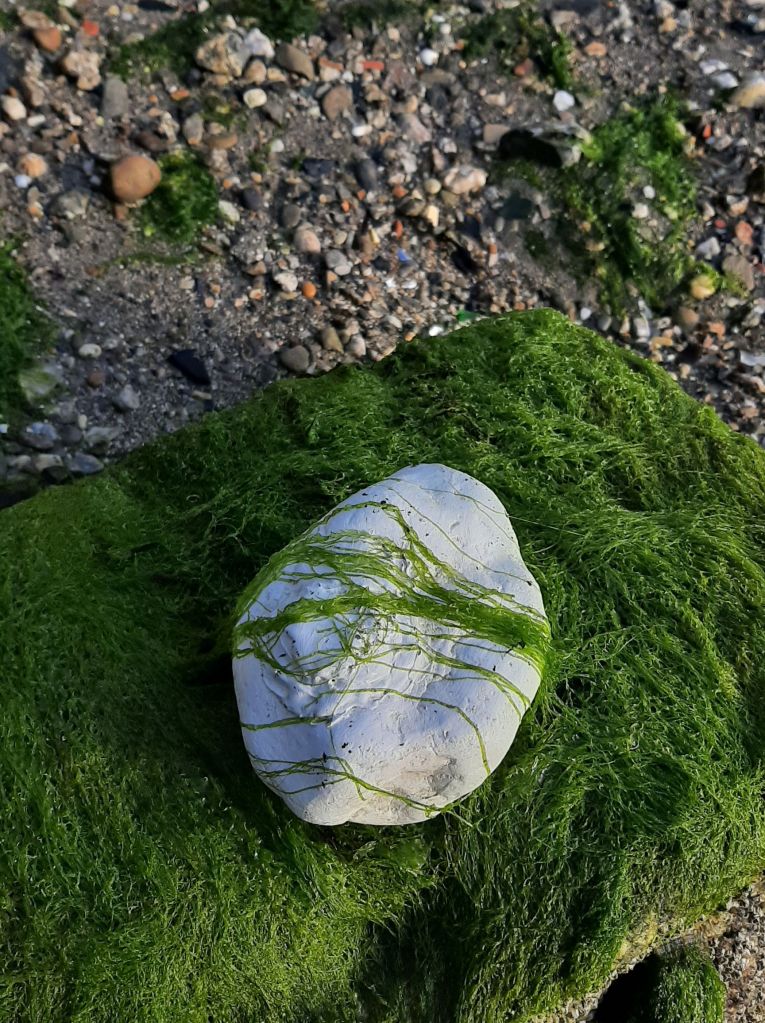
5.5.21 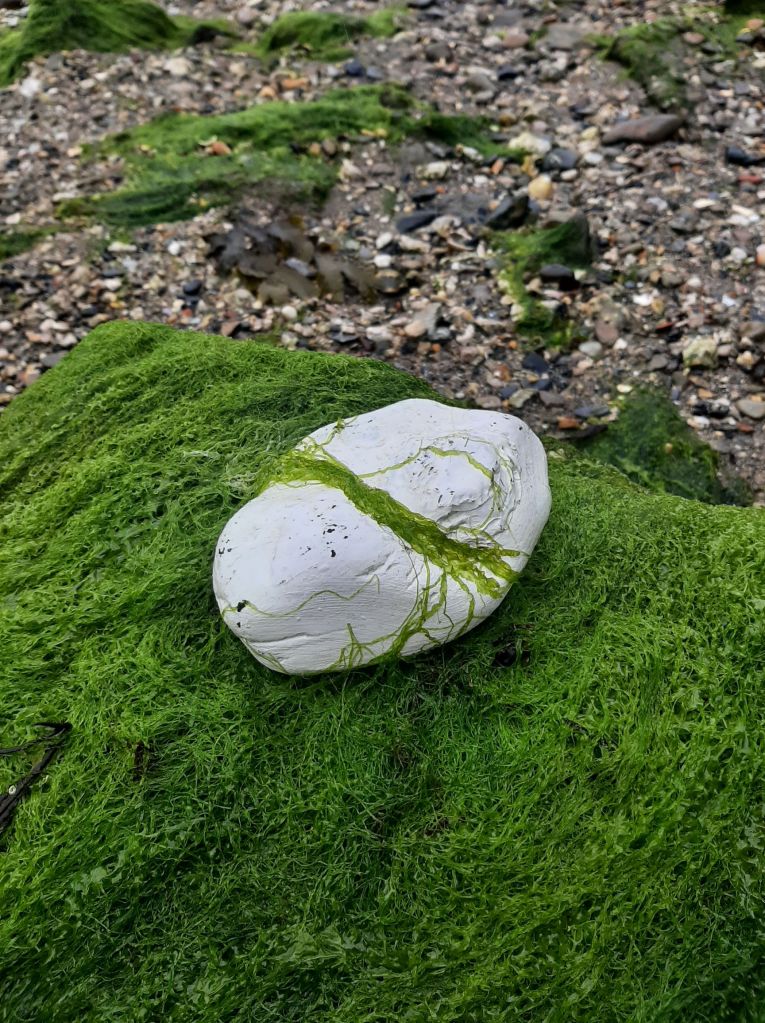
6.5.21 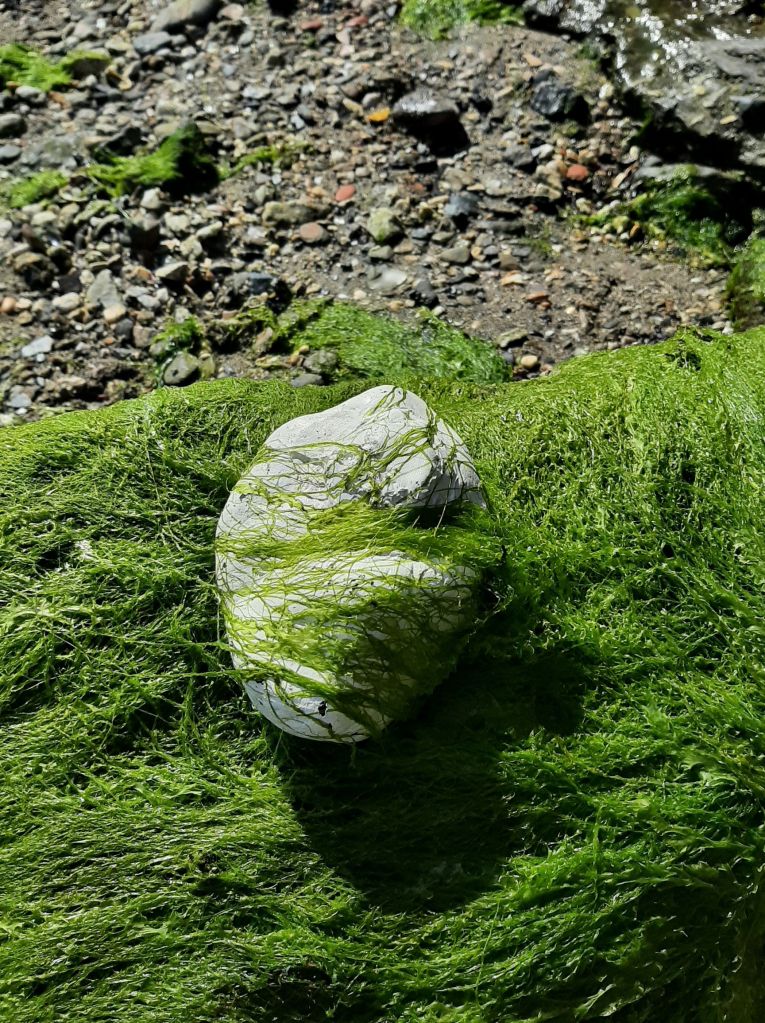
7.5.21 
11.5.21 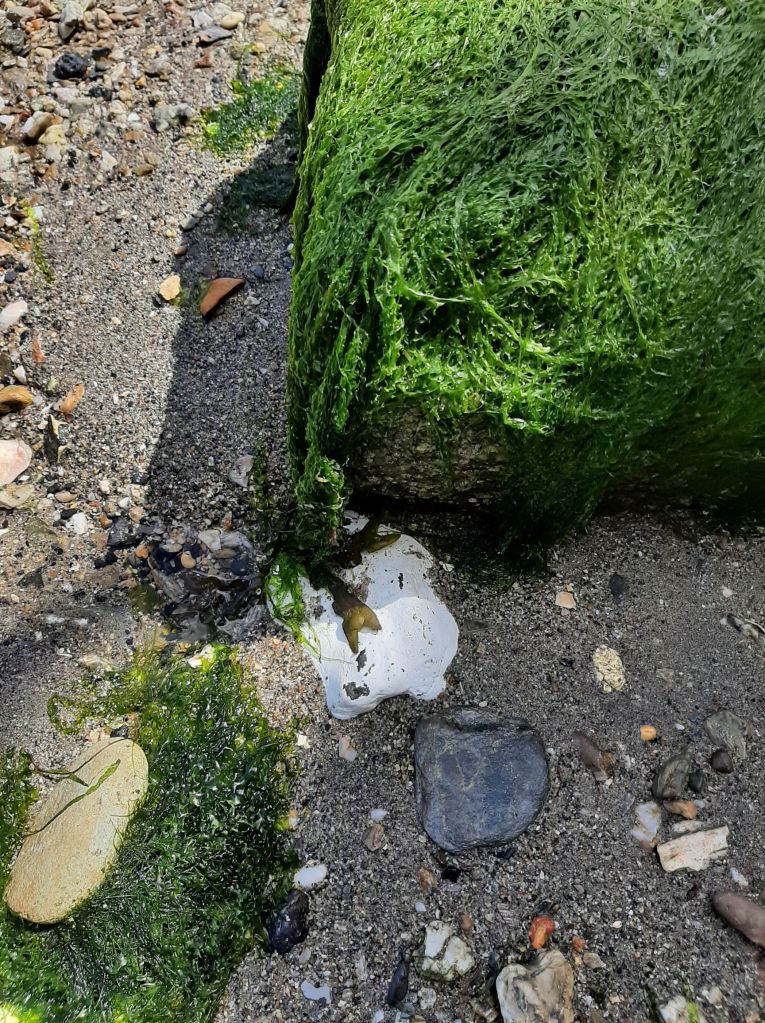
13.5.21 
14.5.21
————————–

23.4.21 
24.4.21 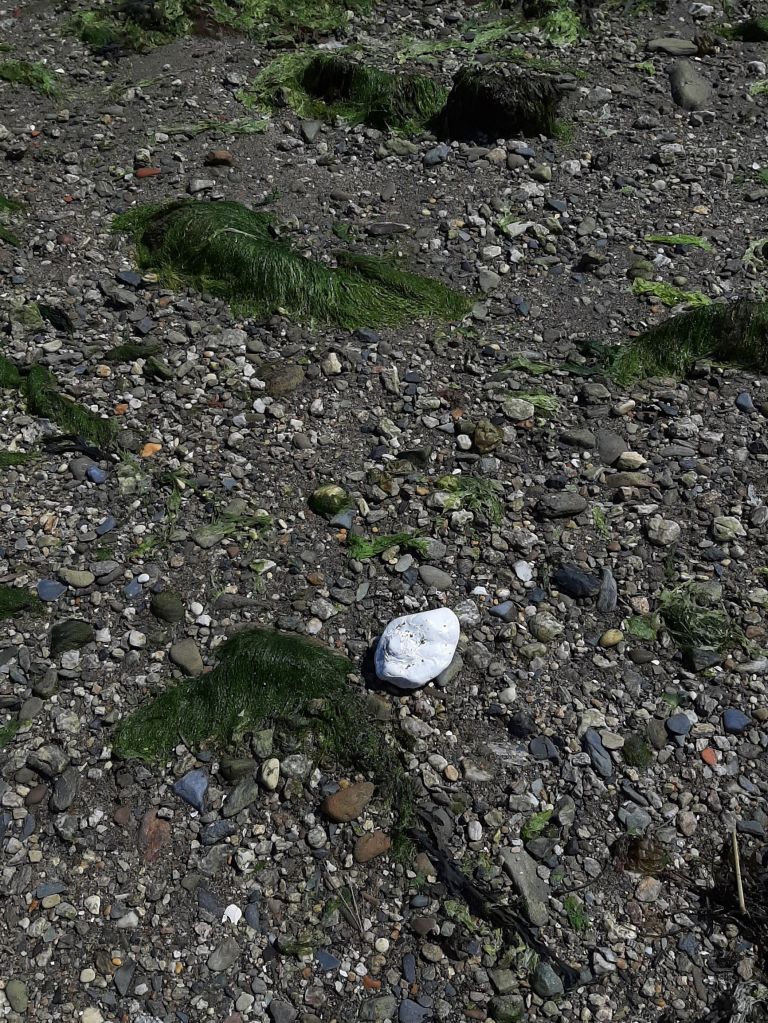
26.4.21 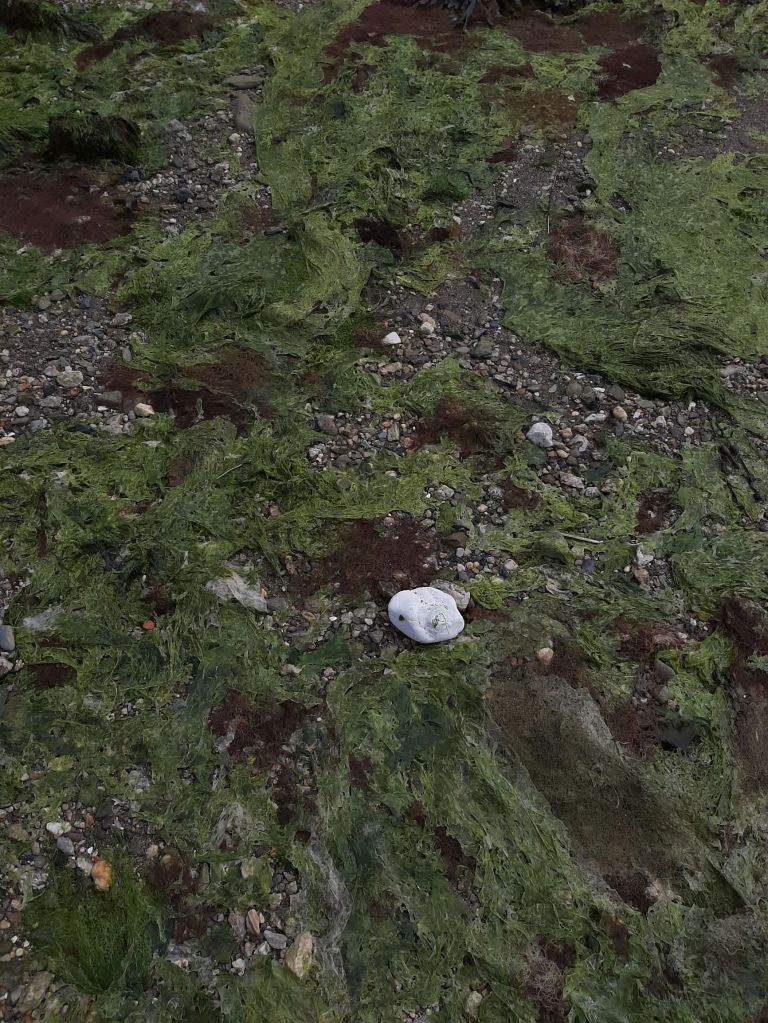
27.4.21 
28.4.21 
30.4.21 
3.5.21 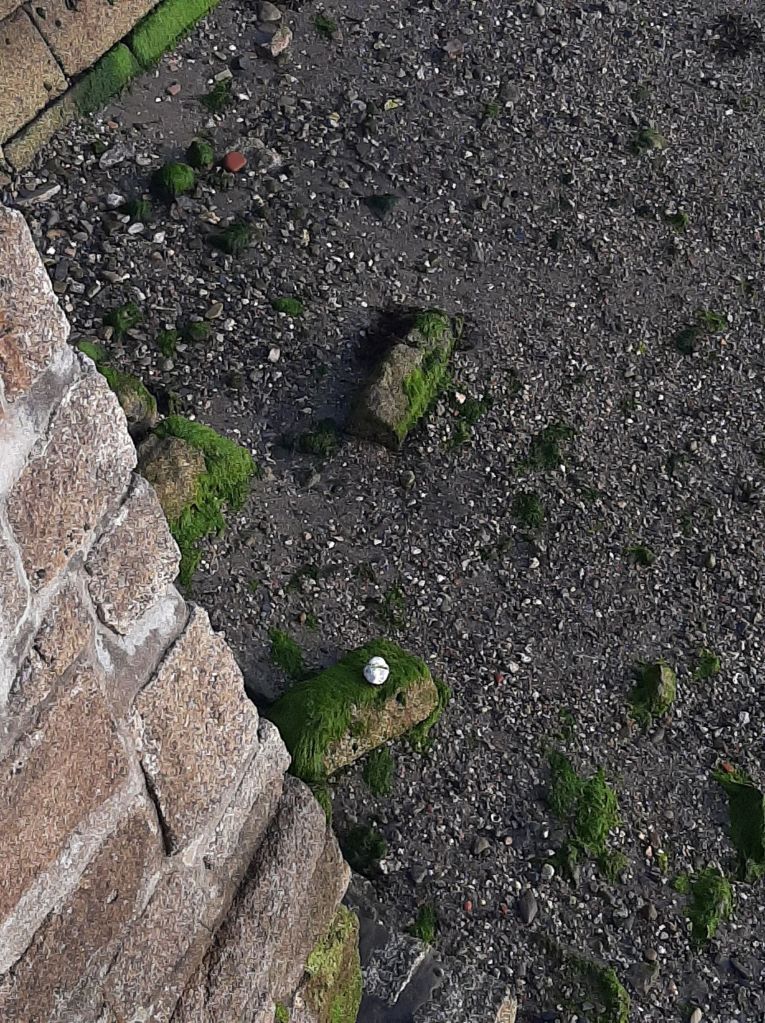
5.5.21 
6.5.21 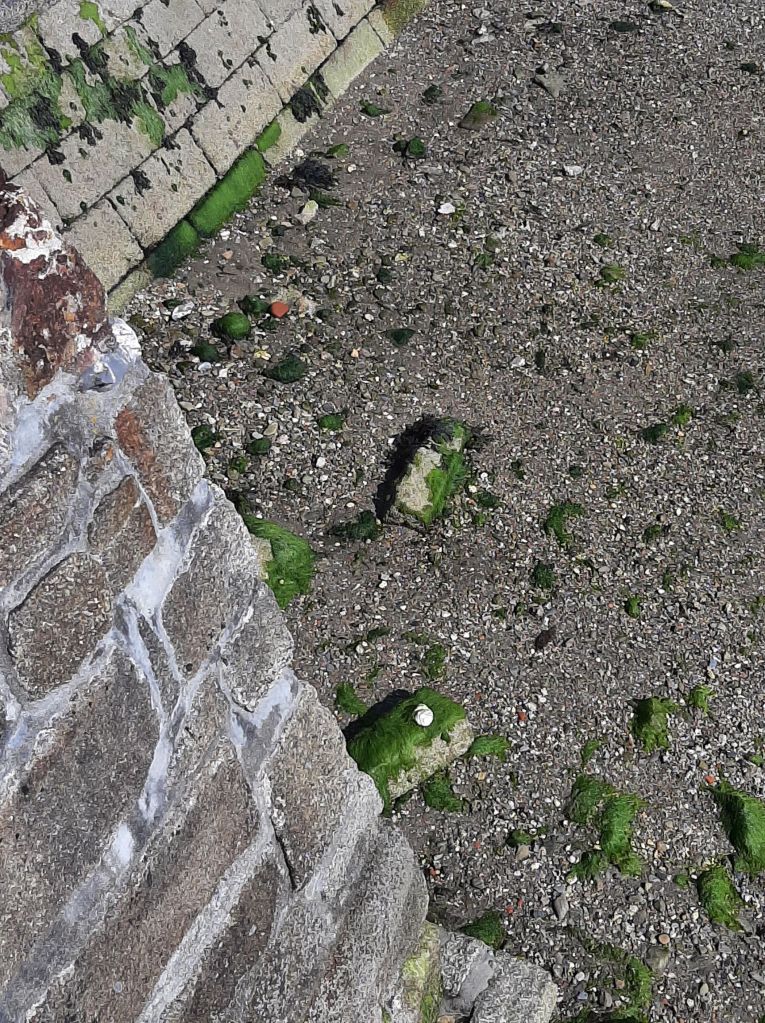
7.5.21 
11.5.21 
14.5.21
————————–
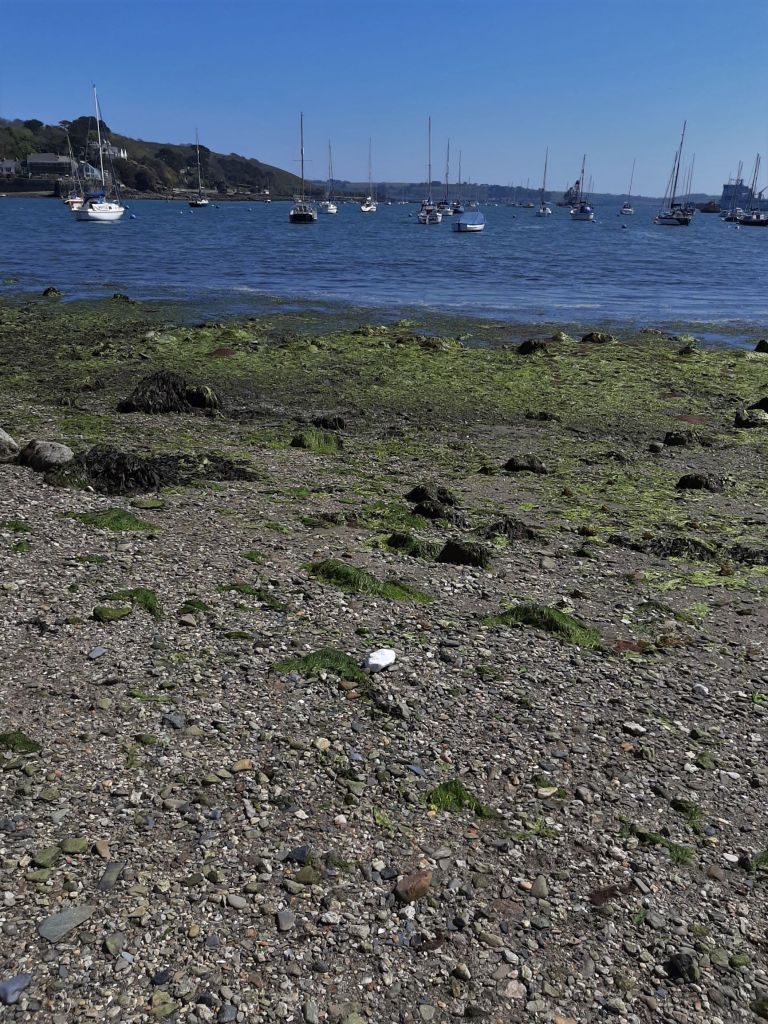
26.4.21 
27.4.21 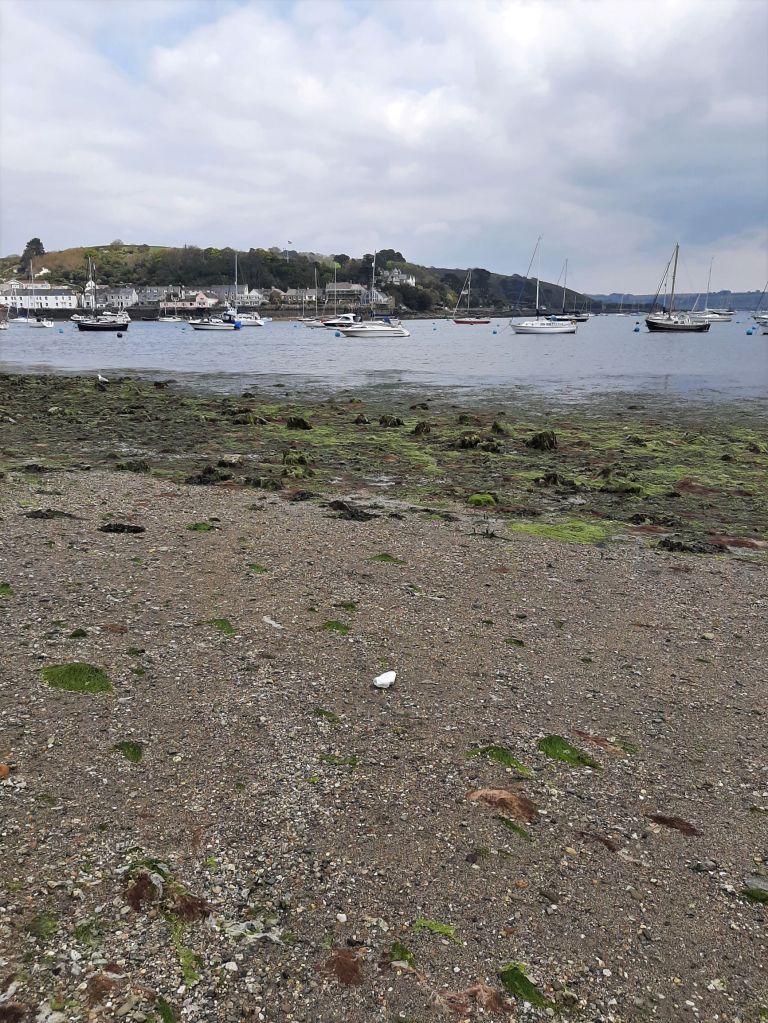
28.4.21 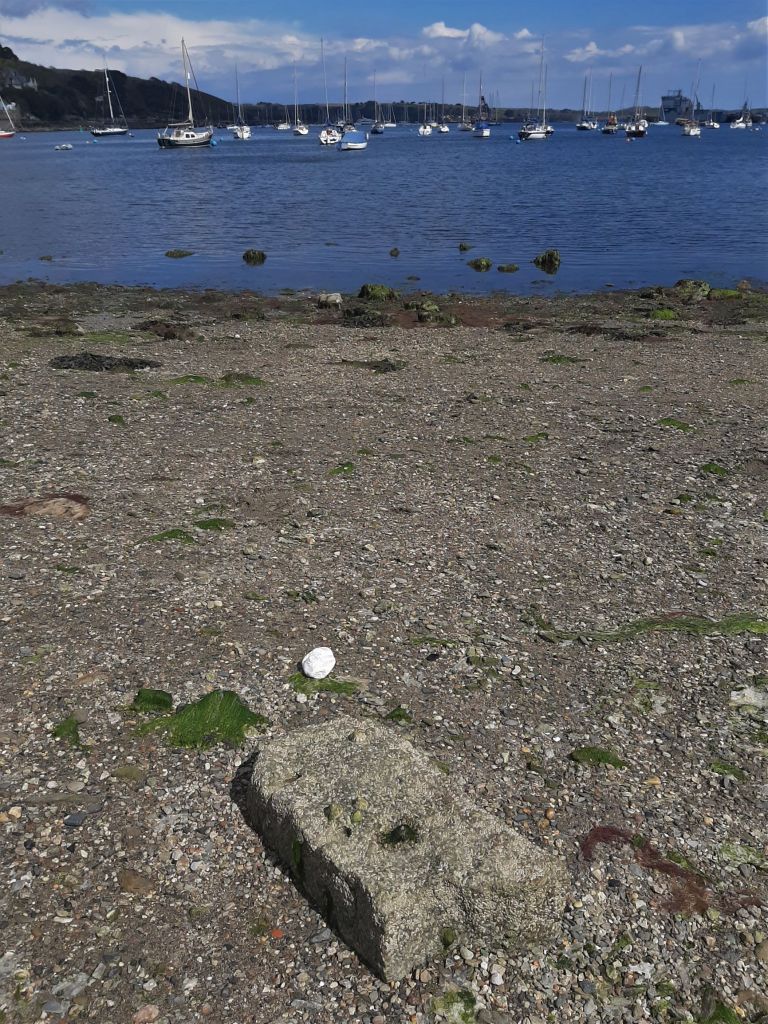
30.4.21 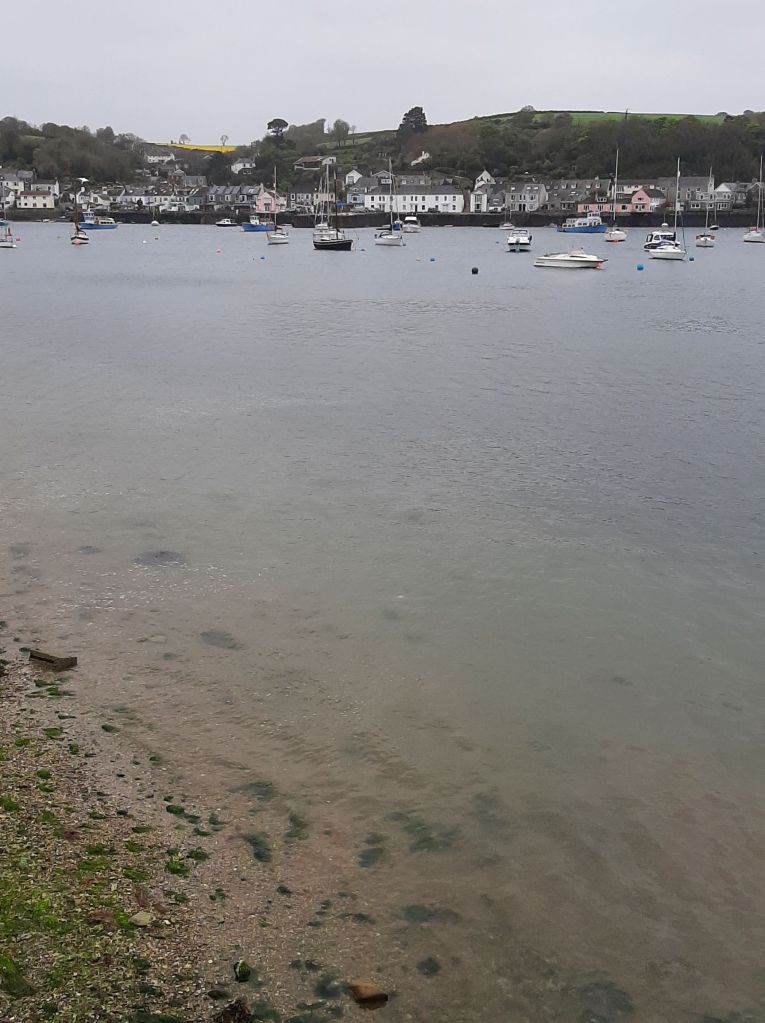
3.5.21 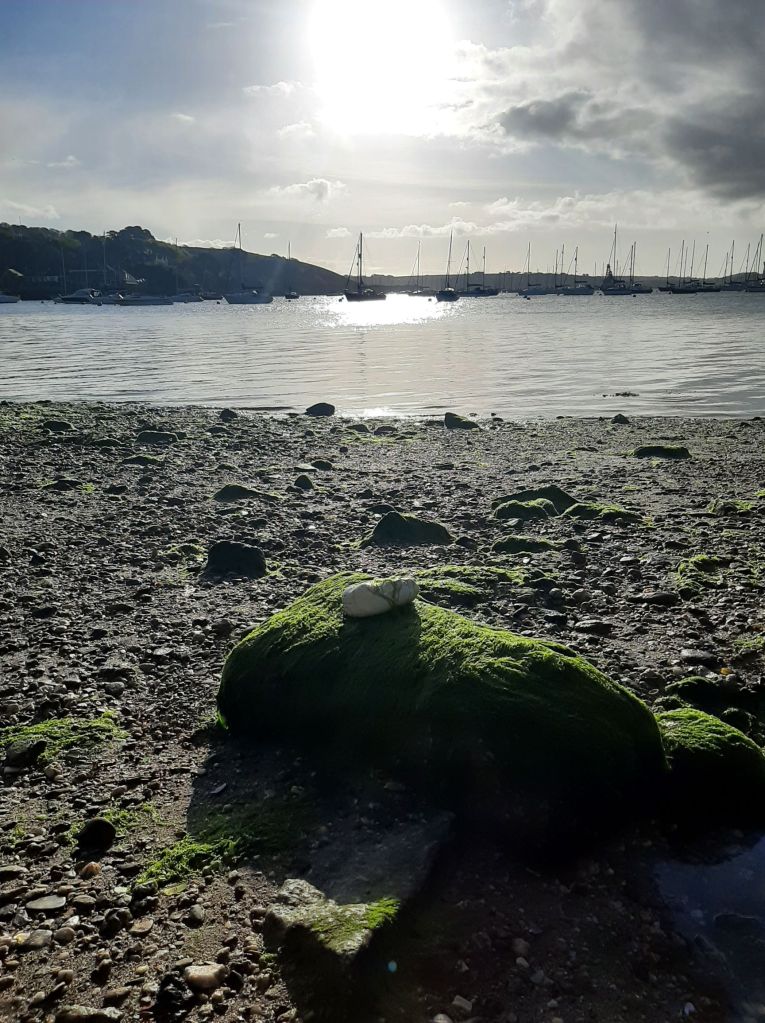
5.5.21 
6.5.21 
7.5.21 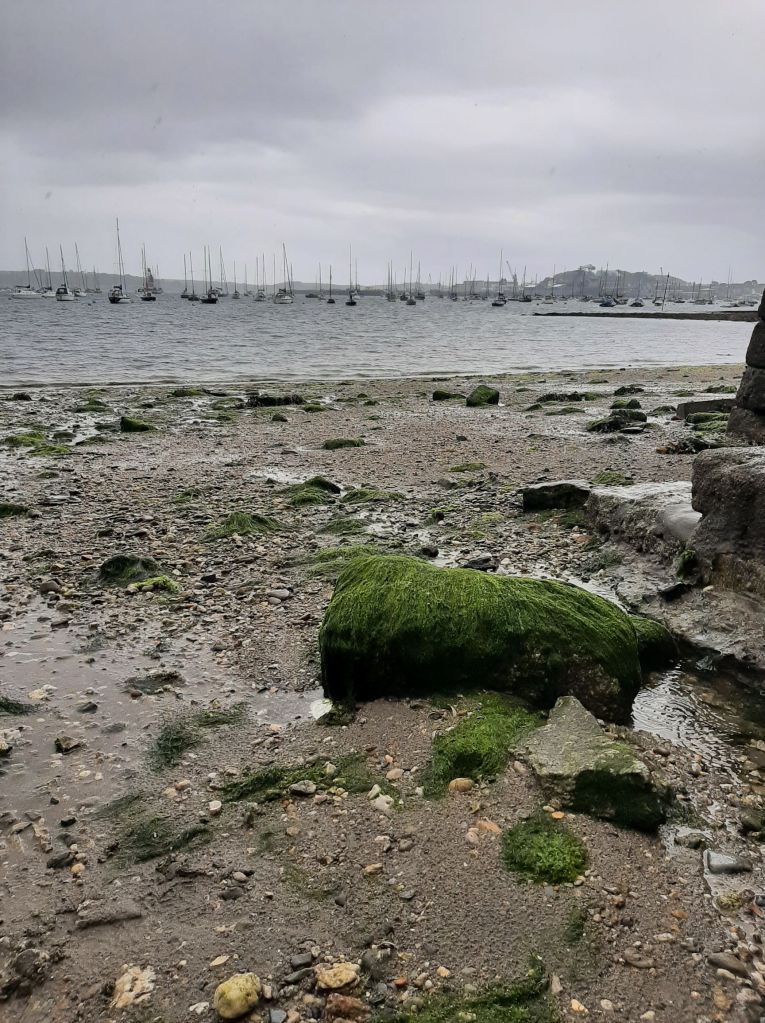
11.5.21 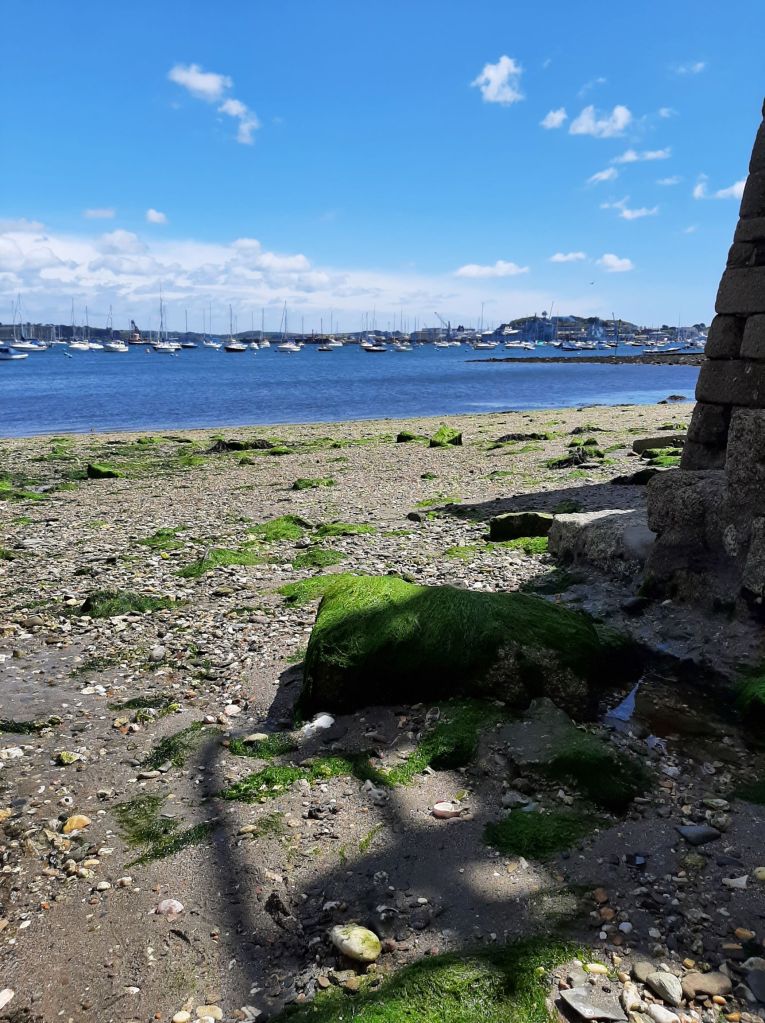
13.5.21 
14.5.21
Another idea I had for a work was to just repetitively photograph one area of beach to document material movement in this way. While I still think this is a good idea for the future, to some extent the first set of above photos already does this, particularly when the rock stayed in the same place for a couple of days. This was actually a strong part of what made this process so interesting: not just seeing the rock move but also the beach changing every day. The repetitive task of going back to the beach every day to look for the same thing became in many ways quite performative and ritualistic, something I considered before in my ‘time-stone’ piece. It also reminds me of a work of Buster Simpson’s entitled Purge Diptych wherein Simpson deposits large limestone discs every day in the river Hudson as a somewhat practical, but essentially futile, action against climate change and acid rain. He, too, performs a repetitive action, returning to a site every day to complete the same task as the day before and the day after. The piece also shares similar environmental undertones, although arguably Simpson’s motivations are made more explicit than mine.

Another artwork this piece strongly reminds me of is David Nash’s Wooden Boulder, a giant boulder of wood (surprisingly) that Nash made and released into the Welsh hills, tracking it for many years until it disappeared. The full story of its movement can be read here. This is definitely a good avenue to identify for further research due to the obvious similarities between this piece and my own.

Simon Starling’s exhibition Never the Same River, too, revolves around similar principles, particularly drawing attention to the interaction and crossover between the movement of time and the movement of things. He displays works in the gallery where they were when they were first exhibited, making evident the material passing of time. ‘The works, though spatially and historically remote all, in themselves, push and pull at our understanding of linear time.’
These works are all good to bear in mind when considering how I understand and situate my own work within my own interests and within wider contemporary art. Looking forwards I aim to continue this piece until the rock is lost, or some other external factor affects my ability to keep tracking it. However, although this piece has taken my practice in an exciting new direction there is still something about it that doesn’t feel completely right – it feels a little bit forced, a little artificial. I’d like to see if I can develop the ideas explored in this piece into something more in keeping with the subtler, more archaeological nature of my practice rather than tracking a stark white rock with a plastic tracking device attached to it. Perhaps I could try burying something for a while, or leaving something (like plaster?) for a shorter amount of time (a day or so?) and then collecting it, having something a little more tangible as the resulting artwork. It would equally be worth having a general brainstorm about similar plans/ideas I could carry out – perhaps attaching a rock to a piece of string and letting it entangle itself in this way? Perhaps exploring materials that react to water, or that would pick up marks from the journey more easily? Either way, this piece feels like an exciting starting point for works to come.

 Anna Harris