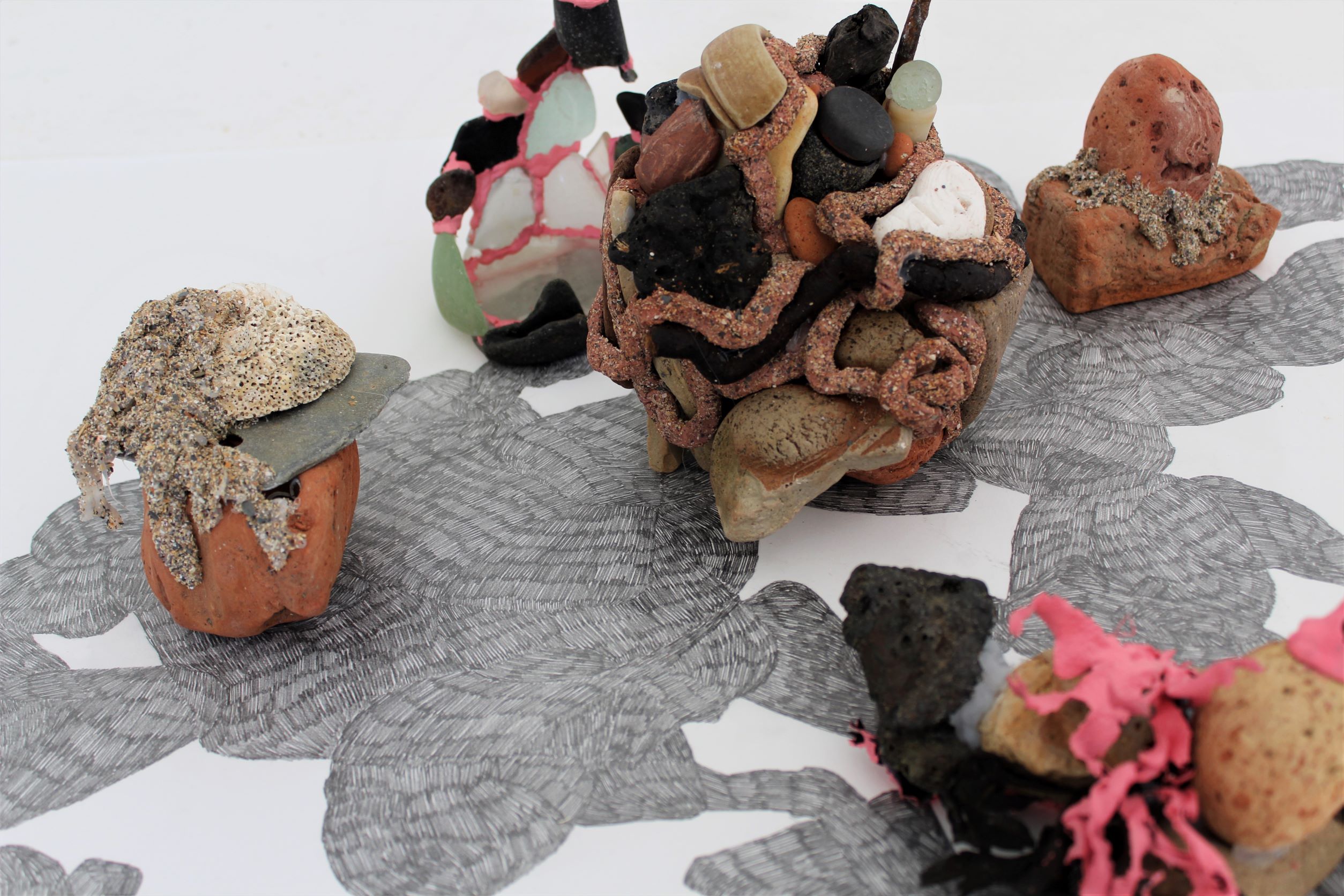
The following is the work I uploaded onto the Displayed site for the week 5 open studios:


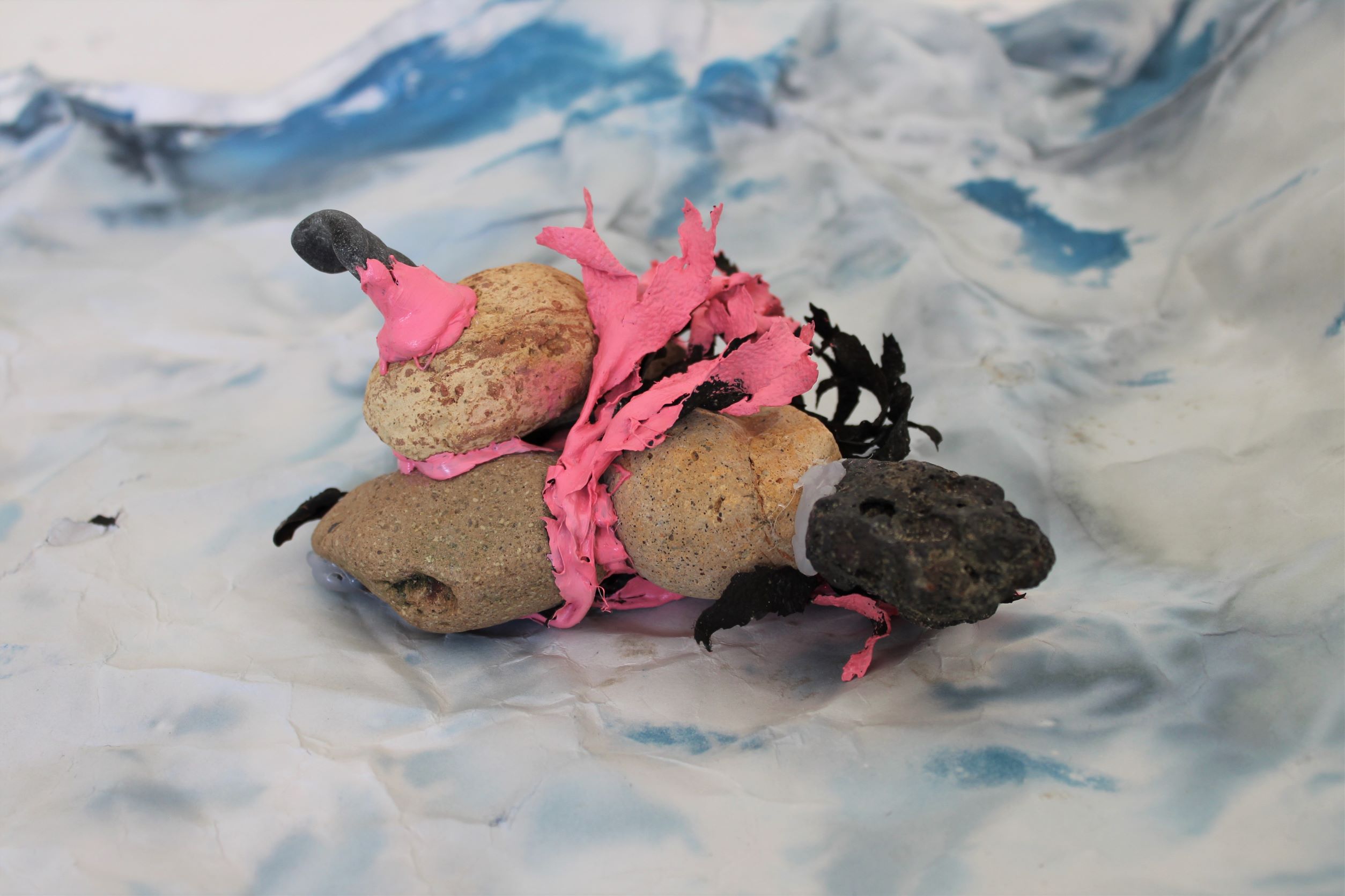
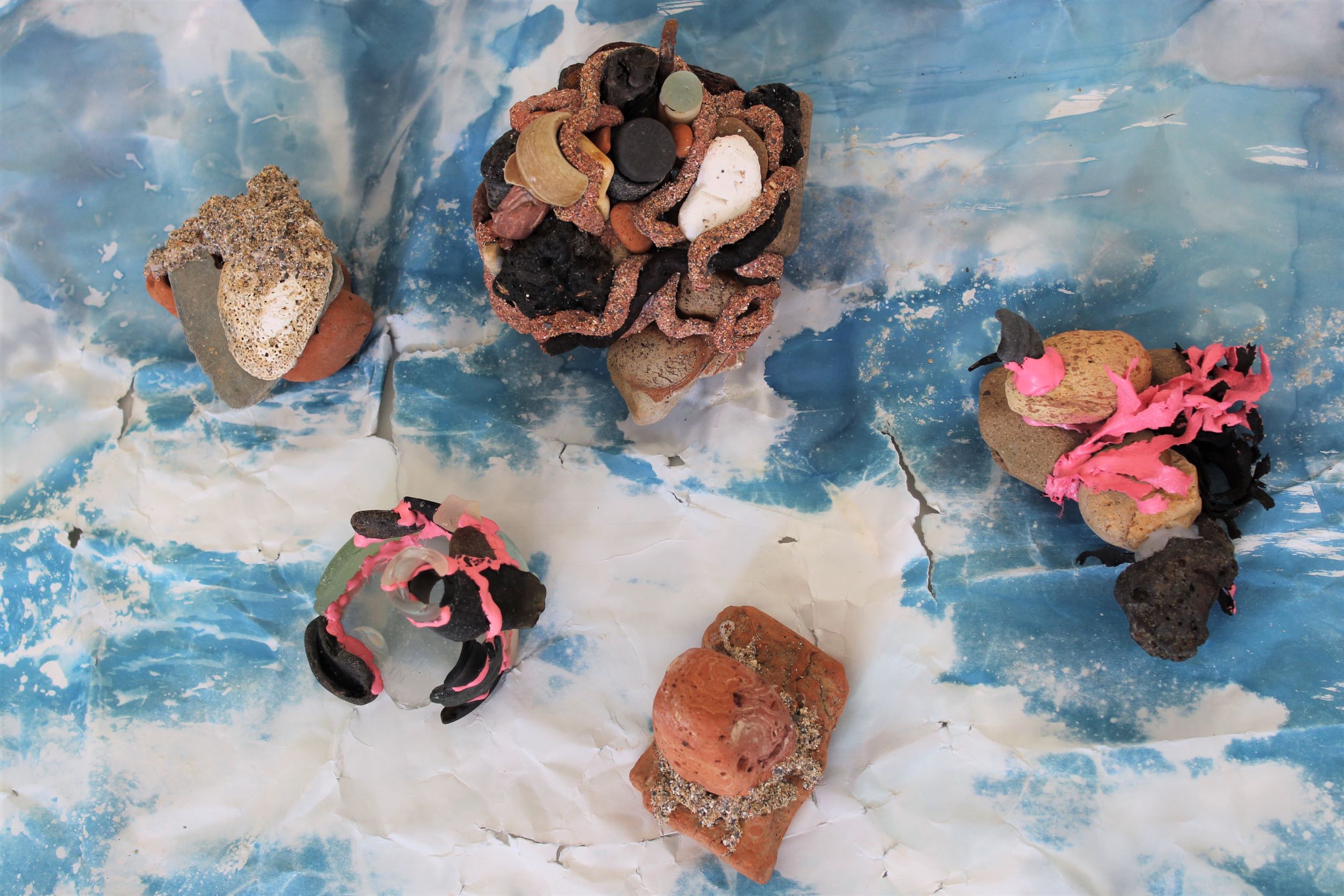
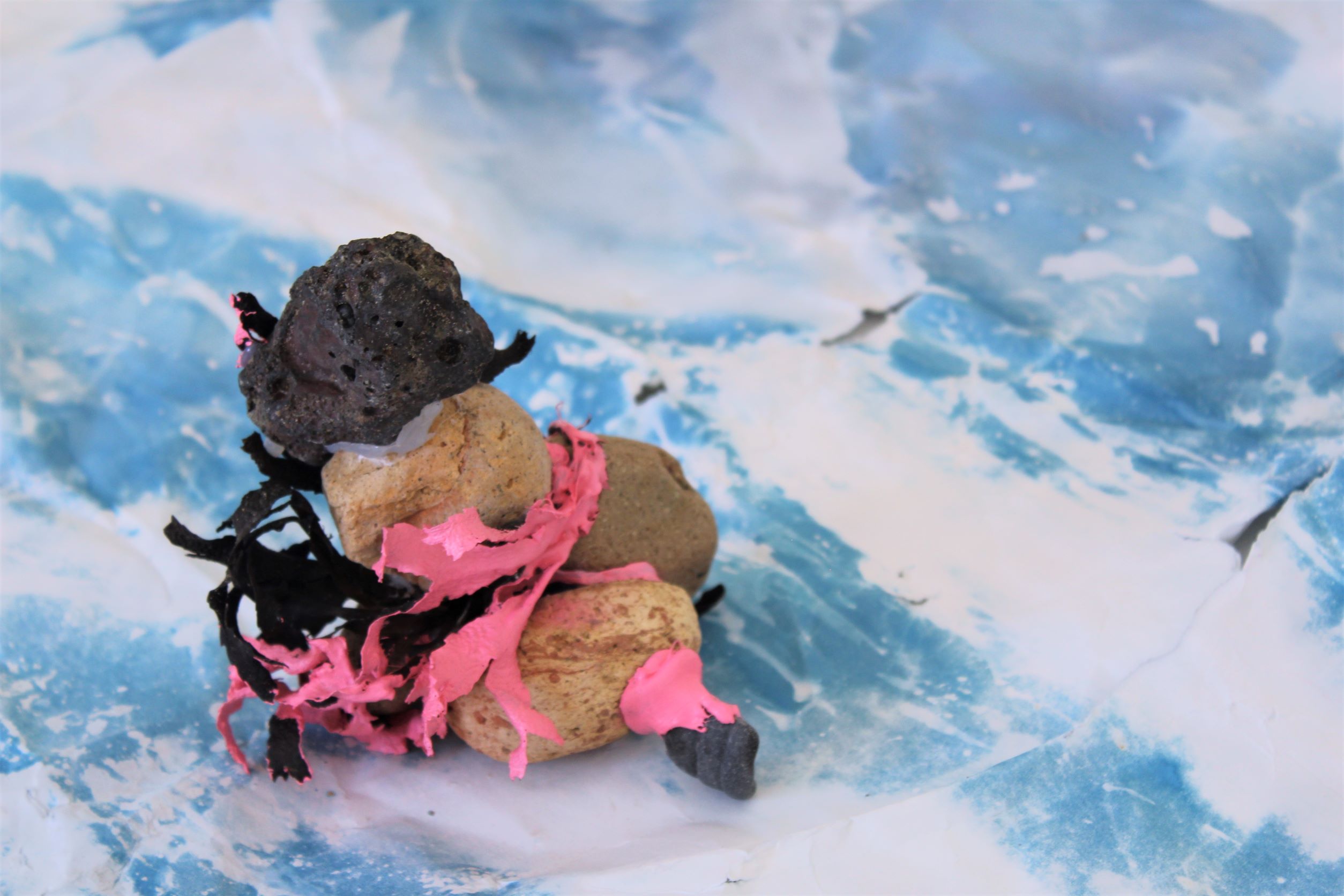
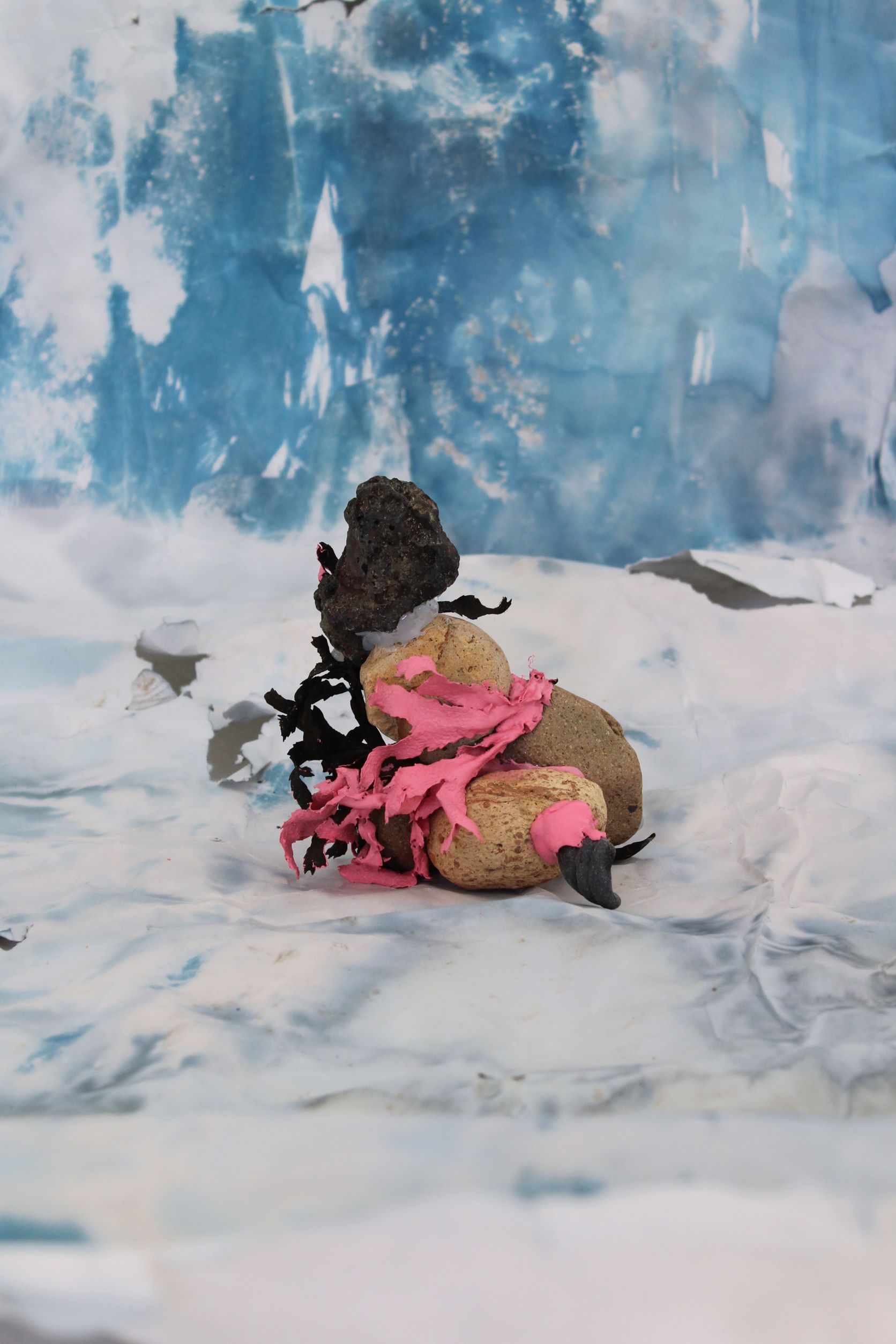
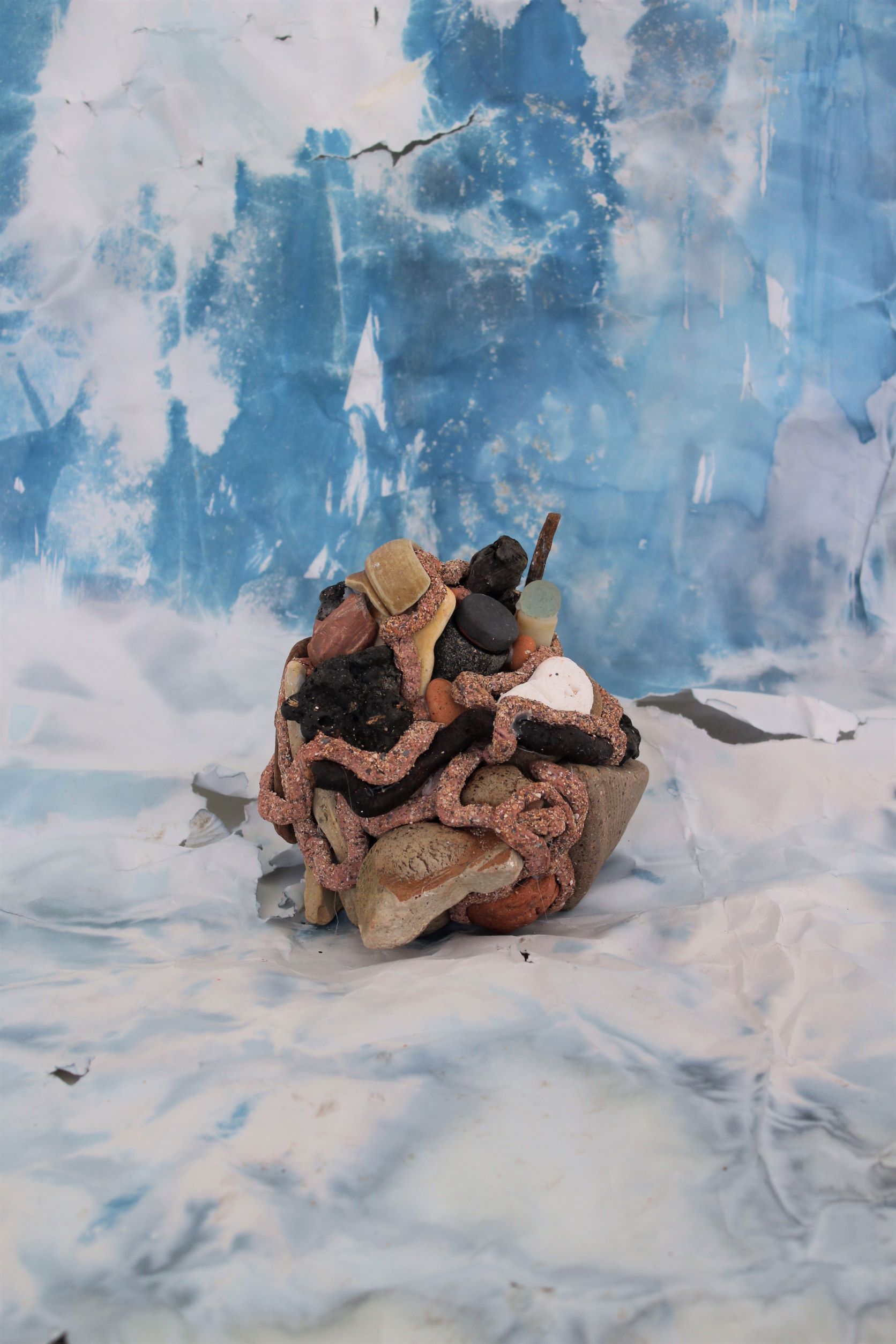
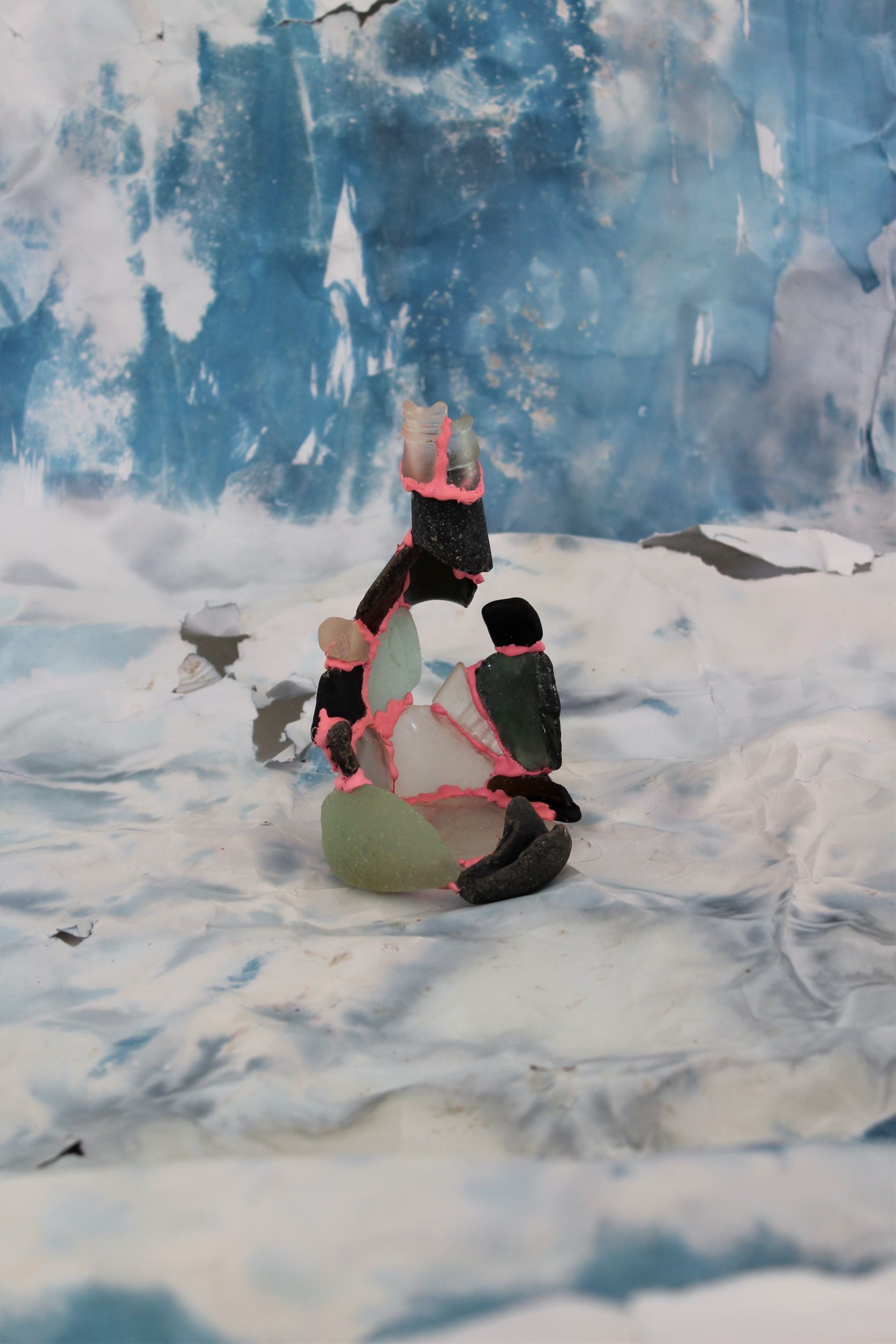


In photographing the work for the website I played around with the interaction between my sculptural work and my drawing/2D work – something that grew out of a comment David Paton made on the connection/dynamic between the two when in my studio.
The blue background was a large cyanotype made at Botallack Mine as part of Keskorra, formed by wrapping the piece of paper around a large rock. I liked that in this way it spoke of this very relationship between two and three dimensions that I was exploring, although perhaps this doesn’t come through particularly strongly in the resulting work/photographs unless explained. The other drawing was one from my tangly drawings series, created through the amalgamation of outlines of various found objects – again speaking to this idea of translation between two and three dimensions.
Having the drawing under the sculptures made the interaction between the two feel a lot more intentional, deliberately establishing a connection. In this way the works feel more lively, as though animated in some way, which links well to my aim of bringing out an inexplicable ‘thingness’. Some feedback I received, however, did note that particularly the cyanotype background felt a little too literal in how it spoke of the sea, and quite a typical idea of the sea at that (blue, splashes etc). The drawing works better in this sense, striking a nicer balance between animating the sculptures (and vice versa) but not becoming overwhelming and detracting from the sculptures in this way.
Alongside the digital presentation of my work, there was a silent crit carried out in my studio space. For this I had my sculptures sat on the table, on top of the cyanotype print, and the rock tracking photos up on the wall.


Other feedback I received, along with my reflections on this, was as follows:
- pink glue looks like coral, particularly on the seaweed
- hard to read/understand – unsure what the glue is just from looking at it
- relates to ideas of time and how things change
- green glue? sea-weedy, like the rock tracking photos
- photos of the rock tracking serving as contextual to other works?
- rock tracking photos not initially translating well as a journey, looking instead like I have myself moved it/taken pictures of it in different locations? in some ways this works quite nicely, reassigning a presumed human agency to the rock
- ‘giving life back to the rock’
- a digitally emitting rock
- ‘missing data’ – need to drill down into this
- plotting line unclear
- the fact that it’s lost works nicely (sense of ongoing-ness)
- optimum presentation? – perhaps a book? one that opens up to retain the sense of the timeline/multitude of images
- focus also on the map of its journey – massive drawing?
- confusion over whether a fake rock or not
- changing, vibrancy, absurdity – humourous
- composition between 2D and 3D – a sense of the sculptures coming out of the drawings – more productive combination with drawing rather than cyanotype – cyanotype too noisy and literal
- pencil as stitch (Helena Clark) – ‘the artist is growing organic forms‘
- ‘speculative root vegetable’
- playing with organic forms
- things moving away from human lives
- Madeleine Roltz? (ask Pip)
- marked by processes vs hand marks (in terms of my written pieces) – playing with the titles we know them by
- lots of projects
- the glue has ‘radically exceeded its functionality’
- pink glue polarises the other natural materials (question this idea of ‘natural’ though?)
- glass sculpture interesting in its singular materiality – defying gravity
- reimagining things with long lives, moving in and out of the human
- put back in environments
- alien
- speaking of organic processes despite their inertness
- risomatic – word for growth, often used for knowledge e.g. ginger
- ‘radical horizontality’
- ‘strange disobedient growth’
- black alien substance in spiderman 3
- make date bigger on rock tracking? this may help emphasise the idea of a progression between images
- artists to look at in terms of displaying gathered data: Australian artist plane pictures of people asleep, Ellie Harrison, Forensic Architecture (amassing data on contentious war problems – using phone pictures, data ‘from the ground‘, real world campaigning)
- check uni for some kind of GPS tracking device that might draw the path
- cyanotype something more of its own accord – seems like a tablecloth on a table
- drawing negative space – drawing air
- James Turrell sky garden
- Deleuze’s fold bringing things together – folding rocks, bringing them close, fusing
- human fusion vs deep time fusion
- speculative proposition
- how big could they go? drilling and digging and attaching – drilling as excavating
- draw on surface?
Overall it was good to see people reacting with some confusion over exactly what certain materials were and how things had been made – I am aiming to make things that sit in this liminal, confusing, thingy space so this feels a good step in this direction. The confusion over the rock tracking, however, shows I need to consider more closely how I want to show the work, and there are lots of options to consider: do I want to show the pictures (and which pictures), include dates/missing dates, the map of the overall path, and in what form? I do like the idea of a book, particularly one that folds out as then the multitude of images (like film stills/frames) is not lost and it retains the sense of progression. I also need to consider how clear I want the set-up to be – I quite liked the fact that it was read as being me moving the rock as there is a clear association between human and agency here that exactly illustrates Bennett’s vital materiality. To retain this in the book would I need the text to be at the end? To allow room for an initial assumption, then to be corrected at the end? Or does this seem a bit too literal? I also need to consider what this writing would say, as well as the tone of it – scientific or humorous?

 Anna Harris