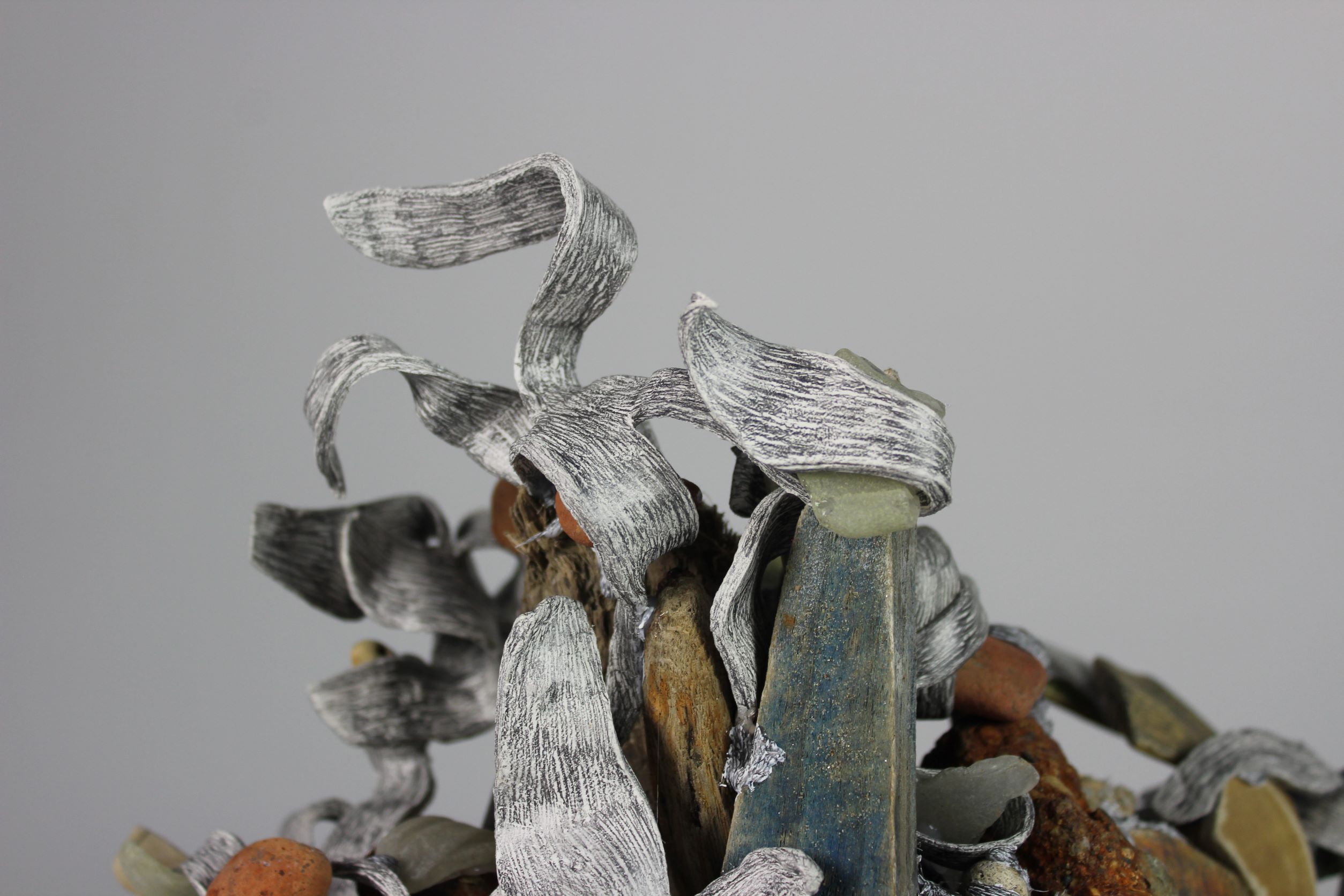
Recently in my ongoing series of sculptures I have begun to incorporate drawn elements into the pieces, where before they were separate (see drawings, open studios and Introduction):

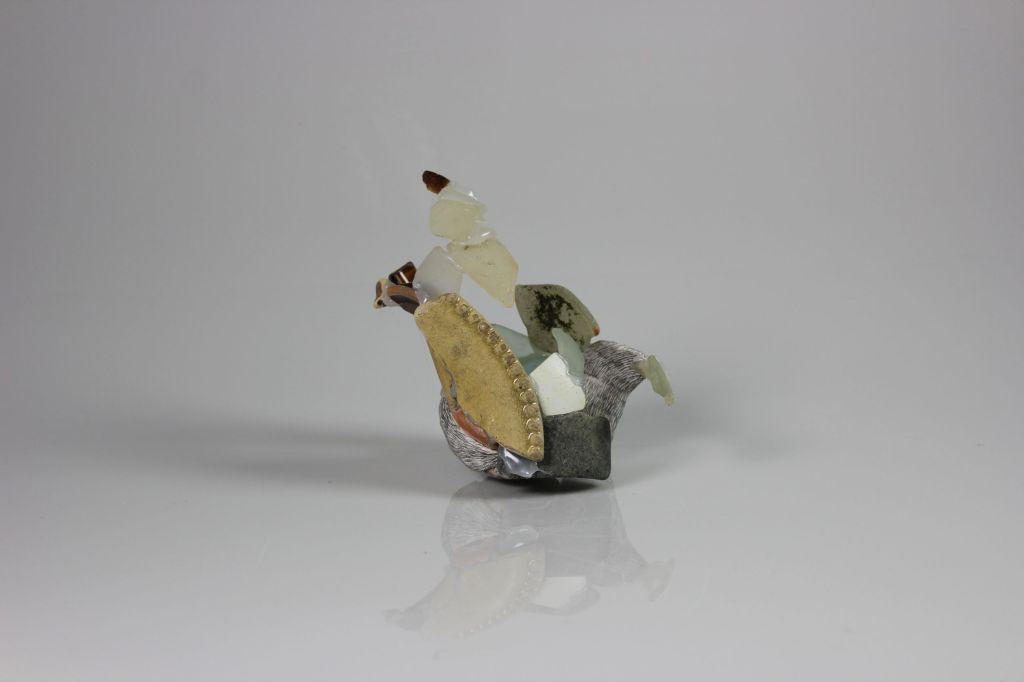
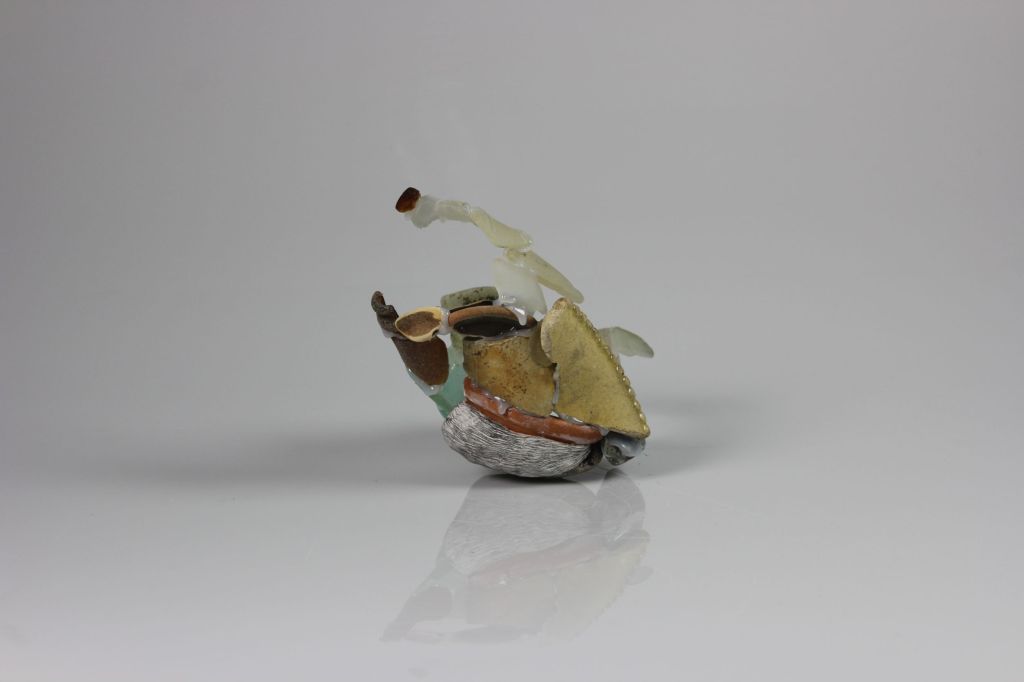

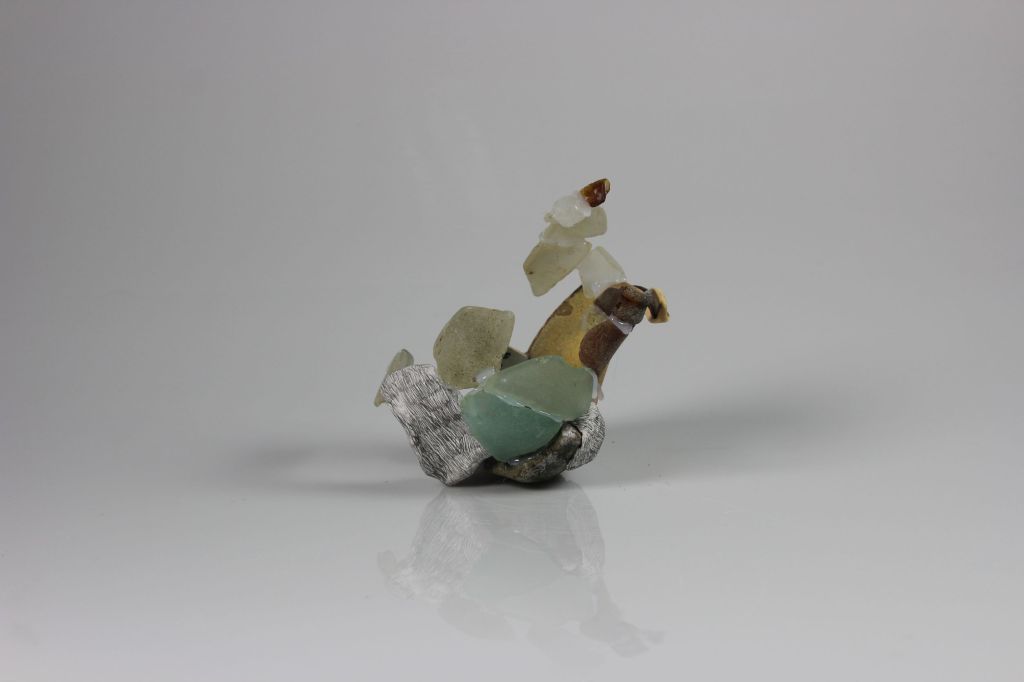
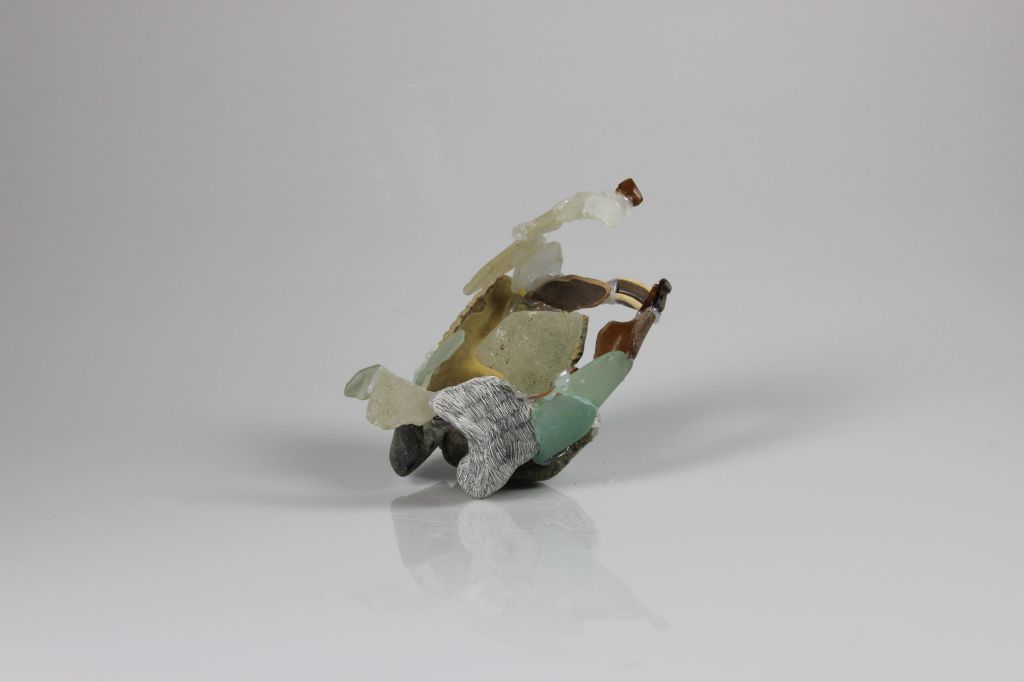
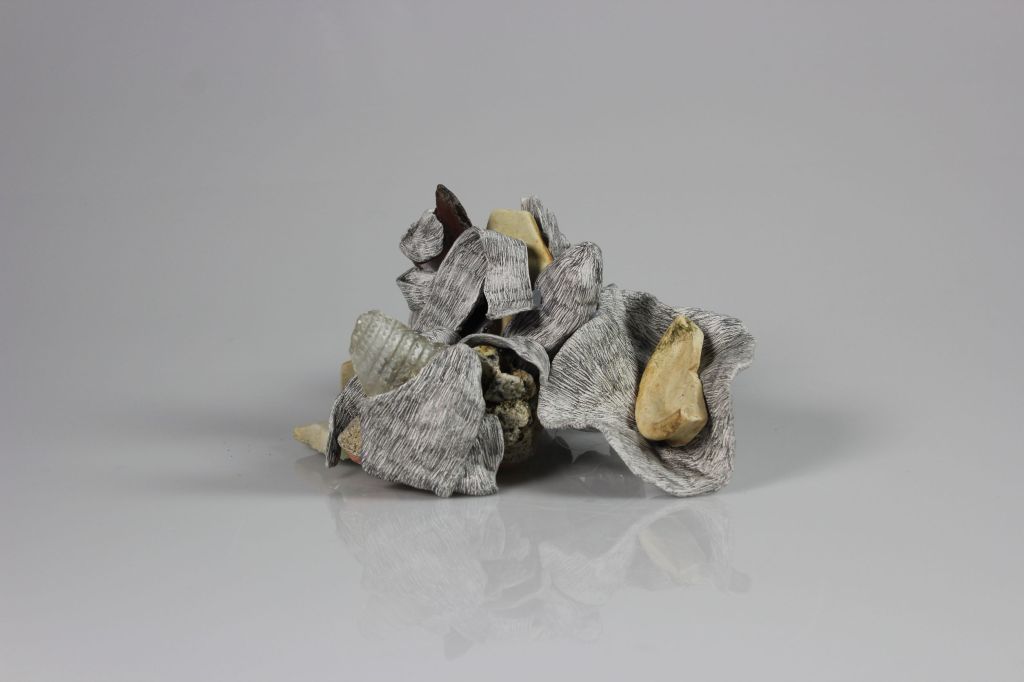

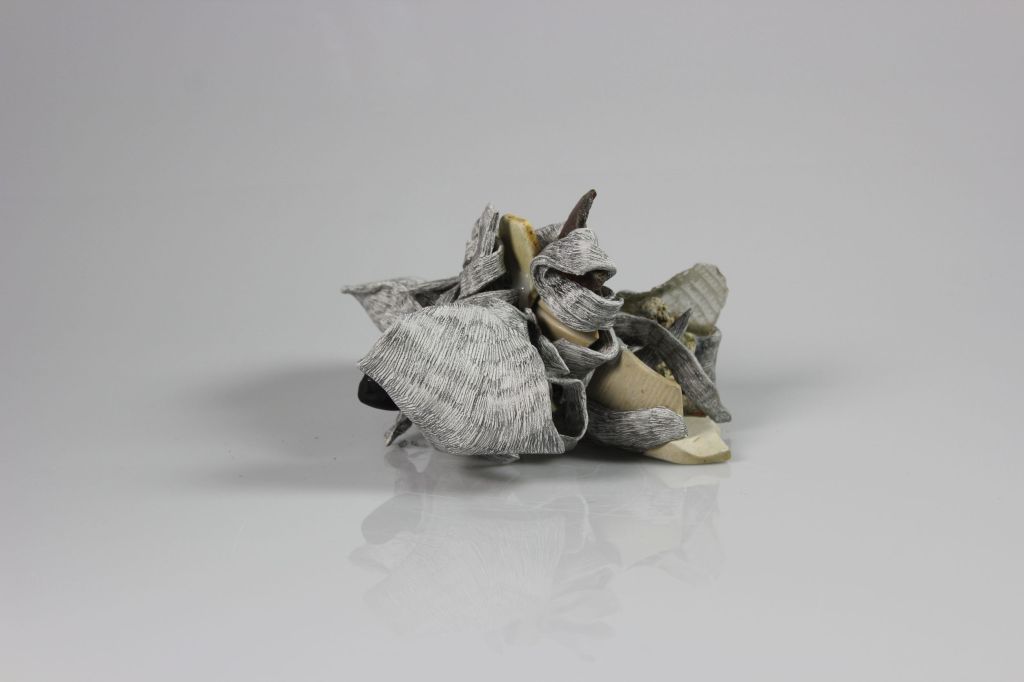
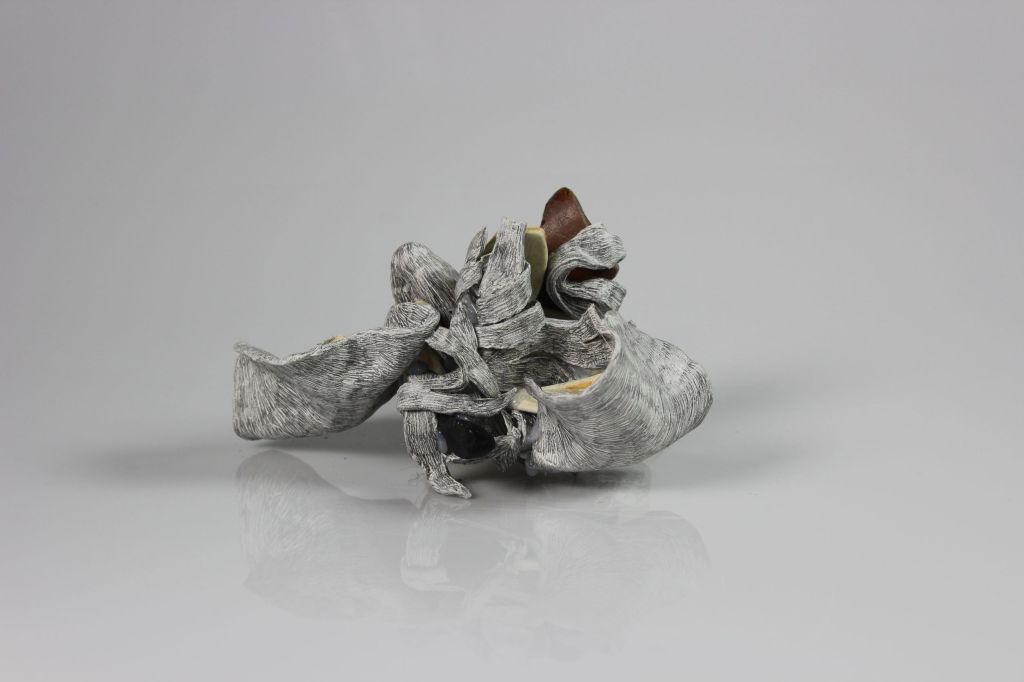
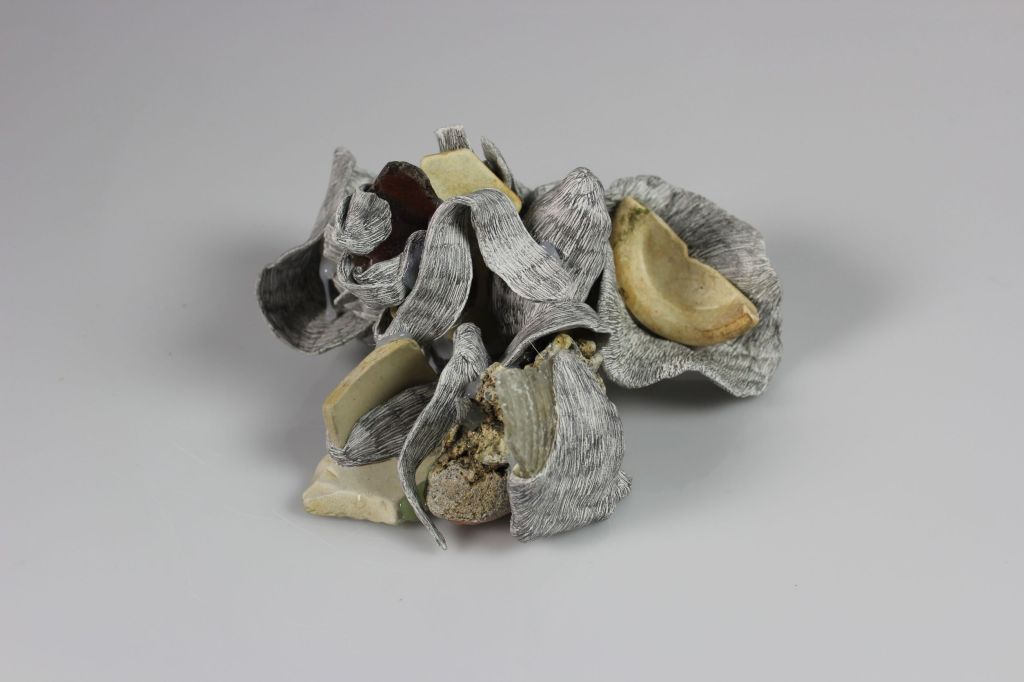
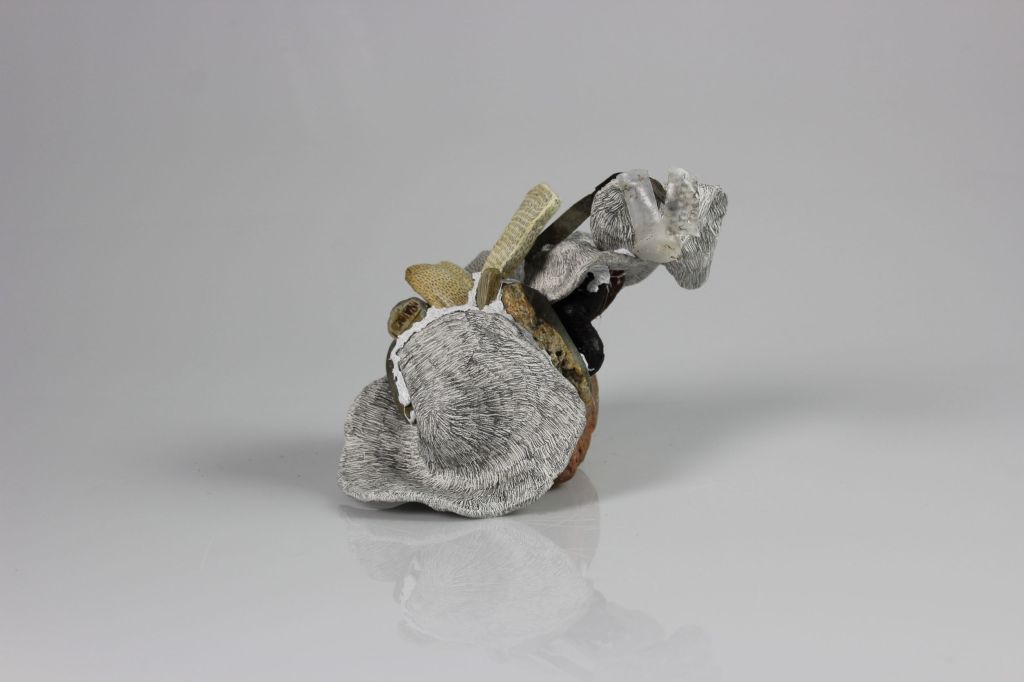
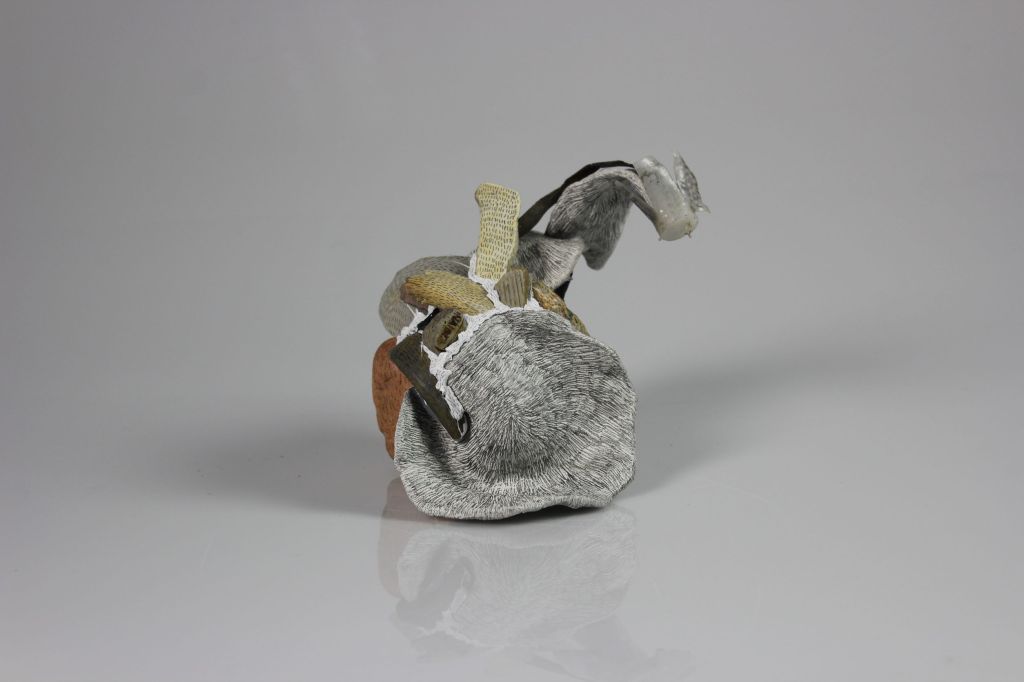

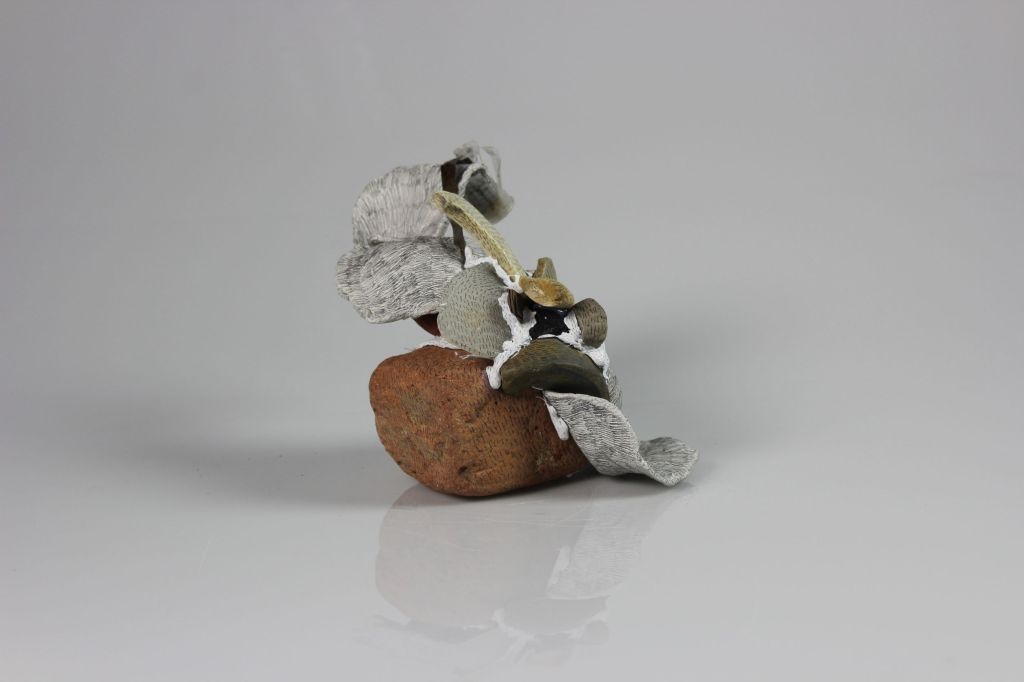
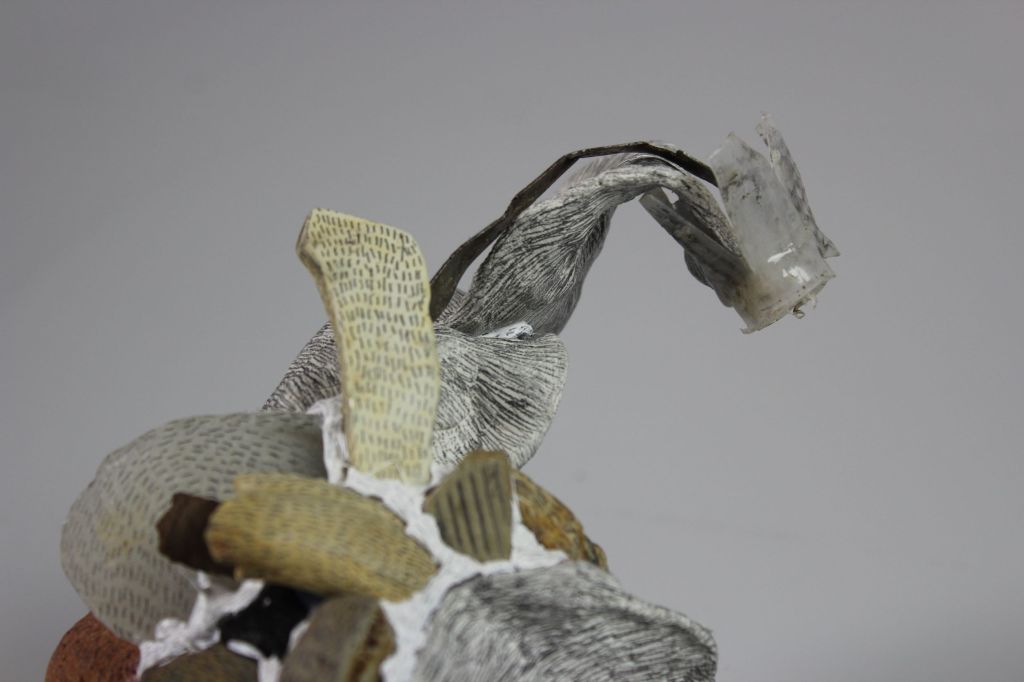
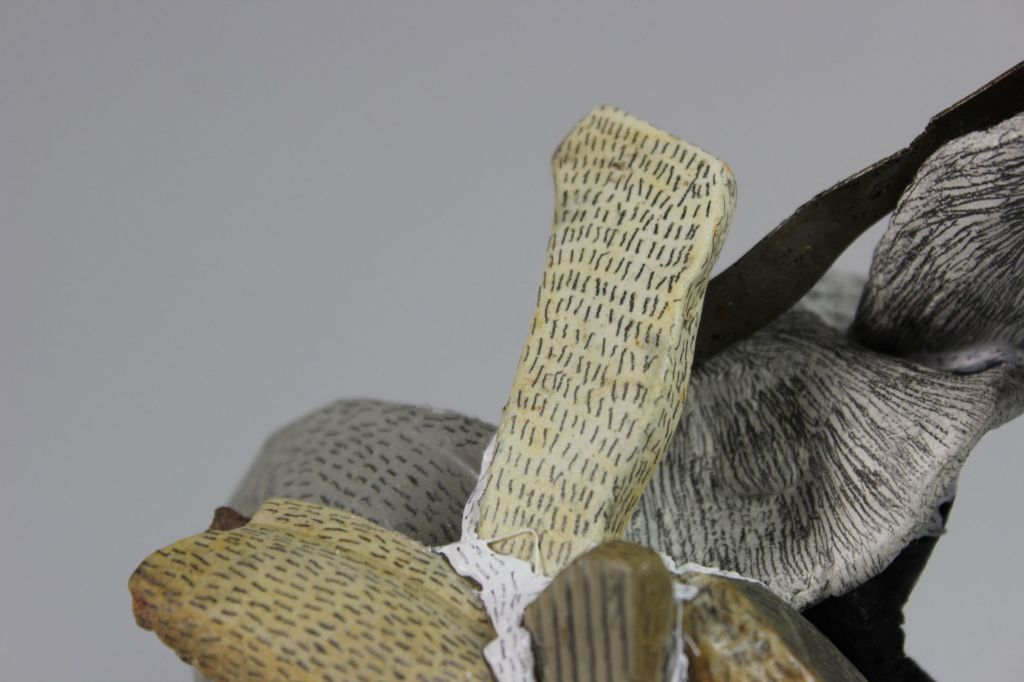

The drawn element brings a new feeling of something created, something stitched together, perhaps a little more intentionally (on my behalf) than those which incorporated the pink seams/seaweed. This is especially prevalent in the third of the above sculptures, creeping out over the entire sculpture rather than just particular parts, as well as also becoming part of the glue. This relates both to the work of Helena Clarke, considering the drawn line as stitch, and in part to my own previous work Time-stone.


With these smaller pieces, however, I felt a growing sense that I was creating lots of small experiments without ever committing to trying something bigger. I was worried that the method of simply sticking the constituent parts together with a glue gun wouldn’t hold out at larger sizes, and so had been talking myself out of doing it, but I eventually came to the realisation that it was better to at least try and see what resulted:
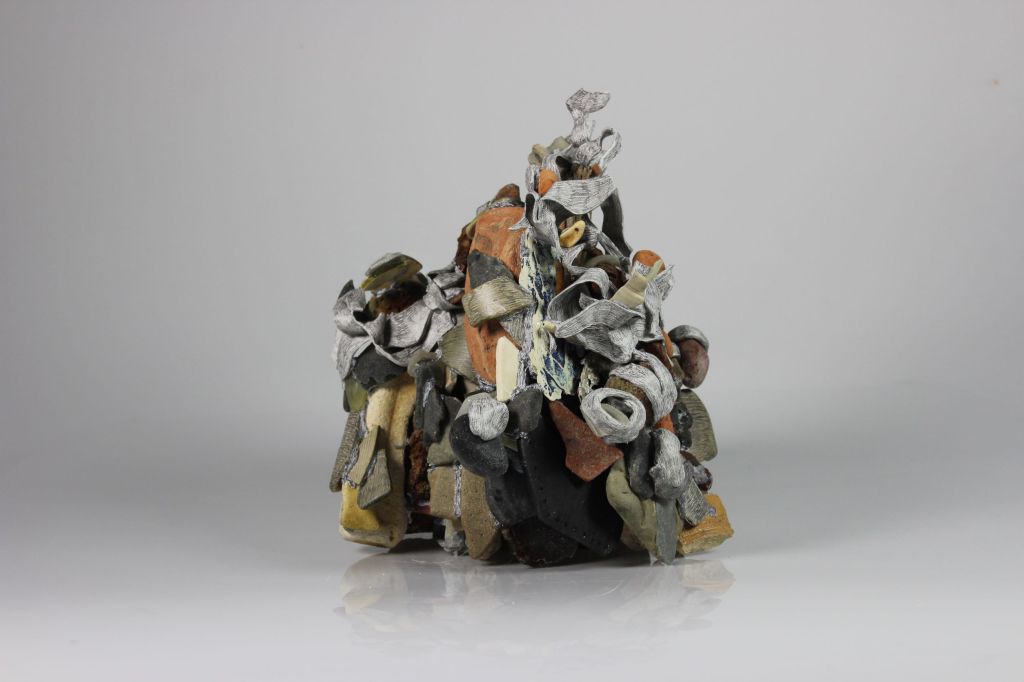
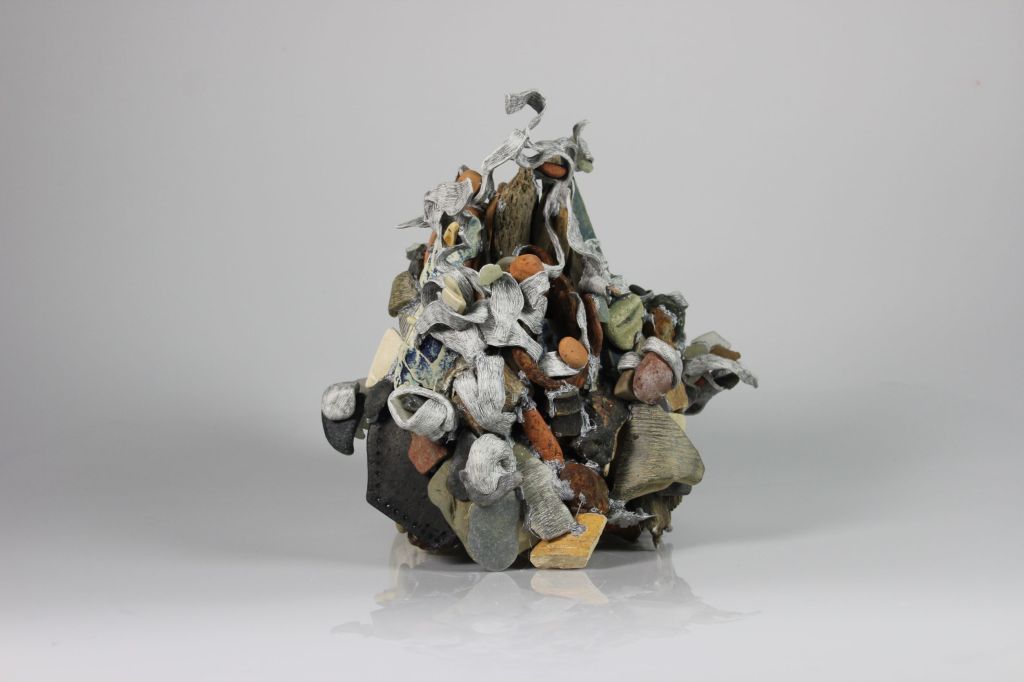

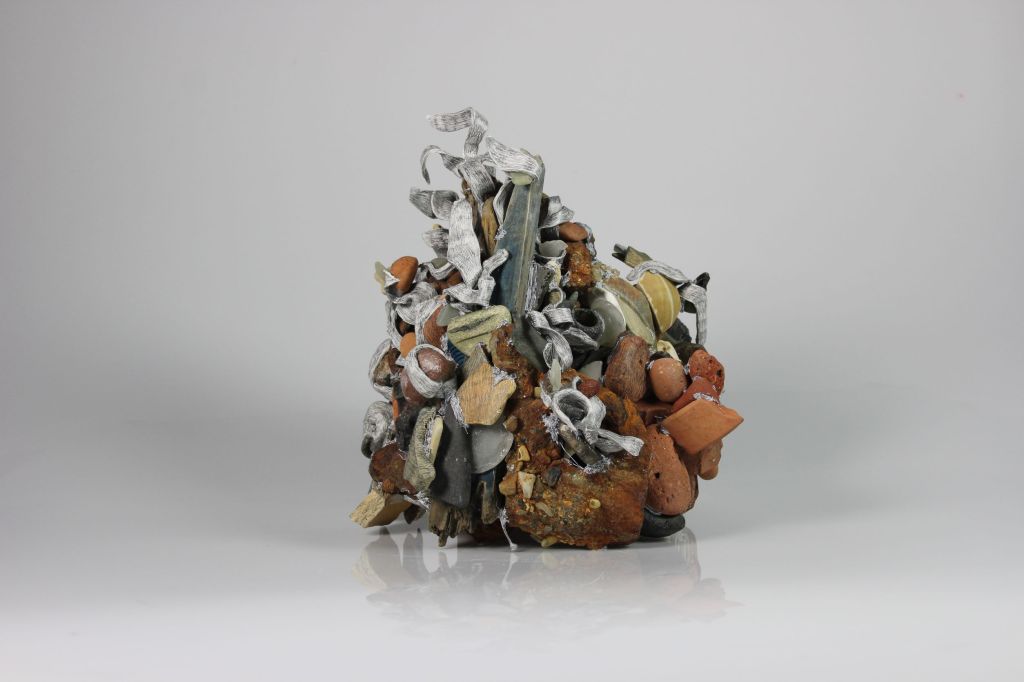


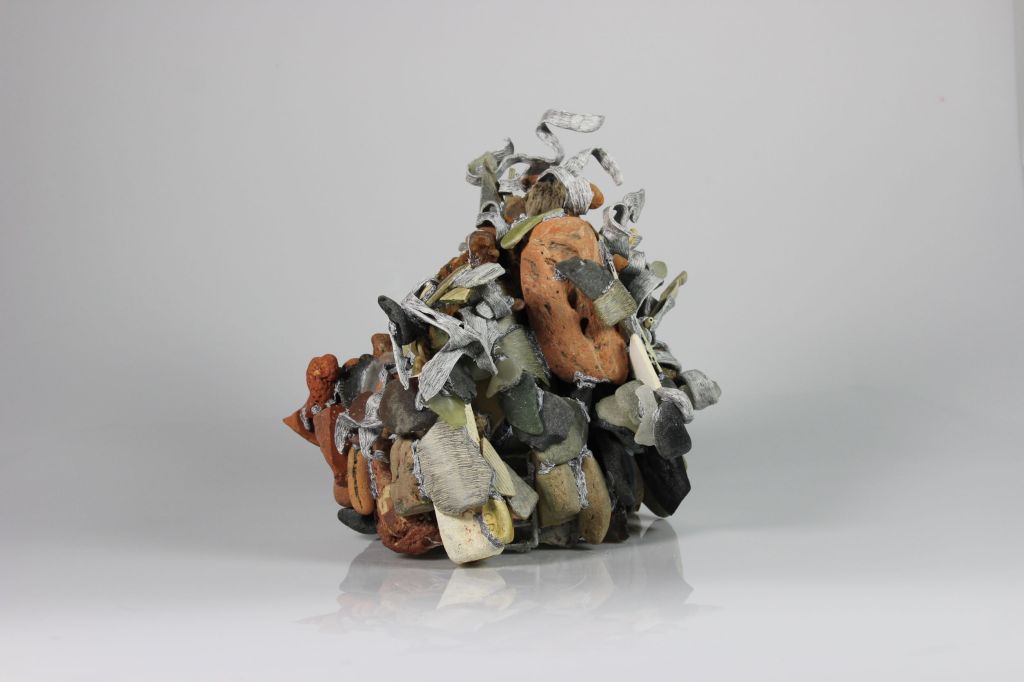


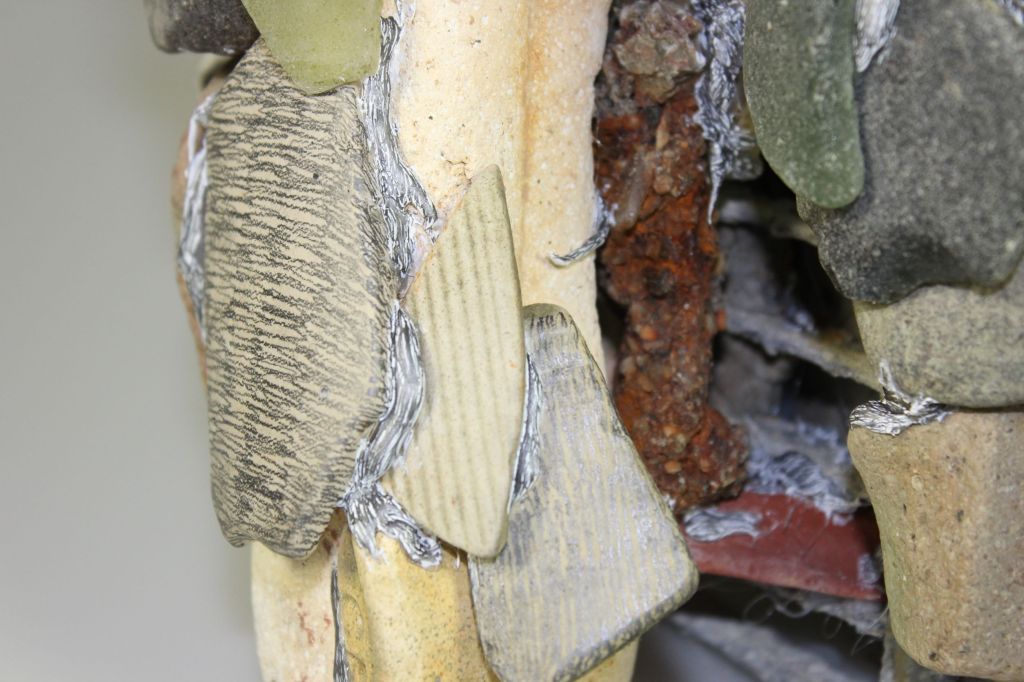

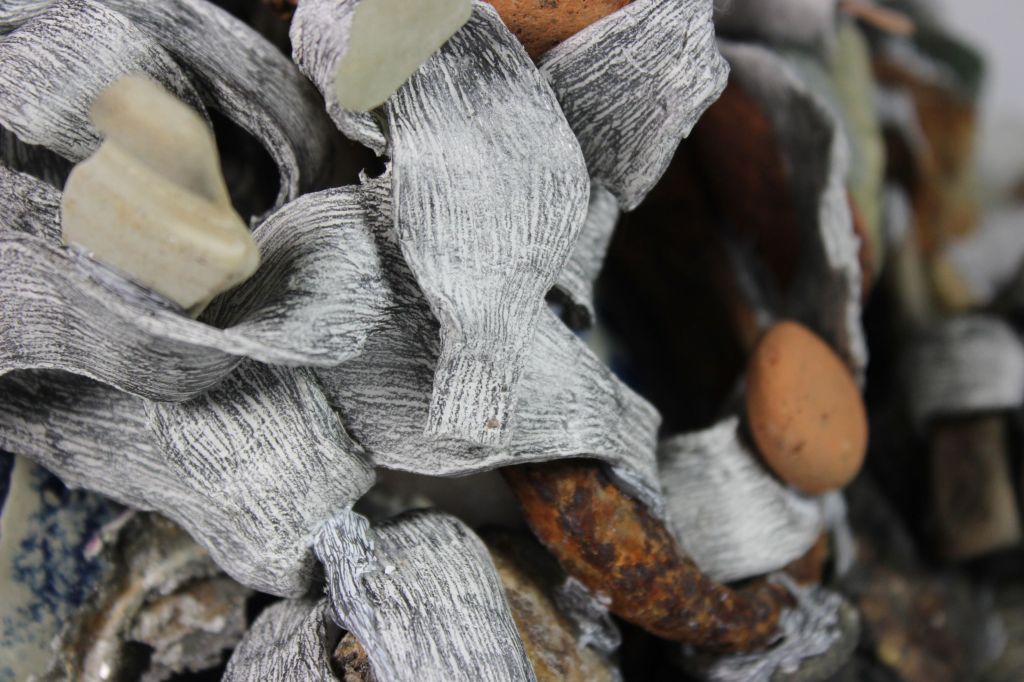


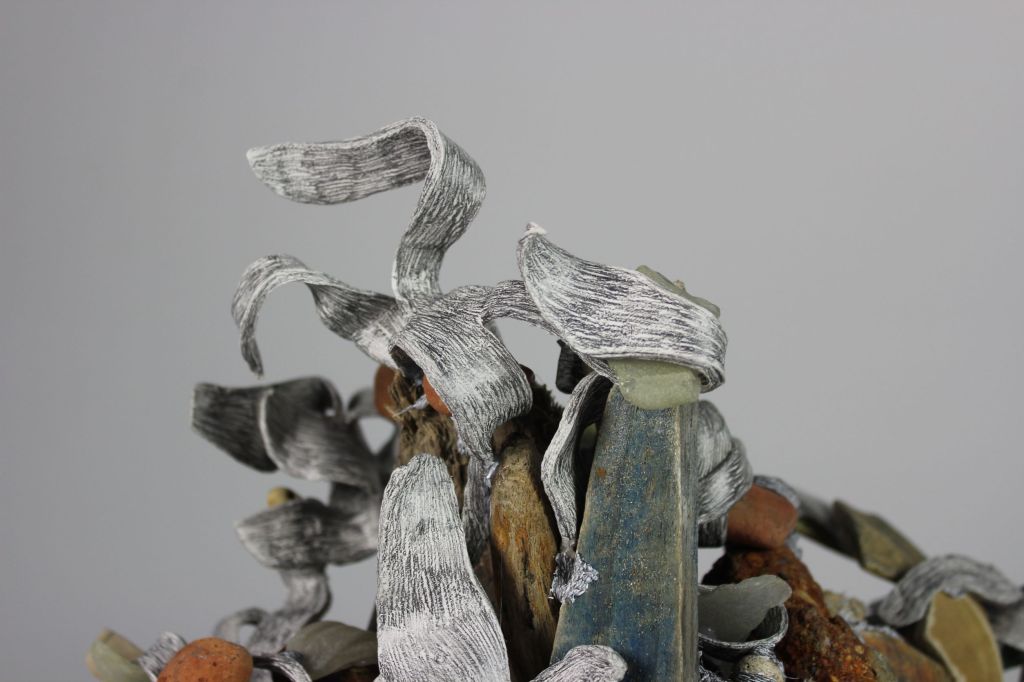

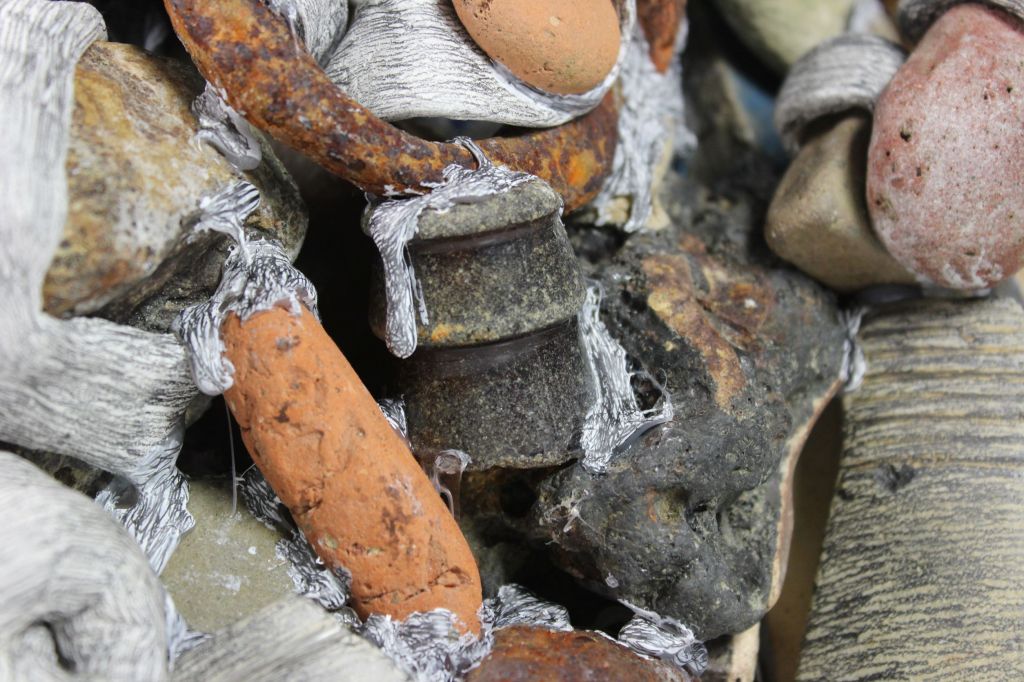
- the larger scale means the piece as a whole seems more concentrated, one uniform lump as opposed to the more asymmetric feeling of the smaller ones – there is a feeling of homogenisation
- there are areas where these smaller patches of asymmetry grow but these tend to be overshadowed by the larger mass – ideally I’d like to get away from this and towards the more organic feeling of something rhizomatically growing and shifting
- the clay ‘tentacles’ are effective in their sense of reaching, growing, wrapping but they also seem a lot more intentional/controlled/placed by the hand of the artist than the wilder feel of the pink seaweed in the earlier sculptures
- I would have liked to have made the seams a little more prominent, using the glue to build up and become part of the overall form, rather than just covertly lining the seams
- I have noticed a tendency for the sculptures to grow towards receptacle-like shapes (from their past lives as various receptacles) – do I want to lean into this or move away from it? (could relate to Ursula K Le Guin’s carrier bag theory of fiction)
- The large size makes the piece seem more final – a heavy, solid, resolved state – and I’d like these to feel a little more transient – little bubblings-up and moments in these materials’ ongoingness rather than a human-imposed final state
- Documenting this sculpture seemed to dampen it, the studio conditions bringing a strange stark and sterile feel to the image. In an ideal world I might take it to the beach, as I have done previously, for a livelier set of photos but even in documenting it on campus damaged the sculpture so it is unlikely it could survive a trip any further afield.
- Perhaps it would be interesting to embrace the fragility of it, taking it to the beach and leaving it there as it is slowly disassembled by the surroundings. My reservation here, though, is the use of the plastic glue which I wouldn’t feel comfortable depositing on a beach. Are there other biodegradable alternatives I could explore? Or other methods of joining? binding, wedging, drilling, weaving etc.
- This process would start to incorporate more of the material agency – a sense of alchemy, even – that was present in Rosanna Martin’s exhibition
- These individual photos all seem a bit too stark and formal – it would be worth playing around with photographing them in clusters, a bit more playfully (as I did for the open studios)
- Could I perhaps change my method so that I have more emphasis on material rather then shapes/forms? As it stands my process is more based on what forms I feel fit well together as opposed to considering anything more critically about the materiality of the pieces
- Could I incorporate all of my experiments or is it best to stick to just some as I’ve done here? Would it be too maximalist to have pink glue, pink seaweed, clay, mark-making on the surface etc
- Perhaps a larger number of smaller, percolating, pieces is more effective – could display covering a large area, growing out of walls, interconnected by drawings etc
- Could even bring in ideas from rock tracking – have an assemblage decomposing on a beach, tracking all of the elements as they slowly spread apart

 Anna Harris