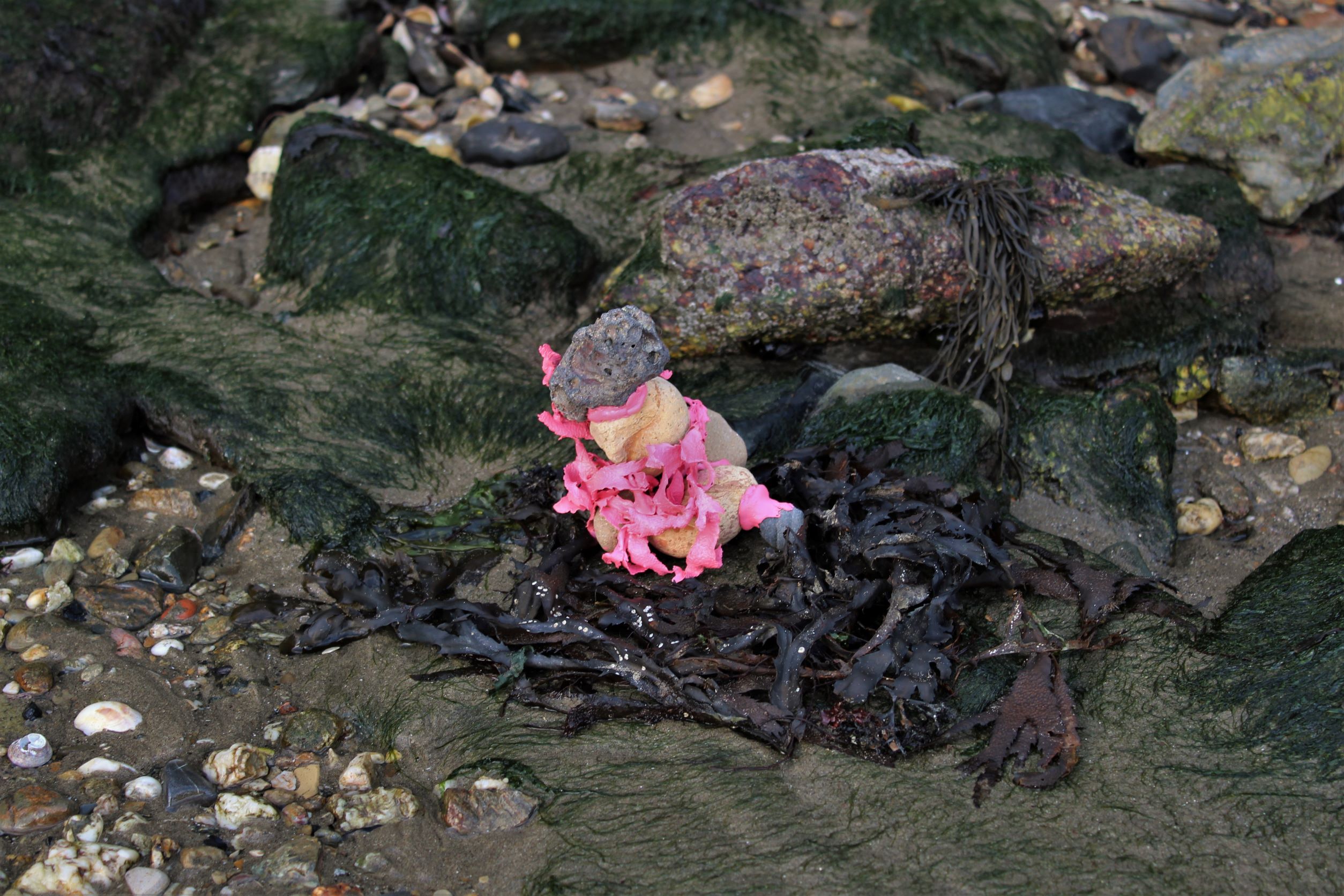
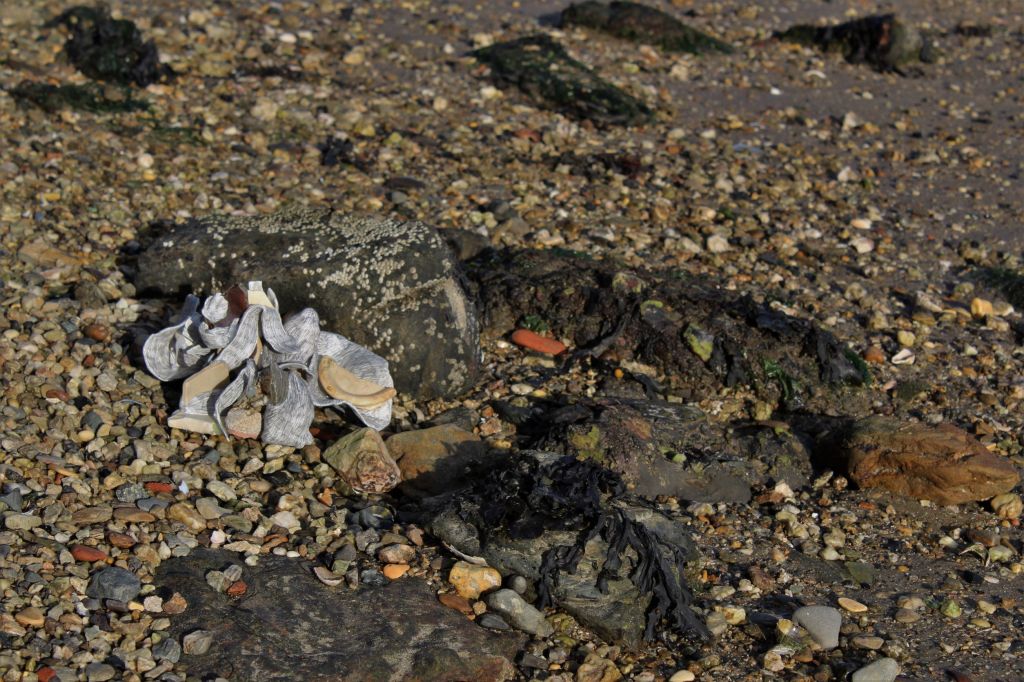
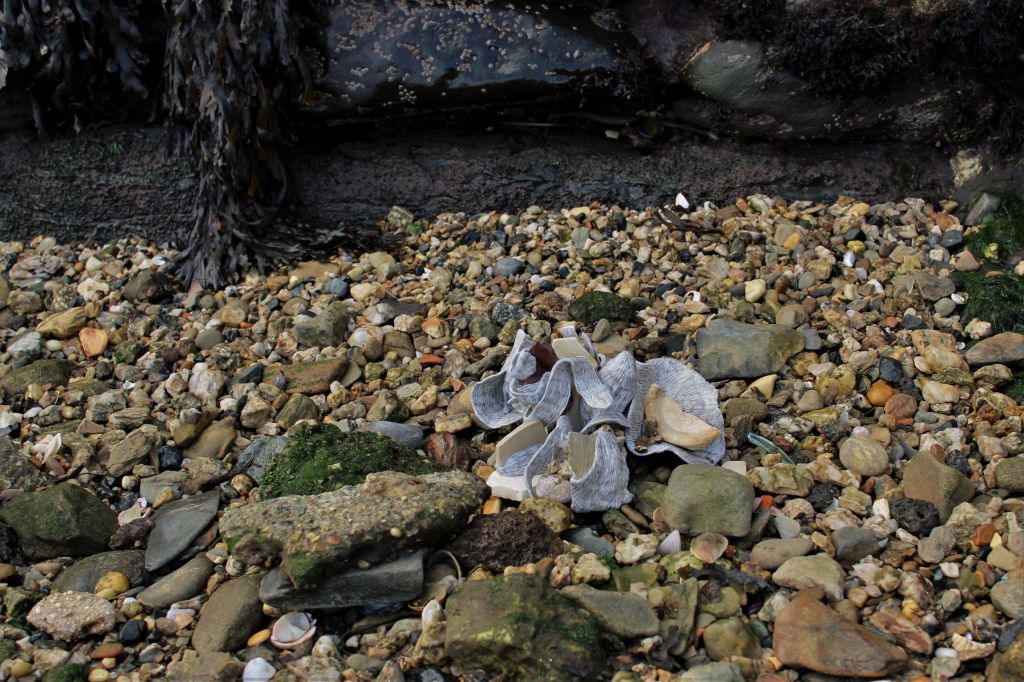
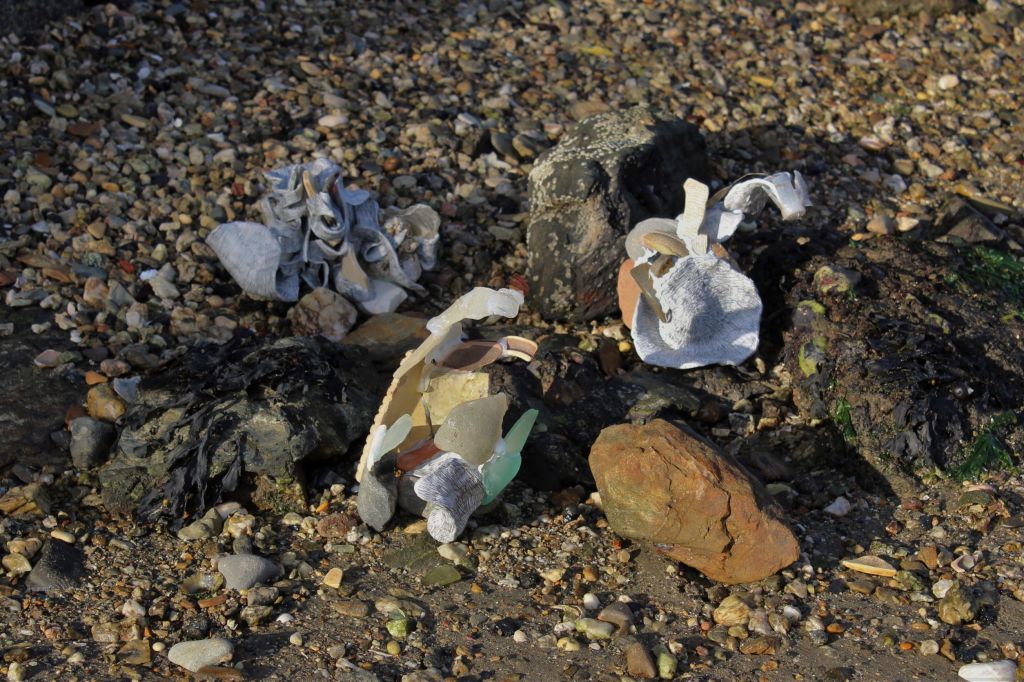
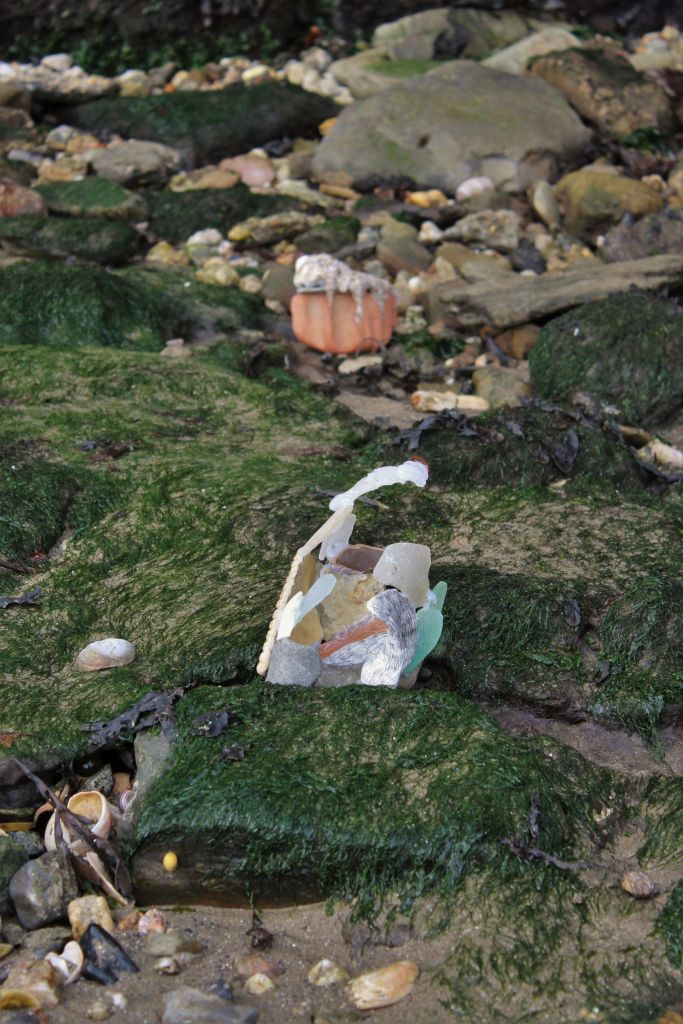
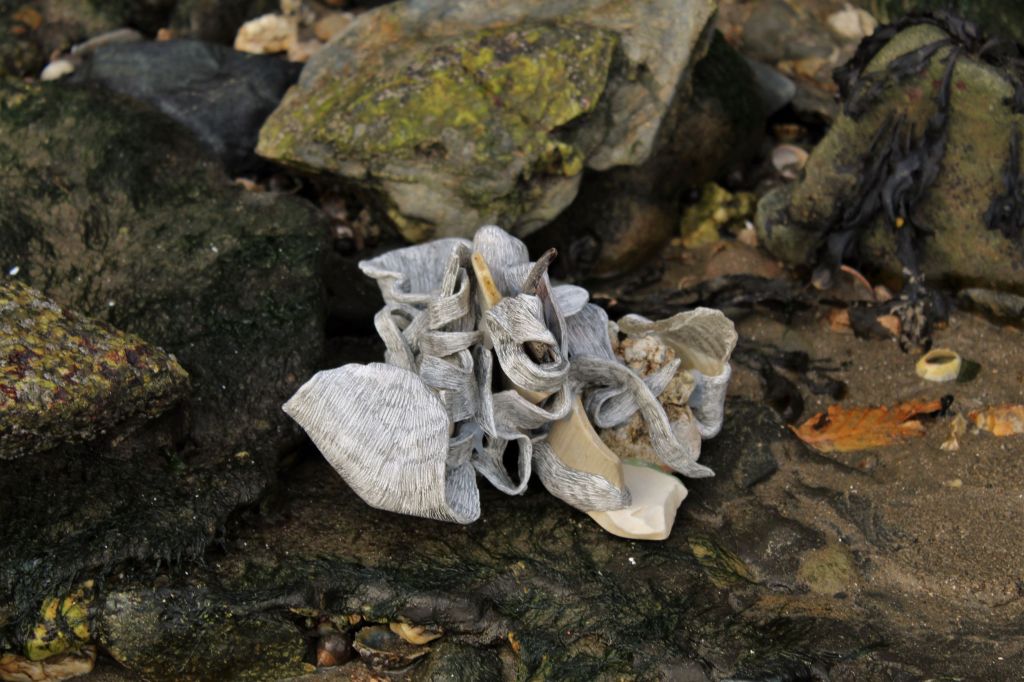
This set of photos is as a result of considering the most effective way at documenting/displaying my ongoing series of sculptures. I have tried taking pictures of them in more conventional settings such as the photo room and my studio – both of which have their merits – but these seemed to dampen the sculptures to some extent, removing any sense of liveliness at which they hint. Responding to comments that my sculptures work well in clusters, particularly amongst the debris I have in my studio, I felt this might work well on the beach where the materials were first collected from. To some extent this also echoes the Keskorra project of which I was part earlier in the year, experimenting with the ways in which displaying work out in the landscape can enhance it.
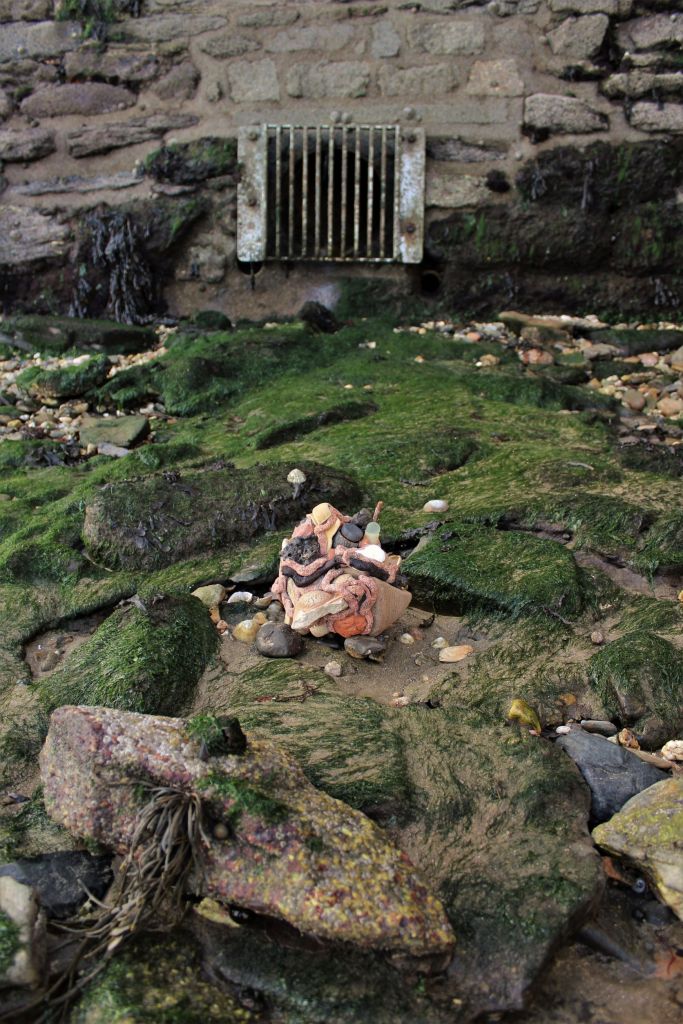




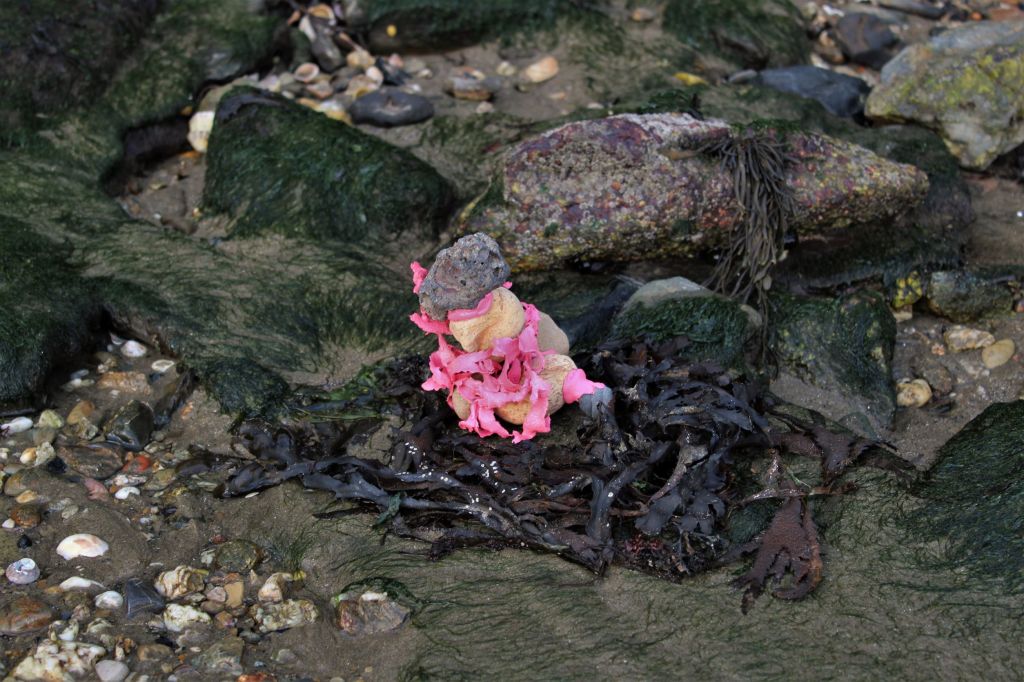

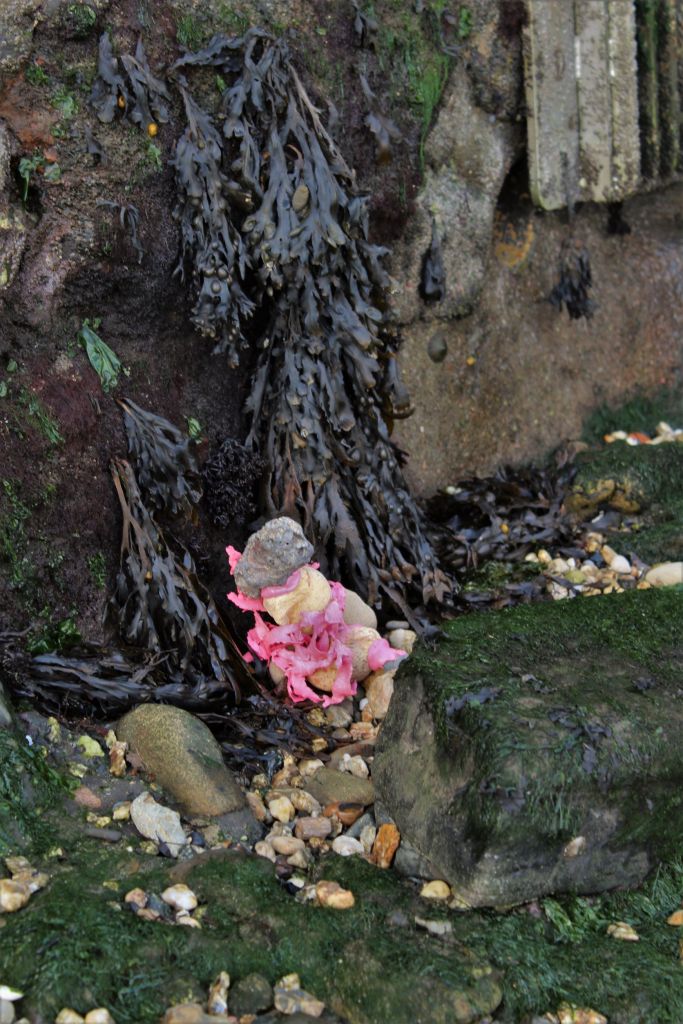

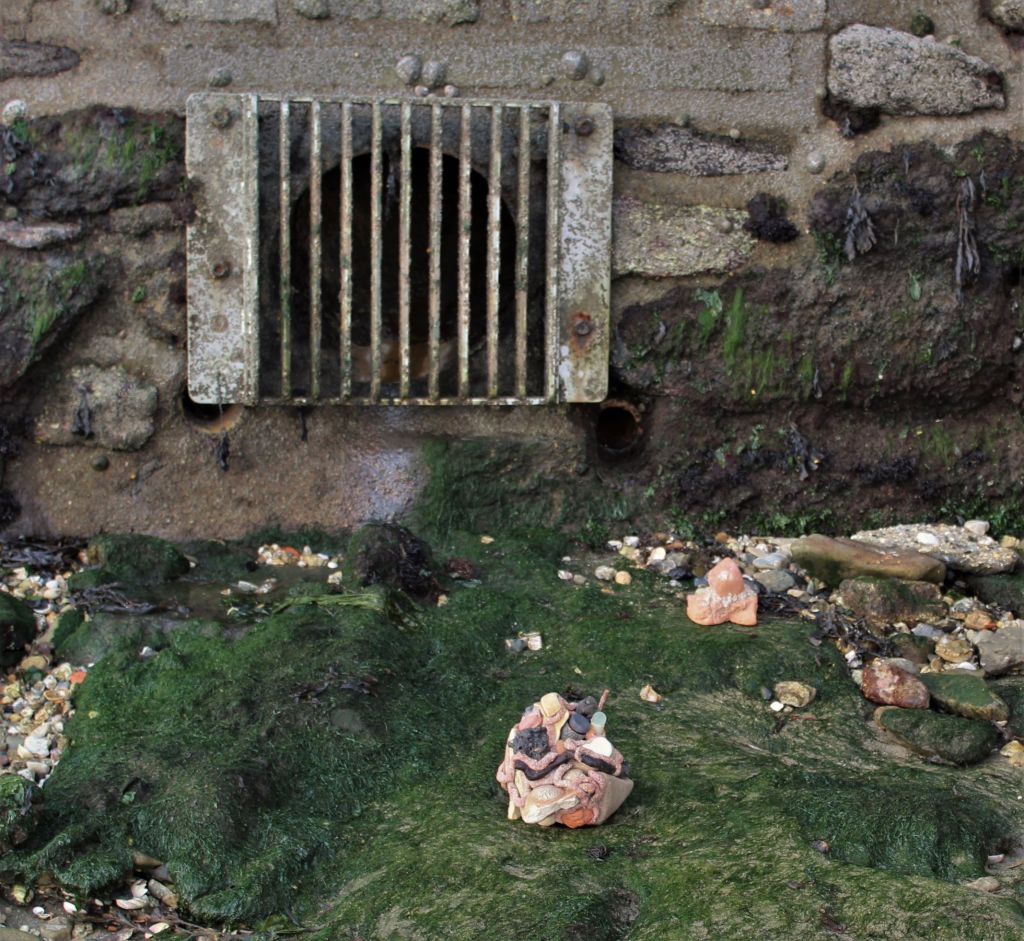
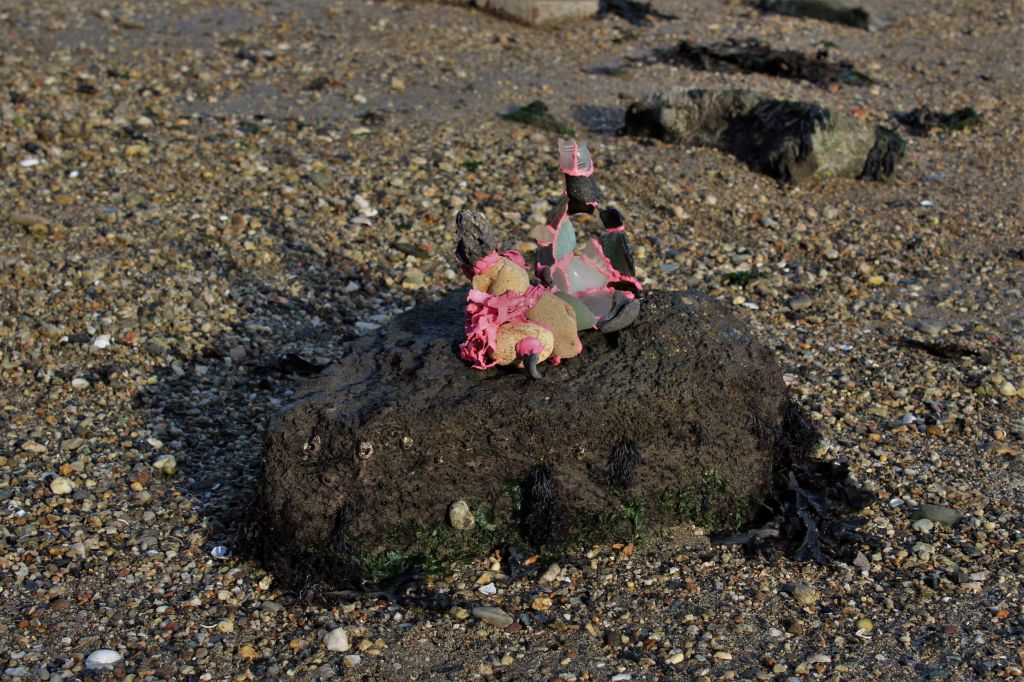


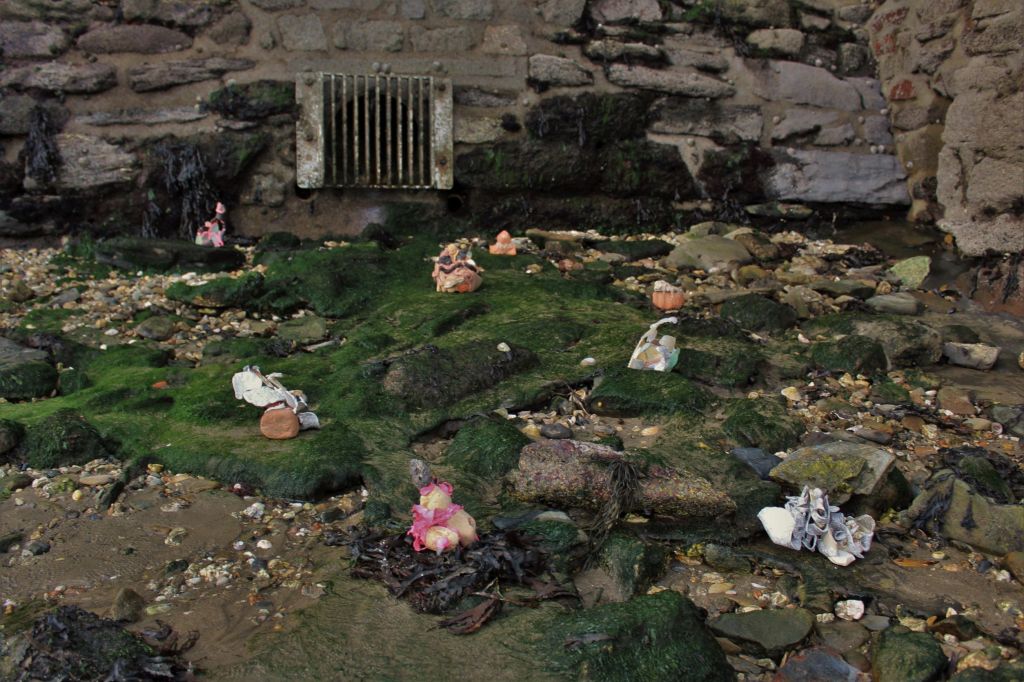


I intentionally incorporated the drain into some of the images because to me it associates with an important passage of Jane Bennett’s Vibrant Matter:
‘On a sunny Tuesday morning on 4 June in the grate over the storm drain to the Chesapeake Bay in front of Sam’s Bagels on Cold Spring Lane in Baltimore, there was:
one large men’s black plastic work glove
one dense mat of oak pollen
one unblemished dead rat
one white plastic bottle cap
one smooth stick of wood
Glove. pollen. rat. cap. stick. As I encountered these items, they shimmied back and forth between debris and thing – between, on the one hand, stuff to ignore, except insofar as it betokened human activity (the workman’s efforts, the litterer’s toss, the rat-poisoner’s success), and, on the other hand, stuff that commanded attention in its own right, as existents in excess of their association with human meanings, habits, or projects. In the second moment, stuff exhibited its thing-power: it issued a call, even if I did not quite understand what it was saying. At the very least, it provoked affects in me: I was repelled by the dead (or was it merely sleeping?) rat and dismayed by the litter, but I also felt something else: a nameless awareness of the impossible singularity of that rat, that configuration of pollen, that otherwise utterly banal, mass-produced plastic water-bottle cap.
I was struck by what Stephen Jay Gould called the “excruciating complexity and intractability” of nonhuman bodies, but, in being struck, I realised that the capacity of these bodies was not restricted to a passive ‘intractability’ but also included the ability to make things happen, to produce effects. When the materiality of the glove, the rat, the pollen, the bottle cap, and the stick started to shimmer and spark, it was in part because of the contingent tableau that they formed with each other, with the street, with the weather that morning, with me. For had the sun not glinted on the black glove, I might not have seen the rat; had the rat not been there, I might not have noted the bottle cap, and so on. But they were all there just as they were, and so I caught a glimpse of an energetic vitality inside each of these things, things that I generally conceived as inert. In this assemblage, objects appeared as things, that is, as vivid entities not entirely reducible to the contexts in which (human) subjects set them, never entirely exhausted by their semiotics. In my encounter, with the gutter on Cold Spring Lane, I glimpsed a culture of things irreducible to the culture of objects. I achieved, for a moment, what Thoreau had made his life’s goal: to be able, as Thomas Dumm puts it, “to be surprised by what we see.”‘ (page 5 Vibrant Matter: A Political Ecology of Things)
I also feel the beach gives the sculptures something to draw a vibrancy from, to respond to, and in return the attention is drawn to the ‘un-sculpted’ materials of which the beach is comprised. In many of the images there are areas of interaction between the sculpture and its surrounding, removing the focus from the singular, individual, item to the entangled mass around it.
Although these images are, at this point, primarily for documentation purposes, it does raise the question of whether I could consider a more permanent display of my work in this way? Would it be possible to hold an exhibition on the beach? And if not, could I then consider these images the artworks as opposed to the sculptures, which instead become more like props?

 Anna Harris