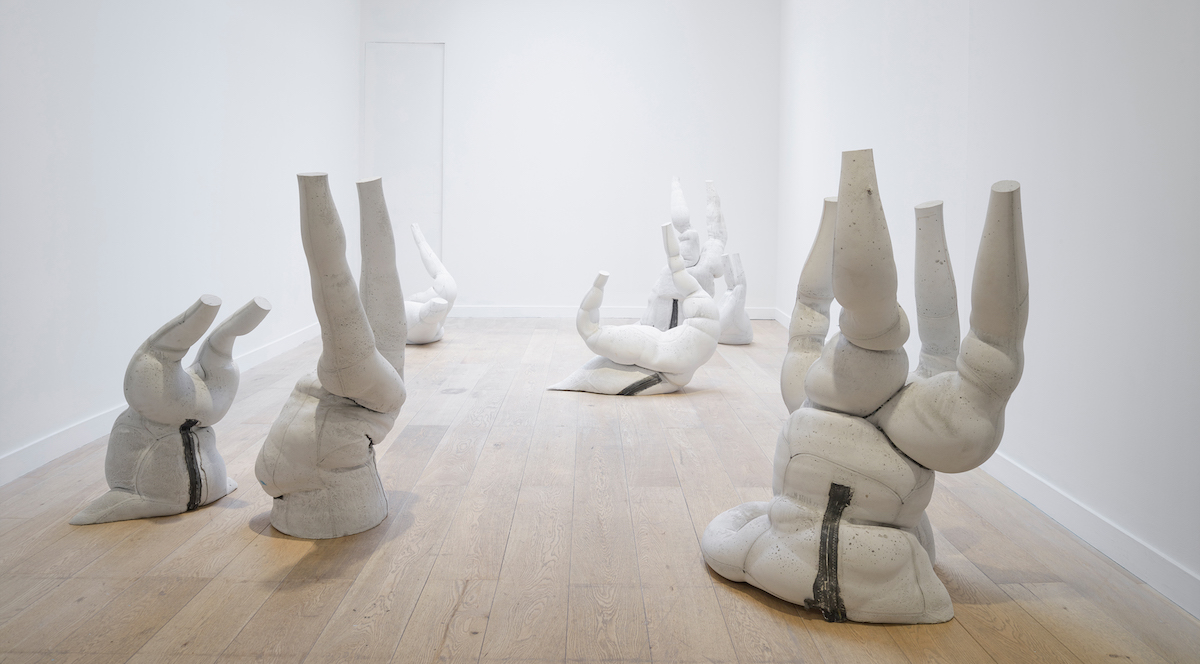


- concrete casts made from wetsuits, exhibited as though diving through the floor
- an exploration of water and human bodies – the body-forms bulging out, becoming watery and fluid, the physical boundary between the two (the wetsuit skin) bulging and breaking along with our understanding
- strong links to my dissertation – should I start to bring this more overtly into my work? using water as a sculptural medium? what materials could i use to be shaped by the water? paper? drawings? clay? sea/rain or more directly just me pouring water?
- also could i bring the human figure in more overtly? some of my tangly drawings are very abstract shapes, organic and risomatic, which could be used to be suggestive of the human?
- the casting process physically replaces a space designated for a human body with something nonhuman – could i take this into my practice in some way? – almost displacing the human from the human, a literal out-of-body experience
http://www.marshwoodawards.com/judges/natural-response-tania-kovats/
- the wetsuit bodies become reminiscent of growths – coral reaching up from the gallery floor (but bleached and lifeless, echoing human impact? – especially paired with the work bleached)
HOLMAN, M., 2018. Tania Kovats: Troubled Waters. Art Monthly, (421), pp. 24-25.
Wetsuits are the skin we wear to be in water, we wrestle in and out of wetsuits, and we are slightly different creatures when we’ve got them on. And I’ve always loved the Selkie myth of the seal woman who slips off her skin to come on shore to dance. This is like that in reverse: you slip on a skin to get into another element, the water. The sculptures are figurative but boneless, they are about the flesh not the skeleton. Their headlessness anonymises them and emphasises the euphoria of the body. I wanted to give the impression they are passing through the solidity of the architecture, joyfully moving between worlds like when you enter water.
Touch is so important, and it has a unique reciprocity: when we touch something it touches us back, and that’s not true of our other senses like looking or listening. So I wanted to visualise a positive language of touch.

 Anna Harris