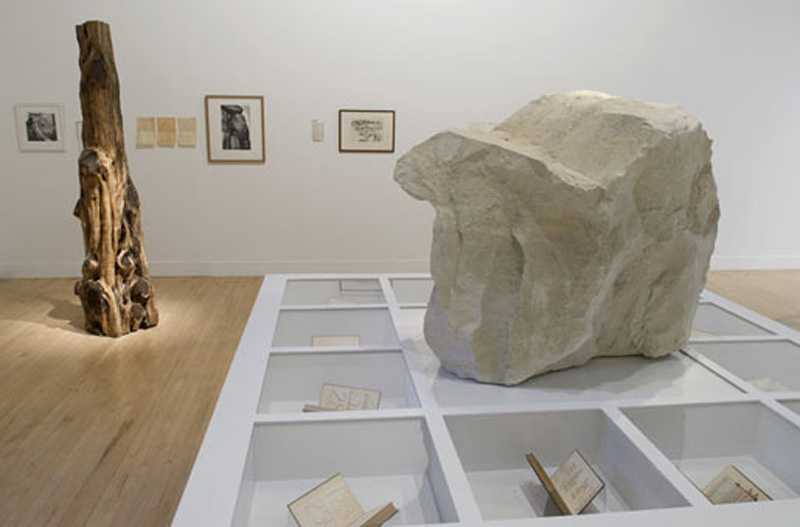
Taxonomy:
‘the branch of science concerned with classification, especially of organisms; systematics‘ (Google definition)
‘Taxonomy is the practice and science of categorization or classification. The word finds its roots in the Greek language τάξις, taxis (meaning ‘order’, ‘arrangement’) and νόμος, nomos (‘law’ or ‘science’).
A taxonomy (or taxonomical classification) is a scheme of classification, especially a hierarchical classification, in which things are organized into groups or types. Among other things, a taxonomy can be used to organize and index knowledge (stored as documents, articles, videos, etc.), such as in the form of a library classification system, or a search engine taxonomy, so that users can more easily find the information they are searching for. Many taxonomies are hierarchies (and thus, have an intrinsic tree structure), but not all are.
Originally, taxonomy referred only to the categorisation of organisms or a particular categorisation of organisms. In a wider, more general sense, it may refer to a categorisation of things or concepts, as well as to the principles underlying such a categorisation. Taxonomy organizes taxonomic units known as “taxa” (singular “taxon”).”
Taxonomy is different from meronomy, which deals with the categorisation of parts of a whole.’
^ (Wikipedia definition)
I have highlighted in bold sections that jump out at me initially in the context of my own work – what does it mean to invoke the language of ‘law’ or ‘science’ in relation to displaying/presenting somewhat unplaceable things? Am I imposing an order or highlighting a lack of? Or perhaps somewhere between the two – creating strange taxa of my own, unreadable and opaque.
The structural hierarchy imbued in taxonomy is also interesting – one of the underpinning concepts of a lot of the materialist ideas I have looked at is the idea of moving away from the ontological hierarchy of human to nonhuman, instead embracing and appreciating the vibrancy of materials. I therefore wouldn’t want to accidentally impose a hierarchical system on the pieces I chose to display, but perhaps, again, I could find a middle-ground wherein I subvert the system rather than leaning into it? I imagine the quotes/text that run alongside the pieces could help with this – on the surface leaning into the categorical mode of display, but when read doing something entirely different.
The phrase ‘organise and index knowledge’ is really intriguing, almost instinctively opening up the question of what is ‘knowledge’. Again, this is another nice question to play with by using a taxonomic mode of display – what do we think we know about these objects? Can this be uprooted in any way? This also ties in with the idea of users ‘more easily finding the information they are searching for’. What if a taxonomic system did the opposite, deliberately making the system of placement obscure and unreadable? It has to be said that thus far, whenever I have used this mode of display, the layout does seem to be fairly intuitive aesthetically. I have placed objects next to each other often based on similar shapes or textures etc, breaking the more rigorous, scientific mode of display, but still using a relatively (?) readable system of categorisation. Perhaps it would be worthwhile considering more critically what various placements do; I like that the aesthetic-driven placement creates unusual links between hugely different objects, but I don’t know if this could be pushed further? Or even needs to be? Gillian was speaking to Izzy and I about using really obscure curatorial themes, that only we know, which might result in a more curious arrangement: ordering by weight (something about this intrigues me as an intrinsic, physical property but one that is not necessarily seen), by age, or by something a lot more niche – what floats, what looks most like a leaf, what was found above or below sea level etc.
Also exploring the unit of taxonomy – taxa, taxon. Could I label individual clusters each a taxon? Perhaps that leans into it a bit too heavily – I could wait and see how overtly the cabinet/museum/taxonomy vibe comes across, and use this according to that.
Meronomy:
‘A meronomy or partonomy is a type of hierarchy that deals with part–whole relationships, in contrast to a taxonomy whose categorisation is based on discrete sets. Accordingly, the unit of meronomical classification is meron, while the unit of taxonomical classification is taxon. These conceptual structures are used in linguistics and computer science, with applications in biology. The part–whole relationship is sometimes referred to as HAS-A, and corresponds to object composition in object-oriented programming. The study of meronomy is known as mereology, and in linguistics a meronym is the name given to a constituent part of, a substance of, or a member of something. “X” is a meronym of “Y” if an X is a part of a Y.’
^ (Wikipedia definition)
Perhaps meronomy is actually closer conceptually to the ideas I am looking at – whereas taxonomy deals with ‘discrete sets’, meronomy seems to tie in with the more fluid, entangled nature of thingness and vital materiality. It is also interesting to note the relation to ‘object-oriented programming’ as, although they are by no means the same, I believe this shares some similarities with Graham Harman’s object-oriented ontology, which also feeds into my work.
The task still remains though of how to translate this into a visual medium – taxonomy is quite readily evoked through the curiosity cabinet mode of display, whereas meronomy might need a little more explaining were I to want to reference it directly.
Archives:
The following extracts are from the Tate Paper entitled Perspectives: Negotiating the Archive:
‘The archive is popularly conceived as a space where things are hidden in a state of stasis, imbued with secrecy, mystery and power. Archives are seen as rows and rows of boxes on shelves, impenetrable without the codex which unlocks their arrangement and locations. For some the archivist is a rule maker, casting spells around archives (damsels in distress), which are suspended in time, waiting to be rescued and re-animated by users (in shining armour). Much has been written by historians about the experience of using archives and the impulse to rescue and rehabilitate not just the lives and actions documented in the archive but the very material itself – the stuff of history – while several recent novels feature archivists prominently (the summary of one describes an archivist as ‘proud gatekeeper to countless objects of desire’).‘
‘There are perhaps connections to be made between this fascination with archives and a widespread sense that within Western capitalist societies we are surrounded by stuff but uncertain about what is significant. Even with the advent of the internet, we seek to order and privilege certain cultural objects over others (and individuals over others). Today our lives are documented in ways unimaginable to previous generations – as seen in recent debates about information security, both that held by government and that which we offer up ourselves on such sites as Facebook, tagging our pages and creating our own taxonomies. According to the French historian Pierre Nora, ‘our whole society lives for archival production’. At a time when we both crave and feel overwhelmed by information, the archive can seem like a more authoritative, or somehow more authentic, body of information or of objects bearing value and meaning.‘
‘Archives no longer belong to the lawmakers and the powerful; archivists see themselves as serving society rather than the state. The archive theorist Eric Ketalaar has described this view of the archive as, ‘By the People, of the People, for the People’.’
‘Christian Boltanski has said of the problems posed by preserving items within a museum setting: “Preventing forgetfulness, stopping the disappearance of things and beings seemed to me a noble goal, but I quickly realised that this ambition was bound to fail, for as soon as we try to preserve something, we fix it. We can preserve things only by stopping life’s course. If I put my glasses in a vitrine, they will never break, but will they still be considered glasses? … Once glasses are part of a museum’s collection, they forget their function, they are then only an image of glasses. In a vitrine, my glasses will have lost their reason for being, but they will also have lost their identity.“‘
‘The shape and contents of that body of material are part of its evidential value. This may or may not include a particular original order in which it was arranged, reflecting the processes that created it. Alternatively, its significance may lie in the interrelationships between the component parts of the archive, which can also imbue each with authenticity. Archives are not placed within a pre-existing taxonomy or classification scheme in the way that libraries are.’
‘Often, things are called archives that are really just groups of material. There is a major difference between the archive of John Piper […] and a single document (let us say a sketchbook), taken from the original context of its production and placed with other, single documents, into what is known as a Special Collection, a collection of individual, decontextualised ‘treasures’. Such a collection is not generated by any activity other than collecting. By contrast, an archive is a set of traces of actions, the records left by a life – drawing, writing, interacting with society on personal and formal levels. In an archive, the sketchbook would ideally be part of a larger body of papers including correspondence, diaries, photographs – all of which can shed light on each other (for example, a diary can locate the artist in a particular place at a particular time, which can help date the contents of the sketchbook).‘
‘Hal Foster describes the nature of archives as at once ‘found yet constructed, factual yet fictive, public yet private’. […] Tate Archive can be described as a formal collection of predominantly informal archives.’
‘Although no activity is objective or free of bias, a core principle of archival practice is to seek to be as objective as possible in what might be called the ‘performance’ archivists enact on the archive.’
‘In the paradigm of the archive continuum, by contrast, the records do not simply go through a life cycle from creation and currency through to inactivity and the archive, but move in and out of currency, having qualities both current and historical from the moment of their creation. On its website the Archive School at Curtin University in Australia describes archives as ‘frozen in time, fixed in a documentary form and linked to their context of creation. They are thus time and space bound, perpetually connected to events in the past.’ It continues: ‘Yet they are also disembedded, carried forward into new circumstances where they are re-presented and used.’
‘Or, as Kabakov says: “A dump not only devours everything, preserving it forever, but one might say it also continually generates something; this is where some kinds of shoots come for new projects, ideas, a certain enthusiasm arises, hopes for the rebirth of something.”‘
‘Other fundamental principles underpinning archive theory and practice – authenticity and the context of the record – are also eminently compatible with postmodernist thought in demanding that we do not take a document at face value but rather look at the process of creation rather than the product itself.’
‘Derrida’s notion of ‘archive fever’ or ‘mal d’archive’: “We are all ‘en mal d’archive’: in need of archives … [we] burn with a passion never to cease searching for the archive right where it slips away … [we] have a compulsive, repetitive and nostalgic desire for the archive, an irrepressible desire to return to the origin, a homesickness, a nostalgia for the return of the most archaic place of absolute beginning.” Importantly, Derrida writes not only about the archive as a site of power and authority but also about the ambiguous and fragmentary nature of its contents – the ‘presentness’ and absence of traces that make up archives.‘
‘the use of the term ‘archive’ is an assertion of the changed status of this material, which has gone from obscurity to preservation and presentation. Cummings and Lewandowska make the following distinction between an archive and a collection: “Archives, like collections in Museums and Galleries are built with the property of multiple authors and previous owners. But unlike the collection, there is no imperative within the logic of the archive, to display or interpret its holdings. An archive designates a territory – and not a particular narrative. The material connections contained are not already authored as someone’s – for example, a curator’s – interpretation, exhibition or property; it’s a discursive terrain. Interpretations are invited and not already determined.”‘
Where the text was written from the perspective of more traditional archives – letters, photos, articles etc – my own reading of it was through a more materialist lens, attempting to apply some of the same thoughts to my own collection of miscellaneous gathered things. I’m not sure if what I am creating currently speaks to, or should speak to, notions of an archive directly. When presented in a cabinet-type display this definitely moves away from an archive as I am directly imposing my own order and interpretation onto the material. If I were to lean into a less ordered mode of display, perhaps allowing viewers to sort through the material themselves, this might be closer to the general understanding of an archive. However, I can’t say I’m drawn to this way of presenting, aside from the fact that I am imposing my own thoughts less onto how the display is read/how the objects are classified. Again, perhaps some kind of middle-ground could be found on this, echoing the language of both a finalised display and an archive – a cabinet but with some disruption, some objects breaking out and onto shelves/the walls/the floor etc.
Responses to some of the highlighted points above:
- ‘which are suspended in time, waiting to be rescued and re-animated by users (in shining armour)’ – this is something I’d ideally like to move away from, but also I feel may be intrinsically imbued in the role of the artist?
- ‘within Western capitalist societies we are surrounded by stuff but uncertain about what is significant’ – using this – the mode of display tells you what is significant, even if it contradicts the value you might otherwise assign to such objects – elevating the status of the found object/thing
- ‘The archive theorist Eric Ketalaar has described this view of the archive as, ‘By the People, of the People, for the People’.’ – what if my display/archive was ‘By the Thing, of the Thing, for the Thing’?! What would this look like?
- ‘as soon as we try to preserve something, we fix it. We can preserve things only by stopping life’s course. If I put my glasses in a vitrine, they will never break, but will they still be considered glasses? … Once glasses are part of a museum’s collection, they forget their function, they are then only an image of glasses. In a vitrine, my glasses will have lost their reason for being, but they will also have lost their identity.’ – again, like the first point, this is something I’d like to move away from, but I’m not sure I can – it feels imbued in the very action of taking something and displaying it. Perhaps there’s a slight difference because I am not trying to preserve anything?
- ‘Archives are not placed within a pre-existing taxonomy or classification scheme in the way that libraries are.’ – an element of the archive that I would like my work to embrace? Or would I like it to exist within the pre-existing taxonomies, just pushing against them?
- ‘Hal Foster describes the nature of archives as at once ‘found yet constructed, factual yet fictive, public yet private’. […] Tate Archive can be described as a formal collection of predominantly informal archives.’ – captures nicely this idea of the liminality of an archive, again something I see echoed in the pieces themselves
- ‘A dump not only devours everything, preserving it forever, but one might say it also continually generates something’ – speaks to ideas of vital materiality – material oozing, flowing, generating
Further research:
- https://www.tate.org.uk/whats-on/tate-britain/art-now-jamie-shovlin
- https://www.tate.org.uk/whats-on/tate-britain/art-now-goshka-macuga#:~:text=Art%20Now%3A%20Goshka%20Macuga%20Objects%20in%20relation&text=Goshka%20Macuga’s%20sculptural%20environments%20include,of%20artist%2C%20curator%20and%20collector.

 Anna Harris